

Few journeys in India carry the emotional and spiritual depth of an Ayodhya Varanasi tour. These two ancient cities stand at the heart of Hindu faith, and how you plan your Ayodhya Varanasi Tour can shape the entire spiritual experience — from witnessing the grandeur of Ram Mandir in Ayodhya to attending the mesmerizing Ganga Aarti in Varanasi. Ayodhya is revered as the birthplace of Lord Ram, while Varanasi is known as the eternal city of Lord Shiva, where the sacred Ganga has flowed for thousands of years. Together, they form one of India’s most powerful pilgrimage circuits, and in 2026, with the Ram Mandir now fully open and attracting millions of devotees, demand for this combined spiritual journey has never been higher.
Explore our Varanasi Tour Packages with Ganga Aarti to start planning a trip that covers both cities with comfort, spiritual depth, and none of the logistical stress. Whether you’re a first-time pilgrim, travelling with elderly family members, or simply seeking a meaningful India experience, this guide covers everything — timing, itineraries, travel options, costs, and what to expect at each destination.
Why Combine Ayodhya and Varanasi in One Trip?
The practical case is straightforward: the two cities are roughly 200 km apart in Uttar Pradesh, well connected by road and rail, and naturally complementary as a pilgrimage pair. For travelers looking to Plan an Ayodhya Varanasi Tour, the route is both convenient and spiritually rewarding.
Ayodhya is the city of Ram — of righteous governance, devotion, and homecoming. Varanasi is the city of Shiva — of liberation, the eternal flame, and the cycle of life and death. Together, they represent two of Hinduism’s most foundational spiritual currents. Many pilgrims believe a spiritual journey feels more complete when both destinations are experienced together.
After the Ram Mandir consecration in January 2024, footfall in Ayodhya increased dramatically. Hotels, ghats, and local infrastructure have expanded rapidly to meet growing tourism demand. This has made it easier than ever to Plan an Ayodhya Varanasi Tour with comfortable transport, improved accommodations, and better pilgrimage facilities across both cities.
Pairing Ayodhya with Varanasi — India’s oldest continuously inhabited city — creates a journey that is emotionally powerful, logistically efficient, and deeply memorable. The circuit is especially ideal for families and senior travelers. Both cities are relatively compact in their main pilgrimage zones, many important sites are located close together, and the overall pace of the journey — morning aarti, temple visits, peaceful boat rides, and evening spiritual ceremonies — naturally supports a slower and more comfortable travel experience.
Best Time to Plan an Ayodhya Varanasi Tour
Winter Season (October to February): The Best Window Overall
October through February is when both cities are at their finest. Temperatures in Uttar Pradesh during this period range from 8°C to 25°C, making early morning ghats, long temple visits, and riverside walks genuinely comfortable.
The Ganga Aarti at Dashashwamedh Ghat is most atmospheric during winter evenings — the cold air, the lamp flames, the chanting, and the mist rising off the river create something that photographs cannot fully capture. This is the period most recommended for first-time visitors.
One practical caveat: winter fog, particularly in December and January, can cause flight and train delays in North India. Build buffer days into your itinerary if you’re travelling during these months.
Festival Season: When the Cities Come Alive
Both Ayodhya and Varanasi have festival calendars that transform the cities entirely.
Dev Deepawali (November) is Varanasi’s most spectacular event — the ghats of the entire city are lit with hundreds of thousands of earthen lamps. Boat rides on this evening are unforgettable. Book accommodation months in advance.
Diwali (October–November) in Ayodhya has become one of India’s most celebrated events since the Ram Mandir’s revival. The Saryu riverfront lighting is extraordinary.
Ram Navami (April) marks Lord Ram’s birthday — Ayodhya sees enormous crowds and a deeply charged spiritual atmosphere, though the weather is already warming.
Kartik Purnima (November) is another major ghat festival in Varanasi, drawing pilgrims from across the country.
Festival travel requires booking hotels at least 2–3 months ahead and realistic crowd management planning. Private transport becomes particularly valuable during these peak periods.
Summer Travel Tips
April through June sees temperatures climb to 38–44°C across Uttar Pradesh. Travel is still possible but requires adjustment. Plan all outdoor activity — temple visits, ghat walks, boat rides — before 9am and after 6pm. Midday hours are best spent indoors. The upside: significantly lower hotel rates and virtually no foreign tourist crowds.
How Many Days Are Enough for Ayodhya and Varanasi?
3-Day Itinerary
The minimum viable option. Day one in Ayodhya covers Ram Mandir, Hanuman Garhi, and the Saryu Aarti. Day two is the drive to Varanasi with an afternoon arrival and evening Ganga Aarti at Dashashwamedh Ghat. Day three covers Kashi Vishwanath and the sunrise boat ride before departure. Rushed but spiritually complete.
4-Day Comfortable Tour
The sweet spot for most travelers. This adds a full second day in Varanasi — enough to cover Sarnath, Assi Ghat, the Banaras bazaars, and a second Ganga Aarti without feeling hurried. Elderly-friendly pacing with rest time built in.
5-Day Spiritual Experience
Ideal for families, senior pilgrims, or anyone wanting to go deeper. Two full days each in Ayodhya and Varanasi, with a comfortable travel day in between. Allows for early morning boat rides, leisurely temple exploration, and the kind of reflective pace that makes pilgrimage meaningful.
Best Ayodhya Varanasi Itinerary
Day 1 – Arrival in Ayodhya
Arrive in Ayodhya by midday. Check in and rest before beginning with Hanuman Garhi in the afternoon — the hilltop temple dedicated to Lord Hanuman that most pilgrims visit before proceeding to Ram Mandir. Late afternoon: the Ram Mandir darshan. The new temple complex is vast, beautifully designed, and deeply moving even for secular visitors. Evening: walk to the Saryu Ghats for the Saryu Aarti, a quieter, more intimate version of Varanasi’s famous ceremony.
Day 2 – Ayodhya Sightseeing + Travel to Varanasi
Morning exploration in Ayodhya: Kanak Bhawan (believed to be a gift from Queen Kaikeyi to Sita), the Ram Katha Museum, and the Nageshwarnath Temple. Lunch and early afternoon departure for Varanasi by road or train. Evening arrival. Check in, freshen up, and walk to Dashashwamedh Ghat for the 6:30–7:00pm Ganga Aarti. Even on your first evening, it will stop you in your tracks.
Day 3 – Kashi Vishwanath & Ganga Aarti
Start before 6am. The Ganga at first light from any ghat is one of travel’s great experiences. Proceed to Kashi Vishwanath Temple for morning darshan — the new corridor has transformed access to the ancient Jyotirlinga shrine. Spend the rest of the morning in the lanes of the old city. Afternoon: Manikarnika Ghat, Sarnath (the deer park where the Buddha gave his first sermon, 13 km from Varanasi). Evening: second Ganga Aarti.
Day 4 – Sunrise Boat Ride & Local Exploration
A pre-sunrise boat ride from Assi Ghat, travelling north along the ghats as the city wakes, is perhaps the single best hour of any Varanasi visit. The light, the temples, the rituals, the smoke — all experienced from the river. Afterward: Banaras street food breakfast (kachori sabzi, jalebi). Morning spent in the silk weaving lanes and brassware markets. Afternoon departure.
Ayodhya to Varanasi Travel Options

By Road
Distance is approximately 195–210 km depending on the route, typically 4–5 hours by private car. The road journey passes through rural Uttar Pradesh — a pleasant drive with occasional stops. Private cab is strongly recommended for families and elderly travelers, offering door-to-door convenience and the flexibility to stop at smaller temples or dhabas along the way.
By Train
Several trains connect Ayodhya and Varanasi, including the Varanasi Express and various intercity services. Journey time is roughly 3.5–5 hours. Budget-friendly and comfortable for solo travelers or couples who are flexible on timing. Book well in advance during festival periods.
By Flight
Ayodhya’s Maharishi Valmiki International Airport now operates regular flights from Delhi, Mumbai, and other major cities. Varanasi’s Lal Bahadur Shastri Airport is well connected nationally. For luxury travelers and those short on time, flying into one city and out of the other offers a clean, efficient circuit. This option is best for those combining the pilgrimage with limited leave from work.
For senior citizens, private road transfer between the two cities remains the most comfortable option — no stairs, no rushing, flexible rest stops.
Best Places to Visit in Ayodhya
Ram Mandir is the centrepiece of any Ayodhya visit. The new temple complex, inaugurated in January 2024, is built in Nagara architectural style with pale pink sandstone. Best visiting hours are early morning (6am–9am) before the crowds build. Dress modestly, cover your head if you prefer, and leave footwear at the designated areas.
Hanuman Garhi sits atop a small hill at the heart of the old city. The 76-step climb leads to a temple dedicated to Hanuman that is considered the protector of Ayodhya. Most pilgrims visit here before Ram Mandir.
Kanak Bhawan is a beautiful, gold-decorated temple housing idols of Ram and Sita. Less crowded than Ram Mandir, quietly devotional in atmosphere.
Saryu Ghat is Ayodhya’s answer to Varanasi’s riverfront. The evening aarti here is peaceful and sincere. Boat rides on the Saryu are available at reasonable rates.
Temple etiquette applies across Ayodhya: no leather goods inside, photography restrictions vary by shrine, and queue systems at Ram Mandir require patience during peak hours.
Best Places to Visit in Varanasi
Kashi Vishwanath Temple is one of the twelve Jyotirlingas of Lord Shiva — among the most sacred sites in all of Hinduism. The new Kashi Vishwanath Corridor, built in 2021, has transformed access and provided a stunning view of the Ganga from the temple complex. Morning darshan queues can be long; arrive before 6am or book a VIP pass for faster entry.
Dashashwamedh Ghat is where the Ganga Aarti happens every evening. This is the cultural and spiritual heart of Varanasi. Arrive at least 30–40 minutes before sunset to secure a good viewing spot, or take a boat for a midstream perspective.
Assi Ghat is where the Assi River meets the Ganga, and where many travellers prefer to stay. Calmer than the central ghats, with a more contemplative atmosphere and excellent sunrise views.
Manikarnika Ghat is Varanasi’s cremation ghat, the holiest place in Hindu tradition to be cremated. Visitors are welcome to observe respectfully from a distance. Photography here is considered deeply inappropriate and should be avoided entirely.
Sarnath is 13 km from central Varanasi and worth a half-day. The site where the Buddha delivered his first sermon contains a significant stupa, the Dhamek Stupa, and an excellent archaeological museum.
Ganga Aarti Experience in Varanasi
The Ganga Aarti at Dashashwamedh Ghat is one of the most visually and emotionally powerful ceremonies in India. Every evening at sunset, seven priests perform a choreographed fire ritual — conch shells, incense, multi-tiered lamps, flowers, and Sanskrit chanting — in perfect unison. The ghat fills with thousands of worshippers and observers. The sound, the light, and the sheer collective devotion of the gathering are difficult to describe adequately.
Viewing options: From the ghat steps (arrive early for space), from a hired rowboat on the river (excellent perspective, book in advance during October–February), or from VIP seating platforms available through some tour operators.
Timings: The aarti begins approximately at sunset — between 6:15pm and 7:00pm depending on the season. The ceremony lasts 45–60 minutes.
What to expect: The aarti is not staged for tourists — it is a genuine daily ritual that has continued for centuries. First-time visitors frequently find it far more moving than they anticipated. Come with patience, respect, and no agenda.
A smaller but equally sincere aarti also takes place at Assi Ghat every morning at sunrise — worth experiencing if you want something more intimate. Read more about what this ceremony means for visitors in our guide to a Varanasi Tour with Ganga Aarti.
Where to Stay During the Tour
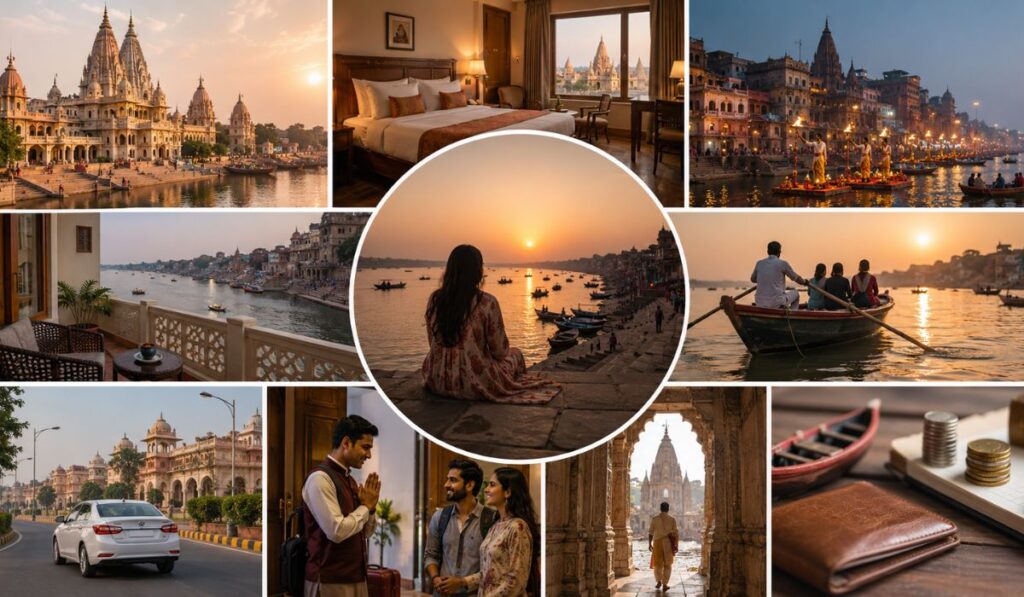
Best Areas in Ayodhya
The area around Ram Mandir and Hanuman Garhi has seen significant hotel development since 2022. Staying within 1–2 km of Ram Mandir keeps temple visits easy and walking times short. Mid-range guesthouses here are clean and well-run. Luxury options are more limited but growing; several heritage-style properties have opened in 2024–25.
Best Areas in Varanasi
Assi Ghat is the preferred base for independent travelers — quieter, cleaner, and well-connected to the central ghats by cycle rickshaw or walk. The Godowlia and Dashashwamedh area offers maximum proximity to the main Aarti ghat, but is busier and noisier. Ghat-side hotels offer rooms with direct Ganga views and are worth the premium for a one-night splurge.
Budget travelers: guesthouses starting from ₹800–1,500 per night near Assi Ghat are perfectly adequate. Mid-range: ₹3,000–8,000. Luxury: established hotels like the Taj Ganges or BrijRama Palace start from ₹12,000–25,000 per night.
Estimated Cost you need to know before Plan Ayodhya Varanasi Tour
Budget trip (per person, 4 days): ₹8,000–14,000. Includes budget guesthouses, shared or train transport, meals at local dhabas, and self-arranged boat rides.
Mid-range tour (per person, 4 days): ₹18,000–30,000. Includes comfortable hotels, private cab between cities, guided temple visits, and boat ride.
Luxury pilgrimage experience (per person, 4 days): ₹50,000–1,00,000+. Includes heritage or 5-star properties, private chauffeur throughout, VIP darshan passes, curated Aarti experience, and personal guide.
Boat ride costs: ₹200–500 per person for a shared boat at sunrise; ₹800–2,000 for a private rowboat during Ganga Aarti.
Guide charges: ₹1,200–2,500 per day for a knowledgeable local guide who can contextualise the temples, ghats, and rituals meaningfully.
Important Travel Tips for First-Time Visitors
Temple dress code: Both Ayodhya and Varanasi temples require modest clothing. Shoulders and knees should be covered. Avoid shorts and sleeveless tops. Dupattas and stoles available at temple entrances for a small fee.
Footwear: All major temples require footwear removal. Carry a small bag to store sandals, or use the designated cloakrooms.
Crowd management: Ram Mandir and Kashi Vishwanath see enormous footfall on weekends and festival days. Weekday visits in the early morning hours (before 8am) are significantly quieter.
Cash vs digital: Most ghats and small temple stalls are cash-only. Carry ₹2,000–3,000 in smaller denominations at all times. UPI payments work at most shops and restaurants in the main areas.
Safety: Both cities are generally safe for all types of travelers including solo women. Standard precautions apply: be aware of aggressive touts near temple entrances, avoid unverified boat operators after dark, and keep valuables secure in crowded ghat areas.
Winter fog: December and January fog in North India frequently delays flights and trains. Build a buffer of at least one extra day into your itinerary, especially for return journeys connecting to international flights.
Why Many Travelers Prefer Guided Plan Ayodhya Varanasi Tour Packages
The logistical complexity of managing two different cities — each with their own temple access systems, ghat timings, accommodation zones, and transport quirks — is something most first-time visitors underestimate.
A guided package handles hotel bookings in the right areas, private transport between cities, temple coordination (including queue management and VIP darshan arrangements), local guide services, and Ganga Aarti viewing arrangements. For families and senior pilgrims particularly, the difference between a structured package and a self-arranged trip can be the difference between a deeply peaceful experience and a stressful one.
For those also wishing to extend this pilgrimage into Prayagraj and Gaya — completing the full sacred circuit of North India’s holiest sites — our Gaya Varanasi Prayagraj and Lucknow Tour covers all four in a well-paced 7-day itinerary.
FAQs – Plan an Ayodhya Varanasi Tour
Is 3 days enough for a Planed Ayodhya and Varanasi tour?
It is the minimum, not the ideal. Three days lets you see the essential sites in both cities but leaves little room for delays, long queues, or extra experiences. Four days is considerably more comfortable.
Which city should I visit first?
Ayodhya first, Varanasi second — this is the natural geographical and spiritual flow for most travelers approaching from Delhi or Lucknow. It also means you end the journey on the Ganga, which is emotionally fitting.
What is the best month for Ganga Aarti?
October through February offers the best Ganga Aarti experience — cool evenings, clear air, and the ceremony at its most atmospheric. November’s Dev Deepawali is the peak of the entire year.
Is the tour suitable for senior citizens?
Yes, with the right planning. Private transport, ghat-side accommodation, and a 4–5 day pace with built-in rest time make this very manageable for elderly travelers. A guided package is strongly recommended.
What is the distance between Ayodhya and Varanasi?
Approximately 195–210 km by road, taking 4–5 hours. By direct train, the journey can be as short as 3.5 hours.
Are private tour packages worth it?
For most travelers — especially families, senior pilgrims, and first-time visitors — yes. The cost difference compared to self-arranging is modest, and the reduction in logistical stress is significant.
Conclusion of How to Plan an Ayodhya Varanasi Tour
An Ayodhya Varanasi tour is not simply a trip — it is a journey through two of the most spiritually significant places in the Hindu world. Standing before Ram Mandir at dawn, or watching the Ganga Aarti from a boat as the lamps shimmer on the water, or simply sitting at Assi Ghat as the sun rises over the oldest living city on earth — these are experiences that stay with travelers for life.
In 2026, with new infrastructure in Ayodhya and deepening cultural interest in this sacred circuit, the journey is more accessible than ever — and more meaningful too. Plan your dates around the winter season, give yourself at least four days, and let the cities set the rhythm.
When you are ready to make it happen, our Varanasi Tour Packages with Ganga Aarti are designed to take care of everything — so all you carry with you is an open heart.

Comments