<!-- wp:heading -->
<h2 class="wp-block-heading">Introduction</h2>
<!-- /wp:heading -->
<!-- wp:paragraph -->
<p>Every year, millions of travelers from around the world land in India with one question on their minds: <strong>is the Golden Triangle worth visiting</strong>? The short answer is yes — but the real question is whether it’s right for <em>you</em>. The Golden Triangle is India’s most celebrated travel circuit, and for good reason. It packs centuries of history, three distinct cities, and some of the most extraordinary monuments on Earth into a single, manageable journey.</p>
<!-- /wp:paragraph -->
<!-- wp:paragraph -->
<p>If you’re planning your first trip to India, the Golden Triangle Tour is usually the obvious starting point. Delhi has the country’s busiest international airport, making it a natural entry point. From there, Agra and Jaipur are well connected by expressway and rail, so logistics are simple even for first-time visitors. In this honest guide, we’ll break down everything you need to know — the highlights, the drawbacks, the costs, and the realities — so you can decide for yourself.</p>
<!-- /wp:paragraph -->
<!-- wp:paragraph -->
<p>If you’re already sold on the idea, explore our <strong><a href="https://www.azaantravels.com/golden-triangle-tour-packages/">Best Golden Triangle Tour Packages</a></strong> to find the perfect itinerary for your trip.</p>
<!-- /wp:paragraph -->
<!-- wp:separator -->
<hr class="wp-block-separator has-alpha-channel-opacity"/>
<!-- /wp:separator -->
<!-- wp:heading -->
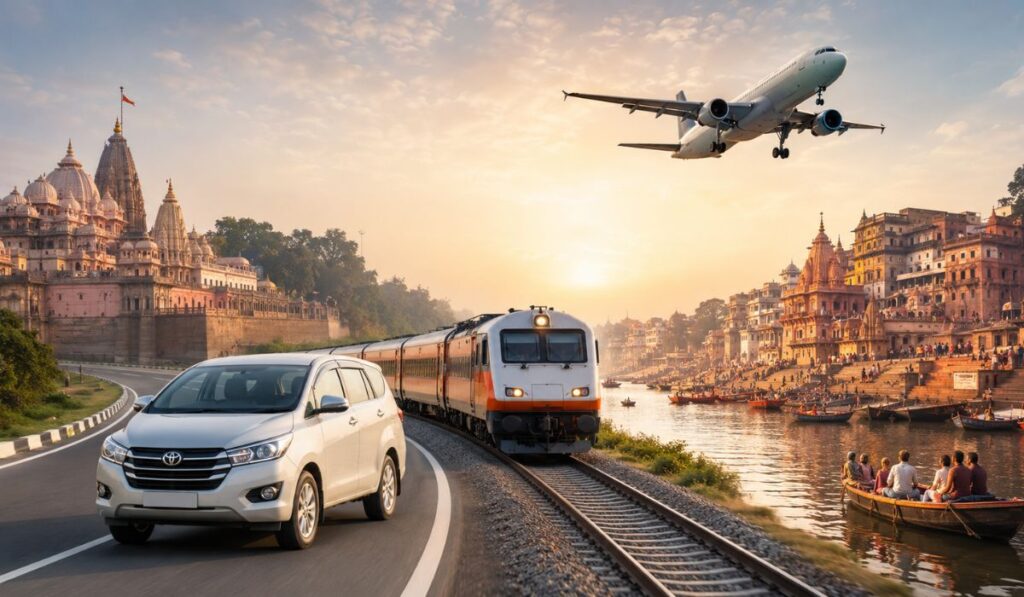
<h2 class="wp-block-heading">What Is the Golden Triangle Tour?</h2>
<!-- /wp:heading -->
<!-- wp:image {"id":3374,"sizeSlug":"large","linkDestination":"none"} -->
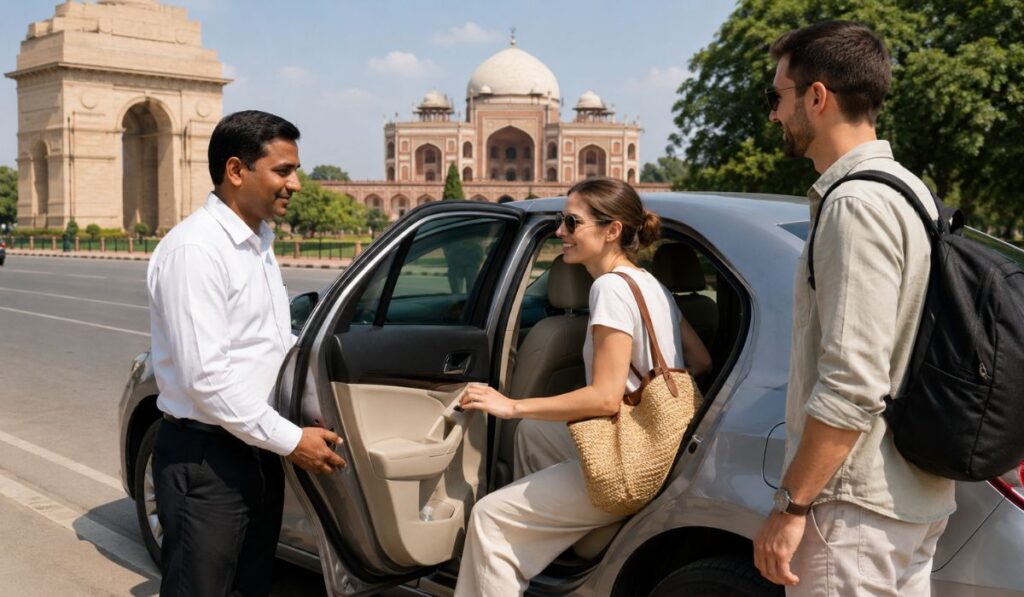
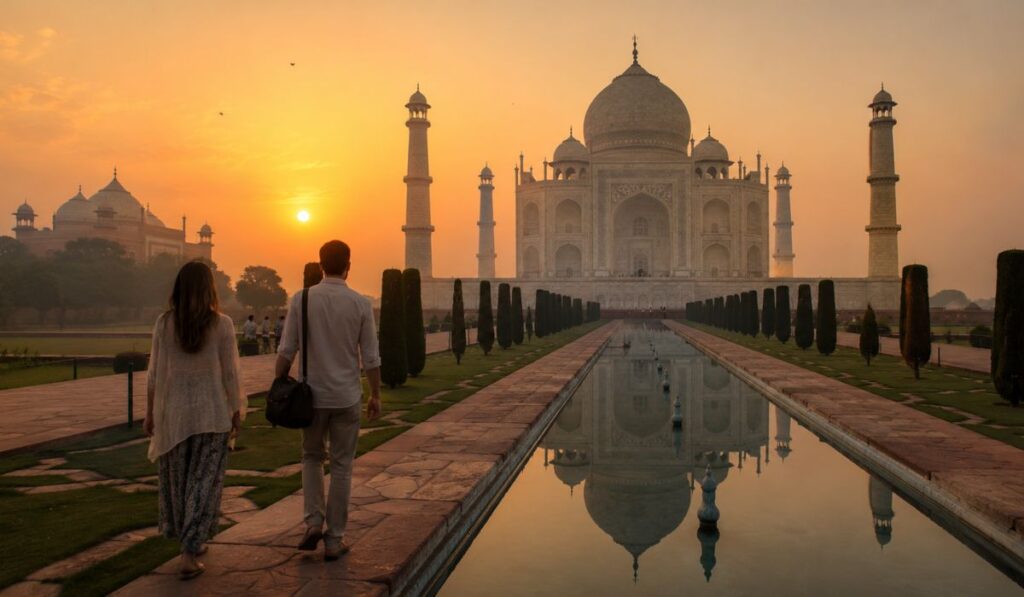
<figure class="wp-block-image size-large"><img src="https://www.azaantravels.com/wp-content/uploads/2026/08/Untitled-design-12-1024x597.jpg" alt="the Golden Triangle Worth Visiting? An Honest Guide for First-Time Travelers (2026)" class="wp-image-3374"/></figure>
<!-- /wp:image -->
<!-- wp:heading {"level":3} -->
<h3 class="wp-block-heading">Why Is It Called the Golden Triangle?</h3>
<!-- /wp:heading -->
<!-- wp:paragraph -->
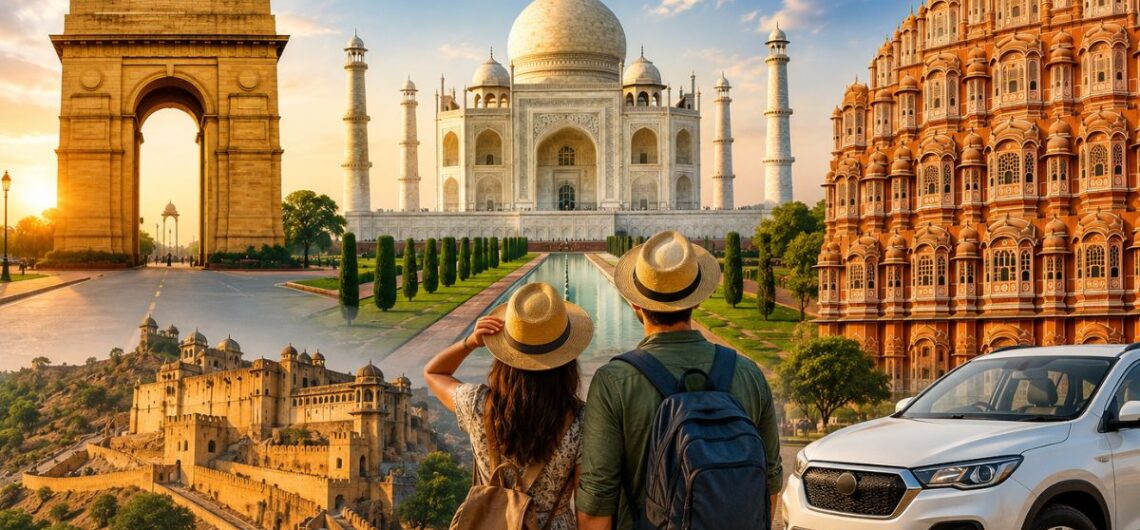
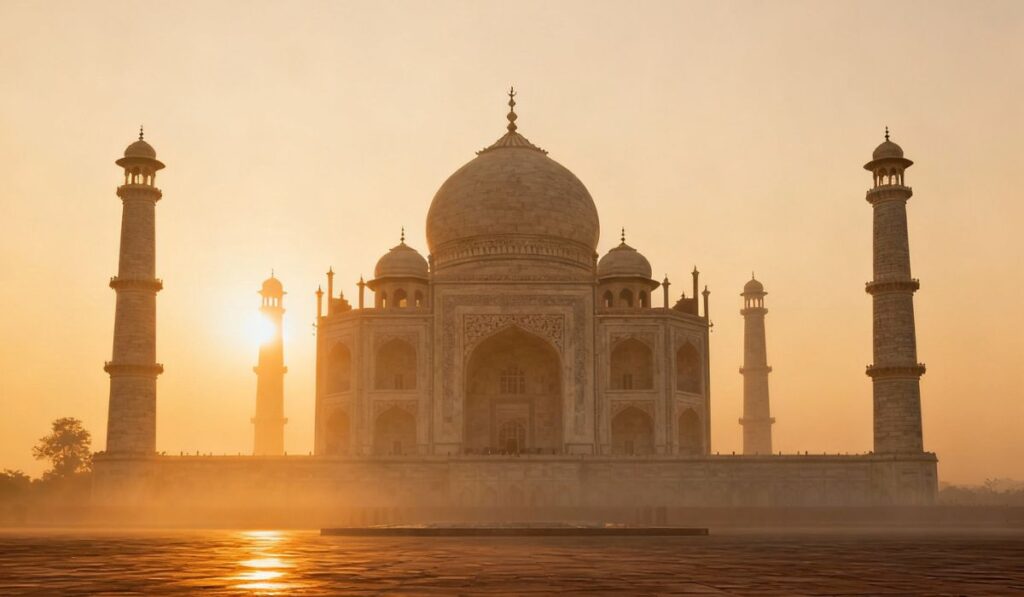
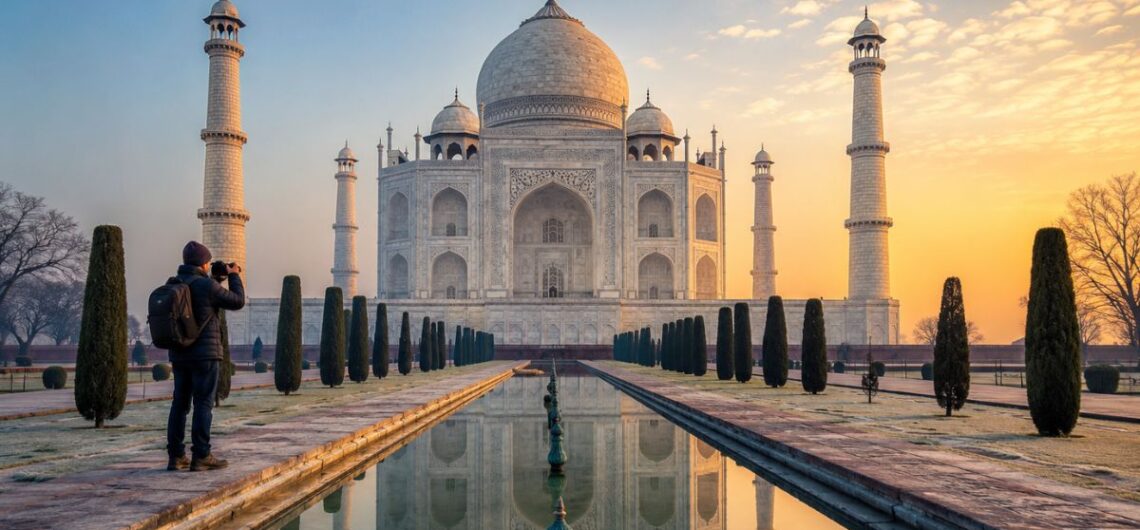
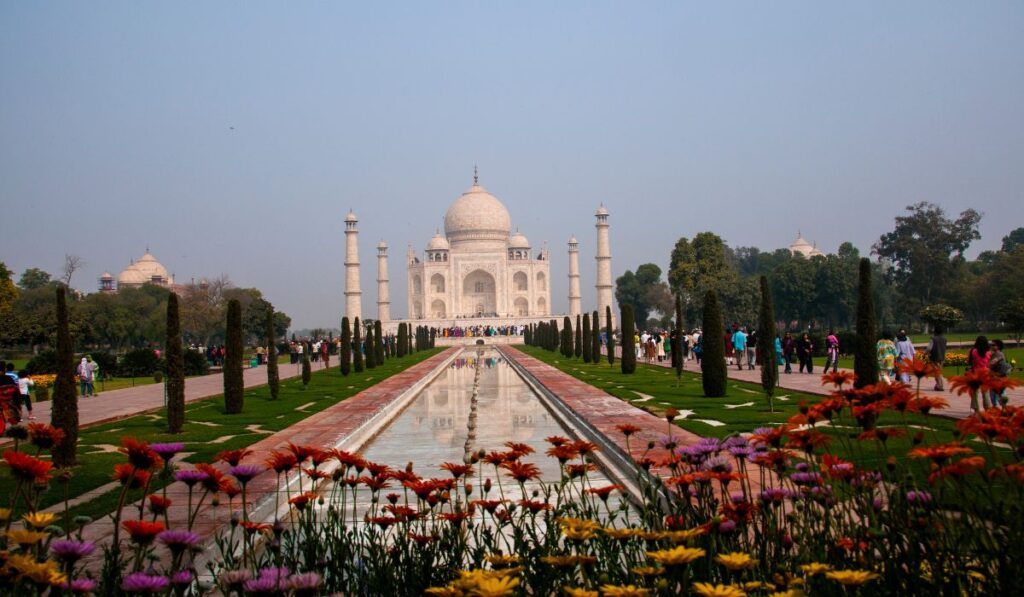
<p>The <strong>Golden Triangle</strong> refers to the triangular route connecting three of North India’s most historically significant cities: Delhi, Agra, and Jaipur. On a map, the route formed by these three cities resembles a rough triangle — hence the name. The “golden” part comes from the sheer concentration of UNESCO World Heritage Sites and royal monuments packed into this relatively small geographic area.</p>
<!-- /wp:paragraph -->
<!-- wp:heading {"level":3} -->
<h3 class="wp-block-heading">Which Cities Are Included?</h3>
<!-- /wp:heading -->
<!-- wp:paragraph -->
<p>The <strong>Golden Triangle India</strong> circuit includes three iconic cities:</p>
<!-- /wp:paragraph -->
<!-- wp:list -->
<ul class="wp-block-list"><!-- wp:list-item -->
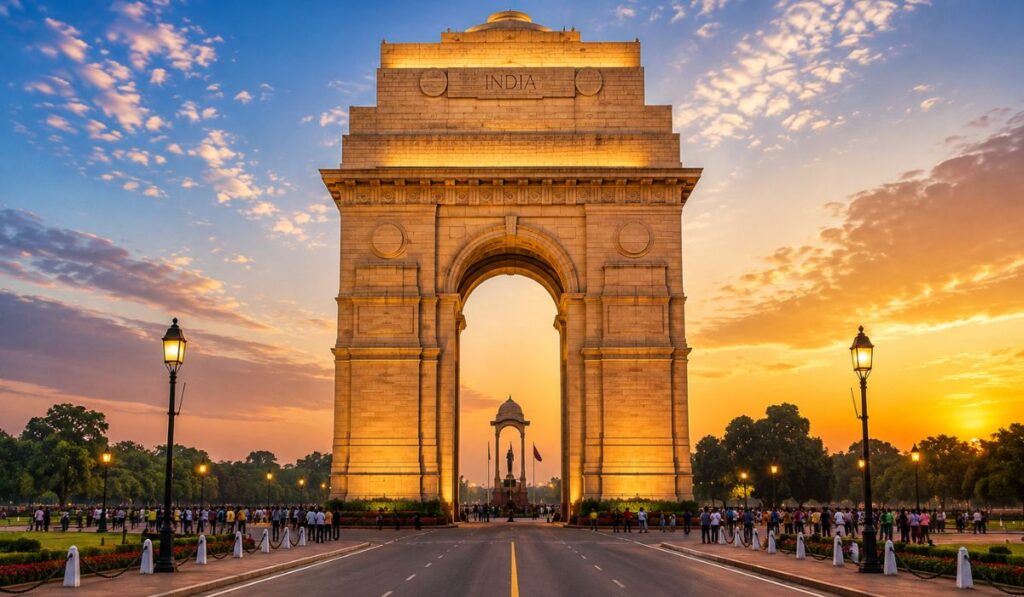
<li><strong>Delhi</strong> — India’s capital and one of the world’s great historic cities. Ancient Mughal monuments sit alongside colonial-era boulevards and a buzzing modern metropolis.</li>
<!-- /wp:list-item -->
<!-- wp:list-item -->
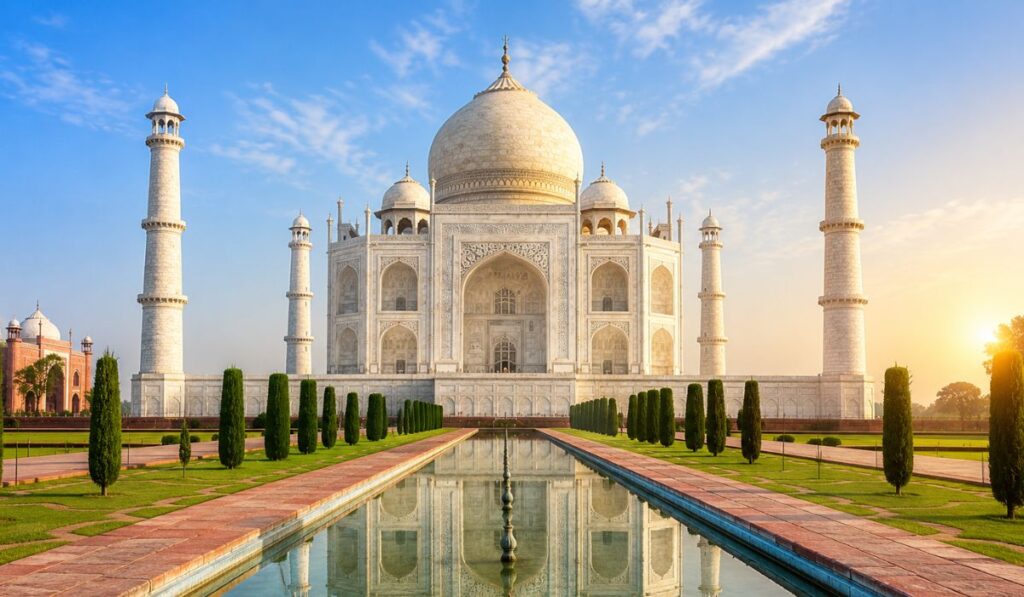
<li><strong>Agra</strong> — Home of the Taj Mahal, one of the Seven Wonders of the World and the most beautiful building most visitors will ever stand in front of.</li>
<!-- /wp:list-item -->
<!-- wp:list-item -->
<li><strong>Jaipur</strong> — The Pink City of Rajasthan. A living royal city of extraordinary forts, opulent palaces, and vibrant bazaars.</li>
<!-- /wp:list-item --></ul>
<!-- /wp:list -->
<!-- wp:paragraph -->
<p>Each city sits approximately 200–250 kilometers from the others, covering a total circuit of around 720 kilometers.</p>
<!-- /wp:paragraph -->
<!-- wp:heading {"level":3} -->
<h3 class="wp-block-heading">Why Is It India’s Most Popular Travel Circuit?</h3>
<!-- /wp:heading -->
<!-- wp:paragraph -->
<p>The <strong>Golden Triangle Tour</strong> is India’s most iconic travel circuit. What makes this route so perfect for first-time visitors is the sheer variety. You get Mughal history in Agra, Rajput architecture in Jaipur, ancient bazaars in Old Delhi, royal palaces, street food, and living culture — all within one manageable loop that you can complete in as few as 4 days or stretch into a leisurely 8-day journey. Nowhere else in India can you see this much history in such a short distance.</p>
<!-- /wp:paragraph -->
<!-- wp:separator -->
<hr class="wp-block-separator has-alpha-channel-opacity"/>
<!-- /wp:separator -->
<!-- wp:heading -->
<h2 class="wp-block-heading">Is the Golden Triangle Worth Visiting? (Quick Answer)</h2>
<!-- /wp:heading -->
<!-- wp:paragraph -->
<p><strong>Yes — the Golden Triangle is absolutely worth visiting for most first-time travelers to India.</strong> It offers an unparalleled introduction to the country’s history, architecture, food, and culture in a compact, well-connected circuit. But like any destination, it’s not for everyone.</p>
<!-- /wp:paragraph -->
<!-- wp:heading {"level":3} -->
<h3 class="wp-block-heading">Why First-Time Visitors Love It</h3>
<!-- /wp:heading -->
<!-- wp:paragraph -->
<p>First-time visitors love the <strong>Golden Triangle</strong> because it delivers the “greatest hits” of North India without requiring weeks of travel. In 4 to 6 days, you can see the Taj Mahal at sunrise, explore Mughal-era forts, wander through pink-hued palaces, and experience the chaos and charm of Old Delhi’s bazaars. It’s efficient, rewarding, and logistically straightforward — even for travelers who’ve never been to India before.</p>
<!-- /wp:paragraph -->
<!-- wp:heading {"level":3} -->
<h3 class="wp-block-heading">What Makes It Different From Other India Tours</h3>
<!-- /wp:heading -->
<!-- wp:paragraph -->
<p>The <strong>Golden Triangle</strong> is different because it offers three completely distinct city personalities in one route. Delhi is a blend of ancient and modern. Agra is singularly focused on the Taj Mahal and Mughal tomb architecture. Jaipur represents Rajput royal heritage with its pink-hued forts and palaces. Few other regions in the world let you move between three such distinct historical chapters in under a week.</p>
<!-- /wp:paragraph -->
<!-- wp:heading {"level":3} -->
<h3 class="wp-block-heading">Who Will Enjoy It the Most?</h3>
<!-- /wp:heading -->
<!-- wp:paragraph -->
<p>The <strong>Golden Triangle</strong> is ideal for:</p>
<!-- /wp:paragraph -->
<!-- wp:list -->
<ul class="wp-block-list"><!-- wp:list-item -->
<li>First-time visitors to India</li>
<!-- /wp:list-item -->
<!-- wp:list-item -->
<li>History and architecture enthusiasts</li>
<!-- /wp:list-item -->
<!-- wp:list-item -->
<li>Travelers with 4–7 days to spare</li>
<!-- /wp:list-item -->
<!-- wp:list-item -->
<li>Couples and families looking for a manageable introduction to India</li>
<!-- /wp:list-item -->
<!-- wp:list-item -->
<li>Photography lovers seeking iconic shots</li>
<!-- /wp:list-item --></ul>
<!-- /wp:list -->
<!-- wp:separator -->
<hr class="wp-block-separator has-alpha-channel-opacity"/>
<!-- /wp:separator -->
<!-- wp:heading -->
<h2 class="wp-block-heading">Top 10 Reasons the Golden Triangle Is Worth Visiting</h2>
<!-- /wp:heading -->
<!-- wp:image {"id":3373,"sizeSlug":"large","linkDestination":"none"} -->
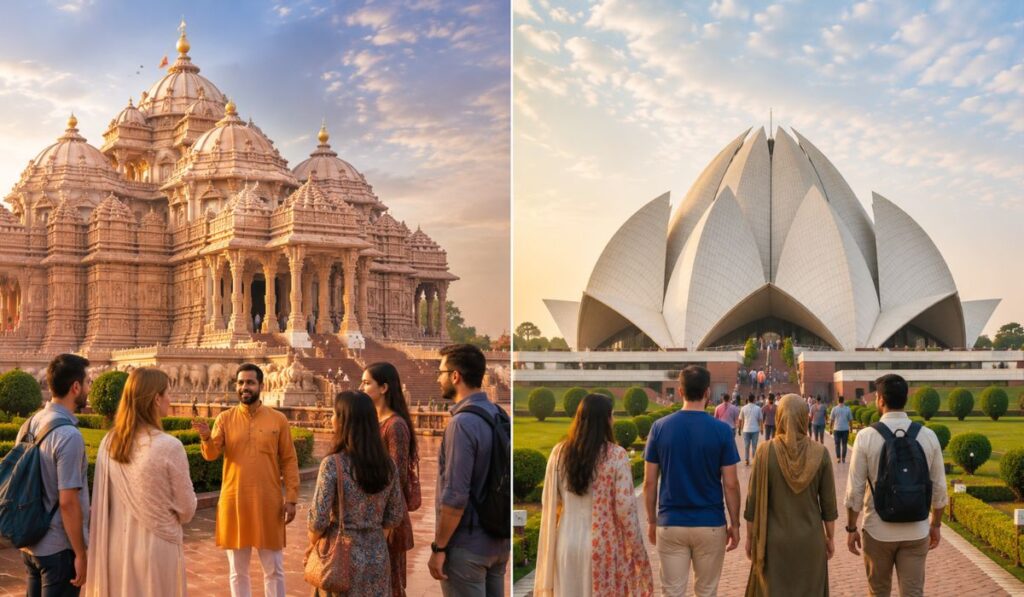
<figure class="wp-block-image size-large"><img src="https://www.azaantravels.com/wp-content/uploads/2026/08/Untitled-design-13-1024x597.jpg" alt="the Golden Triangle Worth Visiting? An Honest Guide for First-Time Travelers (2026)" class="wp-image-3373"/></figure>
<!-- /wp:image -->
<!-- wp:heading {"level":3} -->
<h3 class="wp-block-heading">Three Iconic Cities in One Trip</h3>
<!-- /wp:heading -->
<!-- wp:paragraph -->
<p>You get three completely different cities in a single journey — each with its own personality, food, and architecture.</p>
<!-- /wp:paragraph -->
<!-- wp:heading {"level":3} -->
<h3 class="wp-block-heading">UNESCO World Heritage Sites</h3>
<!-- /wp:heading -->
<!-- wp:paragraph -->
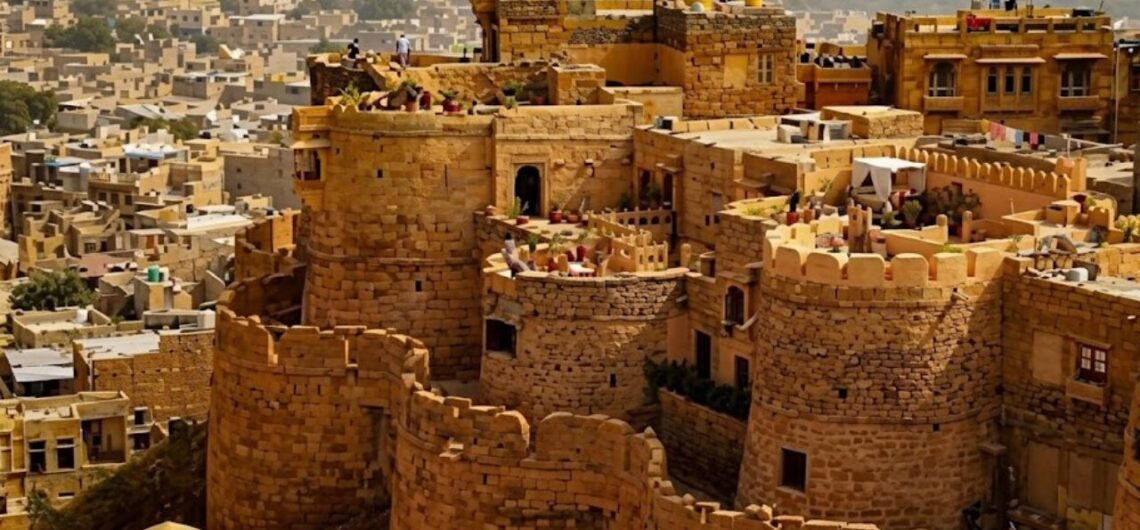
<p>The circuit is packed with UNESCO-listed wonders including the Taj Mahal, Agra Fort, Qutub Minar, Red Fort, and Amber Fort.</p>
<!-- /wp:paragraph -->
<!-- wp:heading {"level":3} -->
<h3 class="wp-block-heading">Rich History and Architecture</h3>
<!-- /wp:heading -->
<!-- wp:paragraph -->
<p>From Mughal grandeur to Rajput royalty, the <strong>Golden Triangle</strong> is a living museum of India’s most glorious eras.</p>
<!-- /wp:paragraph -->
<!-- wp:heading {"level":3} -->
<h3 class="wp-block-heading">Diverse Local Food</h3>
<!-- /wp:heading -->
<!-- wp:paragraph -->
<p>From Delhi’s street food to Jaipur’s royal thalis and Agra’s Mughlai cuisine, every city offers a different culinary experience.</p>
<!-- /wp:paragraph -->
<!-- wp:heading {"level":3} -->
<h3 class="wp-block-heading">Colorful Markets</h3>
<!-- /wp:heading -->
<!-- wp:paragraph -->
<p>Jaipur’s bazaars, Delhi’s Chandni Chowk, and Agra’s marble markets offer some of the best shopping in India.</p>
<!-- /wp:paragraph -->
<!-- wp:heading {"level":3} -->
<h3 class="wp-block-heading">Easy Road Connectivity</h3>
<!-- /wp:heading -->
<!-- wp:paragraph -->
<p>The three cities are connected by excellent expressways, making travel between them comfortable and predictable.</p>
<!-- /wp:paragraph -->
<!-- wp:heading {"level":3} -->
<h3 class="wp-block-heading">Luxury and Budget Options</h3>
<!-- /wp:heading -->
<!-- wp:paragraph -->
<p>Whether you’re a backpacker or a luxury traveler, the <strong>Golden Triangle</strong> offers accommodations and experiences at every price point.</p>
<!-- /wp:paragraph -->
<!-- wp:heading {"level":3} -->
<h3 class="wp-block-heading">Cultural Experiences</h3>
<!-- /wp:heading -->
<!-- wp:paragraph -->
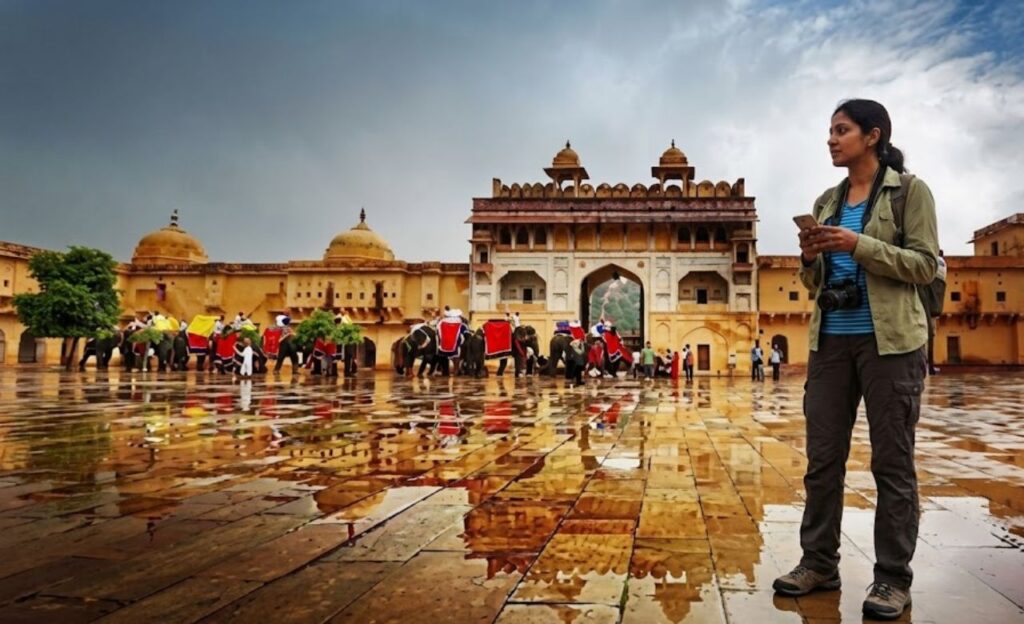
<p>From elephant rides at Amber Fort to sunset aartis and local artisan workshops, cultural immersion is everywhere.</p>
<!-- /wp:paragraph -->
<!-- wp:heading {"level":3} -->
<h3 class="wp-block-heading">Photography Opportunities</h3>
<!-- /wp:heading -->
<!-- wp:paragraph -->
<p>The Taj Mahal at sunrise, Amber Fort at golden hour, and the pink facades of Jaipur offer endless photo opportunities.</p>
<!-- /wp:paragraph -->
<!-- wp:heading {"level":3} -->
<h3 class="wp-block-heading">Flexible Itineraries</h3>
<!-- /wp:heading -->
<!-- wp:paragraph -->
<p>You can customize your <strong>Golden Triangle Tour</strong> to fit 3, 4, 5, or more days — whatever your schedule allows.</p>
<!-- /wp:paragraph -->
<!-- wp:separator -->
<hr class="wp-block-separator has-alpha-channel-opacity"/>
<!-- /wp:separator -->
<!-- wp:heading -->
<h2 class="wp-block-heading">Who Should Choose a Golden Triangle Tour?</h2>
<!-- /wp:heading -->
<!-- wp:paragraph -->
<p><strong>Couples</strong> — The Taj Mahal is the ultimate monument to love, and Jaipur’s palaces make for a romantic escape.</p>
<!-- /wp:paragraph -->
<!-- wp:paragraph -->
<p><strong>Families</strong> — The circuit is family-friendly with plenty of activities for all ages. Most attractions have child-friendly facilities and guides.</p>
<!-- /wp:paragraph -->
<!-- wp:paragraph -->
<p><strong>Solo Travelers</strong> — The <strong>Golden Triangle</strong> is well-trodden and safe for solo travelers, with plenty of hostels, tours, and fellow travelers to meet.</p>
<!-- /wp:paragraph -->
<!-- wp:paragraph -->
<p><strong>Senior Travelers</strong> — Private cars and guides make the circuit comfortable and accessible. Most major sites have wheelchair access or alternative viewing options.</p>
<!-- /wp:paragraph -->
<!-- wp:paragraph -->
<p><strong>Luxury Travelers</strong> — Stay in heritage palaces, dine like royalty, and travel in style. Luxury options range from the Oberoi Amarvilas in Agra to the Rambagh Palace in Jaipur.</p>
<!-- /wp:paragraph -->
<!-- wp:paragraph -->
<p><strong>Photography Enthusiasts</strong> — The <strong>Golden Triangle</strong> offers some of the most photogenic locations in the world.</p>
<!-- /wp:paragraph -->
<!-- wp:separator -->
<hr class="wp-block-separator has-alpha-channel-opacity"/>
<!-- /wp:separator -->
<!-- wp:heading -->
<h2 class="wp-block-heading">Who Might Prefer Another Destination?</h2>
<!-- /wp:heading -->
<!-- wp:paragraph -->
<p><strong>Beach lovers</strong> — If your idea of a perfect vacation is sand and sea, consider Kerala or Goa instead.</p>
<!-- /wp:paragraph -->
<!-- wp:paragraph -->
<p><strong>Adventure seekers</strong> — The <strong>Golden Triangle</strong> is about history and culture, not trekking or white-water rafting. Head to the Himalayas for adventure.</p>
<!-- /wp:paragraph -->
<!-- wp:paragraph -->
<p><strong>Wildlife-focused travelers</strong> — While you can add Ranthambore for tiger safaris, the core circuit is not wildlife-focused. Consider dedicated wildlife tours instead.</p>
<!-- /wp:paragraph -->
<!-- wp:paragraph -->
<p><strong>Travelers looking for a slow-paced vacation</strong> — The <strong>Golden Triangle</strong> involves moving between cities every 1–2 days. If you prefer to unpack once and stay put, consider a single-city itinerary or Kerala’s backwaters.</p>
<!-- /wp:paragraph -->
<!-- wp:paragraph -->
<p><em>This section builds trust and helps you choose the right trip for your travel style.</em></p>
<!-- /wp:paragraph -->
<!-- wp:separator -->
<hr class="wp-block-separator has-alpha-channel-opacity"/>
<!-- /wp:separator -->
<!-- wp:heading -->
<h2 class="wp-block-heading">What You'll Actually Experience in Each City</h2>
<!-- /wp:heading -->
<!-- wp:heading {"level":3} -->
<h3 class="wp-block-heading">Delhi</h3>
<!-- /wp:heading -->
<!-- wp:paragraph -->
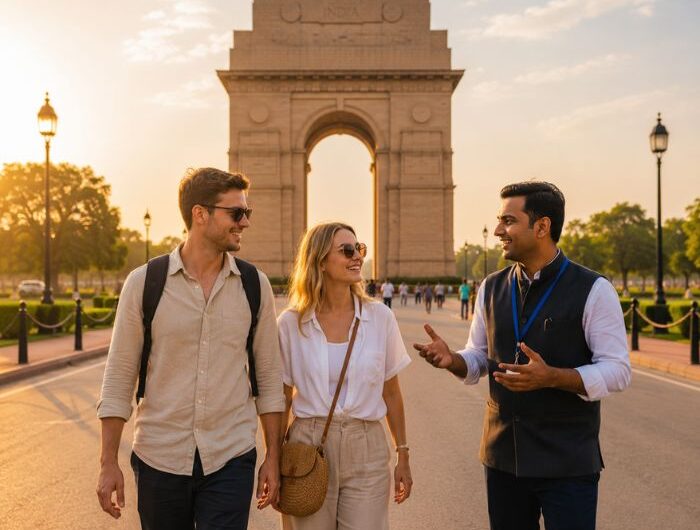
<p><strong>Historical monuments:</strong> The Red Fort, Qutub Minar, Humayun’s Tomb, and India Gate showcase Delhi’s layered history.</p>
<!-- /wp:paragraph -->
<!-- wp:paragraph -->
<p><strong>Markets:</strong> Chandni Chowk’s chaotic bazaars offer everything from spices to jewelry. A rickshaw ride through Old Delhi is an experience in itself.</p>
<!-- /wp:paragraph -->
<!-- wp:paragraph -->
<p><strong>Street food:</strong> From parathas to chaat, Delhi’s street food is legendary. Don’t miss the food stalls of Chandni Chowk and Khan Market.</p>
<!-- /wp:paragraph -->
<!-- wp:paragraph -->
<p><em>Explore our <strong><a href="https://www.azaantravels.com/delhi-tour-packages/">Delhi Tour Packages with Sightseeing</a></strong> to make the most of your time in the capital.</em></p>
<!-- /wp:paragraph -->
<!-- wp:heading {"level":3} -->
<h3 class="wp-block-heading">Agra</h3>
<!-- /wp:heading -->
<!-- wp:paragraph -->
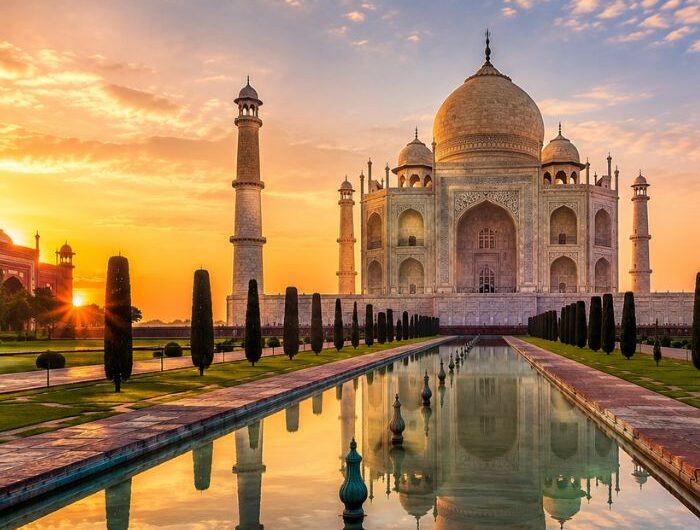
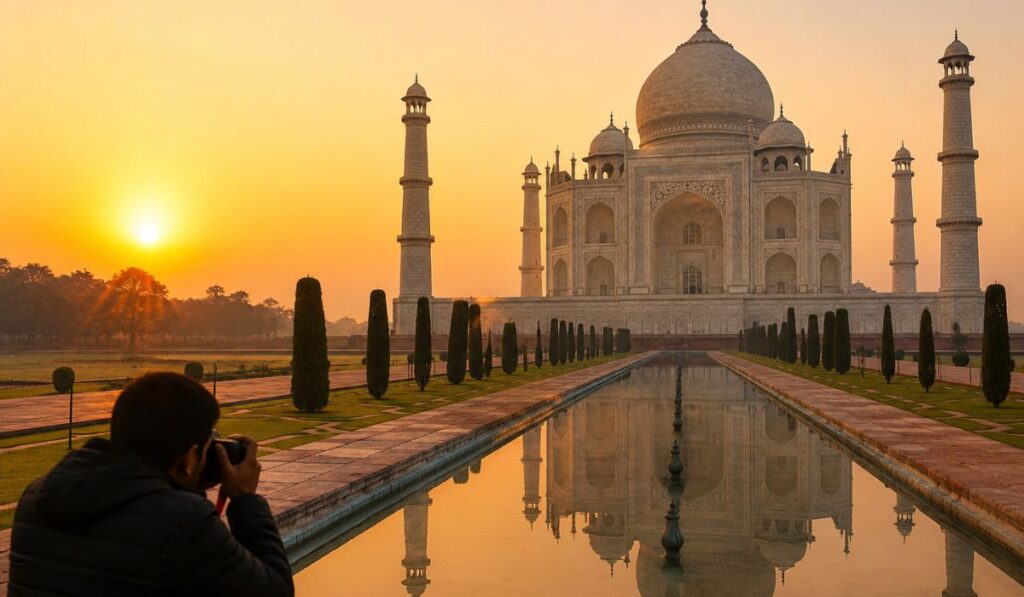
<p><strong>Taj Mahal:</strong> The crown jewel of India — a marble mausoleum built by Shah Jahan for his wife Mumtaz Mahal. Visit at sunrise for the most magical experience.</p>
<!-- /wp:paragraph -->
<!-- wp:paragraph -->
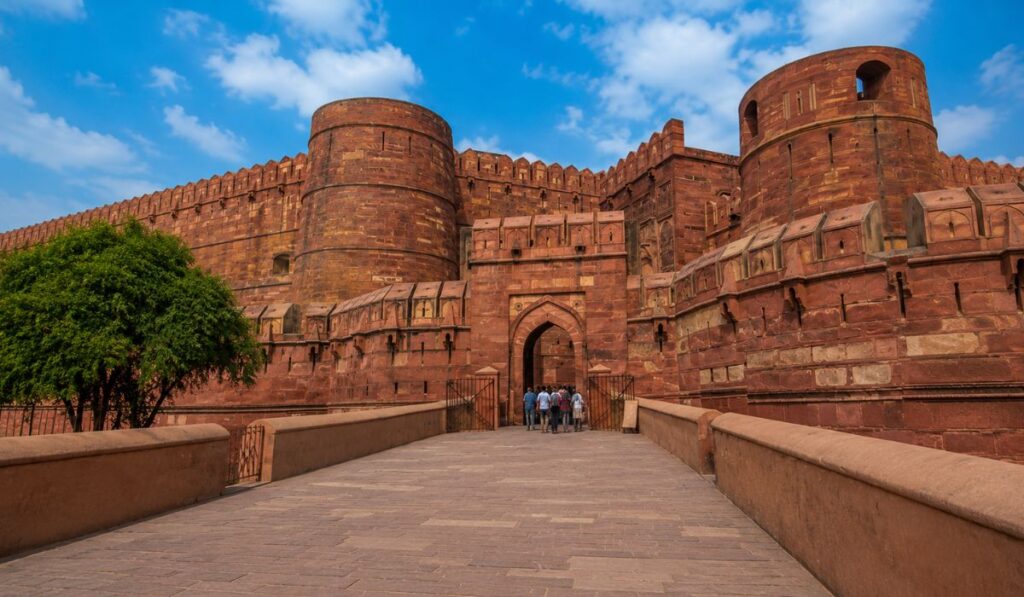
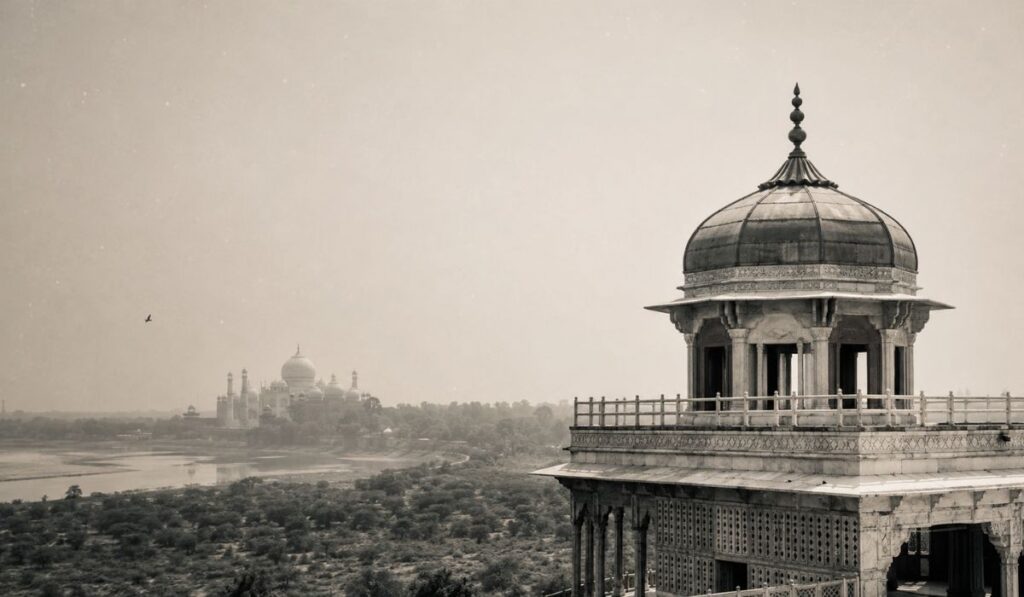
<p><strong>Agra Fort:</strong> A red sandstone fortress that served as the Mughal seat of power. It offers stunning views of the Taj Mahal from a distance.</p>
<!-- /wp:paragraph -->
<!-- wp:paragraph -->
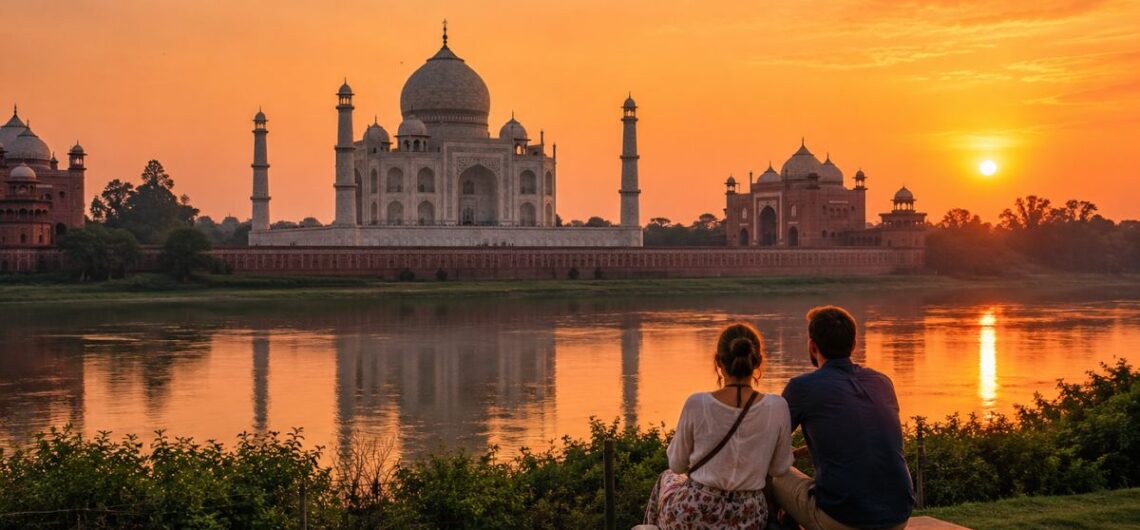
<p><strong>Mehtab Bagh:</strong> A garden complex across the Yamuna River offering the best sunset views of the Taj Mahal — away from the crowds.</p>
<!-- /wp:paragraph -->
<!-- wp:paragraph -->
<p><em>Book our <strong><a href="https://www.azaantravels.com/tours/local-sightseeing-of-agra/">Agra Local Sightseeing Tour with Taj Mahal</a></strong> for a seamless experience.</em></p>
<!-- /wp:paragraph -->
<!-- wp:heading {"level":3} -->
<h3 class="wp-block-heading">Jaipur</h3>
<!-- /wp:heading -->
<!-- wp:paragraph -->
<p><strong>Amber Fort:</strong> A magnificent hilltop fort with stunning mirror work and elephant rides up the ramparts.</p>
<!-- /wp:paragraph -->
<!-- wp:paragraph -->
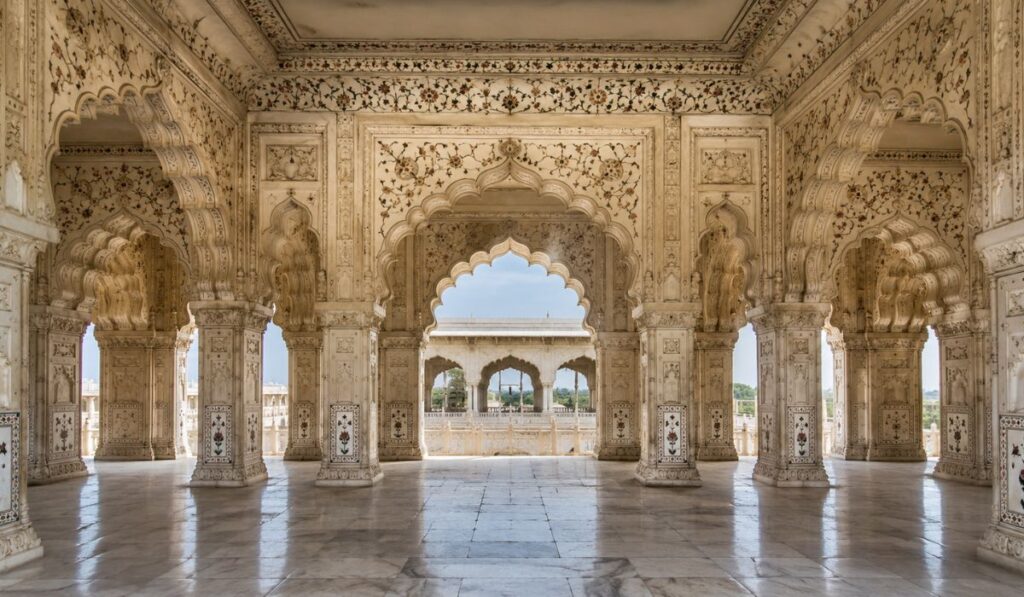
<p><strong>City Palace:</strong> The royal residence in the heart of Jaipur, blending Rajput and Mughal architecture.</p>
<!-- /wp:paragraph -->
<!-- wp:paragraph -->
<p><strong>Hawa Mahal:</strong> The “Palace of Winds” — a five-story pink sandstone structure with 953 windows, designed for royal women to observe street life.</p>
<!-- /wp:paragraph -->
<!-- wp:paragraph -->
<p><strong>Local bazaars:</strong> Jaipur’s markets are famous for textiles, jewelry, and handicrafts. Don’t miss Johari Bazaar and Bapu Bazaar.</p>
<!-- /wp:paragraph -->
<!-- wp:separator -->
<hr class="wp-block-separator has-alpha-channel-opacity"/>
<!-- /wp:separator -->
<!-- wp:heading -->
<h2 class="wp-block-heading">Biggest Expectations vs Reality</h2>
<!-- /wp:heading -->
<!-- wp:table -->
<figure class="wp-block-table"><table class="has-fixed-layout"><thead><tr><th>Expectation</th><th>Reality</th></tr></thead><tbody><tr><td>Less driving</td><td>Expect 3–6 hour journeys between cities. Delhi to Agra is about 4 hours; Agra to Jaipur is about 5 hours.</td></tr><tr><td>Empty monuments</td><td>Popular attractions can be crowded, especially during peak season (October–March). Visit the Taj Mahal at sunrise to avoid the worst crowds.</td></tr><tr><td>Every hotel is luxury</td><td>Accommodation quality varies widely. Budget guesthouses are basic; luxury options are world-class. Research your hotel carefully.</td></tr><tr><td>Everything is cheap</td><td>Monument entry fees for foreigners can add up significantly — the Taj Mahal alone costs ₹1,100 for foreign tourists.</td></tr><tr><td>English is everywhere</td><td>While English is widely spoken in tourist areas, don’t expect everyone to speak it fluently. A guide can be invaluable.</td></tr></tbody></table></figure>
<!-- /wp:table -->
<!-- wp:paragraph -->
<p><em>This unique section is rarely covered by competitors and sets your content apart.</em></p>
<!-- /wp:paragraph -->
<!-- wp:separator -->
<hr class="wp-block-separator has-alpha-channel-opacity"/>
<!-- /wp:separator -->
<!-- wp:heading -->
<h2 class="wp-block-heading">Best Time to Visit the Golden Triangle</h2>
<!-- /wp:heading -->
<!-- wp:heading {"level":3} -->
<h3 class="wp-block-heading">Winter (October–March)</h3>
<!-- /wp:heading -->
<!-- wp:paragraph -->
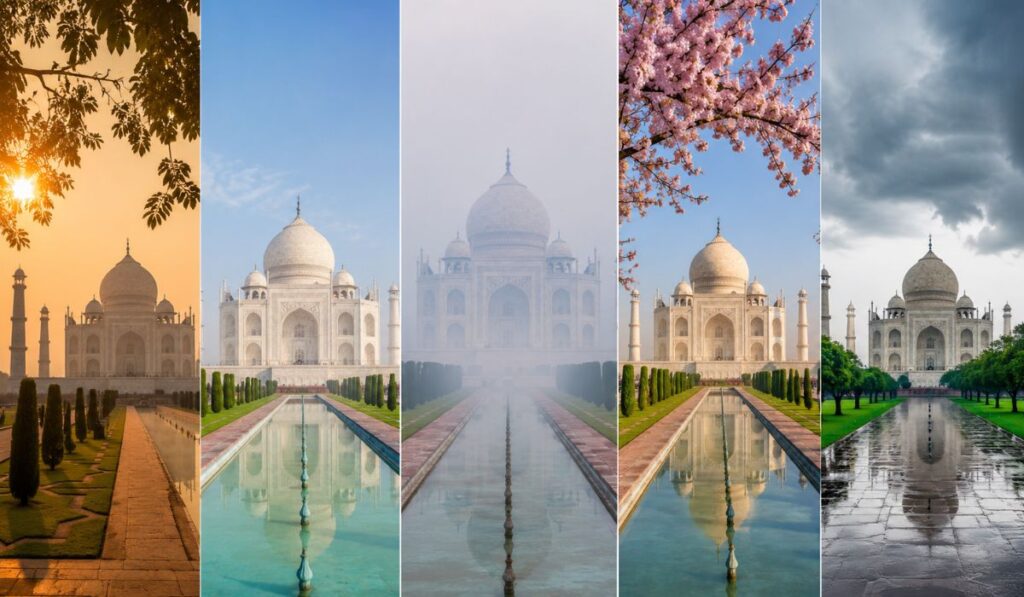
<p><strong>Weather:</strong> Pleasant and dry, with daytime temperatures between 10°C and 27°C.</p>
<!-- /wp:paragraph -->
<!-- wp:paragraph -->
<p><strong>Crowd levels:</strong> Peak season — expect crowds at major monuments.</p>
<!-- /wp:paragraph -->
<!-- wp:paragraph -->
<p><strong>Pros:</strong> Comfortable sightseeing, festivals like Diwali (October–November) and Holi (March).</p>
<!-- /wp:paragraph -->
<!-- wp:paragraph -->
<p><strong>Cons:</strong> Higher prices and more tourists. Book accommodations and tours in advance.</p>
<!-- /wp:paragraph -->
<!-- wp:paragraph -->
<p><strong>Best activities:</strong> All outdoor sightseeing, sunrise at the Taj Mahal, and attending festivals.</p>
<!-- /wp:paragraph -->
<!-- wp:heading {"level":3} -->
<h3 class="wp-block-heading">Summer (April–June)</h3>
<!-- /wp:heading -->
<!-- wp:paragraph -->
<p><strong>Weather:</strong> Brutally hot, with temperatures regularly crossing 40°C in all three cities.</p>
<!-- /wp:paragraph -->
<!-- wp:paragraph -->
<p><strong>Crowd levels:</strong> Low — most tourists avoid this period.</p>
<!-- /wp:paragraph -->
<!-- wp:paragraph -->
<p><strong>Pros:</strong> Lower prices, fewer crowds, and better hotel availability.</p>
<!-- /wp:paragraph -->
<!-- wp:paragraph -->
<p><strong>Cons:</strong> Extreme heat makes outdoor sightseeing uncomfortable and potentially dangerous.</p>
<!-- /wp:paragraph -->
<!-- wp:paragraph -->
<p><strong>Best activities:</strong> Early morning and late afternoon sightseeing only. Avoid midday outdoors.</p>
<!-- /wp:paragraph -->
<!-- wp:heading {"level":3} -->
<h3 class="wp-block-heading">Monsoon (July–September)</h3>
<!-- /wp:heading -->
<!-- wp:paragraph -->
<p><strong>Weather:</strong> Occasional heavy rains, temperatures between 28°C and 35°C.</p>
<!-- /wp:paragraph -->
<!-- wp:paragraph -->
<p><strong>Crowd levels:</strong> Low — crowds thin out significantly and prices drop.</p>
<!-- /wp:paragraph -->
<!-- wp:paragraph -->
<p><strong>Pros:</strong> Budget-friendly, the Taj Mahal looks stunning against dramatic monsoon skies.</p>
<!-- /wp:paragraph -->
<!-- wp:paragraph -->
<p><strong>Cons:</strong> Rain can disrupt outdoor plans. Pack a compact umbrella and stay flexible.</p>
<!-- /wp:paragraph -->
<!-- wp:paragraph -->
<p><strong>Best activities:</strong> Indoor attractions, museums, and enjoying the greenery after rain.</p>
<!-- /wp:paragraph -->
<!-- wp:separator -->
<hr class="wp-block-separator has-alpha-channel-opacity"/>
<!-- /wp:separator -->
<!-- wp:heading -->
<h2 class="wp-block-heading">How Many Days Do You Really Need?</h2>
<!-- /wp:heading -->
<!-- wp:heading {"level":3} -->
<h3 class="wp-block-heading">3-Day Tour</h3>
<!-- /wp:heading -->
<!-- wp:paragraph -->
<p><strong>What’s realistic:</strong> One full day in Delhi, an early morning drive to Agra for the Taj Mahal, then on to Jaipur for a half day.</p>
<!-- /wp:paragraph -->
<!-- wp:paragraph -->
<p><strong>Who it’s for:</strong> Travelers on a layover or with very limited time.</p>
<!-- /wp:paragraph -->
<!-- wp:paragraph -->
<p><strong>The trade-off:</strong> This is fast-paced. You’ll see the highlights but won’t have time to wander.</p>
<!-- /wp:paragraph -->
<!-- wp:heading {"level":3} -->
<h3 class="wp-block-heading">4-Day Tour</h3>
<!-- /wp:heading -->
<!-- wp:paragraph -->
<p><strong>What’s realistic:</strong> A full day in Delhi, a full day in Agra (including sunrise at the Taj Mahal), and a day and a half in Jaipur.</p>
<!-- /wp:paragraph -->
<!-- wp:paragraph -->
<p><strong>Who it’s for:</strong> Travelers with a long weekend.</p>
<!-- /wp:paragraph -->
<!-- wp:paragraph -->
<p><strong>The trade-off:</strong> You can now do the Taj Mahal properly at sunrise. Still fast-paced but less frantic.</p>
<!-- /wp:paragraph -->
<!-- wp:heading {"level":3} -->
<h3 class="wp-block-heading">5-Day Tour</h3>
<!-- /wp:heading -->
<!-- wp:paragraph -->
<p><strong>What’s realistic:</strong> A full day and a half in Delhi, a full day in Agra, and a day and a half in Jaipur.</p>
<!-- /wp:paragraph -->
<!-- wp:paragraph -->
<p><strong>Who it’s for:</strong> Most first-time visitors. This is the most popular option.</p>
<!-- /wp:paragraph -->
<!-- wp:paragraph -->
<p><strong>The trade-off:</strong> A comfortable pace with time to explore beyond the monuments.</p>
<!-- /wp:paragraph -->
<!-- wp:heading {"level":3} -->
<h3 class="wp-block-heading">6-Day Tour</h3>
<!-- /wp:heading -->
<!-- wp:paragraph -->
<p><strong>What’s realistic:</strong> Two days in Delhi, a full day in Agra, and two days in Jaipur with breathing room.</p>
<!-- /wp:paragraph -->
<!-- wp:paragraph -->
<p><strong>Who it’s for:</strong> Travelers who want a relaxed experience.</p>
<!-- /wp:paragraph -->
<!-- wp:paragraph -->
<p><strong>The trade-off:</strong> The sweet spot for most travelers. You leave feeling satisfied rather than rushed.</p>
<!-- /wp:paragraph -->
<!-- wp:paragraph -->
<p><em>Explore our <strong><a href="https://www.azaantravels.com/tours/golden-triangle-tour-delhi-agra-jaipur-5-days-4-nights/">Golden Triangle Delhi Agra Jaipur Tour</a></strong> for a perfectly balanced 5-day itinerary.</em></p>
<!-- /wp:paragraph -->
<!-- wp:separator -->
<hr class="wp-block-separator has-alpha-channel-opacity"/>
<!-- /wp:separator -->
<!-- wp:heading -->
<h2 class="wp-block-heading">Real Travel Times Between Delhi, Agra & Jaipur</h2>
<!-- /wp:heading -->
<!-- wp:paragraph -->
<p><strong>Delhi → Agra:</strong> Approximately 3.5 to 4 hours by car (204 km). With breaks and traffic, budget 4–5 hours.</p>
<!-- /wp:paragraph -->
<!-- wp:paragraph -->
<p><strong>Agra → Jaipur:</strong> Approximately 5 to 6 hours by car (240 km). This is the longest leg of the triangle.</p>
<!-- /wp:paragraph -->
<!-- wp:paragraph -->
<p><strong>Jaipur → Delhi:</strong> Approximately 4 to 5 hours by car (270 km).</p>
<!-- /wp:paragraph -->
<!-- wp:paragraph -->
<p>These are realistic times with breaks — not just Google Maps estimates. Traffic, road conditions, and rest stops all add time to your journey. Plan your days accordingly and avoid driving after dark.</p>
<!-- /wp:paragraph -->
<!-- wp:separator -->
<hr class="wp-block-separator has-alpha-channel-opacity"/>
<!-- /wp:separator -->
<!-- wp:heading -->
<h2 class="wp-block-heading">How Much Does a Golden Triangle Tour Cost?</h2>
<!-- /wp:heading -->
<!-- wp:heading {"level":3} -->
<h3 class="wp-block-heading">Budget Traveler</h3>
<!-- /wp:heading -->
<!-- wp:paragraph -->
<p><strong>Package Cost:</strong> ₹15,000 – ₹25,000 ($180–$300) per person for 5 days.</p>
<!-- /wp:paragraph -->
<!-- wp:paragraph -->
<p><strong>Hotel Standard:</strong> 2–3 star guesthouses.</p>
<!-- /wp:paragraph -->
<!-- wp:paragraph -->
<p><strong>Transport:</strong> Shared or train travel.</p>
<!-- /wp:paragraph -->
<!-- wp:paragraph -->
<p><strong>What’s included:</strong> Basic accommodation, some meals, and transfers.</p>
<!-- /wp:paragraph -->
<!-- wp:heading {"level":3} -->
<h3 class="wp-block-heading">Mid-Range Traveler</h3>
<!-- /wp:heading -->
<!-- wp:paragraph -->
<p><strong>Package Cost:</strong> ₹35,000 – ₹65,000 ($420–$780) per person for 5 days.</p>
<!-- /wp:paragraph -->
<!-- wp:paragraph -->
<p><strong>Hotel Standard:</strong> 3–4 star hotels.</p>
<!-- /wp:paragraph -->
<!-- wp:paragraph -->
<p><strong>Transport:</strong> Private AC car.</p>
<!-- /wp:paragraph -->
<!-- wp:paragraph -->
<p><strong>What’s included:</strong> Comfortable hotels, daily breakfast, private driver, and licensed guides in each city.</p>
<!-- /wp:paragraph -->
<!-- wp:heading {"level":3} -->
<h3 class="wp-block-heading">Luxury Traveler</h3>
<!-- /wp:heading -->
<!-- wp:paragraph -->
<p><strong>Package Cost:</strong> ₹1,00,000 – ₹3,00,000+ ($1,200–$3,600+) per person for 5 days.</p>
<!-- /wp:paragraph -->
<!-- wp:paragraph -->
<p><strong>Hotel Standard:</strong> 5-star and heritage palaces.</p>
<!-- /wp:paragraph -->
<!-- wp:paragraph -->
<p><strong>Transport:</strong> Luxury vehicle.</p>
<!-- /wp:paragraph -->
<!-- wp:paragraph -->
<p><strong>What’s included:</strong> World-class accommodations, all meals, private guides, and premium experiences.</p>
<!-- /wp:paragraph -->
<!-- wp:paragraph -->
<p><strong>Additional costs to consider:</strong> Monument entry fees (significant for international visitors), lunch and dinner (unless included), tips, shopping, and 5% GST on package prices.</p>
<!-- /wp:paragraph -->
<!-- wp:separator -->
<hr class="wp-block-separator has-alpha-channel-opacity"/>
<!-- /wp:separator -->
<!-- wp:heading -->
<h2 class="wp-block-heading">Hidden Experiences Most Tourists Miss</h2>
<!-- /wp:heading -->
<!-- wp:paragraph -->
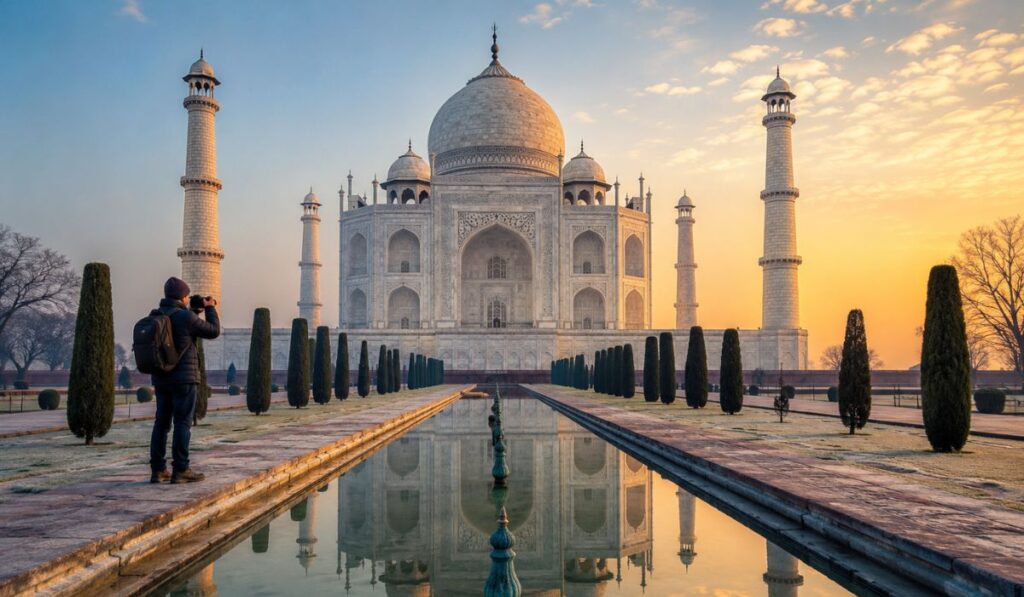
<p><strong>Sunrise at the Taj Mahal:</strong> Most visitors see the Taj during the day. Sunrise offers cooler temperatures, fewer crowds, and magical light on white marble.</p>
<!-- /wp:paragraph -->
<!-- wp:paragraph -->
<p><strong>Mehtab Bagh:</strong> A garden across the Yamuna River offering the best sunset views of the Taj Mahal — without the crowds.</p>
<!-- /wp:paragraph -->
<!-- wp:paragraph -->
<p><strong>Chandni Chowk food walk:</strong> A guided food tour through Old Delhi’s legendary street food scene.</p>
<!-- /wp:paragraph -->
<!-- wp:paragraph -->
<p><strong>Jaipur artisan workshops:</strong> Visit block-printing workshops or gem-cutting studios to see traditional crafts in action.</p>
<!-- /wp:paragraph -->
<!-- wp:paragraph -->
<p><strong>Local village experiences:</strong> Step outside the cities to experience rural Rajasthan — village walks, home-cooked meals, and local crafts.</p>
<!-- /wp:paragraph -->
<!-- wp:separator -->
<hr class="wp-block-separator has-alpha-channel-opacity"/>
<!-- /wp:separator -->
<!-- wp:heading -->
<h2 class="wp-block-heading">Common Mistakes First-Time Travelers Make</h2>
<!-- /wp:heading -->
<!-- wp:paragraph -->
<p><strong>Booking too few days:</strong> The biggest mistake first-timers make is underestimating travel times. Three days is rushed; five to six days is the sweet spot.</p>
<!-- /wp:paragraph -->
<!-- wp:paragraph -->
<p><strong>Visiting the Taj Mahal at the wrong time:</strong> Midday is hot and crowded. Visit at sunrise for the best experience.</p>
<!-- /wp:paragraph -->
<!-- wp:paragraph -->
<p><strong>Ignoring seasonal weather:</strong> Summer temperatures regularly cross 40°C. October to March is the best time to visit.</p>
<!-- /wp:paragraph -->
<!-- wp:paragraph -->
<p><strong>Not pre-booking tickets:</strong> The Taj Mahal and other monuments have entry limits. Book in advance online to avoid queues.</p>
<!-- /wp:paragraph -->
<!-- wp:paragraph -->
<p><strong>Underestimating travel times:</strong> Delhi to Agra is 4 hours; Agra to Jaipur is 5–6 hours. Plan accordingly and don’t pack too much into one day.</p>
<!-- /wp:paragraph -->
<!-- wp:paragraph -->
<p><strong>Skipping a guide:</strong> A good guide adds context and depth to your experience. The extra cost is worth it.</p>
<!-- /wp:paragraph -->
<!-- wp:separator -->
<hr class="wp-block-separator has-alpha-channel-opacity"/>
<!-- /wp:separator -->
<!-- wp:heading -->
<h2 class="wp-block-heading">Golden Triangle vs Other Popular India Tours</h2>
<!-- /wp:heading -->
<!-- wp:heading {"level":3} -->
<h3 class="wp-block-heading">Golden Triangle vs Rajasthan Tour</h3>
<!-- /wp:heading -->
<!-- wp:paragraph -->
<p>The <strong>Golden Triangle</strong> covers Delhi, Agra, and Jaipur in 5–7 days. A full Rajasthan tour adds Jodhpur, Udaipur, Jaisalmer, and more — requiring 10–16 days. Choose the <strong>Golden Triangle</strong> if you have limited time. Choose Rajasthan if you want to go deeper into royal heritage.</p>
<!-- /wp:paragraph -->
<!-- wp:heading {"level":3} -->
<h3 class="wp-block-heading">Golden Triangle vs Kerala Tour</h3>
<!-- /wp:heading -->
<!-- wp:paragraph -->
<p>The <strong>Golden Triangle</strong> is monument-led, fast-paced, and cultural. Kerala is slower, greener, and focused on backwaters, beaches, and tranquility. Choose the <strong>Golden Triangle</strong> if you want history and architecture. Choose Kerala if you want relaxation and nature.</p>
<!-- /wp:paragraph -->
<!-- wp:heading {"level":3} -->
<h3 class="wp-block-heading">Golden Triangle vs North India Tour</h3>
<!-- /wp:heading -->
<!-- wp:paragraph -->
<p>A North India tour typically includes the <strong>Golden Triangle</strong> plus destinations like Varanasi, Rishikesh, or the Himalayas. The <strong>Golden Triangle</strong> alone is a 5–7 day introduction. Add a week or more for a broader North India experience.</p>
<!-- /wp:paragraph -->
<!-- wp:separator -->
<hr class="wp-block-separator has-alpha-channel-opacity"/>
<!-- /wp:separator -->
<!-- wp:heading -->
<h2 class="wp-block-heading">FAQs - Is the Golden Triangle Worth Visiting?</h2>
<!-- /wp:heading -->
<!-- wp:paragraph -->
<p><strong>Is the Golden Triangle safe?</strong></p>
<!-- /wp:paragraph -->
<!-- wp:paragraph -->
<p>Yes — the <strong>Golden Triangle</strong> is generally safe for tourists. Violent crime against foreign tourists is low. However, the region has a developed tourist scam ecosystem — commission-based routing, fake guides, and overpriced transport are common. Book through reputable operators, use registered guides, and stay alert in crowded areas.</p>
<!-- /wp:paragraph -->
<!-- wp:paragraph -->
<p><strong>Is 3 days enough?</strong></p>
<!-- /wp:paragraph -->
<!-- wp:paragraph -->
<p>Three days is the absolute minimum. You’ll see the highlights but it will be rushed. Five to six days is the sweet spot for most travelers.</p>
<!-- /wp:paragraph -->
<!-- wp:paragraph -->
<p><strong>Can I travel solo?</strong></p>
<!-- /wp:paragraph -->
<!-- wp:paragraph -->
<p>Absolutely. The <strong>Golden Triangle</strong> is well-trodden and popular with solo travelers. Hostels, group tours, and private guides are widely available.</p>
<!-- /wp:paragraph -->
<!-- wp:paragraph -->
<p><strong>Is it family-friendly?</strong></p>
<!-- /wp:paragraph -->
<!-- wp:paragraph -->
<p>Yes — the circuit is family-friendly with plenty of activities for all ages. Most attractions have child-friendly facilities. Private cars and guides make logistics easy for families.</p>
<!-- /wp:paragraph -->
<!-- wp:paragraph -->
<p><strong>Which city is the highlight?</strong></p>
<!-- /wp:paragraph -->
<!-- wp:paragraph -->
<p>Most travelers consider the Taj Mahal in Agra the highlight — it’s one of the Seven Wonders of the World. Jaipur’s forts and palaces come a close second. Delhi offers the most variety.</p>
<!-- /wp:paragraph -->
<!-- wp:paragraph -->
<p><strong>Can I customize my itinerary?</strong></p>
<!-- /wp:paragraph -->
<!-- wp:paragraph -->
<p>Yes — most tour operators offer customizable <strong>Golden Triangle Tour</strong> packages. You can add days, skip cities, or add side trips like Ranthambore or Fatehpur Sikri.</p>
<!-- /wp:paragraph -->
<!-- wp:paragraph -->
<p><strong>Is a private driver worth it?</strong></p>
<!-- /wp:paragraph -->
<!-- wp:paragraph -->
<p>Yes — a private driver makes the <strong>Golden Triangle</strong> significantly more comfortable and stress-free. Drivers handle navigation, parking, and logistics, letting you focus on the experience. The cost is reasonable, especially when shared between two or more travelers.</p>
<!-- /wp:paragraph -->
<!-- wp:separator -->
<hr class="wp-block-separator has-alpha-channel-opacity"/>
<!-- /wp:separator -->
<!-- wp:heading -->
<h2 class="wp-block-heading">Final Verdict – Is the Golden Triangle Worth Visiting?</h2>
<!-- /wp:heading -->
<!-- wp:paragraph -->
<p>The <strong>Golden Triangle</strong> is one of the world’s great travel circuits — and for most first-time visitors to India, it is absolutely worth it. It delivers three iconic cities, UNESCO World Heritage Sites, extraordinary food, and cultural immersion in a manageable 5–7 day itinerary.</p>
<!-- /wp:paragraph -->
<!-- wp:heading {"level":3} -->
<h3 class="wp-block-heading">Choose the Golden Triangle if you:</h3>
<!-- /wp:heading -->
<!-- wp:list -->
<ul class="wp-block-list"><!-- wp:list-item -->
<li>Are visiting India for the first time</li>
<!-- /wp:list-item -->
<!-- wp:list-item -->
<li>Love history, architecture, and culture</li>
<!-- /wp:list-item -->
<!-- wp:list-item -->
<li>Have 4–7 days to spare</li>
<!-- /wp:list-item -->
<!-- wp:list-item -->
<li>Want to see India’s most iconic landmarks in one trip</li>
<!-- /wp:list-item -->
<!-- wp:list-item -->
<li>Enjoy variety — from chaotic bazaars to serene palaces</li>
<!-- /wp:list-item --></ul>
<!-- /wp:list -->
<!-- wp:heading {"level":3} -->
<h3 class="wp-block-heading">Consider another destination if you:</h3>
<!-- /wp:heading -->
<!-- wp:list -->
<ul class="wp-block-list"><!-- wp:list-item -->
<li>Prefer beaches or mountains over cities and monuments</li>
<!-- /wp:list-item -->
<!-- wp:list-item -->
<li>Want a wildlife-only itinerary</li>
<!-- /wp:list-item -->
<!-- wp:list-item -->
<li>Have already explored Delhi, Agra, and Jaipur</li>
<!-- /wp:list-item -->
<!-- wp:list-item -->
<li>Prefer a slow-paced vacation where you unpack once</li>
<!-- /wp:list-item -->
<!-- wp:list-item -->
<li>Are seeking adventure activities like trekking or rafting</li>
<!-- /wp:list-item --></ul>
<!-- /wp:list -->
<!-- wp:separator -->
<hr class="wp-block-separator has-alpha-channel-opacity"/>
<!-- /wp:separator -->
<!-- wp:paragraph -->
<p><strong>Ready to experience the Golden Triangle?</strong> Explore our <strong><a href="https://www.azaantravels.com/golden-triangle-tour-packages/">Best Golden Triangle Tour Packages</a></strong> and find the perfect itinerary for your India adventure. Whether you want a quick 3-day tour or a luxurious 6-day exploration, we have options to suit every traveler.</p>
<!-- /wp:paragraph -->
<!-- wp:paragraph -->
<p><em>Plan your journey with Azaan Travels — your trusted partner for <strong><a href="https://www.azaantravels.com/golden-triangle-tour-packages/">Golden Triangle Tour</a></strong> experiences in India.</em></p>
<!-- /wp:paragraph -->
<!-- wp:paragraph -->
<p></p>
<!-- /wp:paragraph -->
Introduction
Every year, millions of travelers from around the world land in India with one question on their minds: is the Golden Triangle worth visiting? The short answer is yes — but the real question is whether it’s right for you. The Golden Triangle is India’s most celebrated travel circuit, and for good reason. It packs centuries of history, three distinct cities, and some of the most extraordinary monuments on Earth into a single, manageable journey.
If you’re planning your first trip to India, the Golden Triangle Tour is usually the obvious starting point. Delhi has the country’s busiest international airport, making it a natural entry point. From there, Agra and Jaipur are well connected by expressway and rail, so logistics are simple even for first-time visitors. In this honest guide, we’ll break down everything you need to know — the highlights, the drawbacks, the costs, and the realities — so you can decide for yourself.
The Golden Triangle refers to the triangular route connecting three of North India’s most historically significant cities: Delhi, Agra, and Jaipur. On a map, the route formed by these three cities resembles a rough triangle — hence the name. The “golden” part comes from the sheer concentration of UNESCO World Heritage Sites and royal monuments packed into this relatively small geographic area.
Which Cities Are Included?
The Golden Triangle India circuit includes three iconic cities:
Delhi — India’s capital and one of the world’s great historic cities. Ancient Mughal monuments sit alongside colonial-era boulevards and a buzzing modern metropolis.
Agra — Home of the Taj Mahal, one of the Seven Wonders of the World and the most beautiful building most visitors will ever stand in front of.
Jaipur — The Pink City of Rajasthan. A living royal city of extraordinary forts, opulent palaces, and vibrant bazaars.
Each city sits approximately 200–250 kilometers from the others, covering a total circuit of around 720 kilometers.
Why Is It India’s Most Popular Travel Circuit?
The Golden Triangle Tour is India’s most iconic travel circuit. What makes this route so perfect for first-time visitors is the sheer variety. You get Mughal history in Agra, Rajput architecture in Jaipur, ancient bazaars in Old Delhi, royal palaces, street food, and living culture — all within one manageable loop that you can complete in as few as 4 days or stretch into a leisurely 8-day journey. Nowhere else in India can you see this much history in such a short distance.
Is the Golden Triangle Worth Visiting? (Quick Answer)
Yes — the Golden Triangle is absolutely worth visiting for most first-time travelers to India. It offers an unparalleled introduction to the country’s history, architecture, food, and culture in a compact, well-connected circuit. But like any destination, it’s not for everyone.
Why First-Time Visitors Love It
First-time visitors love the Golden Triangle because it delivers the “greatest hits” of North India without requiring weeks of travel. In 4 to 6 days, you can see the Taj Mahal at sunrise, explore Mughal-era forts, wander through pink-hued palaces, and experience the chaos and charm of Old Delhi’s bazaars. It’s efficient, rewarding, and logistically straightforward — even for travelers who’ve never been to India before.
What Makes It Different From Other India Tours
The Golden Triangle is different because it offers three completely distinct city personalities in one route. Delhi is a blend of ancient and modern. Agra is singularly focused on the Taj Mahal and Mughal tomb architecture. Jaipur represents Rajput royal heritage with its pink-hued forts and palaces. Few other regions in the world let you move between three such distinct historical chapters in under a week.
Who Will Enjoy It the Most?
The Golden Triangle is ideal for:
First-time visitors to India
History and architecture enthusiasts
Travelers with 4–7 days to spare
Couples and families looking for a manageable introduction to India
Photography lovers seeking iconic shots
Top 10 Reasons the Golden Triangle Is Worth Visiting
Three Iconic Cities in One Trip
You get three completely different cities in a single journey — each with its own personality, food, and architecture.
UNESCO World Heritage Sites
The circuit is packed with UNESCO-listed wonders including the Taj Mahal, Agra Fort, Qutub Minar, Red Fort, and Amber Fort.
Rich History and Architecture
From Mughal grandeur to Rajput royalty, the Golden Triangle is a living museum of India’s most glorious eras.
Diverse Local Food
From Delhi’s street food to Jaipur’s royal thalis and Agra’s Mughlai cuisine, every city offers a different culinary experience.
Colorful Markets
Jaipur’s bazaars, Delhi’s Chandni Chowk, and Agra’s marble markets offer some of the best shopping in India.
Easy Road Connectivity
The three cities are connected by excellent expressways, making travel between them comfortable and predictable.
Luxury and Budget Options
Whether you’re a backpacker or a luxury traveler, the Golden Triangle offers accommodations and experiences at every price point.
Cultural Experiences
From elephant rides at Amber Fort to sunset aartis and local artisan workshops, cultural immersion is everywhere.
Photography Opportunities
The Taj Mahal at sunrise, Amber Fort at golden hour, and the pink facades of Jaipur offer endless photo opportunities.
Flexible Itineraries
You can customize your Golden Triangle Tour to fit 3, 4, 5, or more days — whatever your schedule allows.
Who Should Choose a Golden Triangle Tour?
Couples — The Taj Mahal is the ultimate monument to love, and Jaipur’s palaces make for a romantic escape.
Families — The circuit is family-friendly with plenty of activities for all ages. Most attractions have child-friendly facilities and guides.
Solo Travelers — The Golden Triangle is well-trodden and safe for solo travelers, with plenty of hostels, tours, and fellow travelers to meet.
Senior Travelers — Private cars and guides make the circuit comfortable and accessible. Most major sites have wheelchair access or alternative viewing options.
Luxury Travelers — Stay in heritage palaces, dine like royalty, and travel in style. Luxury options range from the Oberoi Amarvilas in Agra to the Rambagh Palace in Jaipur.
Photography Enthusiasts — The Golden Triangle offers some of the most photogenic locations in the world.
Who Might Prefer Another Destination?
Beach lovers — If your idea of a perfect vacation is sand and sea, consider Kerala or Goa instead.
Adventure seekers — The Golden Triangle is about history and culture, not trekking or white-water rafting. Head to the Himalayas for adventure.
Wildlife-focused travelers — While you can add Ranthambore for tiger safaris, the core circuit is not wildlife-focused. Consider dedicated wildlife tours instead.
Travelers looking for a slow-paced vacation — The Golden Triangle involves moving between cities every 1–2 days. If you prefer to unpack once and stay put, consider a single-city itinerary or Kerala’s backwaters.
This section builds trust and helps you choose the right trip for your travel style.
What You’ll Actually Experience in Each City
Delhi
Historical monuments: The Red Fort, Qutub Minar, Humayun’s Tomb, and India Gate showcase Delhi’s layered history.
Markets: Chandni Chowk’s chaotic bazaars offer everything from spices to jewelry. A rickshaw ride through Old Delhi is an experience in itself.
Street food: From parathas to chaat, Delhi’s street food is legendary. Don’t miss the food stalls of Chandni Chowk and Khan Market.
Taj Mahal: The crown jewel of India — a marble mausoleum built by Shah Jahan for his wife Mumtaz Mahal. Visit at sunrise for the most magical experience.
Agra Fort: A red sandstone fortress that served as the Mughal seat of power. It offers stunning views of the Taj Mahal from a distance.
Mehtab Bagh: A garden complex across the Yamuna River offering the best sunset views of the Taj Mahal — away from the crowds.
Delhi → Agra: Approximately 3.5 to 4 hours by car (204 km). With breaks and traffic, budget 4–5 hours.
Agra → Jaipur: Approximately 5 to 6 hours by car (240 km). This is the longest leg of the triangle.
Jaipur → Delhi: Approximately 4 to 5 hours by car (270 km).
These are realistic times with breaks — not just Google Maps estimates. Traffic, road conditions, and rest stops all add time to your journey. Plan your days accordingly and avoid driving after dark.
How Much Does a Golden Triangle Tour Cost?
Budget Traveler
Package Cost: ₹15,000 – ₹25,000 ($180–$300) per person for 5 days.
Hotel Standard: 2–3 star guesthouses.
Transport: Shared or train travel.
What’s included: Basic accommodation, some meals, and transfers.
Mid-Range Traveler
Package Cost: ₹35,000 – ₹65,000 ($420–$780) per person for 5 days.
Hotel Standard: 3–4 star hotels.
Transport: Private AC car.
What’s included: Comfortable hotels, daily breakfast, private driver, and licensed guides in each city.
Luxury Traveler
Package Cost: ₹1,00,000 – ₹3,00,000+ ($1,200–$3,600+) per person for 5 days.
Hotel Standard: 5-star and heritage palaces.
Transport: Luxury vehicle.
What’s included: World-class accommodations, all meals, private guides, and premium experiences.
Additional costs to consider: Monument entry fees (significant for international visitors), lunch and dinner (unless included), tips, shopping, and 5% GST on package prices.
Hidden Experiences Most Tourists Miss
Sunrise at the Taj Mahal: Most visitors see the Taj during the day. Sunrise offers cooler temperatures, fewer crowds, and magical light on white marble.
Mehtab Bagh: A garden across the Yamuna River offering the best sunset views of the Taj Mahal — without the crowds.
Chandni Chowk food walk: A guided food tour through Old Delhi’s legendary street food scene.
Jaipur artisan workshops: Visit block-printing workshops or gem-cutting studios to see traditional crafts in action.
Local village experiences: Step outside the cities to experience rural Rajasthan — village walks, home-cooked meals, and local crafts.
Common Mistakes First-Time Travelers Make
Booking too few days: The biggest mistake first-timers make is underestimating travel times. Three days is rushed; five to six days is the sweet spot.
Visiting the Taj Mahal at the wrong time: Midday is hot and crowded. Visit at sunrise for the best experience.
Ignoring seasonal weather: Summer temperatures regularly cross 40°C. October to March is the best time to visit.
Not pre-booking tickets: The Taj Mahal and other monuments have entry limits. Book in advance online to avoid queues.
Underestimating travel times: Delhi to Agra is 4 hours; Agra to Jaipur is 5–6 hours. Plan accordingly and don’t pack too much into one day.
Skipping a guide: A good guide adds context and depth to your experience. The extra cost is worth it.
Golden Triangle vs Other Popular India Tours
Golden Triangle vs Rajasthan Tour
The Golden Triangle covers Delhi, Agra, and Jaipur in 5–7 days. A full Rajasthan tour adds Jodhpur, Udaipur, Jaisalmer, and more — requiring 10–16 days. Choose the Golden Triangle if you have limited time. Choose Rajasthan if you want to go deeper into royal heritage.
Golden Triangle vs Kerala Tour
The Golden Triangle is monument-led, fast-paced, and cultural. Kerala is slower, greener, and focused on backwaters, beaches, and tranquility. Choose the Golden Triangle if you want history and architecture. Choose Kerala if you want relaxation and nature.
Golden Triangle vs North India Tour
A North India tour typically includes the Golden Triangle plus destinations like Varanasi, Rishikesh, or the Himalayas. The Golden Triangle alone is a 5–7 day introduction. Add a week or more for a broader North India experience.
FAQs – Is the Golden Triangle Worth Visiting?
Is the Golden Triangle safe?
Yes — the Golden Triangle is generally safe for tourists. Violent crime against foreign tourists is low. However, the region has a developed tourist scam ecosystem — commission-based routing, fake guides, and overpriced transport are common. Book through reputable operators, use registered guides, and stay alert in crowded areas.
Is 3 days enough?
Three days is the absolute minimum. You’ll see the highlights but it will be rushed. Five to six days is the sweet spot for most travelers.
Can I travel solo?
Absolutely. The Golden Triangle is well-trodden and popular with solo travelers. Hostels, group tours, and private guides are widely available.
Is it family-friendly?
Yes — the circuit is family-friendly with plenty of activities for all ages. Most attractions have child-friendly facilities. Private cars and guides make logistics easy for families.
Which city is the highlight?
Most travelers consider the Taj Mahal in Agra the highlight — it’s one of the Seven Wonders of the World. Jaipur’s forts and palaces come a close second. Delhi offers the most variety.
Can I customize my itinerary?
Yes — most tour operators offer customizable Golden Triangle Tour packages. You can add days, skip cities, or add side trips like Ranthambore or Fatehpur Sikri.
Is a private driver worth it?
Yes — a private driver makes the Golden Triangle significantly more comfortable and stress-free. Drivers handle navigation, parking, and logistics, letting you focus on the experience. The cost is reasonable, especially when shared between two or more travelers.
Final Verdict – Is the Golden Triangle Worth Visiting?
The Golden Triangle is one of the world’s great travel circuits — and for most first-time visitors to India, it is absolutely worth it. It delivers three iconic cities, UNESCO World Heritage Sites, extraordinary food, and cultural immersion in a manageable 5–7 day itinerary.
Choose the Golden Triangle if you:
Are visiting India for the first time
Love history, architecture, and culture
Have 4–7 days to spare
Want to see India’s most iconic landmarks in one trip
Enjoy variety — from chaotic bazaars to serene palaces
Consider another destination if you:
Prefer beaches or mountains over cities and monuments
Want a wildlife-only itinerary
Have already explored Delhi, Agra, and Jaipur
Prefer a slow-paced vacation where you unpack once
Are seeking adventure activities like trekking or rafting
Ready to experience the Golden Triangle? Explore our Best Golden Triangle Tour Packages and find the perfect itinerary for your India adventure. Whether you want a quick 3-day tour or a luxurious 6-day exploration, we have options to suit every traveler.
Plan your journey with Azaan Travels — your trusted partner for Golden Triangle Tour experiences in India.
<!-- wp:paragraph -->
<p>If you're based in East or West Delhi-NCR and searching for Agra Tour Packages from Noida & Gurugram, you've probably realized that the biggest challenge isn't deciding to visit the Taj Mahal — it's planning the journey. From choosing the best pickup point to understanding toll costs and travel time, the logistics can be confusing. Whether you're looking for convenient <a href="https://www.azaantravels.com/agra-tour-packages/">Agra Tour Packages with Taj Mahal</a> sightseeing or a comfortable same-day trip, this guide answers everything city by city, helping you compare routes, pickup options, and travel times so you can book with confidence.</p>
<!-- /wp:paragraph -->
<!-- wp:paragraph -->
<p>Last updated: July 2026 — we review monument timings, toll rates, and expressway details every 3–6 months to keep this guide accurate. [See our update log at the end of this article.]</p>
<!-- /wp:paragraph -->
<!-- wp:heading -->
<h2 class="wp-block-heading"><strong>Quick Answer: How Far Is Agra From Noida and Gurugram?</strong></h2>
<!-- /wp:heading -->
<!-- wp:image {"id":3366,"sizeSlug":"large","linkDestination":"none"} -->
<figure class="wp-block-image size-large"><img src="https://www.azaantravels.com/wp-content/uploads/2026/07/Untitled-design-74-1024x597.jpg" alt="Agra Tour Packages from Noida & Gurugram Route Guide" class="wp-image-3366"/></figure>
<!-- /wp:image -->
<!-- wp:paragraph -->
<p>Agra is roughly 200–220 km from Noida (about 2.5–3 hours via the Yamuna Expressway) and roughly 230–238 km from Gurugram (about 3.5–4 hours, since you first have to cross to the expressway). Noida is the faster starting point simply because it sits closer to the Yamuna Expressway entry point.</p>
<!-- /wp:paragraph -->
<!-- wp:quote -->
<blockquote class="wp-block-quote"><!-- wp:paragraph -->
<p><strong>Key Takeaway:</strong> Travelers from Noida typically reach Agra in 2.5–3 hours, while those from Gurugram should allow 3.5–4 hours because of the additional drive needed to reach the Yamuna Expressway.</p>
<!-- /wp:paragraph -->
<!-- wp:heading -->
<h2 class="wp-block-heading"><strong>Need Help Planning Your Agra Tour?</strong></h2>
<!-- /wp:heading -->
<!-- wp:paragraph -->
<p>Our travel experts can recommend the best itinerary, pickup point, and vehicle based on your location and travel preferences.</p>
<!-- /wp:paragraph -->
<!-- wp:buttons {"layout":{"type":"flex","justifyContent":"center"}} -->
<div class="wp-block-buttons"><!-- wp:button {"style":{"typography":{"textAlign":"center"}}} -->
<div class="wp-block-button"><a class="wp-block-button__link has-text-align-center wp-element-button" href="https://wa.me/919897916035"><strong>Talk to a Travel Expert</strong></a></div>
<!-- /wp:button --></div>
<!-- /wp:buttons --></blockquote>
<!-- /wp:quote -->
<!-- wp:heading {"level":3} -->
<h3 class="wp-block-heading"><strong>Noida vs. Gurugram: Which Pickup Is Faster?</strong></h3>
<!-- /wp:heading -->
<!-- wp:paragraph -->
<p>This is the single most-asked question we get, and almost no other guide answers it directly — so here's the honest comparison for Agra tour package from Noida and Agra tour package from Gurgaon / Gurugram travelers.</p>
<!-- /wp:paragraph -->
<!-- wp:table -->
<figure class="wp-block-table"><table class="has-fixed-layout"><thead><tr><th>Factor</th><th>From Noida</th><th>From Gurugram</th></tr></thead><tbody><tr><td>Distance</td><td>~200–220 km</td><td>~230–238 km</td></tr><tr><td>Travel time</td><td>~2.5–3 hours</td><td>~3.5–4 hours</td></tr><tr><td>Expressway access</td><td>Direct entry to Yamuna Expressway</td><td>Via Delhi/Noida to reach the Yamuna Expressway</td></tr><tr><td>Recommended departure</td><td>~6:00 AM</td><td>~5:00 AM (to clear city traffic before joining the expressway)</td></tr><tr><td>Best suited for</td><td>Families, East NCR residents</td><td>Business travelers, West NCR / Cyber City–Golf Course Road residents</td></tr></tbody></table></figure>
<!-- /wp:table -->
<!-- wp:paragraph -->
<p>Bottom line: if both pickup points are equally convenient for you, a Noida to Agra day trip will get you there faster and let you leave a little later. A Gurgaon to Agra day trip takes longer purely because of the cross-city drive before you even reach the expressway — not because the roads themselves are worse.</p>
<!-- /wp:paragraph -->
<!-- wp:heading -->
<h2 class="wp-block-heading"><strong>Why Noida Travelers Save 30–45 Minutes</strong></h2>
<!-- /wp:heading -->
<!-- wp:paragraph -->
<p>The time difference isn't about road quality — both routes eventually use the same Yamuna Expressway. It comes down to three things:</p>
<!-- /wp:paragraph -->
<!-- wp:list -->
<ul class="wp-block-list"><!-- wp:list-item -->
<li><strong>Distance to the on-ramp.</strong> Noida sectors sit within a short drive of the Yamuna Expressway's starting point in Greater Noida. Gurugram travelers have to cross the entire width of Delhi-NCR first, usually via NH48 and the Delhi-Gurgaon Expressway, before reaching that same on-ramp.</li>
<!-- /wp:list-item -->
<!-- wp:list-item -->
<li><strong>Traffic exposure.</strong> That cross-city leg from Gurugram passes through some of the NCR's busiest morning-commute corridors, which is why an earlier departure (5:00 AM vs. 6:00 AM) is recommended specifically for Gurugram pickups.</li>
<!-- /wp:list-item -->
<!-- wp:list-item -->
<li><strong>Fewer turns, fewer signals.</strong> Once on the Yamuna Expressway, both routes run at similar speeds. The gap is almost entirely front-loaded into the first 45–60 minutes of the Gurugram journey.</li>
<!-- /wp:list-item --></ul>
<!-- /wp:list -->
<!-- wp:paragraph -->
<p>This is a useful thing to tell Gurugram-based travelers directly, since it reframes "why does my trip take longer" as a one-time, predictable cost rather than a sign of a worse route or operator.</p>
<!-- /wp:paragraph -->
<!-- wp:heading -->
<h2 class="wp-block-heading"><strong>Route Guide: Noida to Agra by Car</strong></h2>
<!-- /wp:heading -->
<!-- wp:paragraph -->
<p>The fastest and safest way to do a Noida to Agra by car trip is the Yamuna Expressway — a 165.5 km, 6-lane controlled-access highway running from Greater Noida straight to Agra.</p>
<!-- /wp:paragraph -->
<!-- wp:list -->
<ul class="wp-block-list"><!-- wp:list-item -->
<li>Distance: ~200–220 km depending on your exact Noida sector</li>
<!-- /wp:list-item -->
<!-- wp:list-item -->
<li>Travel time: ~2.5–3 hours under normal traffic</li>
<!-- /wp:list-item -->
<!-- wp:list-item -->
<li>Speed limit: 100–120 km/h, with CCTV monitoring roughly every 5 km and patrol vehicles every 25 km</li>
<!-- /wp:list-item -->
<!-- wp:list-item -->
<li>Halfway point: Tappal, about 60 km from the Noida side, with a permanent patrol station</li>
<!-- /wp:list-item -->
<!-- wp:list-item -->
<li>Alternative route: NH19 via Mathura is slower (4–5 hours) but has lower tolls — not recommended if you're on a tight day-trip schedule</li>
<!-- /wp:list-item --></ul>
<!-- /wp:list -->
<!-- wp:paragraph -->
<p>Real driver and traveler timing checks on this stretch back this up: one traveler starting from Noida Sector 82 reported reaching the Taj Mahal in around 2 hours 10 minutes while maintaining a steady 100 km/h — in line with the range above.</p>
<!-- /wp:paragraph -->
<!-- wp:heading -->
<h2 class="wp-block-heading"><strong>Route Guide: Gurgaon to Agra by Car</strong></h2>
<!-- /wp:heading -->
<!-- wp:paragraph -->
<p>A Gurgaon to Agra by car journey has two realistic options:</p>
<!-- /wp:paragraph -->
<!-- wp:list {"ordered":true} -->
<ol class="wp-block-list"><!-- wp:list-item -->
<li>Delhi–Gurgaon Expressway → Noida/Greater Noida → Yamuna Expressway (recommended — fastest despite the detour)</li>
<!-- /wp:list-item -->
<!-- wp:list-item -->
<li>NH19 via Faridabad–Palwal–Mathura (a more direct line on the map, but slower in practice due to town traffic)</li>
<!-- /wp:list-item --></ol>
<!-- /wp:list -->
<!-- wp:paragraph -->
<p>Either way, leave by 5:00–6:00 AM to clear Gurugram and Delhi's morning traffic before you hit the open expressway — this single decision has more impact on your total travel time than the route choice itself.</p>
<!-- /wp:paragraph -->
<!-- wp:quote -->
<blockquote class="wp-block-quote"><!-- wp:paragraph -->
<p><strong>Key Takeaway:</strong> The route choice matters less than departure time. Leaving before 6 AM (Noida) or 5 AM (Gurugram) does more for your total travel time than which expressway path you take.</p>
<!-- /wp:paragraph --></blockquote>
<!-- /wp:quote -->
<!-- wp:paragraph -->
<p><strong>Best Seat in the Vehicle for Photography Enthusiasts</strong></p>
<!-- /wp:paragraph -->
<!-- wp:paragraph -->
<p>If you're traveling specifically to capture the drive or the monuments, seating position matters more than most people expect:</p>
<!-- /wp:paragraph -->
<!-- wp:list -->
<ul class="wp-block-list"><!-- wp:list-item -->
<li><strong>Left side (driver's side in India) heading toward Agra</strong> on the Yamuna Expressway gives you clearer, unobstructed shots of the toll plazas and open farmland stretches, since the expressway curves gently and the sun is generally behind you on a morning departure.</li>
<!-- /wp:list-item -->
<!-- wp:list-item -->
<li><strong>For the Taj Mahal itself</strong>, the classic front-facing bench shot is taken from the marble platform directly ahead of the main gate — this has nothing to do with vehicle seating, but it's worth requesting a slightly earlier arrival slot in your itinerary if photography without crowds in frame is a priority.</li>
<!-- /wp:list-item -->
<!-- wp:list-item -->
<li><strong>Front passenger seat</strong> is best if you want a phone-mounted timelapse of the expressway drive, since rear windows in most tour sedans/SUVs pick up more glare.</li>
<!-- /wp:list-item --></ul>
<!-- /wp:list -->
<!-- wp:heading {"level":3} -->
<h3 class="wp-block-heading"><strong>Toll and Rest Stop Breakdown</strong> in Agra Tour Packages from Noida & Gurugram</h3>
<!-- /wp:heading -->
<!-- wp:paragraph -->
<p>Something almost no competing guide spells out clearly: what you're actually paying and where you can stop.</p>
<!-- /wp:paragraph -->
<!-- wp:list -->
<ul class="wp-block-list"><!-- wp:list-item -->
<li>FASTag is mandatory on the Yamuna Expressway since June 2021 — paying cash means paying double the toll.</li>
<!-- /wp:list-item -->
<!-- wp:list-item -->
<li>There are 3 toll plazas along the route. One-way toll for a sedan is roughly ₹440–₹460 (rates are revised periodically, so treat this as an estimate).</li>
<!-- /wp:list-item -->
<!-- wp:list-item -->
<li>Round trips within 24 hours cost about 1.6× the one-way toll — cheaper than paying two separate one-way charges, so ask your tour operator whether this is already factored into your package price.</li>
<!-- /wp:list-item -->
<!-- wp:list-item -->
<li>Rest stops: food courts at the toll plazas (a mix of quick-service chains and local vendors), so you're not stuck without options on either leg of the trip.</li>
<!-- /wp:list-item --></ul>
<!-- /wp:list -->
<!-- wp:heading -->
<h2 class="wp-block-heading"><strong>Where to Take Your First Rest Stop</strong></h2>
<!-- /wp:heading -->
<!-- wp:paragraph -->
<p>For most Noida departures, the first natural break point is around the Tappal patrol station area, roughly 60 km in — far enough to justify a stop, close enough that it doesn't eat into your monument time. For Gurugram departures, since the first hour is spent crossing the city rather than on the expressway, we recommend holding off the first stop until you're actually on the Yamuna Expressway itself, rather than stopping mid-city.</p>
<!-- /wp:paragraph -->
<!-- wp:heading {"level":3} -->
<h3 class="wp-block-heading"><strong>Best Breakfast Stop Based on Travel Direction</strong></h3>
<!-- /wp:heading -->
<!-- wp:list -->
<ul class="wp-block-list"><!-- wp:list-item -->
<li><strong>From Noida:</strong> A short breakfast stop at one of the toll-plaza food courts around the Tappal halfway point works well — it splits the 2.5–3 hour drive roughly in half without adding much time.</li>
<!-- /wp:list-item -->
<!-- wp:list-item -->
<li><strong>From Gurugram:</strong> Because the first leg is city driving, it's better to grab something quick before departure (5:00 AM) and take your actual sit-down breakfast stop once you're on the expressway itself, closer to the same Tappal-area stop Noida travelers use. This avoids losing time to city traffic while stopped.</li>
<!-- /wp:list-item --></ul>
<!-- /wp:list -->
<!-- wp:heading -->
<h2 class="wp-block-heading"><strong>Taj Mahal Visiting Hours, Fees, and Rules</strong></h2>
<!-- /wp:heading -->
<!-- wp:paragraph -->
<p>Whether you're booking a Taj Mahal tour from Noida or a Taj Mahal tour from Gurgaon, these are the details to plan around:</p>
<!-- /wp:paragraph -->
<!-- wp:list -->
<ul class="wp-block-list"><!-- wp:list-item -->
<li>Hours: Open sunrise to sunset (roughly 6:00 AM–6:30 PM, shifting slightly by season)</li>
<!-- /wp:list-item -->
<!-- wp:list-item -->
<li>Closed every Friday for general visitors (reserved for mosque prayers)</li>
<!-- /wp:list-item -->
<!-- wp:list-item -->
<li>Entry fee: ₹50 for Indian citizens, ₹1,100 for foreign tourists (plus ₹200 for main mausoleum entry); free for children under 15</li>
<!-- /wp:list-item -->
<!-- wp:list-item -->
<li>Night viewing: available on 5 nights per lunar month (2 nights before the full moon, the full moon night, and 2 nights after), 8:30 PM–12:30 AM, bookable 24 hours in advance — not available on Fridays or during Ramadan</li>
<!-- /wp:list-item -->
<!-- wp:list-item -->
<li>Entry gates: Western Gate (near Saheli Burj) and Eastern Gate for entry; the Southern Gate is exit only</li>
<!-- /wp:list-item -->
<!-- wp:list-item -->
<li>Not allowed inside: large bags, food, drones, tripods, tobacco, and sharp objects</li>
<!-- /wp:list-item --></ul>
<!-- /wp:list -->
<!-- wp:paragraph -->
<p>(Source of record: the official ASI visiting-hours page at tajmahal.gov.in — always double-check exact fees and hours close to your travel date, as these are revised periodically.)</p>
<!-- /wp:paragraph -->
<!-- wp:heading {"level":3} -->
<h3 class="wp-block-heading"><strong>What to Do If the Taj Mahal Feels Crowded</strong></h3>
<!-- /wp:heading -->
<!-- wp:paragraph -->
<p>Crowding is heaviest between roughly 9:30 AM and 11:30 AM, once day-trip buses from multiple cities converge. If your arrival window falls in that band:</p>
<!-- /wp:paragraph -->
<!-- wp:list -->
<ul class="wp-block-list"><!-- wp:list-item -->
<li>Head to the Eastern Gate rather than the Western Gate — it typically sees a lighter flow of visitor traffic.</li>
<!-- /wp:list-item -->
<!-- wp:list-item -->
<li>Visit the mosque and Jawab (the two red sandstone buildings flanking the main mausoleum) first — most visitors beeline straight for the marble platform, so these are usually quieter and still offer strong photo angles of the Taj itself.</li>
<!-- /wp:list-item -->
<!-- wp:list-item -->
<li>If your schedule allows any flexibility, ask your operator about shifting your visit 30–45 minutes earlier — even a small shift ahead of the mid-morning peak makes a noticeable difference.</li>
<!-- /wp:list-item --></ul>
<!-- /wp:list -->
<!-- wp:heading {"level":3} -->
<h3 class="wp-block-heading"><strong>When to Skip Baby Taj to Save Time</strong></h3>
<!-- /wp:heading -->
<!-- wp:paragraph -->
<p>Itmad-ud-Daulah's Tomb (often called "Baby Taj") is a worthwhile add-on if you have flexibility, but on a tight same-day schedule it's usually the first thing to cut. Skip it if:</p>
<!-- /wp:paragraph -->
<!-- wp:list -->
<ul class="wp-block-list"><!-- wp:list-item -->
<li>You're already combining Taj Mahal + Agra Fort in one day, since both of those alone can fill 5–6 hours comfortably.</li>
<!-- /wp:list-item -->
<!-- wp:list-item -->
<li>Your pickup city is Gurugram, where the extra travel time already compresses your on-ground hours in Agra.</li>
<!-- /wp:list-item -->
<!-- wp:list-item -->
<li>You're traveling with young children or senior citizens where a lighter pace matters more than covering an extra monument.</li>
<!-- /wp:list-item --></ul>
<!-- /wp:list -->
<!-- wp:paragraph -->
<p>It's a better fit for overnight Agra stays or the Golden Triangle itinerary, where the extra hour doesn't compete directly with your two headline monuments.</p>
<!-- /wp:paragraph -->
<!-- wp:heading -->
<h2 class="wp-block-heading"><strong>Agra Fort: The Perfect Add-On</strong></h2>
<!-- /wp:heading -->
<!-- wp:paragraph -->
<p>Agra Fort sits only about 2.5 km from the Taj Mahal, making it easy to combine in the same day.</p>
<!-- /wp:paragraph -->
<!-- wp:list -->
<ul class="wp-block-list"><!-- wp:list-item -->
<li>Open all 7 days, 6:00 AM–6:00 PM — no weekly closure, unlike the Taj Mahal</li>
<!-- /wp:list-item -->
<!-- wp:list-item -->
<li>Entry fee: ₹50 Indian / ₹650 foreign (₹40/₹600 on Fridays); free for children under 15</li>
<!-- /wp:list-item -->
<!-- wp:list-item -->
<li>Only public entry point: Amar Singh Gate (the Delhi Gate is military-restricted)</li>
<!-- /wp:list-item --></ul>
<!-- /wp:list -->
<!-- wp:paragraph -->
<p>For a full breakdown of monument timings and history, see our Agra Fort Guide.</p>
<!-- /wp:paragraph -->
<!-- wp:heading -->
<h2 class="wp-block-heading"><strong>How Our Pickup Process Works</strong> in Agra Tour Packages from Noida & Gurugram Route Guide</h2>
<!-- /wp:heading -->
<!-- wp:paragraph -->
<p>The most common complaint we see in reviews of Agra day tours isn't about the Taj Mahal — it's about pickup. A late or unclear pickup can throw off an entire 12–14 hour day. Here's how we remove that uncertainty:</p>
<!-- /wp:paragraph -->
<!-- wp:list -->
<ul class="wp-block-list"><!-- wp:list-item -->
<li>Confirmation the evening before, with your exact pickup time and location</li>
<!-- /wp:list-item -->
<!-- wp:list-item -->
<li>Driver details shared in advance — name, contact number, and vehicle number</li>
<!-- /wp:list-item -->
<!-- wp:list-item -->
<li>Buffer time built into the schedule, so light traffic on your side of NCR doesn't cascade into a rushed day at the monuments</li>
<!-- /wp:list-item -->
<!-- wp:list-item -->
<li>Flexible drop-off — picked up in Noida, dropped in Gurugram (or vice versa) if that suits your day better</li>
<!-- /wp:list-item --></ul>
<!-- /wp:list -->
<!-- wp:heading -->
<h2 class="wp-block-heading"><strong>Local Pickup Points We Cover</strong></h2>
<!-- /wp:heading -->
<!-- wp:paragraph -->
<p>We offer Agra tour with pickup from Sector [X] / Cyber City / MG Road and other major NCR locations, including:</p>
<!-- /wp:paragraph -->
<!-- wp:list -->
<ul class="wp-block-list"><!-- wp:list-item -->
<li>Noida: Sector 18, Sector 62, major hotels near the Noida Expressway, Botanical Garden metro area</li>
<!-- /wp:list-item -->
<!-- wp:list-item -->
<li>Gurugram: Cyber City, MG Road, Golf Course Road, Sohna Road, hotels near NH48</li>
<!-- /wp:list-item --></ul>
<!-- /wp:list -->
<!-- wp:paragraph -->
<p>If your exact location isn't listed, message us before booking — most NCR addresses can be accommodated with a small adjustment to departure time.</p>
<!-- /wp:paragraph -->
<!-- wp:heading -->
<h2 class="wp-block-heading"><strong>Traveling with Family or Senior Citizens</strong></h2>
<!-- /wp:heading -->
<!-- wp:heading {"level":3} -->
<h3 class="wp-block-heading"><strong>Family travel tips:</strong></h3>
<!-- /wp:heading -->
<!-- wp:list -->
<ul class="wp-block-list"><!-- wp:list-item -->
<li>Request child seating/booster arrangements at the time of booking rather than the morning of pickup, since not every vehicle in the fleet carries one by default.</li>
<!-- /wp:list-item -->
<!-- wp:list-item -->
<li>Pack snacks and entertainment for the 2.5–4 hour drive — the toll-plaza food courts are a backup, not a replacement for what younger kids may need on hand.</li>
<!-- /wp:list-item -->
<!-- wp:list-item -->
<li>Children under 15 enter both the Taj Mahal and Agra Fort free, which makes family days meaningfully cheaper than couples or solo trips per person.</li>
<!-- /wp:list-item --></ul>
<!-- /wp:list -->
<!-- wp:heading {"level":3} -->
<h3 class="wp-block-heading"><strong>Senior citizen tips:</strong></h3>
<!-- /wp:heading -->
<!-- wp:list -->
<ul class="wp-block-list"><!-- wp:list-item -->
<li>Let us know in advance if stairs or extended walking at the monuments are a concern — both the Taj Mahal platform and Agra Fort involve some walking distance from parking to entry.</li>
<!-- /wp:list-item -->
<!-- wp:list-item -->
<li>A slightly later, less rushed itinerary can usually be arranged on request — see the FAQ on customization below.</li>
<!-- /wp:list-item -->
<!-- wp:list-item -->
<li>Carry any regular medication with you; it's a long day even when well-paced, and the toll-plaza stops are the only reliable break points along the way.</li>
<!-- /wp:list-item --></ul>
<!-- /wp:list -->
<!-- wp:heading -->
<h2 class="wp-block-heading"><strong>What Our Drivers Recommend</strong> - Agra Tour Packages from Noida & Gurugram</h2>
<!-- /wp:heading -->
<!-- wp:paragraph -->
<p>A few things that come up again and again from travelers who've done this route:</p>
<!-- /wp:paragraph -->
<!-- wp:list -->
<ul class="wp-block-list"><!-- wp:list-item -->
<li>Leave before 6 AM if you can. The earlier you're on the expressway, the more buffer you have if the Taj Mahal gets crowded later in the morning.</li>
<!-- /wp:list-item -->
<!-- wp:list-item -->
<li>Watch your speed near the toll plazas. Speed cameras are active roughly every 5 km — sticking to the posted limit avoids fines and keeps the drive relaxed.</li>
<!-- /wp:list-item -->
<!-- wp:list-item -->
<li>Don't skip breakfast at the rest stop. A short stop partway through the drive breaks up the journey and means you're not rushing straight into monument visits hungry.</li>
<!-- /wp:list-item --></ul>
<!-- /wp:list -->
<!-- wp:heading {"level":3} -->
<h3 class="wp-block-heading"><strong>Sample One-Day Itinerary</strong></h3>
<!-- /wp:heading -->
<!-- wp:paragraph -->
<p><em>From Noida:</em></p>
<!-- /wp:paragraph -->
<!-- wp:list -->
<ul class="wp-block-list"><!-- wp:list-item -->
<li>6:00 AM — Pickup from Sector 18/62 or your hotel</li>
<!-- /wp:list-item -->
<!-- wp:list-item -->
<li>6:00–9:00 AM — Drive via Yamuna Expressway, short breakfast stop en route</li>
<!-- /wp:list-item -->
<!-- wp:list-item -->
<li>9:00 AM–12:00 PM — Taj Mahal visit</li>
<!-- /wp:list-item -->
<!-- wp:list-item -->
<li>12:00–1:00 PM — Lunch</li>
<!-- /wp:list-item -->
<!-- wp:list-item -->
<li>1:00–3:00 PM — Agra Fort visit</li>
<!-- /wp:list-item -->
<!-- wp:list-item -->
<li>3:00–6:00 PM — Return drive to Noida</li>
<!-- /wp:list-item --></ul>
<!-- /wp:list -->
<!-- wp:heading {"level":3} -->
<h3 class="wp-block-heading"><em>From Gurugram:</em></h3>
<!-- /wp:heading -->
<!-- wp:list -->
<ul class="wp-block-list"><!-- wp:list-item -->
<li>5:00 AM — Pickup from Cyber City/MG Road/Golf Course Road</li>
<!-- /wp:list-item -->
<!-- wp:list-item -->
<li>5:00–9:00 AM — Drive to Agra (via Noida/Greater Noida to reach the expressway)</li>
<!-- /wp:list-item -->
<!-- wp:list-item -->
<li>9:00 AM–12:00 PM — Taj Mahal visit</li>
<!-- /wp:list-item -->
<!-- wp:list-item -->
<li>12:00–1:00 PM — Lunch</li>
<!-- /wp:list-item -->
<!-- wp:list-item -->
<li>1:00–3:00 PM — Agra Fort visit</li>
<!-- /wp:list-item -->
<!-- wp:list-item -->
<li>3:00–7:00 PM — Return drive to Gurugram</li>
<!-- /wp:list-item --></ul>
<!-- /wp:list -->
<!-- wp:paragraph -->
<p>Want the religious-circuit version instead? Ask about our combined Noida–Agra–Mathura–Vrindavan same day Agra tour from Noida/Gurugram, which follows a similar structure with two extra stops.</p>
<!-- /wp:paragraph -->
<!-- wp:heading {"level":3} -->
<h3 class="wp-block-heading"><strong>Seasonal Driving Notes</strong></h3>
<!-- /wp:heading -->
<!-- wp:list -->
<ul class="wp-block-list"><!-- wp:list-item -->
<li>Winter (Nov–Feb): Fog on the Yamuna Expressway can slow early-morning drives — build in extra buffer time and expect a later-than-usual sunrise for photos.</li>
<!-- /wp:list-item -->
<!-- wp:list-item -->
<li>Monsoon (Jul–Sep): Occasional waterlogging near toll plazas; departure times may shift slightly for safety.</li>
<!-- /wp:list-item -->
<!-- wp:list-item -->
<li>Summer (Apr–Jun): Early starts matter most here — leaving by 5–6 AM avoids both the heat and any midday crowding at the monuments.</li>
<!-- /wp:list-item --></ul>
<!-- /wp:list -->
<!-- wp:paragraph -->
<p>Once filled in, this becomes one of the strongest differentiators on the page — it's the one section competitors genuinely can't copy.</p>
<!-- /wp:paragraph -->
<!-- wp:heading -->
<h2 class="wp-block-heading"><strong>FAQs - Agra Tour Packages from Noida & Gurugram</strong></h2>
<!-- /wp:heading -->
<!-- wp:heading {"level":3} -->
<h3 class="wp-block-heading"><strong>What is the distance between Noida and Agra?</strong> </h3>
<!-- /wp:heading -->
<!-- wp:paragraph -->
<p>Roughly 200–220 km via the Yamuna Expressway, depending on your exact Noida sector.</p>
<!-- /wp:paragraph -->
<!-- wp:heading {"level":3} -->
<h3 class="wp-block-heading"><strong>How long does it take to reach Agra from Gurugram by car?</strong> </h3>
<!-- /wp:heading -->
<!-- wp:paragraph -->
<p>Around 3.5–4 hours, mainly because of the cross-city drive needed to reach the Yamuna Expressway.</p>
<!-- /wp:paragraph -->
<!-- wp:heading {"level":3} -->
<h3 class="wp-block-heading"><strong>Which is faster — pickup from Noida or Gurugram?</strong> </h3>
<!-- /wp:heading -->
<!-- wp:paragraph -->
<p>Noida, since it's closer to the Yamuna Expressway entry point and saves roughly 30–45 minutes compared to Gurugram.</p>
<!-- /wp:paragraph -->
<!-- wp:heading {"level":3} -->
<h3 class="wp-block-heading"><strong>Is the Taj Mahal open every day?</strong> </h3>
<!-- /wp:heading -->
<!-- wp:paragraph -->
<p>No — it's closed every Friday for general visitors. It's open the rest of the week from sunrise to sunset.</p>
<!-- /wp:paragraph -->
<!-- wp:heading {"level":3} -->
<h3 class="wp-block-heading"><strong>What is the best time to leave for a same-day Agra trip?</strong> </h3>
<!-- /wp:heading -->
<!-- wp:paragraph -->
<p>Around 6:00 AM from Noida or 5:00 AM from Gurugram, to clear NCR traffic before joining the expressway.</p>
<!-- /wp:paragraph -->
<!-- wp:heading {"level":3} -->
<h3 class="wp-block-heading"><strong>Are tolls included in the tour package price?</strong> </h3>
<!-- /wp:heading -->
<!-- wp:paragraph -->
<p>This varies by package — confirm with your operator whether the one-way or round-trip toll is included before booking.</p>
<!-- /wp:paragraph -->
<!-- wp:heading {"level":3} -->
<h3 class="wp-block-heading"><strong>Can the tour be combined with Mathura and Vrindavan?</strong> </h3>
<!-- /wp:heading -->
<!-- wp:paragraph -->
<p>Yes, this can be arranged as a Noida–Agra–Mathura–Vrindavan combined day tour with an earlier departure.</p>
<!-- /wp:paragraph -->
<!-- wp:heading {"level":3} -->
<h3 class="wp-block-heading"><strong>Is Agra Fort open on Fridays (when Taj Mahal is closed)?</strong> </h3>
<!-- /wp:heading -->
<!-- wp:paragraph -->
<p>Yes — Agra Fort is open all 7 days, so it's a good alternative if your visit falls on a Friday.</p>
<!-- /wp:paragraph -->
<!-- wp:heading {"level":3} -->
<h3 class="wp-block-heading"><strong>What should I carry / what's not allowed inside the Taj Mahal?</strong> </h3>
<!-- /wp:heading -->
<!-- wp:paragraph -->
<p>Carry a valid ID. Large bags, food, drones, tripods, tobacco, and sharp objects are not allowed inside.</p>
<!-- /wp:paragraph -->
<!-- wp:heading {"level":3} -->
<h3 class="wp-block-heading"><strong>Is the Yamuna Expressway safe to travel on early morning or during fog season?</strong> </h3>
<!-- /wp:heading -->
<!-- wp:paragraph -->
<p>Yes, but winter fog can slow travel — departures may be adjusted slightly, and extra buffer time is recommended.</p>
<!-- /wp:paragraph -->
<!-- wp:heading {"level":3} -->
<h3 class="wp-block-heading"><strong>What's the best pickup point if I'm staying near Cyber City or Golf Course Road?</strong> </h3>
<!-- /wp:heading -->
<!-- wp:paragraph -->
<p>We offer direct pickup from both locations — see the local pickup points section above.</p>
<!-- /wp:paragraph -->
<!-- wp:heading {"level":3} -->
<h3 class="wp-block-heading"><strong>Can senior citizens or families with young kids do this as a comfortable day trip?</strong> </h3>
<!-- /wp:heading -->
<!-- wp:paragraph -->
<p>Yes — the itinerary is paced to avoid feeling rushed, but let us know in advance if you'd like a lighter schedule.</p>
<!-- /wp:paragraph -->
<!-- wp:heading {"level":3} -->
<h3 class="wp-block-heading"><strong>Will I have enough time at the Taj Mahal, or will the day feel rushed?</strong> </h3>
<!-- /wp:heading -->
<!-- wp:paragraph -->
<p>The itinerary is built with buffer time specifically so you're not rushed — most of the day's flexibility is designed around this.</p>
<!-- /wp:paragraph -->
<!-- wp:heading {"level":3} -->
<h3 class="wp-block-heading"><strong>What exactly is included — guide, tickets, lunch, water?</strong> </h3>
<!-- /wp:heading -->
<!-- wp:paragraph -->
<p>This depends on the specific package; confirm inclusions (guide, monument tickets, lunch, water) at the time of booking.</p>
<!-- /wp:paragraph -->
<!-- wp:heading {"level":3} -->
<h3 class="wp-block-heading"><strong>What happens if our pickup is delayed or traffic runs long?</strong> </h3>
<!-- /wp:heading -->
<!-- wp:paragraph -->
<p>Buffer time is built into the schedule specifically to absorb minor delays without compressing your time at the monuments.</p>
<!-- /wp:paragraph -->
<!-- wp:heading {"level":3} -->
<h3 class="wp-block-heading"><strong>Can we get dropped back to a different city than we were picked up from?</strong> </h3>
<!-- /wp:heading -->
<!-- wp:paragraph -->
<p>Yes — for example, pickup in Noida with drop-off in Gurugram (or vice versa) can be arranged.</p>
<!-- /wp:paragraph -->
<!-- wp:heading {"level":3} -->
<h3 class="wp-block-heading"><strong>Is the toll a one-way or round-trip charge, and is it included in the package price?</strong> </h3>
<!-- /wp:heading -->
<!-- wp:paragraph -->
<p>Round-trip tolls within 24 hours are discounted compared to two one-way charges — ask your operator whether this is already built into your quoted price.</p>
<!-- /wp:paragraph -->
<!-- wp:heading {"level":3} -->
<h3 class="wp-block-heading"><strong>How far in advance should I book?</strong> </h3>
<!-- /wp:heading -->
<!-- wp:paragraph -->
<p>24–48 hours is common for this route, but confirm your actual booking window.</p>
<!-- /wp:paragraph -->
<!-- wp:heading -->
<h2 class="wp-block-heading"><strong>Explore More</strong> with Agra Tour Packages from Noida & Gurugram</h2>
<!-- /wp:heading -->
<!-- wp:list -->
<ul class="wp-block-list"><!-- wp:list-item -->
<li><a href="https://www.azaantravels.com/tours/same-day-agra-tour-from-delhi/">Same Day Agra Tour</a></li>
<!-- /wp:list-item -->
<!-- wp:list-item -->
<li><a href="https://www.azaantravels.com/tours/sunrise-tour-of-taj-mahal-by-car/">Sunrise Taj Mahal Tour</a></li>
<!-- /wp:list-item -->
<!-- wp:list-item -->
<li><a href="https://www.azaantravels.com/delhi-tour-packages/">Delhi Tour Packages with Sightseeing</a></li>
<!-- /wp:list-item -->
<!-- wp:list-item -->
<li><a href="https://www.azaantravels.com/golden-triangle-tour-packages/">Golden Triangle Tour Packages</a></li>
<!-- /wp:list-item -->
<!-- wp:list-item -->
<li><a href="https://www.azaantravels.com/hidden-facts-about-agra-fort/">Agra Fort Time Guide</a></li>
<!-- /wp:list-item --></ul>
<!-- /wp:list -->
<!-- wp:paragraph -->
<p><strong>Ready to Book Your Agra Tour Packages from Noida & Gurugram?</strong></p>
<!-- /wp:paragraph -->
<!-- wp:paragraph -->
<p>Whether you're looking for a one day Agra trip from Noida or a same day Agra tour from Noida/Gurugram, we handle the pickup, the route, and the pacing so you get a full day at the Taj Mahal without the logistics headache. Get in touch to lock in your preferred pickup point and departure time.</p>
<!-- /wp:paragraph -->
If you’re based in East or West Delhi-NCR and searching for Agra Tour Packages from Noida & Gurugram, you’ve probably realized that the biggest challenge isn’t deciding to visit the Taj Mahal — it’s planning the journey. From choosing the best pickup point to understanding toll costs and travel time, the logistics can be confusing. Whether you’re looking for convenient Agra Tour Packages with Taj Mahal sightseeing or a comfortable same-day trip, this guide answers everything city by city, helping you compare routes, pickup options, and travel times so you can book with confidence.
Last updated: July 2026 — we review monument timings, toll rates, and expressway details every 3–6 months to keep this guide accurate. [See our update log at the end of this article.]
Quick Answer: How Far Is Agra From Noida and Gurugram?
Agra is roughly 200–220 km from Noida (about 2.5–3 hours via the Yamuna Expressway) and roughly 230–238 km from Gurugram (about 3.5–4 hours, since you first have to cross to the expressway). Noida is the faster starting point simply because it sits closer to the Yamuna Expressway entry point.
Key Takeaway: Travelers from Noida typically reach Agra in 2.5–3 hours, while those from Gurugram should allow 3.5–4 hours because of the additional drive needed to reach the Yamuna Expressway.
Need Help Planning Your Agra Tour?
Our travel experts can recommend the best itinerary, pickup point, and vehicle based on your location and travel preferences.
This is the single most-asked question we get, and almost no other guide answers it directly — so here’s the honest comparison for Agra tour package from Noida and Agra tour package from Gurgaon / Gurugram travelers.
Factor
From Noida
From Gurugram
Distance
~200–220 km
~230–238 km
Travel time
~2.5–3 hours
~3.5–4 hours
Expressway access
Direct entry to Yamuna Expressway
Via Delhi/Noida to reach the Yamuna Expressway
Recommended departure
~6:00 AM
~5:00 AM (to clear city traffic before joining the expressway)
Best suited for
Families, East NCR residents
Business travelers, West NCR / Cyber City–Golf Course Road residents
Bottom line: if both pickup points are equally convenient for you, a Noida to Agra day trip will get you there faster and let you leave a little later. A Gurgaon to Agra day trip takes longer purely because of the cross-city drive before you even reach the expressway — not because the roads themselves are worse.
Why Noida Travelers Save 30–45 Minutes
The time difference isn’t about road quality — both routes eventually use the same Yamuna Expressway. It comes down to three things:
Distance to the on-ramp. Noida sectors sit within a short drive of the Yamuna Expressway’s starting point in Greater Noida. Gurugram travelers have to cross the entire width of Delhi-NCR first, usually via NH48 and the Delhi-Gurgaon Expressway, before reaching that same on-ramp.
Traffic exposure. That cross-city leg from Gurugram passes through some of the NCR’s busiest morning-commute corridors, which is why an earlier departure (5:00 AM vs. 6:00 AM) is recommended specifically for Gurugram pickups.
Fewer turns, fewer signals. Once on the Yamuna Expressway, both routes run at similar speeds. The gap is almost entirely front-loaded into the first 45–60 minutes of the Gurugram journey.
This is a useful thing to tell Gurugram-based travelers directly, since it reframes “why does my trip take longer” as a one-time, predictable cost rather than a sign of a worse route or operator.
Route Guide: Noida to Agra by Car
The fastest and safest way to do a Noida to Agra by car trip is the Yamuna Expressway — a 165.5 km, 6-lane controlled-access highway running from Greater Noida straight to Agra.
Distance: ~200–220 km depending on your exact Noida sector
Travel time: ~2.5–3 hours under normal traffic
Speed limit: 100–120 km/h, with CCTV monitoring roughly every 5 km and patrol vehicles every 25 km
Halfway point: Tappal, about 60 km from the Noida side, with a permanent patrol station
Alternative route: NH19 via Mathura is slower (4–5 hours) but has lower tolls — not recommended if you’re on a tight day-trip schedule
Real driver and traveler timing checks on this stretch back this up: one traveler starting from Noida Sector 82 reported reaching the Taj Mahal in around 2 hours 10 minutes while maintaining a steady 100 km/h — in line with the range above.
Route Guide: Gurgaon to Agra by Car
A Gurgaon to Agra by car journey has two realistic options:
NH19 via Faridabad–Palwal–Mathura (a more direct line on the map, but slower in practice due to town traffic)
Either way, leave by 5:00–6:00 AM to clear Gurugram and Delhi’s morning traffic before you hit the open expressway — this single decision has more impact on your total travel time than the route choice itself.
Key Takeaway: The route choice matters less than departure time. Leaving before 6 AM (Noida) or 5 AM (Gurugram) does more for your total travel time than which expressway path you take.
Best Seat in the Vehicle for Photography Enthusiasts
If you’re traveling specifically to capture the drive or the monuments, seating position matters more than most people expect:
Left side (driver’s side in India) heading toward Agra on the Yamuna Expressway gives you clearer, unobstructed shots of the toll plazas and open farmland stretches, since the expressway curves gently and the sun is generally behind you on a morning departure.
For the Taj Mahal itself, the classic front-facing bench shot is taken from the marble platform directly ahead of the main gate — this has nothing to do with vehicle seating, but it’s worth requesting a slightly earlier arrival slot in your itinerary if photography without crowds in frame is a priority.
Front passenger seat is best if you want a phone-mounted timelapse of the expressway drive, since rear windows in most tour sedans/SUVs pick up more glare.
Toll and Rest Stop Breakdown in Agra Tour Packages from Noida & Gurugram
Something almost no competing guide spells out clearly: what you’re actually paying and where you can stop.
FASTag is mandatory on the Yamuna Expressway since June 2021 — paying cash means paying double the toll.
There are 3 toll plazas along the route. One-way toll for a sedan is roughly ₹440–₹460 (rates are revised periodically, so treat this as an estimate).
Round trips within 24 hours cost about 1.6× the one-way toll — cheaper than paying two separate one-way charges, so ask your tour operator whether this is already factored into your package price.
Rest stops: food courts at the toll plazas (a mix of quick-service chains and local vendors), so you’re not stuck without options on either leg of the trip.
Where to Take Your First Rest Stop
For most Noida departures, the first natural break point is around the Tappal patrol station area, roughly 60 km in — far enough to justify a stop, close enough that it doesn’t eat into your monument time. For Gurugram departures, since the first hour is spent crossing the city rather than on the expressway, we recommend holding off the first stop until you’re actually on the Yamuna Expressway itself, rather than stopping mid-city.
Best Breakfast Stop Based on Travel Direction
From Noida: A short breakfast stop at one of the toll-plaza food courts around the Tappal halfway point works well — it splits the 2.5–3 hour drive roughly in half without adding much time.
From Gurugram: Because the first leg is city driving, it’s better to grab something quick before departure (5:00 AM) and take your actual sit-down breakfast stop once you’re on the expressway itself, closer to the same Tappal-area stop Noida travelers use. This avoids losing time to city traffic while stopped.
Taj Mahal Visiting Hours, Fees, and Rules
Whether you’re booking a Taj Mahal tour from Noida or a Taj Mahal tour from Gurgaon, these are the details to plan around:
Hours: Open sunrise to sunset (roughly 6:00 AM–6:30 PM, shifting slightly by season)
Closed every Friday for general visitors (reserved for mosque prayers)
Entry fee: ₹50 for Indian citizens, ₹1,100 for foreign tourists (plus ₹200 for main mausoleum entry); free for children under 15
Night viewing: available on 5 nights per lunar month (2 nights before the full moon, the full moon night, and 2 nights after), 8:30 PM–12:30 AM, bookable 24 hours in advance — not available on Fridays or during Ramadan
Entry gates: Western Gate (near Saheli Burj) and Eastern Gate for entry; the Southern Gate is exit only
Not allowed inside: large bags, food, drones, tripods, tobacco, and sharp objects
(Source of record: the official ASI visiting-hours page at tajmahal.gov.in — always double-check exact fees and hours close to your travel date, as these are revised periodically.)
What to Do If the Taj Mahal Feels Crowded
Crowding is heaviest between roughly 9:30 AM and 11:30 AM, once day-trip buses from multiple cities converge. If your arrival window falls in that band:
Head to the Eastern Gate rather than the Western Gate — it typically sees a lighter flow of visitor traffic.
Visit the mosque and Jawab (the two red sandstone buildings flanking the main mausoleum) first — most visitors beeline straight for the marble platform, so these are usually quieter and still offer strong photo angles of the Taj itself.
If your schedule allows any flexibility, ask your operator about shifting your visit 30–45 minutes earlier — even a small shift ahead of the mid-morning peak makes a noticeable difference.
When to Skip Baby Taj to Save Time
Itmad-ud-Daulah’s Tomb (often called “Baby Taj”) is a worthwhile add-on if you have flexibility, but on a tight same-day schedule it’s usually the first thing to cut. Skip it if:
You’re already combining Taj Mahal + Agra Fort in one day, since both of those alone can fill 5–6 hours comfortably.
Your pickup city is Gurugram, where the extra travel time already compresses your on-ground hours in Agra.
You’re traveling with young children or senior citizens where a lighter pace matters more than covering an extra monument.
It’s a better fit for overnight Agra stays or the Golden Triangle itinerary, where the extra hour doesn’t compete directly with your two headline monuments.
Agra Fort: The Perfect Add-On
Agra Fort sits only about 2.5 km from the Taj Mahal, making it easy to combine in the same day.
Open all 7 days, 6:00 AM–6:00 PM — no weekly closure, unlike the Taj Mahal
Entry fee: ₹50 Indian / ₹650 foreign (₹40/₹600 on Fridays); free for children under 15
Only public entry point: Amar Singh Gate (the Delhi Gate is military-restricted)
For a full breakdown of monument timings and history, see our Agra Fort Guide.
How Our Pickup Process Works in Agra Tour Packages from Noida & Gurugram Route Guide
The most common complaint we see in reviews of Agra day tours isn’t about the Taj Mahal — it’s about pickup. A late or unclear pickup can throw off an entire 12–14 hour day. Here’s how we remove that uncertainty:
Confirmation the evening before, with your exact pickup time and location
Driver details shared in advance — name, contact number, and vehicle number
Buffer time built into the schedule, so light traffic on your side of NCR doesn’t cascade into a rushed day at the monuments
Flexible drop-off — picked up in Noida, dropped in Gurugram (or vice versa) if that suits your day better
Local Pickup Points We Cover
We offer Agra tour with pickup from Sector [X] / Cyber City / MG Road and other major NCR locations, including:
Noida: Sector 18, Sector 62, major hotels near the Noida Expressway, Botanical Garden metro area
Gurugram: Cyber City, MG Road, Golf Course Road, Sohna Road, hotels near NH48
If your exact location isn’t listed, message us before booking — most NCR addresses can be accommodated with a small adjustment to departure time.
Traveling with Family or Senior Citizens
Family travel tips:
Request child seating/booster arrangements at the time of booking rather than the morning of pickup, since not every vehicle in the fleet carries one by default.
Pack snacks and entertainment for the 2.5–4 hour drive — the toll-plaza food courts are a backup, not a replacement for what younger kids may need on hand.
Children under 15 enter both the Taj Mahal and Agra Fort free, which makes family days meaningfully cheaper than couples or solo trips per person.
Senior citizen tips:
Let us know in advance if stairs or extended walking at the monuments are a concern — both the Taj Mahal platform and Agra Fort involve some walking distance from parking to entry.
A slightly later, less rushed itinerary can usually be arranged on request — see the FAQ on customization below.
Carry any regular medication with you; it’s a long day even when well-paced, and the toll-plaza stops are the only reliable break points along the way.
What Our Drivers Recommend – Agra Tour Packages from Noida & Gurugram
A few things that come up again and again from travelers who’ve done this route:
Leave before 6 AM if you can. The earlier you’re on the expressway, the more buffer you have if the Taj Mahal gets crowded later in the morning.
Watch your speed near the toll plazas. Speed cameras are active roughly every 5 km — sticking to the posted limit avoids fines and keeps the drive relaxed.
Don’t skip breakfast at the rest stop. A short stop partway through the drive breaks up the journey and means you’re not rushing straight into monument visits hungry.
Sample One-Day Itinerary
From Noida:
6:00 AM — Pickup from Sector 18/62 or your hotel
6:00–9:00 AM — Drive via Yamuna Expressway, short breakfast stop en route
9:00 AM–12:00 PM — Taj Mahal visit
12:00–1:00 PM — Lunch
1:00–3:00 PM — Agra Fort visit
3:00–6:00 PM — Return drive to Noida
From Gurugram:
5:00 AM — Pickup from Cyber City/MG Road/Golf Course Road
5:00–9:00 AM — Drive to Agra (via Noida/Greater Noida to reach the expressway)
9:00 AM–12:00 PM — Taj Mahal visit
12:00–1:00 PM — Lunch
1:00–3:00 PM — Agra Fort visit
3:00–7:00 PM — Return drive to Gurugram
Want the religious-circuit version instead? Ask about our combined Noida–Agra–Mathura–Vrindavan same day Agra tour from Noida/Gurugram, which follows a similar structure with two extra stops.
Seasonal Driving Notes
Winter (Nov–Feb): Fog on the Yamuna Expressway can slow early-morning drives — build in extra buffer time and expect a later-than-usual sunrise for photos.
Monsoon (Jul–Sep): Occasional waterlogging near toll plazas; departure times may shift slightly for safety.
Summer (Apr–Jun): Early starts matter most here — leaving by 5–6 AM avoids both the heat and any midday crowding at the monuments.
Once filled in, this becomes one of the strongest differentiators on the page — it’s the one section competitors genuinely can’t copy.
FAQs – Agra Tour Packages from Noida & Gurugram
What is the distance between Noida and Agra?
Roughly 200–220 km via the Yamuna Expressway, depending on your exact Noida sector.
How long does it take to reach Agra from Gurugram by car?
Around 3.5–4 hours, mainly because of the cross-city drive needed to reach the Yamuna Expressway.
Which is faster — pickup from Noida or Gurugram?
Noida, since it’s closer to the Yamuna Expressway entry point and saves roughly 30–45 minutes compared to Gurugram.
Is the Taj Mahal open every day?
No — it’s closed every Friday for general visitors. It’s open the rest of the week from sunrise to sunset.
What is the best time to leave for a same-day Agra trip?
Around 6:00 AM from Noida or 5:00 AM from Gurugram, to clear NCR traffic before joining the expressway.
Are tolls included in the tour package price?
This varies by package — confirm with your operator whether the one-way or round-trip toll is included before booking.
Can the tour be combined with Mathura and Vrindavan?
Yes, this can be arranged as a Noida–Agra–Mathura–Vrindavan combined day tour with an earlier departure.
Is Agra Fort open on Fridays (when Taj Mahal is closed)?
Yes — Agra Fort is open all 7 days, so it’s a good alternative if your visit falls on a Friday.
What should I carry / what’s not allowed inside the Taj Mahal?
Carry a valid ID. Large bags, food, drones, tripods, tobacco, and sharp objects are not allowed inside.
Is the Yamuna Expressway safe to travel on early morning or during fog season?
Yes, but winter fog can slow travel — departures may be adjusted slightly, and extra buffer time is recommended.
What’s the best pickup point if I’m staying near Cyber City or Golf Course Road?
We offer direct pickup from both locations — see the local pickup points section above.
Can senior citizens or families with young kids do this as a comfortable day trip?
Yes — the itinerary is paced to avoid feeling rushed, but let us know in advance if you’d like a lighter schedule.
Will I have enough time at the Taj Mahal, or will the day feel rushed?
The itinerary is built with buffer time specifically so you’re not rushed — most of the day’s flexibility is designed around this.
What exactly is included — guide, tickets, lunch, water?
This depends on the specific package; confirm inclusions (guide, monument tickets, lunch, water) at the time of booking.
What happens if our pickup is delayed or traffic runs long?
Buffer time is built into the schedule specifically to absorb minor delays without compressing your time at the monuments.
Can we get dropped back to a different city than we were picked up from?
Yes — for example, pickup in Noida with drop-off in Gurugram (or vice versa) can be arranged.
Is the toll a one-way or round-trip charge, and is it included in the package price?
Round-trip tolls within 24 hours are discounted compared to two one-way charges — ask your operator whether this is already built into your quoted price.
How far in advance should I book?
24–48 hours is common for this route, but confirm your actual booking window.
Explore More with Agra Tour Packages from Noida & Gurugram
Ready to Book Your Agra Tour Packages from Noida & Gurugram?
Whether you’re looking for a one day Agra trip from Noida or a same day Agra tour from Noida/Gurugram, we handle the pickup, the route, and the pacing so you get a full day at the Taj Mahal without the logistics headache. Get in touch to lock in your preferred pickup point and departure time.
<!-- wp:paragraph -->
<p>Planning a trip to Rajasthan and stuck between comfort and cost? You are not alone. Every traveler asks the same question at some point: should I splurge on a luxury Rajasthan tour, or can I see the same forts, lakes, and bazaars on a tighter budget?</p>
<!-- /wp:paragraph -->
<!-- wp:paragraph -->
<p>The honest answer is that both paths work. It depends on how you like to travel, not just how much you can spend. This guide breaks down what a luxury Rajasthan tour actually looks like compared to a budget Rajasthan trip, using Jaipur and Udaipur as real examples. By the end, you will know exactly which style fits your travel personality, and roughly what it will cost you.</p>
<!-- /wp:paragraph -->
<!-- wp:heading -->
<h2 class="wp-block-heading"><strong>Luxury vs Budget Rajasthan Tour at a Glance</strong></h2>
<!-- /wp:heading -->
<!-- wp:image {"id":3359,"sizeSlug":"large","linkDestination":"none"} -->
<figure class="wp-block-image size-large"><img src="https://www.azaantravels.com/wp-content/uploads/2026/07/Untitled-design-2026-07-21T175139.852-1024x624.jpg" alt="Luxury vs Budget Rajasthan Tour" class="wp-image-3359"/></figure>
<!-- /wp:image -->
<!-- wp:table -->
<figure class="wp-block-table"><table class="has-fixed-layout"><tbody><tr><td><strong>Feature</strong></td><td><strong>Luxury Tour</strong></td><td><strong>Budget Tour</strong></td></tr><tr><td>Average Daily Cost</td><td>₹8,000–₹18,000</td><td>₹1,200–₹3,000</td></tr><tr><td>Hotel Type</td><td>Heritage Palaces & 5-Star Hotels</td><td>Guesthouses & Hostels</td></tr><tr><td>Transportation</td><td>Private Chauffeur</td><td>Public Transport & Cabs</td></tr><tr><td>Dining</td><td>Fine Dining</td><td>Local Restaurants & Street Food</td></tr><tr><td>Sightseeing</td><td>Private Guides</td><td>Self-Guided</td></tr><tr><td>Comfort</td><td>Premium</td><td>Basic</td></tr><tr><td>Flexibility</td><td>High</td><td>Moderate</td></tr><tr><td>Best For</td><td>Honeymoon, Families, Luxury Travelers</td><td>Backpackers, Students, Solo Travelers</td></tr></tbody></table></figure>
<!-- /wp:table -->
<!-- wp:paragraph -->
<p>If you value comfort, personalized experiences, and convenience, a luxury Rajasthan tour is the better choice. If your priority is exploring Rajasthan affordably while experiencing local culture, a budget tour offers excellent value. Both options cover iconic destinations like Jaipur and Udaipur, the right choice depends on your travel style and budget.</p>
<!-- /wp:paragraph -->
<!-- wp:heading -->
<h2 class="wp-block-heading"><strong>Why Jaipur and Udaipur Are Rajasthan's Top Tourist Destinations</strong> for Luxury and Budget Rajasthan Tour</h2>
<!-- /wp:heading -->
<!-- wp:paragraph -->
<p>Jaipur, the Pink City, is usually the first stop on any Rajasthan itinerary. It has the Amber Fort, City Palace, and Hawa Mahal, all packed into a compact, walkable old city. Udaipur, on the other hand, feels calmer. Its lakes, palaces, and rooftop cafes give it a romantic, slow-travel vibe that many visitors fall in love with.</p>
<!-- /wp:paragraph -->
<!-- wp:paragraph -->
<p>Together, these two cities show the full range of what Rajasthan offers. Jaipur brings energy, history, and shopping. Udaipur brings scenery, quiet luxury, and boat rides at sunset. If you are exploring<a href="https://www.azaantravels.com/rajasthan-tour-packages/"> Rajasthan Tour Packages</a>, most itineraries naturally include both cities, and for good reason. Comparing a luxury Rajasthan tour against a budget Rajasthan trip is easiest when you look at these two destinations side by side.</p>
<!-- /wp:paragraph -->
<!-- wp:heading -->
<h2 class="wp-block-heading"><strong>Luxury Rajasthan Tour Experience</strong></h2>
<!-- /wp:heading -->
<!-- wp:paragraph -->
<p>A luxury Rajasthan tour is built around comfort, privacy, and a bit of theatre. Here is what it usually includes.</p>
<!-- /wp:paragraph -->
<!-- wp:paragraph -->
<p><strong>Luxury Hotels</strong> Think heritage palaces converted into five-star properties, or new-age luxury resorts with pools facing the Aravalli hills. In Jaipur, that means places like the Rambagh Palace. In Udaipur, it often means a lakeside property with private balconies overlooking the water.</p>
<!-- /wp:paragraph -->
<!-- wp:paragraph -->
<p><strong>Private Chauffeur</strong> No haggling with auto drivers or waiting for buses. A private car with a driver takes you from sight to sight, at your own pace, with air conditioning that actually works.</p>
<!-- /wp:paragraph -->
<!-- wp:paragraph -->
<p><strong>Palace Experiences</strong> Luxury travelers often get access to private palace wings, candlelight dinners in courtyards, or after-hours fort visits without the daytime crowds.</p>
<!-- /wp:paragraph -->
<!-- wp:paragraph -->
<p><strong>Fine Dining</strong> Rooftop restaurants, multi-course Rajasthani thalis served with formal plating, and wine pairings are common. Food becomes part of the experience, not just fuel for the day.</p>
<!-- /wp:paragraph -->
<!-- wp:paragraph -->
<p><strong>Private Guides</strong> A dedicated guide means better storytelling, flexible timing, and answers to questions a group tour guide would rush past.</p>
<!-- /wp:paragraph -->
<!-- wp:heading -->
<h2 class="wp-block-heading"><strong>Budget Rajasthan Tour Experience</strong></h2>
<!-- /wp:heading -->
<!-- wp:paragraph -->
<p>A budget Rajasthan tour focuses on value and flexibility rather than polish. It is still a rich experience, just a different one.</p>
<!-- /wp:paragraph -->
<!-- wp:paragraph -->
<p><strong>Budget Hotels</strong> Clean, simple guesthouses and mid-range hotels are easy to find in both Jaipur and Udaipur. Many offer rooftop views for a fraction of luxury hotel prices.</p>
<!-- /wp:paragraph -->
<!-- wp:paragraph -->
<p><strong>Hostels</strong> Popular with solo travelers and backpackers, hostels in Udaipur especially have become known for social vibes and lake-facing common areas.</p>
<!-- /wp:paragraph -->
<!-- wp:paragraph -->
<p><strong>Public Transport</strong> Shared autos, local buses, and app-based cabs cover most of what a private car would, just with more waiting and a bit more planning.</p>
<!-- /wp:paragraph -->
<!-- wp:paragraph -->
<p><strong>Street Food</strong> Some of the best food in Rajasthan is not in a restaurant at all. Kachori stalls in Jaipur and lakeside snack shops in Udaipur often beat fine dining on flavor.</p>
<!-- /wp:paragraph -->
<!-- wp:paragraph -->
<p><strong>Affordable Sightseeing</strong> Entry tickets to forts and palaces are the same for everyone. Budget travelers see the same monuments, just without the private car or reserved time slots.</p>
<!-- /wp:paragraph -->
<!-- wp:heading -->
<h2 class="wp-block-heading"><strong>Jaipur Luxury vs Budget Comparison</strong></h2>
<!-- /wp:heading -->
<!-- wp:table -->
<figure class="wp-block-table"><table class="has-fixed-layout"><tbody><tr><td><strong>Category</strong></td><td><strong>Luxury Jaipur Tour</strong></td><td><strong>Budget Jaipur Tour</strong></td></tr><tr><td>Stay</td><td>Heritage palace hotels, 5-star resorts</td><td>Guesthouses, budget hotels</td></tr><tr><td>Transport</td><td>Private chauffeur-driven car</td><td>Shared autos, buses, app cabs</td></tr><tr><td>Food</td><td>Fine dining, curated thalis</td><td>Street food, local dhabas</td></tr><tr><td>Sightseeing</td><td>Private guide, skip-the-line access</td><td>Self-paced, standard entry</td></tr><tr><td>Shopping</td><td>Curated boutique experiences</td><td>Bapu Bazaar, Johari Bazaar bargaining</td></tr><tr><td>Daily Cost (per person)</td><td>₹8,000–₹15,000+</td><td>₹1,500–₹3,000</td></tr></tbody></table></figure>
<!-- /wp:table -->
<!-- wp:heading -->
<h2 class="wp-block-heading"><strong>Udaipur Luxury vs Budget Comparison</strong></h2>
<!-- /wp:heading -->
<!-- wp:table -->
<figure class="wp-block-table"><table class="has-fixed-layout"><tbody><tr><td><strong>Category</strong></td><td><strong>Luxury Udaipur Tour</strong></td><td><strong>Budget Udaipur Tour</strong></td></tr><tr><td>Stay</td><td>Lakeside palace hotels</td><td>Rooftop guesthouses, hostels</td></tr><tr><td>Transport</td><td>Private car with driver</td><td>Shared taxis, e-rickshaws</td></tr><tr><td>Food</td><td>Rooftop fine dining, boat dinners</td><td>Café hopping, local thalis</td></tr><tr><td>Sightseeing</td><td>Private boat tours, VIP palace access</td><td>Regular boat rides, standard tickets</td></tr><tr><td>Shopping</td><td>Curated art and textile stores</td><td>Local markets near Jagdish Temple</td></tr><tr><td>Daily Cost (per person)</td><td>₹9,000–₹18,000+</td><td>₹1,200–₹2,800</td></tr></tbody></table></figure>
<!-- /wp:table -->
<!-- wp:heading -->
<h2 class="wp-block-heading"><strong>Cost Comparison</strong></h2>
<!-- /wp:heading -->
<!-- wp:paragraph -->
<p>Costs shift depending on season, city, and how many people are traveling together. Here is a realistic daily breakdown per person, covering stay, food, transport, and sightseeing.</p>
<!-- /wp:paragraph -->
<!-- wp:paragraph -->
<p><strong>Luxury:</strong> ₹8,000 to ₹18,000 per day. This covers a premium hotel room, private transport, guided tours, and upscale meals.</p>
<!-- /wp:paragraph -->
<!-- wp:paragraph -->
<p><strong>Mid-range:</strong> ₹4,000 to ₹7,000 per day. A comfortable hotel, occasional private transport, and a mix of nice restaurants and local eateries fall here.</p>
<!-- /wp:paragraph -->
<!-- wp:paragraph -->
<p><strong>Budget:</strong> ₹1,200 to ₹3,000 per day. This includes a simple guesthouse, public transport, and mostly local food.</p>
<!-- /wp:paragraph -->
<!-- wp:paragraph -->
<p>A full Rajasthan tour cost for a week-long trip covering Jaipur and Udaipur, including a few other cities, can range from ₹25,000 on a tight budget to over ₹1,50,000 for a full luxury experience. Travelers exploring the broader circuit often check<a href="https://www.azaantravels.com/golden-triangle-tour-packages/"> Golden Triangle Tour Packages</a> to compare pricing across Delhi, Agra, and Jaipur together.</p>
<!-- /wp:paragraph -->
<!-- wp:heading -->
<h2 class="wp-block-heading"><strong>Where Luxury Travel Is Worth the Money</strong></h2>
<!-- /wp:heading -->
<!-- wp:image {"id":3360,"sizeSlug":"large","linkDestination":"none"} -->
<figure class="wp-block-image size-large"><img src="https://www.azaantravels.com/wp-content/uploads/2026/07/Untitled-design-2026-07-21T175128.989-1024x624.jpg" alt="Luxury vs Budget Rajasthan Tour" class="wp-image-3360"/></figure>
<!-- /wp:image -->
<!-- wp:paragraph -->
<p>Luxury makes the most sense in a few specific situations. Honeymoons and anniversaries benefit hugely from private boat rides and palace dinners. Families traveling with elderly parents appreciate not standing in lines or dealing with public transport heat. Business travelers combining work with leisure often value the time saved by a private car and guide.</p>
<!-- /wp:paragraph -->
<!-- wp:paragraph -->
<p>The extra money buys comfort, privacy, and a few genuinely memorable moments, like a sunset dinner inside a real fort.</p>
<!-- /wp:paragraph -->
<!-- wp:heading -->
<h2 class="wp-block-heading"><strong>How Budget Travelers Can Save More</strong></h2>
<!-- /wp:heading -->
<!-- wp:paragraph -->
<p>Budget travel in Rajasthan does not mean giving up good experiences. A few habits make a real difference.</p>
<!-- /wp:paragraph -->
<!-- wp:paragraph -->
<p>Book hotels directly instead of through third-party apps when possible, since many small guesthouses offer better rates that way. Travel between cities by train rather than private car when your schedule allows it. Eat where locals eat, since the best food is rarely in a touristy restaurant. Visit monuments early morning to skip both crowds and the worst of the heat, which also means fewer paid extras like guides you did not plan for.</p>
<!-- /wp:paragraph -->
<!-- wp:paragraph -->
<p>Small choices like these can cut your daily cost by 30 to 40 percent without cutting the experience short.</p>
<!-- /wp:paragraph -->
<!-- wp:heading -->
<h2 class="wp-block-heading"><strong>Who Should Choose Luxury?</strong></h2>
<!-- /wp:heading -->
<!-- wp:paragraph -->
<p>Luxury fits travelers who value time and comfort over saving money. If you are on a short trip and want to see the highlights without exhaustion, luxury removes the friction. It also suits older travelers, couples celebrating something special, and anyone who simply wants Rajasthan to feel effortless.</p>
<!-- /wp:paragraph -->
<!-- wp:heading -->
<h2 class="wp-block-heading"><strong>Who Should Choose Budget?</strong></h2>
<!-- /wp:heading -->
<!-- wp:paragraph -->
<p>Budget travel fits people with flexible time, an interest in local culture, and comfort with a bit of unpredictability. Backpackers, students, and solo travelers often prefer this style because it forces more interaction with local life. It also works well for longer trips, where luxury-level daily spending simply is not sustainable.</p>
<!-- /wp:paragraph -->
<!-- wp:heading -->
<h2 class="wp-block-heading"><strong>Can You Combine Luxury and Budget?</strong></h2>
<!-- /wp:heading -->
<!-- wp:paragraph -->
<p>Yes, and many experienced travelers do exactly this. A hybrid Rajasthan trip might mean budget guesthouses in smaller towns, but one splurge night at a heritage palace in Udaipur. Or public transport between cities, paired with a private guide only on the day you visit Amber Fort.</p>
<!-- /wp:paragraph -->
<!-- wp:paragraph -->
<p>This approach lets you spend where it matters most to you, whether that is a special dinner, a better view, or simply one comfortable night to recharge. It is often the smartest way to experience both worlds without overspending.</p>
<!-- /wp:paragraph -->
<!-- wp:heading -->
<h2 class="wp-block-heading"><strong>Suggested Rajasthan Itinerary</strong></h2>
<!-- /wp:heading -->
<!-- wp:paragraph -->
<p>A balanced 6-day itinerary covering Jaipur and Udaipur could look like this.</p>
<!-- /wp:paragraph -->
<!-- wp:paragraph -->
<p><strong>Day 1–3, Jaipur:</strong> Amber Fort, City Palace, Hawa Mahal, and local bazaars. Mix a budget guesthouse with one private guided day.</p>
<!-- /wp:paragraph -->
<!-- wp:paragraph -->
<p><strong>Day 4:</strong> Travel to Udaipur by train or private car.</p>
<!-- /wp:paragraph -->
<!-- wp:paragraph -->
<p><strong>Day 5–6, Udaipur:</strong> City Palace, Lake Pichola boat ride, and a sunset dinner. Splurge on one lakeside hotel night if your budget allows.</p>
<!-- /wp:paragraph -->
<!-- wp:paragraph -->
<p>For a wider view of what else fits into this route,<a href="https://www.azaantravels.com/best-places-to-visit-in-rajasthan/"> Best Places to Visit in Rajasthan</a> covers additional stops worth adding if you have more time. If Udaipur is your main focus, a dedicated guide to the<a href="https://www.azaantravels.com/best-places-to-visit-in-udaipur/"> 10 Best Udaipur Places to Visit</a> can help you plan those two days in more detail.</p>
<!-- /wp:paragraph -->
<!-- wp:heading -->
<h2 class="wp-block-heading"><strong>Final Verdict</strong> - Luxury vs Budget Rajasthan Tour</h2>
<!-- /wp:heading -->
<!-- wp:paragraph -->
<p>There is no single right answer between a luxury Rajasthan tour and a budget Rajasthan trip. Luxury buys comfort, privacy, and a few unforgettable moments. Budget travel buys flexibility, authenticity, and more days on the road for the same money.</p>
<!-- /wp:paragraph -->
<!-- wp:paragraph -->
<p>The smartest travelers often borrow from both. Choose comfort where it truly matters to you, and save where it does not. Either way, Jaipur and Udaipur reward you with forts, lakes, food, and culture that stay with you long after the trip ends.</p>
<!-- /wp:paragraph -->
<!-- wp:separator -->
<hr class="wp-block-separator has-alpha-channel-opacity"/>
<!-- /wp:separator -->
<!-- wp:heading {"level":3} -->
<h3 class="wp-block-heading"><strong>Travel Expert Insight</strong></h3>
<!-- /wp:heading -->
<!-- wp:paragraph -->
<p>At Azaan Travels, we have planned Rajasthan trips for travelers with very different budgets, from backpackers doing the region in two weeks to couples booking a single luxury night at a palace hotel. What we have noticed over the years is that satisfaction rarely comes down to how much someone spent. It comes down to whether their trip matched their travel style.</p>
<!-- /wp:paragraph -->
<!-- wp:paragraph -->
<p>Travelers who choose budget stays but book one guided day at a major fort often report the best of both worlds. Those who go fully luxury tend to value having someone else handle the logistics, especially on shorter trips. Our advice is simple: decide what matters most to you, whether that is comfort, cost, or culture, and build your Rajasthan itinerary around that one priority first.</p>
<!-- /wp:paragraph -->
<!-- wp:separator -->
<hr class="wp-block-separator has-alpha-channel-opacity"/>
<!-- /wp:separator -->
<!-- wp:heading {"level":3} -->
<h3 class="wp-block-heading"><strong>Quick Answers</strong> - Luxury vs Budget Rajasthan Tour</h3>
<!-- /wp:heading -->
<!-- wp:heading {"level":3} -->
<h3 class="wp-block-heading"><strong>Is Rajasthan expensive for tourists?</strong> </h3>
<!-- /wp:heading -->
<!-- wp:paragraph -->
<p>Not necessarily. Rajasthan can be as affordable or as luxurious as you choose. Budget travelers can manage on ₹1,500 to ₹3,000 a day, while luxury travelers may spend ₹10,000 or more daily.</p>
<!-- /wp:paragraph -->
<!-- wp:heading {"level":3} -->
<h3 class="wp-block-heading"><strong>Is Jaipur better than Udaipur?</strong> </h3>
<!-- /wp:heading -->
<!-- wp:paragraph -->
<p>Neither is objectively better. Jaipur suits travelers who want history, forts, and shopping. Udaipur suits those who prefer lakes, calmer streets, and romantic settings.</p>
<!-- /wp:paragraph -->
<!-- wp:heading {"level":3} -->
<h3 class="wp-block-heading"><strong>How much does a Rajasthan trip cost?</strong> </h3>
<!-- /wp:heading -->
<!-- wp:paragraph -->
<p>A week-long trip covering Jaipur and Udaipur ranges from around ₹25,000 on a budget to over ₹1,50,000 for a luxury experience, depending on hotels and transport choices.</p>
<!-- /wp:paragraph -->
<!-- wp:heading {"level":3} -->
<h3 class="wp-block-heading"><strong>Is luxury travel in Rajasthan worth it?</strong> </h3>
<!-- /wp:heading -->
<!-- wp:paragraph -->
<p>For short trips, celebrations, or travelers who value comfort and time, yes. It removes logistics and adds memorable experiences like palace dinners.</p>
<!-- /wp:paragraph -->
<!-- wp:heading {"level":3} -->
<h3 class="wp-block-heading"><strong>Can I travel Rajasthan on a budget?</strong> </h3>
<!-- /wp:heading -->
<!-- wp:paragraph -->
<p>Absolutely. Public transport, guesthouses, and street food let you see the same major sights as luxury travelers, just with more planning and patience.</p>
<!-- /wp:paragraph -->
<!-- wp:separator -->
<hr class="wp-block-separator has-alpha-channel-opacity"/>
<!-- /wp:separator -->
<!-- wp:heading -->
<h2 class="wp-block-heading"><strong>F</strong>AQs - Luxury vs Budget Rajasthan Tour</h2>
<!-- /wp:heading -->
<!-- wp:heading {"level":3} -->
<h3 class="wp-block-heading"><strong>1. What is the best time to visit Jaipur and Udaipur?</strong> </h3>
<!-- /wp:heading -->
<!-- wp:paragraph -->
<p>October to March offers the most comfortable weather for sightseeing. Summers get very hot, especially in Jaipur, so early morning visits are best if you travel between April and June.</p>
<!-- /wp:paragraph -->
<!-- wp:heading {"level":3} -->
<h3 class="wp-block-heading"><strong>2. Is Udaipur more expensive than Jaipur?</strong> </h3>
<!-- /wp:heading -->
<!-- wp:paragraph -->
<p>Udaipur's luxury hotels can be pricier due to lakeside locations, but budget options in both cities cost roughly the same. Overall daily costs are comparable across both destinations.</p>
<!-- /wp:paragraph -->
<!-- wp:heading {"level":3} -->
<h3 class="wp-block-heading"><strong>3. How many days are enough for Jaipur and Udaipur together?</strong> </h3>
<!-- /wp:heading -->
<!-- wp:paragraph -->
<p>Five to six days work well, with three days in Jaipur and two to three in Udaipur. This allows enough time for major sights without rushing.</p>
<!-- /wp:paragraph -->
<!-- wp:heading {"level":3} -->
<h3 class="wp-block-heading"><strong>4. Are private guides worth hiring in Rajasthan?</strong> </h3>
<!-- /wp:heading -->
<!-- wp:paragraph -->
<p>Yes, especially at Amber Fort and City Palace, where history is layered and easy to miss without context. A good guide adds depth that self-guided visits often lack.</p>
<!-- /wp:paragraph -->
<!-- wp:heading {"level":3} -->
<h3 class="wp-block-heading"><strong>5. What is the cheapest way to travel between Jaipur and Udaipur?</strong> </h3>
<!-- /wp:heading -->
<!-- wp:paragraph -->
<p>Overnight trains or shared taxis are the most budget-friendly options. Private cars are faster and more comfortable but cost significantly more.</p>
<!-- /wp:paragraph -->
<!-- wp:heading {"level":3} -->
<h3 class="wp-block-heading"><strong>6. Do budget hotels in Rajasthan feel unsafe?</strong> </h3>
<!-- /wp:heading -->
<!-- wp:paragraph -->
<p>Most established budget guesthouses in tourist areas are safe and well-reviewed. Checking recent reviews before booking is a smart habit regardless of budget.</p>
<!-- /wp:paragraph -->
<!-- wp:heading {"level":3} -->
<h3 class="wp-block-heading"><strong>7. Can solo female travelers manage a budget Rajasthan trip?</strong> </h3>
<!-- /wp:heading -->
<!-- wp:paragraph -->
<p>Yes, many do so comfortably, especially by sticking to well-known guesthouses and hostels in central areas of Jaipur and Udaipur, and traveling during daylight hours.</p>
<!-- /wp:paragraph -->
<!-- wp:heading {"level":3} -->
<h3 class="wp-block-heading"><strong>8. What should I not skip in Jaipur, regardless of budget?</strong> </h3>
<!-- /wp:heading -->
<!-- wp:paragraph -->
<p>Amber Fort and the old city bazaars are worth prioritizing. Both offer strong value whether you visit with a private guide or explore independently.</p>
<!-- /wp:paragraph -->
<!-- wp:paragraph -->
<p><strong>9. What should I not skip in Udaipur, regardless of budget?</strong> A boat ride on Lake Pichola at sunset is worth it at any budget level, since the view itself is the main experience.</p>
<!-- /wp:paragraph -->
<!-- wp:paragraph -->
<p><strong>10. Is it possible to negotiate luxury hotel rates in Rajasthan?</strong> During off-season months, many luxury hotels offer discounted rates or added perks. Booking directly with the hotel sometimes unlocks better deals than third-party platforms.</p>
<!-- /wp:paragraph -->
Planning a trip to Rajasthan and stuck between comfort and cost? You are not alone. Every traveler asks the same question at some point: should I splurge on a luxury Rajasthan tour, or can I see the same forts, lakes, and bazaars on a tighter budget?
The honest answer is that both paths work. It depends on how you like to travel, not just how much you can spend. This guide breaks down what a luxury Rajasthan tour actually looks like compared to a budget Rajasthan trip, using Jaipur and Udaipur as real examples. By the end, you will know exactly which style fits your travel personality, and roughly what it will cost you.
Luxury vs Budget Rajasthan Tour at a Glance
Feature
Luxury Tour
Budget Tour
Average Daily Cost
₹8,000–₹18,000
₹1,200–₹3,000
Hotel Type
Heritage Palaces & 5-Star Hotels
Guesthouses & Hostels
Transportation
Private Chauffeur
Public Transport & Cabs
Dining
Fine Dining
Local Restaurants & Street Food
Sightseeing
Private Guides
Self-Guided
Comfort
Premium
Basic
Flexibility
High
Moderate
Best For
Honeymoon, Families, Luxury Travelers
Backpackers, Students, Solo Travelers
If you value comfort, personalized experiences, and convenience, a luxury Rajasthan tour is the better choice. If your priority is exploring Rajasthan affordably while experiencing local culture, a budget tour offers excellent value. Both options cover iconic destinations like Jaipur and Udaipur, the right choice depends on your travel style and budget.
Why Jaipur and Udaipur Are Rajasthan’s Top Tourist Destinations for Luxury and Budget Rajasthan Tour
Jaipur, the Pink City, is usually the first stop on any Rajasthan itinerary. It has the Amber Fort, City Palace, and Hawa Mahal, all packed into a compact, walkable old city. Udaipur, on the other hand, feels calmer. Its lakes, palaces, and rooftop cafes give it a romantic, slow-travel vibe that many visitors fall in love with.
Together, these two cities show the full range of what Rajasthan offers. Jaipur brings energy, history, and shopping. Udaipur brings scenery, quiet luxury, and boat rides at sunset. If you are exploring Rajasthan Tour Packages, most itineraries naturally include both cities, and for good reason. Comparing a luxury Rajasthan tour against a budget Rajasthan trip is easiest when you look at these two destinations side by side.
Luxury Rajasthan Tour Experience
A luxury Rajasthan tour is built around comfort, privacy, and a bit of theatre. Here is what it usually includes.
Luxury Hotels Think heritage palaces converted into five-star properties, or new-age luxury resorts with pools facing the Aravalli hills. In Jaipur, that means places like the Rambagh Palace. In Udaipur, it often means a lakeside property with private balconies overlooking the water.
Private Chauffeur No haggling with auto drivers or waiting for buses. A private car with a driver takes you from sight to sight, at your own pace, with air conditioning that actually works.
Palace Experiences Luxury travelers often get access to private palace wings, candlelight dinners in courtyards, or after-hours fort visits without the daytime crowds.
Fine Dining Rooftop restaurants, multi-course Rajasthani thalis served with formal plating, and wine pairings are common. Food becomes part of the experience, not just fuel for the day.
Private Guides A dedicated guide means better storytelling, flexible timing, and answers to questions a group tour guide would rush past.
Budget Rajasthan Tour Experience
A budget Rajasthan tour focuses on value and flexibility rather than polish. It is still a rich experience, just a different one.
Budget Hotels Clean, simple guesthouses and mid-range hotels are easy to find in both Jaipur and Udaipur. Many offer rooftop views for a fraction of luxury hotel prices.
Hostels Popular with solo travelers and backpackers, hostels in Udaipur especially have become known for social vibes and lake-facing common areas.
Public Transport Shared autos, local buses, and app-based cabs cover most of what a private car would, just with more waiting and a bit more planning.
Street Food Some of the best food in Rajasthan is not in a restaurant at all. Kachori stalls in Jaipur and lakeside snack shops in Udaipur often beat fine dining on flavor.
Affordable Sightseeing Entry tickets to forts and palaces are the same for everyone. Budget travelers see the same monuments, just without the private car or reserved time slots.
Jaipur Luxury vs Budget Comparison
Category
Luxury Jaipur Tour
Budget Jaipur Tour
Stay
Heritage palace hotels, 5-star resorts
Guesthouses, budget hotels
Transport
Private chauffeur-driven car
Shared autos, buses, app cabs
Food
Fine dining, curated thalis
Street food, local dhabas
Sightseeing
Private guide, skip-the-line access
Self-paced, standard entry
Shopping
Curated boutique experiences
Bapu Bazaar, Johari Bazaar bargaining
Daily Cost (per person)
₹8,000–₹15,000+
₹1,500–₹3,000
Udaipur Luxury vs Budget Comparison
Category
Luxury Udaipur Tour
Budget Udaipur Tour
Stay
Lakeside palace hotels
Rooftop guesthouses, hostels
Transport
Private car with driver
Shared taxis, e-rickshaws
Food
Rooftop fine dining, boat dinners
Café hopping, local thalis
Sightseeing
Private boat tours, VIP palace access
Regular boat rides, standard tickets
Shopping
Curated art and textile stores
Local markets near Jagdish Temple
Daily Cost (per person)
₹9,000–₹18,000+
₹1,200–₹2,800
Cost Comparison
Costs shift depending on season, city, and how many people are traveling together. Here is a realistic daily breakdown per person, covering stay, food, transport, and sightseeing.
Luxury: ₹8,000 to ₹18,000 per day. This covers a premium hotel room, private transport, guided tours, and upscale meals.
Mid-range: ₹4,000 to ₹7,000 per day. A comfortable hotel, occasional private transport, and a mix of nice restaurants and local eateries fall here.
Budget: ₹1,200 to ₹3,000 per day. This includes a simple guesthouse, public transport, and mostly local food.
A full Rajasthan tour cost for a week-long trip covering Jaipur and Udaipur, including a few other cities, can range from ₹25,000 on a tight budget to over ₹1,50,000 for a full luxury experience. Travelers exploring the broader circuit often check Golden Triangle Tour Packages to compare pricing across Delhi, Agra, and Jaipur together.
Where Luxury Travel Is Worth the Money
Luxury makes the most sense in a few specific situations. Honeymoons and anniversaries benefit hugely from private boat rides and palace dinners. Families traveling with elderly parents appreciate not standing in lines or dealing with public transport heat. Business travelers combining work with leisure often value the time saved by a private car and guide.
The extra money buys comfort, privacy, and a few genuinely memorable moments, like a sunset dinner inside a real fort.
How Budget Travelers Can Save More
Budget travel in Rajasthan does not mean giving up good experiences. A few habits make a real difference.
Book hotels directly instead of through third-party apps when possible, since many small guesthouses offer better rates that way. Travel between cities by train rather than private car when your schedule allows it. Eat where locals eat, since the best food is rarely in a touristy restaurant. Visit monuments early morning to skip both crowds and the worst of the heat, which also means fewer paid extras like guides you did not plan for.
Small choices like these can cut your daily cost by 30 to 40 percent without cutting the experience short.
Who Should Choose Luxury?
Luxury fits travelers who value time and comfort over saving money. If you are on a short trip and want to see the highlights without exhaustion, luxury removes the friction. It also suits older travelers, couples celebrating something special, and anyone who simply wants Rajasthan to feel effortless.
Who Should Choose Budget?
Budget travel fits people with flexible time, an interest in local culture, and comfort with a bit of unpredictability. Backpackers, students, and solo travelers often prefer this style because it forces more interaction with local life. It also works well for longer trips, where luxury-level daily spending simply is not sustainable.
Can You Combine Luxury and Budget?
Yes, and many experienced travelers do exactly this. A hybrid Rajasthan trip might mean budget guesthouses in smaller towns, but one splurge night at a heritage palace in Udaipur. Or public transport between cities, paired with a private guide only on the day you visit Amber Fort.
This approach lets you spend where it matters most to you, whether that is a special dinner, a better view, or simply one comfortable night to recharge. It is often the smartest way to experience both worlds without overspending.
Suggested Rajasthan Itinerary
A balanced 6-day itinerary covering Jaipur and Udaipur could look like this.
Day 1–3, Jaipur: Amber Fort, City Palace, Hawa Mahal, and local bazaars. Mix a budget guesthouse with one private guided day.
Day 4: Travel to Udaipur by train or private car.
Day 5–6, Udaipur: City Palace, Lake Pichola boat ride, and a sunset dinner. Splurge on one lakeside hotel night if your budget allows.
For a wider view of what else fits into this route, Best Places to Visit in Rajasthan covers additional stops worth adding if you have more time. If Udaipur is your main focus, a dedicated guide to the 10 Best Udaipur Places to Visit can help you plan those two days in more detail.
Final Verdict – Luxury vs Budget Rajasthan Tour
There is no single right answer between a luxury Rajasthan tour and a budget Rajasthan trip. Luxury buys comfort, privacy, and a few unforgettable moments. Budget travel buys flexibility, authenticity, and more days on the road for the same money.
The smartest travelers often borrow from both. Choose comfort where it truly matters to you, and save where it does not. Either way, Jaipur and Udaipur reward you with forts, lakes, food, and culture that stay with you long after the trip ends.
Travel Expert Insight
At Azaan Travels, we have planned Rajasthan trips for travelers with very different budgets, from backpackers doing the region in two weeks to couples booking a single luxury night at a palace hotel. What we have noticed over the years is that satisfaction rarely comes down to how much someone spent. It comes down to whether their trip matched their travel style.
Travelers who choose budget stays but book one guided day at a major fort often report the best of both worlds. Those who go fully luxury tend to value having someone else handle the logistics, especially on shorter trips. Our advice is simple: decide what matters most to you, whether that is comfort, cost, or culture, and build your Rajasthan itinerary around that one priority first.
Quick Answers – Luxury vs Budget Rajasthan Tour
Is Rajasthan expensive for tourists?
Not necessarily. Rajasthan can be as affordable or as luxurious as you choose. Budget travelers can manage on ₹1,500 to ₹3,000 a day, while luxury travelers may spend ₹10,000 or more daily.
Is Jaipur better than Udaipur?
Neither is objectively better. Jaipur suits travelers who want history, forts, and shopping. Udaipur suits those who prefer lakes, calmer streets, and romantic settings.
How much does a Rajasthan trip cost?
A week-long trip covering Jaipur and Udaipur ranges from around ₹25,000 on a budget to over ₹1,50,000 for a luxury experience, depending on hotels and transport choices.
Is luxury travel in Rajasthan worth it?
For short trips, celebrations, or travelers who value comfort and time, yes. It removes logistics and adds memorable experiences like palace dinners.
Can I travel Rajasthan on a budget?
Absolutely. Public transport, guesthouses, and street food let you see the same major sights as luxury travelers, just with more planning and patience.
FAQs – Luxury vs Budget Rajasthan Tour
1. What is the best time to visit Jaipur and Udaipur?
October to March offers the most comfortable weather for sightseeing. Summers get very hot, especially in Jaipur, so early morning visits are best if you travel between April and June.
2. Is Udaipur more expensive than Jaipur?
Udaipur’s luxury hotels can be pricier due to lakeside locations, but budget options in both cities cost roughly the same. Overall daily costs are comparable across both destinations.
3. How many days are enough for Jaipur and Udaipur together?
Five to six days work well, with three days in Jaipur and two to three in Udaipur. This allows enough time for major sights without rushing.
4. Are private guides worth hiring in Rajasthan?
Yes, especially at Amber Fort and City Palace, where history is layered and easy to miss without context. A good guide adds depth that self-guided visits often lack.
5. What is the cheapest way to travel between Jaipur and Udaipur?
Overnight trains or shared taxis are the most budget-friendly options. Private cars are faster and more comfortable but cost significantly more.
6. Do budget hotels in Rajasthan feel unsafe?
Most established budget guesthouses in tourist areas are safe and well-reviewed. Checking recent reviews before booking is a smart habit regardless of budget.
7. Can solo female travelers manage a budget Rajasthan trip?
Yes, many do so comfortably, especially by sticking to well-known guesthouses and hostels in central areas of Jaipur and Udaipur, and traveling during daylight hours.
8. What should I not skip in Jaipur, regardless of budget?
Amber Fort and the old city bazaars are worth prioritizing. Both offer strong value whether you visit with a private guide or explore independently.
9. What should I not skip in Udaipur, regardless of budget? A boat ride on Lake Pichola at sunset is worth it at any budget level, since the view itself is the main experience.
10. Is it possible to negotiate luxury hotel rates in Rajasthan? During off-season months, many luxury hotels offer discounted rates or added perks. Booking directly with the hotel sometimes unlocks better deals than third-party platforms.
<!-- wp:image {"id":3343,"sizeSlug":"large","linkDestination":"none"} -->
<figure class="wp-block-image size-large"><img src="https://www.azaantravels.com/wp-content/uploads/2026/07/Untitled-design-8-1024x597.jpg" alt="best time to visit Agra" class="wp-image-3343"/></figure>
<!-- /wp:image -->
<!-- wp:paragraph -->
<p>The best time to visit Agra is generally from <strong>October to March</strong>, when cooler weather makes exploring the Taj Mahal, Agra Fort, and other outdoor attractions more comfortable. However, the ideal time for your trip also depends on what matters most to you.</p>
<!-- /wp:paragraph -->
<!-- wp:paragraph -->
<p>Some travellers want clear conditions for photography, while others prefer fewer crowds or lower travel costs. Your available time also matters, especially if you are planning a one-day visit from Delhi.</p>
<!-- /wp:paragraph -->
<!-- wp:paragraph -->
<p>Travellers who want to explore the city beyond a single monument can compare our <strong><a href="https://www.azaantravels.com/agra-tour-packages/">Agra Tour Packages with Taj Mahal</a></strong> and choose an itinerary based on their time and travel style.</p>
<!-- /wp:paragraph -->
<!-- wp:heading -->
<h2 class="wp-block-heading">Quick Answer: When Is the Best Time to Visit Agra?</h2>
<!-- /wp:heading -->
<!-- wp:paragraph -->
<p>For most travellers, <strong>October to March is the best season to visit Agra</strong>. The days are generally more comfortable for walking around monuments and exploring the city.</p>
<!-- /wp:paragraph -->
<!-- wp:paragraph -->
<p>Here is a quick guide:</p>
<!-- /wp:paragraph -->
<!-- wp:list -->
<ul class="wp-block-list"><!-- wp:list-item -->
<li><strong>Best overall:</strong> October to March</li>
<!-- /wp:list-item -->
<!-- wp:list-item -->
<li><strong>Best weather:</strong> November to February</li>
<!-- /wp:list-item -->
<!-- wp:list-item -->
<li><strong>Best for photography:</strong> February–March and October–November</li>
<!-- /wp:list-item -->
<!-- wp:list-item -->
<li><strong>Best for fewer crowds:</strong> July to September</li>
<!-- /wp:list-item -->
<!-- wp:list-item -->
<li><strong>Best for budget travel:</strong> April to September</li>
<!-- /wp:list-item -->
<!-- wp:list-item -->
<li><strong>Best for a Delhi day trip:</strong> Cooler months with an early start</li>
<!-- /wp:list-item --></ul>
<!-- /wp:list -->
<!-- wp:paragraph -->
<p>There is no single perfect month for everyone. Winter brings pleasant weather but more visitors, while summer and monsoon travel can mean fewer crowds with more challenging weather conditions.</p>
<!-- /wp:paragraph -->
<!-- wp:heading -->
<h2 class="wp-block-heading">Best Time to Visit Agra Based on Your Travel Style</h2>
<!-- /wp:heading -->
<!-- wp:paragraph -->
<p>The best month to visit Agra depends on the experience you want. Before choosing your travel dates, think about weather, crowd levels, photography, and your sightseeing priorities.</p>
<!-- /wp:paragraph -->
<!-- wp:heading {"level":3} -->
<h3 class="wp-block-heading">Best for First-Time Visitors</h3>
<!-- /wp:heading -->
<!-- wp:paragraph -->
<p><strong>November to February</strong> is a popular choice for first-time visitors because the cooler weather makes outdoor sightseeing easier.</p>
<!-- /wp:paragraph -->
<!-- wp:paragraph -->
<p>This is also Agra’s peak tourist season, so expect more visitors at major attractions. December and January mornings can occasionally be foggy, which is worth considering if a clear sunrise view is your main priority.</p>
<!-- /wp:paragraph -->
<!-- wp:heading {"level":3} -->
<h3 class="wp-block-heading">Best for Photography</h3>
<!-- /wp:heading -->
<!-- wp:paragraph -->
<p><strong>October–November and February–March</strong> can offer a good balance of comfortable weather and photography conditions.</p>
<!-- /wp:paragraph -->
<!-- wp:paragraph -->
<p>The time of day is just as important as the month. Early morning and late afternoon light can change the appearance of the Taj Mahal, while winter fog may sometimes reduce visibility.</p>
<!-- /wp:paragraph -->
<!-- wp:heading {"level":3} -->
<h3 class="wp-block-heading">Best for Fewer Crowds</h3>
<!-- /wp:heading -->
<!-- wp:paragraph -->
<p>Travellers who prefer a quieter experience can consider the <strong>summer or monsoon months</strong>.</p>
<!-- /wp:paragraph -->
<!-- wp:paragraph -->
<p>Visitor numbers are generally lower than during the winter peak season. The trade-off is hotter weather from April to June and rain or humidity from July to September.</p>
<!-- /wp:paragraph -->
<!-- wp:heading {"level":3} -->
<h3 class="wp-block-heading">Best for Budget Travellers</h3>
<!-- /wp:heading -->
<!-- wp:paragraph -->
<p>The <strong>April to September off-season</strong> may suit travellers looking for better value and fewer tourists.</p>
<!-- /wp:paragraph -->
<!-- wp:paragraph -->
<p>However, saving money should not come at the cost of poor planning. In summer, outdoor sightseeing should be scheduled around the heat, while monsoon itineraries need some flexibility for rain.</p>
<!-- /wp:paragraph -->
<!-- wp:heading -->
<h2 class="wp-block-heading">Agra Weather and Seasons Explained</h2>
<!-- /wp:heading -->
<!-- wp:paragraph -->
<p>Agra has three main travel seasons: winter, summer, and monsoon. Each offers a different experience, and understanding the weather can help you plan a more comfortable trip.</p>
<!-- /wp:paragraph -->
<!-- wp:heading {"level":3} -->
<h3 class="wp-block-heading">Winter in Agra: October to March</h3>
<!-- /wp:heading -->
<!-- wp:paragraph -->
<p>Winter is the most popular season for visiting Agra. Daytime conditions are generally more comfortable for walking through large monuments, gardens, and heritage sites.</p>
<!-- /wp:paragraph -->
<!-- wp:paragraph -->
<p>November to February attracts the highest number of visitors, so popular attractions can be busy. December and January can also bring cold mornings and occasional fog.</p>
<!-- /wp:paragraph -->
<!-- wp:paragraph -->
<p>For travellers focused on sunrise photography, this is an important detail. A winter morning may be atmospheric, but clear views cannot always be guaranteed.</p>
<!-- /wp:paragraph -->
<!-- wp:heading {"level":3} -->
<h3 class="wp-block-heading">Summer in Agra: April to June</h3>
<!-- /wp:heading -->
<!-- wp:paragraph -->
<p>Summer in Agra can be very hot, particularly during the afternoon. Long outdoor visits become more tiring as temperatures rise.</p>
<!-- /wp:paragraph -->
<!-- wp:paragraph -->
<p>The advantage is that the city generally receives fewer tourists than in peak winter. If you visit during summer, start sightseeing early and avoid planning too many outdoor attractions during the hottest part of the day.</p>
<!-- /wp:paragraph -->
<!-- wp:paragraph -->
<p>Summer can work for travellers who value fewer crowds, but the daily schedule needs to be planned carefully.</p>
<!-- /wp:paragraph -->
<!-- wp:heading {"level":3} -->
<h3 class="wp-block-heading">Monsoon in Agra: July to September</h3>
<!-- /wp:heading -->
<!-- wp:paragraph -->
<p>The monsoon brings rain, humidity, and greener surroundings. It is also part of Agra’s quieter travel period.</p>
<!-- /wp:paragraph -->
<!-- wp:paragraph -->
<p>Rain does not necessarily mean losing a full sightseeing day, but a tightly packed itinerary can become difficult. Keeping extra time between attractions makes the trip easier when short rain interruptions occur.</p>
<!-- /wp:paragraph -->
<!-- wp:paragraph -->
<p>For travellers who do not mind humidity, the monsoon can offer a less crowded side of Agra.</p>
<!-- /wp:paragraph -->
<!-- wp:heading -->
<h2 class="wp-block-heading">Best Time to Visit Agra Month by Month</h2>
<!-- /wp:heading -->
<!-- wp:image {"id":3342,"sizeSlug":"large","linkDestination":"none"} -->
<figure class="wp-block-image size-large"><img src="https://www.azaantravels.com/wp-content/uploads/2026/07/Untitled-design-7-1024x597.jpg" alt="Best Time to Visit Agra Month by Month for best time to visit Agra" class="wp-image-3342"/></figure>
<!-- /wp:image -->
<!-- wp:paragraph -->
<p>Agra’s travel conditions change throughout the year. Instead of looking at every month separately, it is more useful to group months with similar weather and sightseeing conditions.</p>
<!-- /wp:paragraph -->
<!-- wp:heading {"level":3} -->
<h3 class="wp-block-heading">October and November: Excellent for Sightseeing</h3>
<!-- /wp:heading -->
<!-- wp:paragraph -->
<p>October marks the transition towards more comfortable weather, while November is one of the most popular months for an Agra trip.</p>
<!-- /wp:paragraph -->
<!-- wp:paragraph -->
<p>These months are well suited to outdoor sightseeing and longer visits to heritage attractions. Tourist numbers also begin to rise, especially around popular travel dates.</p>
<!-- /wp:paragraph -->
<!-- wp:heading {"level":3} -->
<h3 class="wp-block-heading">December and January: Cool but Sometimes Foggy</h3>
<!-- /wp:heading -->
<!-- wp:paragraph -->
<p>December and January offer some of the coolest weather in Agra. This makes daytime sightseeing comfortable, but mornings can be cold.</p>
<!-- /wp:paragraph -->
<!-- wp:paragraph -->
<p>Fog is the main factor to consider. It may occasionally affect early views, so travellers should avoid assuming that every winter sunrise will be perfectly clear.</p>
<!-- /wp:paragraph -->
<!-- wp:paragraph -->
<p>These are also busy months, particularly around holidays and peak travel periods.</p>
<!-- /wp:paragraph -->
<!-- wp:heading {"level":3} -->
<h3 class="wp-block-heading">February and March: A Good Balance</h3>
<!-- /wp:heading -->
<!-- wp:paragraph -->
<p>February and March can offer a strong balance between comfortable weather and enjoyable sightseeing conditions.</p>
<!-- /wp:paragraph -->
<!-- wp:paragraph -->
<p>The colder part of winter begins to ease, while the extreme summer heat has not yet arrived. These months can be especially appealing to travellers who want to spend more time exploring outdoor attractions.</p>
<!-- /wp:paragraph -->
<!-- wp:heading {"level":3} -->
<h3 class="wp-block-heading">April to June: Hot but Less Crowded</h3>
<!-- /wp:heading -->
<!-- wp:paragraph -->
<p>Temperatures rise quickly from April, with May and June bringing the most challenging heat.</p>
<!-- /wp:paragraph -->
<!-- wp:paragraph -->
<p>The main advantage is lower visitor numbers compared with the winter season. Early starts are essential, and long outdoor sightseeing sessions should not be planned for the hottest afternoon hours.</p>
<!-- /wp:paragraph -->
<!-- wp:heading {"level":3} -->
<h3 class="wp-block-heading">July to September: Rainy and Quieter</h3>
<!-- /wp:heading -->
<!-- wp:paragraph -->
<p>July to September brings the monsoon season, with higher humidity and periods of rain.</p>
<!-- /wp:paragraph -->
<!-- wp:paragraph -->
<p>These months can appeal to travellers who prioritise fewer crowds over perfect weather. The key is flexibility: leave enough time in the itinerary for weather changes rather than planning every attraction back to back.</p>
<!-- /wp:paragraph -->
<!-- wp:heading -->
<h2 class="wp-block-heading">What Is the Best Time of Day to Visit the Taj Mahal?</h2>
<!-- /wp:heading -->
<!-- wp:paragraph -->
<p>Early morning is one of the most popular times to visit the Taj Mahal. The temperature is usually more comfortable, the light can be softer, and the monument has a different atmosphere as the day begins.</p>
<!-- /wp:paragraph -->
<!-- wp:paragraph -->
<p>However, sunrise is not automatically the best choice in every season. December and January mornings can sometimes be foggy, while summer mornings are valuable mainly because they help visitors avoid the intense afternoon heat.</p>
<!-- /wp:paragraph -->
<!-- wp:paragraph -->
<p>Late afternoon can also be a good option, especially for travellers who prefer a slower start. The changing light can be beautiful, although summer temperatures may remain high until later in the day.</p>
<!-- /wp:paragraph -->
<!-- wp:paragraph -->
<p>Opening hours change with sunrise and sunset, and the monument is closed to general visitors on Fridays. Check our complete <strong><a href="https://www.azaantravels.com/taj-mahal-visiting-time-agra-sightseeing/">Taj Mahal visiting time</a></strong> guide before finalising your sightseeing schedule.</p>
<!-- /wp:paragraph -->
<!-- wp:heading -->
<h2 class="wp-block-heading">How Should Your Agra Sightseeing Plan Change by Season?</h2>
<!-- /wp:heading -->
<!-- wp:paragraph -->
<p>Knowing the best season to visit Agra is useful, but your daily itinerary should also change with the weather.</p>
<!-- /wp:paragraph -->
<!-- wp:heading {"level":3} -->
<h3 class="wp-block-heading">Winter Sightseeing Plan</h3>
<!-- /wp:heading -->
<!-- wp:paragraph -->
<p>Do not assume every winter sunrise will offer perfectly clear views. During foggy periods, keep some flexibility in your schedule and use the more comfortable daytime hours to explore other attractions.</p>
<!-- /wp:paragraph -->
<!-- wp:heading {"level":3} -->
<h3 class="wp-block-heading">Summer Sightseeing Plan</h3>
<!-- /wp:heading -->
<!-- wp:paragraph -->
<p>Start outdoor sightseeing as early as possible. Avoid packing several large monuments into the hottest afternoon hours, as places such as Agra Fort require considerable walking.</p>
<!-- /wp:paragraph -->
<!-- wp:heading {"level":3} -->
<h3 class="wp-block-heading">Monsoon Sightseeing Plan</h3>
<!-- /wp:heading -->
<!-- wp:paragraph -->
<p>Keep extra time between attractions and avoid a tightly packed schedule. Short periods of rain may affect travel time, so flexibility is more useful than trying to rush through every stop.</p>
<!-- /wp:paragraph -->
<!-- wp:heading -->
<h2 class="wp-block-heading">What Is the Best Time to Visit Agra Fort?</h2>
<!-- /wp:heading -->
<!-- wp:paragraph -->
<p>Cooler morning or late-afternoon hours are generally more comfortable for exploring Agra Fort. The complex is large and involves more walking than many first-time visitors expect.</p>
<!-- /wp:paragraph -->
<!-- wp:paragraph -->
<p>In summer, avoid the hottest part of the afternoon whenever possible. During winter, the fort can fit well into the later part of the morning or afternoon, depending on your Taj Mahal schedule.</p>
<!-- /wp:paragraph -->
<!-- wp:paragraph -->
<p>Check the latest <strong><a href="https://www.azaantravels.com/agra-fort-visiting-time/">Agra Fort visiting time</a></strong> before deciding the order of your sightseeing.</p>
<!-- /wp:paragraph -->
<!-- wp:paragraph -->
<p>The fort is also more rewarding when you understand the stories behind its palaces, royal spaces, and Mughal architecture. Reading these <strong><a href="https://www.azaantravels.com/hidden-facts-about-agra-fort/">hidden facts about Agra Fort</a></strong> before your visit can help you notice details that many travellers miss.</p>
<!-- /wp:paragraph -->
<!-- wp:heading -->
<h2 class="wp-block-heading">When Is Agra Less Crowded?</h2>
<!-- /wp:heading -->
<!-- wp:paragraph -->
<p>Agra is generally busiest during the cooler winter months, when comfortable weather attracts more domestic and international visitors.</p>
<!-- /wp:paragraph -->
<!-- wp:paragraph -->
<p>Summer and monsoon usually bring fewer tourists, but the trade-off is heat, humidity, or rain. If comfortable weather matters more to you, consider travelling outside major holiday periods and choosing weekdays where possible.</p>
<!-- /wp:paragraph -->
<!-- wp:paragraph -->
<p>An early start may also help with the experience at popular attractions, but crowd levels can still vary by season and travel date. The least crowded time is not always the best time for weather, so choose according to your priorities.</p>
<!-- /wp:paragraph -->
<!-- wp:heading -->
<h2 class="wp-block-heading">Train or Car: What Is the Best Way to Visit Agra from Delhi?</h2>
<!-- /wp:heading -->
<!-- wp:paragraph -->
<p>The best way to reach Agra depends more on your schedule and travel preferences than on the season alone. Both train and private car travel can work well for a one-day Agra trip.</p>
<!-- /wp:paragraph -->
<!-- wp:heading {"level":3} -->
<h3 class="wp-block-heading">Choose the Train for a Structured One-Day Trip</h3>
<!-- /wp:heading -->
<!-- wp:paragraph -->
<p>A fast train suits travellers who prefer a fixed schedule and want to reduce time spent on the road.</p>
<!-- /wp:paragraph -->
<!-- wp:paragraph -->
<p>A <strong><a href="https://azaantravels.com/tours/taj-mahal-tour-by-train/">Taj Mahal Tour by Gatimaan Express</a></strong> can combine fast rail travel from Delhi with planned sightseeing in Agra. This option is useful for travellers who want to make the most of a single day without planning each part of the journey separately.</p>
<!-- /wp:paragraph -->
<!-- wp:heading {"level":3} -->
<h3 class="wp-block-heading">Choose a Private Car for More Flexibility</h3>
<!-- /wp:heading -->
<!-- wp:paragraph -->
<p>Private car travel offers door-to-door pickup and more flexibility around the road journey. It can be convenient for couples, families, and travellers who prefer private transport.</p>
<!-- /wp:paragraph -->
<!-- wp:paragraph -->
<p>A <strong><a href="https://azaantravels.com/tours/same-day-tour-of-taj-mahal-by-car/">Same Day Tour of Taj Mahal by Car</a></strong> can suit visitors who want to travel directly from their Delhi hotel and return after sightseeing.</p>
<!-- /wp:paragraph -->
<!-- wp:paragraph -->
<p>The better option depends on what matters most to you: a structured rail journey or the flexibility of private road travel.</p>
<!-- /wp:paragraph -->
<!-- wp:heading -->
<h2 class="wp-block-heading">Practical Tips for Choosing When to Visit Agra</h2>
<!-- /wp:heading -->
<!-- wp:paragraph -->
<p>Before fixing your travel dates, keep these points in mind:</p>
<!-- /wp:paragraph -->
<!-- wp:list -->
<ul class="wp-block-list"><!-- wp:list-item -->
<li>Check seasonal sunrise and sunset times.</li>
<!-- /wp:list-item -->
<!-- wp:list-item -->
<li>Consider winter fog when planning sunrise photography.</li>
<!-- /wp:list-item -->
<!-- wp:list-item -->
<li>Avoid long outdoor sightseeing during summer afternoons.</li>
<!-- /wp:list-item -->
<!-- wp:list-item -->
<li>Keep some flexibility during the monsoon.</li>
<!-- /wp:list-item -->
<!-- wp:list-item -->
<li>Check monument opening hours and weekly closure days.</li>
<!-- /wp:list-item -->
<!-- wp:list-item -->
<li>Choose train or car travel according to your schedule, not only the season.</li>
<!-- /wp:list-item --></ul>
<!-- /wp:list -->
<!-- wp:paragraph -->
<p>A realistic itinerary usually creates a better experience than trying to visit too many attractions in one day.</p>
<!-- /wp:paragraph -->
<!-- wp:heading -->
<h2 class="wp-block-heading">Final Thoughts: When Should You Visit Agra?</h2>
<!-- /wp:heading -->
<!-- wp:paragraph -->
<p>For most travellers, <strong>October to March is the best time to visit Agra</strong> because the weather is more comfortable for sightseeing. February–March and October–November can offer a particularly good balance, while summer and monsoon may suit visitors who prefer fewer crowds.</p>
<!-- /wp:paragraph -->
<!-- wp:paragraph -->
<p>The right time ultimately depends on your priorities. Consider the weather, visibility, crowd levels, travel budget, and the way you plan to reach Agra before choosing your dates.</p>
<!-- /wp:paragraph -->
<!-- wp:heading -->
<h2 class="wp-block-heading">Frequently Asked Questions</h2>
<!-- /wp:heading -->
<!-- wp:heading {"level":3} -->
<h3 class="wp-block-heading">Which month is best to visit Agra?</h3>
<!-- /wp:heading -->
<!-- wp:paragraph -->
<p>November to February is popular for comfortable sightseeing weather. However, October, February, and March may offer a good balance for travellers who want pleasant conditions while considering factors such as winter fog and peak crowds.</p>
<!-- /wp:paragraph -->
<!-- wp:heading {"level":3} -->
<h3 class="wp-block-heading">Is December a good time to visit Agra?</h3>
<!-- /wp:heading -->
<!-- wp:paragraph -->
<p>Yes. December offers cool weather that is comfortable for exploring outdoor attractions. However, early mornings can sometimes be cold or foggy, so travellers planning a Taj Mahal sunrise visit should keep visibility conditions in mind.</p>
<!-- /wp:paragraph -->
<!-- wp:heading {"level":3} -->
<h3 class="wp-block-heading">Is sunrise always the best time to visit the Taj Mahal?</h3>
<!-- /wp:heading -->
<!-- wp:paragraph -->
<p>No. Sunrise is popular for cooler temperatures and soft light, but winter fog can sometimes reduce visibility. The best time of day depends on the season, weather conditions, and whether your priority is photography, comfort, or crowd levels.</p>
<!-- /wp:paragraph -->
<!-- wp:heading {"level":3} -->
<h3 class="wp-block-heading">When is Agra least crowded?</h3>
<!-- /wp:heading -->
<!-- wp:paragraph -->
<p>Agra generally receives fewer tourists during the hot summer and monsoon months. These quieter periods come with weather trade-offs, so travellers should balance lower crowd levels against heat, humidity, or rain.</p>
<!-- /wp:paragraph -->
<!-- wp:heading {"level":3} -->
<h3 class="wp-block-heading">How many days are enough for Agra?</h3>
<!-- /wp:heading -->
<!-- wp:paragraph -->
<p>One full day can cover the main highlights if the itinerary is well planned. Travellers who want a slower experience or wish to explore more heritage attractions may prefer an overnight stay.</p>
<!-- /wp:paragraph -->
<!-- wp:heading {"level":3} -->
<h3 class="wp-block-heading">Is it better to visit Agra from Delhi by train or car?</h3>
<!-- /wp:heading -->
<!-- wp:paragraph -->
<p>The train is useful for travellers who prefer a fast, structured journey. A private car offers door-to-door transport and greater flexibility. The better choice depends on your schedule, travel style, and preference for convenience.</p>
<!-- /wp:paragraph -->
The best time to visit Agra is generally from October to March, when cooler weather makes exploring the Taj Mahal, Agra Fort, and other outdoor attractions more comfortable. However, the ideal time for your trip also depends on what matters most to you.
Some travellers want clear conditions for photography, while others prefer fewer crowds or lower travel costs. Your available time also matters, especially if you are planning a one-day visit from Delhi.
Travellers who want to explore the city beyond a single monument can compare our Agra Tour Packages with Taj Mahal and choose an itinerary based on their time and travel style.
Quick Answer: When Is the Best Time to Visit Agra?
For most travellers, October to March is the best season to visit Agra. The days are generally more comfortable for walking around monuments and exploring the city.
Here is a quick guide:
Best overall: October to March
Best weather: November to February
Best for photography: February–March and October–November
Best for fewer crowds: July to September
Best for budget travel: April to September
Best for a Delhi day trip: Cooler months with an early start
There is no single perfect month for everyone. Winter brings pleasant weather but more visitors, while summer and monsoon travel can mean fewer crowds with more challenging weather conditions.
Best Time to Visit Agra Based on Your Travel Style
The best month to visit Agra depends on the experience you want. Before choosing your travel dates, think about weather, crowd levels, photography, and your sightseeing priorities.
Best for First-Time Visitors
November to February is a popular choice for first-time visitors because the cooler weather makes outdoor sightseeing easier.
This is also Agra’s peak tourist season, so expect more visitors at major attractions. December and January mornings can occasionally be foggy, which is worth considering if a clear sunrise view is your main priority.
Best for Photography
October–November and February–March can offer a good balance of comfortable weather and photography conditions.
The time of day is just as important as the month. Early morning and late afternoon light can change the appearance of the Taj Mahal, while winter fog may sometimes reduce visibility.
Best for Fewer Crowds
Travellers who prefer a quieter experience can consider the summer or monsoon months.
Visitor numbers are generally lower than during the winter peak season. The trade-off is hotter weather from April to June and rain or humidity from July to September.
Best for Budget Travellers
The April to September off-season may suit travellers looking for better value and fewer tourists.
However, saving money should not come at the cost of poor planning. In summer, outdoor sightseeing should be scheduled around the heat, while monsoon itineraries need some flexibility for rain.
Agra Weather and Seasons Explained
Agra has three main travel seasons: winter, summer, and monsoon. Each offers a different experience, and understanding the weather can help you plan a more comfortable trip.
Winter in Agra: October to March
Winter is the most popular season for visiting Agra. Daytime conditions are generally more comfortable for walking through large monuments, gardens, and heritage sites.
November to February attracts the highest number of visitors, so popular attractions can be busy. December and January can also bring cold mornings and occasional fog.
For travellers focused on sunrise photography, this is an important detail. A winter morning may be atmospheric, but clear views cannot always be guaranteed.
Summer in Agra: April to June
Summer in Agra can be very hot, particularly during the afternoon. Long outdoor visits become more tiring as temperatures rise.
The advantage is that the city generally receives fewer tourists than in peak winter. If you visit during summer, start sightseeing early and avoid planning too many outdoor attractions during the hottest part of the day.
Summer can work for travellers who value fewer crowds, but the daily schedule needs to be planned carefully.
Monsoon in Agra: July to September
The monsoon brings rain, humidity, and greener surroundings. It is also part of Agra’s quieter travel period.
Rain does not necessarily mean losing a full sightseeing day, but a tightly packed itinerary can become difficult. Keeping extra time between attractions makes the trip easier when short rain interruptions occur.
For travellers who do not mind humidity, the monsoon can offer a less crowded side of Agra.
Best Time to Visit Agra Month by Month
Agra’s travel conditions change throughout the year. Instead of looking at every month separately, it is more useful to group months with similar weather and sightseeing conditions.
October and November: Excellent for Sightseeing
October marks the transition towards more comfortable weather, while November is one of the most popular months for an Agra trip.
These months are well suited to outdoor sightseeing and longer visits to heritage attractions. Tourist numbers also begin to rise, especially around popular travel dates.
December and January: Cool but Sometimes Foggy
December and January offer some of the coolest weather in Agra. This makes daytime sightseeing comfortable, but mornings can be cold.
Fog is the main factor to consider. It may occasionally affect early views, so travellers should avoid assuming that every winter sunrise will be perfectly clear.
These are also busy months, particularly around holidays and peak travel periods.
February and March: A Good Balance
February and March can offer a strong balance between comfortable weather and enjoyable sightseeing conditions.
The colder part of winter begins to ease, while the extreme summer heat has not yet arrived. These months can be especially appealing to travellers who want to spend more time exploring outdoor attractions.
April to June: Hot but Less Crowded
Temperatures rise quickly from April, with May and June bringing the most challenging heat.
The main advantage is lower visitor numbers compared with the winter season. Early starts are essential, and long outdoor sightseeing sessions should not be planned for the hottest afternoon hours.
July to September: Rainy and Quieter
July to September brings the monsoon season, with higher humidity and periods of rain.
These months can appeal to travellers who prioritise fewer crowds over perfect weather. The key is flexibility: leave enough time in the itinerary for weather changes rather than planning every attraction back to back.
What Is the Best Time of Day to Visit the Taj Mahal?
Early morning is one of the most popular times to visit the Taj Mahal. The temperature is usually more comfortable, the light can be softer, and the monument has a different atmosphere as the day begins.
However, sunrise is not automatically the best choice in every season. December and January mornings can sometimes be foggy, while summer mornings are valuable mainly because they help visitors avoid the intense afternoon heat.
Late afternoon can also be a good option, especially for travellers who prefer a slower start. The changing light can be beautiful, although summer temperatures may remain high until later in the day.
Opening hours change with sunrise and sunset, and the monument is closed to general visitors on Fridays. Check our complete Taj Mahal visiting time guide before finalising your sightseeing schedule.
How Should Your Agra Sightseeing Plan Change by Season?
Knowing the best season to visit Agra is useful, but your daily itinerary should also change with the weather.
Winter Sightseeing Plan
Do not assume every winter sunrise will offer perfectly clear views. During foggy periods, keep some flexibility in your schedule and use the more comfortable daytime hours to explore other attractions.
Summer Sightseeing Plan
Start outdoor sightseeing as early as possible. Avoid packing several large monuments into the hottest afternoon hours, as places such as Agra Fort require considerable walking.
Monsoon Sightseeing Plan
Keep extra time between attractions and avoid a tightly packed schedule. Short periods of rain may affect travel time, so flexibility is more useful than trying to rush through every stop.
What Is the Best Time to Visit Agra Fort?
Cooler morning or late-afternoon hours are generally more comfortable for exploring Agra Fort. The complex is large and involves more walking than many first-time visitors expect.
In summer, avoid the hottest part of the afternoon whenever possible. During winter, the fort can fit well into the later part of the morning or afternoon, depending on your Taj Mahal schedule.
The fort is also more rewarding when you understand the stories behind its palaces, royal spaces, and Mughal architecture. Reading these hidden facts about Agra Fort before your visit can help you notice details that many travellers miss.
When Is Agra Less Crowded?
Agra is generally busiest during the cooler winter months, when comfortable weather attracts more domestic and international visitors.
Summer and monsoon usually bring fewer tourists, but the trade-off is heat, humidity, or rain. If comfortable weather matters more to you, consider travelling outside major holiday periods and choosing weekdays where possible.
An early start may also help with the experience at popular attractions, but crowd levels can still vary by season and travel date. The least crowded time is not always the best time for weather, so choose according to your priorities.
Train or Car: What Is the Best Way to Visit Agra from Delhi?
The best way to reach Agra depends more on your schedule and travel preferences than on the season alone. Both train and private car travel can work well for a one-day Agra trip.
Choose the Train for a Structured One-Day Trip
A fast train suits travellers who prefer a fixed schedule and want to reduce time spent on the road.
A Taj Mahal Tour by Gatimaan Express can combine fast rail travel from Delhi with planned sightseeing in Agra. This option is useful for travellers who want to make the most of a single day without planning each part of the journey separately.
Choose a Private Car for More Flexibility
Private car travel offers door-to-door pickup and more flexibility around the road journey. It can be convenient for couples, families, and travellers who prefer private transport.
A Same Day Tour of Taj Mahal by Car can suit visitors who want to travel directly from their Delhi hotel and return after sightseeing.
The better option depends on what matters most to you: a structured rail journey or the flexibility of private road travel.
Practical Tips for Choosing When to Visit Agra
Before fixing your travel dates, keep these points in mind:
Check seasonal sunrise and sunset times.
Consider winter fog when planning sunrise photography.
Avoid long outdoor sightseeing during summer afternoons.
Keep some flexibility during the monsoon.
Check monument opening hours and weekly closure days.
Choose train or car travel according to your schedule, not only the season.
A realistic itinerary usually creates a better experience than trying to visit too many attractions in one day.
Final Thoughts: When Should You Visit Agra?
For most travellers, October to March is the best time to visit Agra because the weather is more comfortable for sightseeing. February–March and October–November can offer a particularly good balance, while summer and monsoon may suit visitors who prefer fewer crowds.
The right time ultimately depends on your priorities. Consider the weather, visibility, crowd levels, travel budget, and the way you plan to reach Agra before choosing your dates.
Frequently Asked Questions
Which month is best to visit Agra?
November to February is popular for comfortable sightseeing weather. However, October, February, and March may offer a good balance for travellers who want pleasant conditions while considering factors such as winter fog and peak crowds.
Is December a good time to visit Agra?
Yes. December offers cool weather that is comfortable for exploring outdoor attractions. However, early mornings can sometimes be cold or foggy, so travellers planning a Taj Mahal sunrise visit should keep visibility conditions in mind.
Is sunrise always the best time to visit the Taj Mahal?
No. Sunrise is popular for cooler temperatures and soft light, but winter fog can sometimes reduce visibility. The best time of day depends on the season, weather conditions, and whether your priority is photography, comfort, or crowd levels.
When is Agra least crowded?
Agra generally receives fewer tourists during the hot summer and monsoon months. These quieter periods come with weather trade-offs, so travellers should balance lower crowd levels against heat, humidity, or rain.
How many days are enough for Agra?
One full day can cover the main highlights if the itinerary is well planned. Travellers who want a slower experience or wish to explore more heritage attractions may prefer an overnight stay.
Is it better to visit Agra from Delhi by train or car?
The train is useful for travellers who prefer a fast, structured journey. A private car offers door-to-door transport and greater flexibility. The better choice depends on your schedule, travel style, and preference for convenience.
<!-- wp:paragraph -->
<p>Every year, millions of foreign travelers land in Delhi and walk away with nothing but great memories. But if you are reading this, chances are you have seen the headlines, heard the stories, or felt that nagging doubt before your first trip to India's capital. So let us answer the question directly: <strong class="">Is Delhi safe for foreign tourists?</strong> Yes—when you know what to expect.</p>
<!-- /wp:paragraph -->
<!-- wp:paragraph -->
<p>Delhi is a city of extremes. It houses world-class museums, stunning Mughal architecture, and some of the most welcoming people you will meet. It also has crowded markets, aggressive touts, and traffic that operates by its own rules. The difference between a stressful visit and a smooth one usually comes down to preparation. This guide covers everything you need to know—common scams, safe neighborhoods, transport rules, health tips, and how to explore the city without unnecessary risk.</p>
<!-- /wp:paragraph -->
<!-- wp:paragraph -->
<p>If you want to see the best of the city with trusted transport and a planned route, booking <strong><a href="https://www.azaantravels.com/delhi-tour-packages/" target="_blank" rel="noreferrer noopener">Delhi Tour Packages with Sightseeing</a></strong> is one of the smartest ways to experience Delhi safely and efficiently.</p>
<!-- /wp:paragraph -->
<!-- wp:heading {"className":""} -->
<h2 class="wp-block-heading">Is Delhi Safe for Foreign Tourists?</h2>
<!-- /wp:heading -->
<!-- wp:heading {"level":3,"className":""} -->
<h3 class="wp-block-heading">Overall Safety</h3>
<!-- /wp:heading -->
<!-- wp:paragraph -->
<p>Delhi is generally safe for tourists who exercise standard urban awareness. Violent crime against foreigners is rare. Most issues tourists face are non-violent: overcharging, petty theft, or aggressive sales tactics. The city has a dedicated Tourist Police force, and major attractions like India Gate, Qutub Minar, and Humayun's Tomb are heavily patrolled and well-maintained.</p>
<!-- /wp:paragraph -->
<!-- wp:paragraph -->
<p>That said, Delhi is not a place to wander blindly. You need to know which areas suit tourists, how to move around, and how to spot a scam before it starts.</p>
<!-- /wp:paragraph -->
<!-- wp:heading {"level":3,"className":""} -->
<h3 class="wp-block-heading">Police Presence</h3>
<!-- /wp:heading -->
<!-- wp:paragraph -->
<p>You will notice police presence at major monuments, metro stations, and markets. The <strong>Tourist Police</strong> specifically assists foreign visitors and can be recognized by their distinctive uniforms. If you feel harassed or cheated, approaching them is more effective than arguing with a vendor. Keep a photo of your passport and visa on your phone, and carry a printed copy of your hotel address in Hindi—this speeds up any interaction with local authorities.</p>
<!-- /wp:paragraph -->
<!-- wp:heading {"level":3,"className":""} -->
<h3 class="wp-block-heading">Tourist-Friendly Areas</h3>
<!-- /wp:heading -->
<!-- wp:paragraph -->
<p>Neighborhoods like <strong>Connaught Place, Aerocity, Chanakyapuri, and South Delhi</strong> (Hauz Khas, Saket) are built around visitor needs. They have international hotels, clean restaurants, English-speaking staff, and better infrastructure. If it is your first time in Delhi, base yourself in one of these areas. It removes half the friction immediately.</p>
<!-- /wp:paragraph -->
<!-- wp:heading {"level":3} -->
<h3 class="wp-block-heading">Safety During Day & Night</h3>
<!-- /wp:heading -->
<!-- wp:paragraph -->
<p>Delhi during the day is active, open, and easy to navigate with basic caution. At night, the dynamics shift. Central business districts and hotel zones remain safe, but isolated streets, unlit parks, and unregulated markets become riskier. The rule is simple: stick to well-lit, populated areas after dark, and avoid walking alone in unfamiliar neighborhoods late at night.</p>
<!-- /wp:paragraph -->
<!-- wp:heading {"className":""} -->
<h2 class="wp-block-heading">Common Tourist Scams in Delhi</h2>
<!-- /wp:heading -->
<!-- wp:paragraph -->
<p>Knowing the scams is half the defense. Here are the ones that actually target foreign tourists.</p>
<!-- /wp:paragraph -->
<!-- wp:paragraph -->
<p><strong>Fake Tour Guides:</strong> Men approach you at monuments claiming to be "government-approved" guides. They are not. Official guides wear ID badges issued by the Ministry of Tourism. If someone walks up to you unsolicited, decline politely and walk away.</p>
<!-- /wp:paragraph -->
<!-- wp:paragraph -->
<p><strong>Fake Government Tourism Offices:</strong> Touts near Connaught Place or Paharganj may direct you to a "Government of India Tourist Office" that is actually a private travel agency designed to sell overpriced tours. The legitimate <strong>India Tourism Delhi</strong> office is at 88 Janpath. Verify before you book anything.</p>
<!-- /wp:paragraph -->
<!-- wp:paragraph -->
<p><strong>Taxi Scams:</strong> Prepaid airport taxis are safe. Unmarked cabs or drivers who approach you at baggage claim are not. Some drivers claim your hotel "burned down" or "moved" to take you to a different property where they earn a commission. Always confirm your hotel name and address before leaving the airport.</p>
<!-- /wp:paragraph -->
<!-- wp:paragraph -->
<p><strong>Rickshaw Overcharging:</strong> Auto-rickshaw drivers rarely use meters with tourists. Negotiate the fare before getting in. A rough rule: if the driver quotes a price immediately without you asking, it is inflated.</p>
<!-- /wp:paragraph -->
<!-- wp:paragraph -->
<p><strong>Fake Ticket Sellers:</strong> At popular sites, individuals sell "skip-the-line" tickets that are either fake or priced double. Buy tickets only at official counters or verified online portals.</p>
<!-- /wp:paragraph -->
<!-- wp:paragraph -->
<p><strong>Currency Exchange Scams:</strong> Never exchange money on the street. Use authorized currency exchange counters at airports, banks, or reputable hotels. Count your cash carefully and check rates independently.</p>
<!-- /wp:paragraph -->
<!-- wp:paragraph -->
<p><strong>Pickpocketing:</strong> Crowded markets, metro stations, and bus terminals are prime spots. Keep wallets in front pockets, use crossbody bags, and avoid flashing expensive electronics.</p>
<!-- /wp:paragraph -->
<!-- wp:heading {"className":""} -->
<h2 class="wp-block-heading">Safest Places to Stay in Delhi</h2>
<!-- /wp:heading -->
<!-- wp:paragraph -->
<p><strong class="">Connaught Place:</strong> The commercial and geographic heart of Delhi. Well-policed, walkable, and connected to the metro. Ideal for first-time visitors.</p>
<!-- /wp:paragraph -->
<!-- wp:paragraph -->
<p><strong>Aerocity:</strong> Located near the airport. Modern hotels, clean streets, and minimal chaos. Best if you have an early flight or prefer a resort-style base away from Old Delhi's intensity.</p>
<!-- /wp:paragraph -->
<!-- wp:paragraph -->
<p><strong class="">Chanakyapuri:</strong> The diplomatic enclave. Quiet, tree-lined, and extremely secure. Home to many embassies and high-end hotels.</p>
<!-- /wp:paragraph -->
<!-- wp:paragraph -->
<p><strong>South Delhi:</strong> Neighborhoods like Greater Kailash, Saket, and Hauz Khas offer boutique stays, cafes, and a younger, more international crowd. Good for travelers who want local flavor with modern comfort.</p>
<!-- /wp:paragraph -->
<!-- wp:heading -->
<h2 class="wp-block-heading">Areas Where Tourists Should Be More Careful</h2>
<!-- /wp:heading -->
<!-- wp:paragraph -->
<p><strong>Railway Station:</strong> New Delhi Railway Station and Paharganj (the backpacker district next to it) are chaotic. Touts, fake porters, and petty theft are common. If you must transit through here, keep luggage locked, refuse "help" from strangers, and move quickly to your transport.</p>
<!-- /wp:paragraph -->
<!-- wp:paragraph -->
<p><strong>Crowded Markets:</strong> Chandni Chowk, Sadar Bazaar, and Karol Bagh are incredible for shopping but overwhelming for unprepared visitors. Watch your belongings, ignore aggressive sellers, and do not follow anyone to a "special shop."</p>
<!-- /wp:paragraph -->
<!-- wp:paragraph -->
<p><strong>Late Night Streets:</strong> After midnight, even some central areas empty out or fill with intoxicated crowds. Use booked cabs rather than street-hailed transport, and avoid walking long distances alone.</p>
<!-- /wp:paragraph -->
<!-- wp:heading {"className":""} -->
<h2 class="wp-block-heading">How to Travel Safely Around Delhi</h2>
<!-- /wp:heading -->
<!-- wp:image {"id":3304,"sizeSlug":"large","linkDestination":"none"} -->
<figure class="wp-block-image size-large"><img src="https://www.azaantravels.com/wp-content/uploads/2026/06/Private-sightseeing-car-with-driver-for-safe-travel-in-Delhi-1024x597.jpg" alt="Is Delhi Safe for Foreign Tourists? Safety Tips, Scams & Travel Advice (2026 Guide)" class="wp-image-3304"/></figure>
<!-- /wp:image -->
<!-- wp:paragraph -->
<p><strong>Metro:</strong> The Delhi Metro is clean, efficient, affordable, and generally very safe. It has dedicated women's compartments on every train. Avoid rush hours (8:30–10:00 AM and 5:30–7:30 PM) if you dislike crowds. Keep bags zipped and be aware of your stop.</p>
<!-- /wp:paragraph -->
<!-- wp:paragraph -->
<p><strong>Uber / Ola:</strong> These are the safest ways to travel by road. Fares are fixed, routes are tracked, and driver details are recorded. Avoid unmarked cabs entirely.</p>
<!-- /wp:paragraph -->
<!-- wp:paragraph -->
<p><strong>Private Car:</strong> Hiring a private car with a driver for the day is the most comfortable and secure option, especially if you are visiting multiple sites. It eliminates haggling, navigation stress, and exposure to heat or pollution between stops.</p>
<!-- /wp:paragraph -->
<!-- wp:paragraph -->
<p><strong>Walking:</strong> Delhi is not a walking city in the European sense. Sidewalks disappear, traffic ignores pedestrians, and distances are larger than they appear. Walk in parks, monuments, and designated heritage zones. Avoid walking long distances on main roads.</p>
<!-- /wp:paragraph -->
<!-- wp:paragraph -->
<p><strong>Auto Rickshaw:</strong> Fun, but negotiate hard. For short hops in known areas, they are fine. For longer trips or late-night travel, use Uber instead.</p>
<!-- /wp:paragraph -->
<!-- wp:paragraph -->
<p>If it's your first visit to Delhi, choosing a professionally planned sightseeing tour is one of the easiest ways to explore the city safely. Our <strong><a href="https://www.azaantravels.com/tours/delhi-local-city-tour-with-transport-guide/">Delhi Local City Tour With Transport & Guide</a></strong> includes private transportation, an experienced local guide, and visits to Delhi's top attractions, allowing you to enjoy the city without worrying about routes, parking, or local transport.</p>
<!-- /wp:paragraph -->
<!-- wp:heading {"className":""} -->
<h2 class="wp-block-heading">Safety Tips for Solo Female Travelers</h2>
<!-- /wp:heading -->
<!-- wp:paragraph -->
<p>Delhi requires extra awareness for solo women, but thousands of female travelers explore the city safely every month.</p>
<!-- /wp:paragraph -->
<!-- wp:paragraph -->
<p><strong>Clothing:</strong> Dress conservatively. Shoulders and knees covered go a long way in reducing unwanted attention. This is not about judgment—it is about blending in and avoiding becoming a target.</p>
<!-- /wp:paragraph -->
<!-- wp:paragraph -->
<p><strong>Transport:</strong> Use Uber or the women's metro compartment after dark. Avoid isolated auto-rickshaw rides late at night. Share your live location with someone when traveling alone.</p>
<!-- /wp:paragraph -->
<!-- wp:paragraph -->
<p><strong>Emergency Numbers:</strong> Save <strong>112</strong> (all-in-one emergency), <strong>1091</strong> (women's helpline), and <strong>100</strong> (police). The <strong>SHEWINGS</strong> app and similar services offer real-time safety support for women in Delhi.</p>
<!-- /wp:paragraph -->
<!-- wp:paragraph -->
<p><strong>Local Customs:</strong> A firm "Nahin chahiye" (I don't want it) and confident body language deter most harassers. Avoid engaging in prolonged eye contact or conversation with persistent strangers.</p>
<!-- /wp:paragraph -->
<!-- wp:heading {"className":""} -->
<h2 class="wp-block-heading">Health & Emergency Tips</h2>
<!-- /wp:heading -->
<!-- wp:paragraph -->
<p><strong>Drinking Water:</strong> Do not drink tap water. Use sealed bottled water or carry a portable UV filter bottle. Even brushing your teeth with bottled water is a smart habit for sensitive stomachs.</p>
<!-- /wp:paragraph -->
<!-- wp:paragraph -->
<p><strong class="">Food Hygiene:</strong> Delhi street food is legendary—and risky for unaccustomed stomachs. If you want to try it, stick to busy stalls with high turnover, avoid raw salads or unpeeled fruit, and eat hot, freshly cooked items.</p>
<!-- /wp:paragraph -->
<!-- wp:paragraph -->
<p><strong>Hospitals:</strong><strong>Apollo Hospital, Max Healthcare, and Fortis</strong> are reputable private hospitals with international standards and English-speaking staff. Note the nearest one to your hotel.</p>
<!-- /wp:paragraph -->
<!-- wp:paragraph -->
<p><strong>Emergency Contacts:</strong></p>
<!-- /wp:paragraph -->
<!-- wp:list -->
<ul class="wp-block-list"><!-- wp:list-item -->
<li>Police: 100</li>
<!-- /wp:list-item -->
<!-- wp:list-item -->
<li>Ambulance: 102</li>
<!-- /wp:list-item -->
<!-- wp:list-item -->
<li>Fire: 101</li>
<!-- /wp:list-item -->
<!-- wp:list-item -->
<li>Tourist Helpline: 1363</li>
<!-- /wp:list-item --></ul>
<!-- /wp:list -->
<!-- wp:heading {"className":""} -->
<h2 class="wp-block-heading">Cultural Etiquette Every Tourist Should Know</h2>
<!-- /wp:heading -->
<!-- wp:image {"id":3306,"sizeSlug":"large","linkDestination":"none"} -->
<figure class="wp-block-image size-large"><img src="https://www.azaantravels.com/wp-content/uploads/2026/06/Tourists-visiting-Delhis-famous-religious-and-spiritual-landmarks-1024x597.jpg" alt="Is Delhi Safe for Foreign Tourists? Safety Tips, Scams & Travel Advice (2026 Guide)" class="wp-image-3306"/></figure>
<!-- /wp:image -->
<!-- wp:paragraph -->
<p><strong>Temples:</strong> Remove shoes before entering. Cover your head if required (especially in Sikh gurudwaras). Do not point feet toward idols or religious texts.</p>
<!-- /wp:paragraph -->
<!-- wp:paragraph -->
<p><strong>Mosques:</strong> Dress modestly. Women may need to cover their heads. Remove shoes. Avoid visiting during prayer times unless you are participating respectfully.</p>
<!-- /wp:paragraph -->
<!-- wp:paragraph -->
<p><strong>Photography:</strong> Always ask before photographing people, especially in religious settings. Some temples and mosques prohibit photography entirely. Do not photograph military or government buildings.</p>
<!-- /wp:paragraph -->
<!-- wp:paragraph -->
<p><strong>Dress Code:</strong> Conservative dress is appreciated everywhere. Lightweight long pants and breathable long-sleeve shirts serve double duty: cultural respect and sun protection.</p>
<!-- /wp:paragraph -->
<!-- wp:paragraph -->
<p>Delhi is home to some of India's most important temples, mosques, gurudwaras, and churches, each with its own traditions and customs. If you'd like to experience these sacred places with expert guidance, our <strong><a href="https://www.azaantravels.com/tours/religious-spiritual-tour-of-old-new-delhi/">Religious & Spiritual Tour of Old & New Delhi</a></strong> offers a carefully planned itinerary covering the city's most significant spiritual landmarks while respecting local traditions.</p>
<!-- /wp:paragraph -->
<!-- wp:heading {"className":""} -->
<h2 class="wp-block-heading">One-Day Safe Delhi Sightseeing Plan</h2>
<!-- /wp:heading -->
<!-- wp:paragraph -->
<p>If you have one full day and want to see the best of Delhi without unnecessary risk, follow this route:</p>
<!-- /wp:paragraph -->
<!-- wp:paragraph -->
<p><strong class="">Morning:</strong> Start at <strong>India Gate</strong> for a relaxed walk in a secure, open area. Then head to <strong>Humayun's Tomb</strong>—a stunning precursor to the Taj Mahal with manageable crowds and excellent photo opportunities.</p>
<!-- /wp:paragraph -->
<!-- wp:paragraph -->
<p><strong>Afternoon:</strong> Visit <strong>Qutub Minar</strong>. The complex is spacious, well-maintained, and easy to navigate. Have lunch at a reputable restaurant in Saket or Hauz Khas rather than an unknown street stall.</p>
<!-- /wp:paragraph -->
<!-- wp:paragraph -->
<p><strong>Evening:</strong> Return to <strong>Connaught Place</strong> for dinner, shopping, and people-watching in a well-policed, central location.</p>
<!-- /wp:paragraph -->
<!-- wp:paragraph -->
<p>If you prefer not to handle transport logistics yourself, a structured <strong><a target="_blank" href="sandbox:///mnt/agents/output/delhi-tour-packages-sightseeing" rel="noreferrer noopener">Delhi Tour Packages with Sightseeing</a></strong> option gives you a vetted driver, pre-planned route, and the security of knowing exactly where you are going.</p>
<!-- /wp:paragraph -->
<!-- wp:heading {"className":""} -->
<h2 class="wp-block-heading">Recommended Reading Before You Visit Delhi</h2>
<!-- /wp:heading -->
<!-- wp:paragraph -->
<p>Planning a trip to Delhi involves more than just safety. These guides help you build a complete, rewarding itinerary.</p>
<!-- /wp:paragraph -->
<!-- wp:heading {"level":3,"className":""} -->
<h3 class="wp-block-heading">Delhi Sightseeing: Top Places, Itinerary, Routes & Travel Guide (2026)</h3>
<!-- /wp:heading -->
<!-- wp:paragraph -->
<p><strong>Why Read It?</strong> Learn about <a href="https://www.azaantravels.com/delhi-sightseeing-guide/">Delhi's must-visit attractions,</a> suggested sightseeing routes, one-day and two-day itineraries, travel tips, and how to explore the city efficiently. This is the logical next step after understanding safety—turning that knowledge into an actual plan.</p>
<!-- /wp:paragraph -->
<!-- wp:heading {"level":3,"className":""} -->
<h3 class="wp-block-heading">How to Plan a Spiritual Tour of Delhi (Complete Itinerary + Tips)</h3>
<!-- /wp:heading -->
<!-- wp:paragraph -->
<p><strong>Why Read It?</strong> Planning to visit Delhi's famous temples, gurudwaras, mosques, and churches? This guide helps you build the <a href="https://www.azaantravels.com/spiritual-tour-of-delhi-itinerary/">perfect spiritual itinerary</a> with practical travel tips, respectful visiting protocols, and transport advice.</p>
<!-- /wp:paragraph -->
<!-- wp:separator -->
<hr class="wp-block-separator has-alpha-channel-opacity"/>
<!-- /wp:separator -->
<!-- wp:heading {"className":""} -->
<h2 class="wp-block-heading">Why Choose a Guided Delhi Sightseeing Tour?</h2>
<!-- /wp:heading -->
<!-- wp:paragraph -->
<p>Even experienced travelers benefit from guided tours in Delhi. Here is why:</p>
<!-- /wp:paragraph -->
<!-- wp:paragraph -->
<p><strong>Safe Transportation:</strong> No haggling with rickshaw drivers, no guessing if an Uber will show up, and no navigating chaotic traffic yourself.</p>
<!-- /wp:paragraph -->
<!-- wp:paragraph -->
<p><strong>Experienced Local Driver:</strong> A professional driver knows which routes avoid congestion, where to park safely, and how to handle local interactions on your behalf.</p>
<!-- /wp:paragraph -->
<!-- wp:paragraph -->
<p><strong>Time-Saving Itinerary:</strong> You see more in one day because someone else has already optimized the route and timing.</p>
<!-- /wp:paragraph -->
<!-- wp:paragraph -->
<p><strong>Comfortable Travel:</strong> Air-conditioned vehicles, bottled water, and the ability to rest between stops make a huge difference in Delhi's heat.</p>
<!-- /wp:paragraph -->
<!-- wp:paragraph -->
<p><strong>Local Insights:</strong> A good guide explains context you would miss alone—history, architecture, and the small stories that make monuments come alive.</p>
<!-- /wp:paragraph -->
<!-- wp:paragraph -->
<p><strong>Stress-Free Experience:</strong> You focus on the experience. They handle the logistics.</p>
<!-- /wp:paragraph -->
<!-- wp:paragraph -->
<p>For visitors who want security, efficiency, and depth, booking a <strong><a target="_blank" href="sandbox:///mnt/agents/output/delhi-tour-packages-sightseeing" rel="noreferrer noopener">Delhi Tour Packages with Sightseeing</a></strong> is the most practical decision you can make.</p>
<!-- /wp:paragraph -->
<!-- wp:separator -->
<hr class="wp-block-separator has-alpha-channel-opacity"/>
<!-- /wp:separator -->
<!-- wp:heading {"className":""} -->
<h2 class="wp-block-heading">FAQs - Is Delhi Safe for Foreign Tourists</h2>
<!-- /wp:heading -->
<!-- wp:paragraph -->
<p><strong>Is Delhi Safe for Foreign Tourists at night?</strong><br>Delhi is safe at night in well-populated, well-lit areas like Connaught Place, Aerocity, and major hotel districts. Avoid walking alone in isolated areas or unlit streets after dark.</p>
<!-- /wp:paragraph -->
<!-- wp:paragraph -->
<p><strong>Is Delhi safe for solo women?</strong><br>Yes, with precautions. Use trusted transport, dress conservatively, stay in reputable accommodations, and avoid isolated areas at night. Thousands of solo female travelers visit safely every year.</p>
<!-- /wp:paragraph -->
<!-- wp:paragraph -->
<p><strong>Is Uber safe in Delhi?</strong><br>Yes. Uber and Ola are generally safe, tracked, and reliable. Share your trip status with a friend and verify the driver and license plate before entering.</p>
<!-- /wp:paragraph -->
<!-- wp:paragraph -->
<p><strong>Which areas should tourists avoid?</strong><br>Paharganj (especially late at night), isolated parts of Old Delhi after dark, and unregulated markets where you are likely to be overcharged or pickpocketed.</p>
<!-- /wp:paragraph -->
<!-- wp:paragraph -->
<p><strong>Can foreigners use the Delhi Metro?</strong><br>Absolutely. The metro is tourist-friendly, with English signage, affordable fares, and a dedicated airport express line. Buy a rechargeable smart card or single-journey tokens at any station.</p>
<!-- /wp:paragraph -->
<!-- wp:paragraph -->
<p><strong>How much cash should I carry?</strong><br>Carry small denominations for tips, street purchases, and auto-rickshaws—roughly ₹2,000–₹3,000 per day. Most hotels, restaurants, and shops accept cards. Use ATMs inside banks or malls for withdrawals.</p>
<!-- /wp:paragraph -->
<!-- wp:paragraph -->
<p><strong>What emergency number should I call?</strong><br>Dial <strong>112</strong> for all emergencies. For women's safety, <strong>1091</strong>. For police, <strong>100</strong>. Save these before you arrive.</p>
<!-- /wp:paragraph -->
<!-- wp:separator -->
<hr class="wp-block-separator has-alpha-channel-opacity"/>
<!-- /wp:separator -->
<!-- wp:heading {"className":""} -->
<h2 class="wp-block-heading">Final Thoughts on Is Delhi Safe for Foreign Tourists</h2>
<!-- /wp:heading -->
<!-- wp:paragraph -->
<p>Delhi is not a city that coddles you. It is loud, crowded, and intense. But it is also safe, fascinating, and deeply rewarding when you approach it with the right mindset. <strong>Is Delhi safe for foreign tourists?</strong> Yes—if you stay in established areas, use trusted transport, ignore touts, and keep your wits about you.</p>
<!-- /wp:paragraph -->
<!-- wp:paragraph -->
<p>The key takeaways are simple: book accommodation in a secure neighborhood, avoid street-hailed transport, drink only bottled water, and do not let aggressive salespeople pressure you. With that foundation, Delhi opens up. You will eat incredible food, stand in front of thousand-year-old monuments, and meet people who make the chaos worth it.</p>
<!-- /wp:paragraph -->
<!-- wp:paragraph -->
<p></p>
<!-- /wp:paragraph -->
Every year, millions of foreign travelers land in Delhi and walk away with nothing but great memories. But if you are reading this, chances are you have seen the headlines, heard the stories, or felt that nagging doubt before your first trip to India’s capital. So let us answer the question directly: Is Delhi safe for foreign tourists? Yes—when you know what to expect.
Delhi is a city of extremes. It houses world-class museums, stunning Mughal architecture, and some of the most welcoming people you will meet. It also has crowded markets, aggressive touts, and traffic that operates by its own rules. The difference between a stressful visit and a smooth one usually comes down to preparation. This guide covers everything you need to know—common scams, safe neighborhoods, transport rules, health tips, and how to explore the city without unnecessary risk.
If you want to see the best of the city with trusted transport and a planned route, booking Delhi Tour Packages with Sightseeing is one of the smartest ways to experience Delhi safely and efficiently.
Is Delhi Safe for Foreign Tourists?
Overall Safety
Delhi is generally safe for tourists who exercise standard urban awareness. Violent crime against foreigners is rare. Most issues tourists face are non-violent: overcharging, petty theft, or aggressive sales tactics. The city has a dedicated Tourist Police force, and major attractions like India Gate, Qutub Minar, and Humayun’s Tomb are heavily patrolled and well-maintained.
That said, Delhi is not a place to wander blindly. You need to know which areas suit tourists, how to move around, and how to spot a scam before it starts.
Police Presence
You will notice police presence at major monuments, metro stations, and markets. The Tourist Police specifically assists foreign visitors and can be recognized by their distinctive uniforms. If you feel harassed or cheated, approaching them is more effective than arguing with a vendor. Keep a photo of your passport and visa on your phone, and carry a printed copy of your hotel address in Hindi—this speeds up any interaction with local authorities.
Tourist-Friendly Areas
Neighborhoods like Connaught Place, Aerocity, Chanakyapuri, and South Delhi (Hauz Khas, Saket) are built around visitor needs. They have international hotels, clean restaurants, English-speaking staff, and better infrastructure. If it is your first time in Delhi, base yourself in one of these areas. It removes half the friction immediately.
Safety During Day & Night
Delhi during the day is active, open, and easy to navigate with basic caution. At night, the dynamics shift. Central business districts and hotel zones remain safe, but isolated streets, unlit parks, and unregulated markets become riskier. The rule is simple: stick to well-lit, populated areas after dark, and avoid walking alone in unfamiliar neighborhoods late at night.
Common Tourist Scams in Delhi
Knowing the scams is half the defense. Here are the ones that actually target foreign tourists.
Fake Tour Guides: Men approach you at monuments claiming to be “government-approved” guides. They are not. Official guides wear ID badges issued by the Ministry of Tourism. If someone walks up to you unsolicited, decline politely and walk away.
Fake Government Tourism Offices: Touts near Connaught Place or Paharganj may direct you to a “Government of India Tourist Office” that is actually a private travel agency designed to sell overpriced tours. The legitimate India Tourism Delhi office is at 88 Janpath. Verify before you book anything.
Taxi Scams: Prepaid airport taxis are safe. Unmarked cabs or drivers who approach you at baggage claim are not. Some drivers claim your hotel “burned down” or “moved” to take you to a different property where they earn a commission. Always confirm your hotel name and address before leaving the airport.
Rickshaw Overcharging: Auto-rickshaw drivers rarely use meters with tourists. Negotiate the fare before getting in. A rough rule: if the driver quotes a price immediately without you asking, it is inflated.
Fake Ticket Sellers: At popular sites, individuals sell “skip-the-line” tickets that are either fake or priced double. Buy tickets only at official counters or verified online portals.
Currency Exchange Scams: Never exchange money on the street. Use authorized currency exchange counters at airports, banks, or reputable hotels. Count your cash carefully and check rates independently.
Pickpocketing: Crowded markets, metro stations, and bus terminals are prime spots. Keep wallets in front pockets, use crossbody bags, and avoid flashing expensive electronics.
Safest Places to Stay in Delhi
Connaught Place: The commercial and geographic heart of Delhi. Well-policed, walkable, and connected to the metro. Ideal for first-time visitors.
Aerocity: Located near the airport. Modern hotels, clean streets, and minimal chaos. Best if you have an early flight or prefer a resort-style base away from Old Delhi’s intensity.
Chanakyapuri: The diplomatic enclave. Quiet, tree-lined, and extremely secure. Home to many embassies and high-end hotels.
South Delhi: Neighborhoods like Greater Kailash, Saket, and Hauz Khas offer boutique stays, cafes, and a younger, more international crowd. Good for travelers who want local flavor with modern comfort.
Areas Where Tourists Should Be More Careful
Railway Station: New Delhi Railway Station and Paharganj (the backpacker district next to it) are chaotic. Touts, fake porters, and petty theft are common. If you must transit through here, keep luggage locked, refuse “help” from strangers, and move quickly to your transport.
Crowded Markets: Chandni Chowk, Sadar Bazaar, and Karol Bagh are incredible for shopping but overwhelming for unprepared visitors. Watch your belongings, ignore aggressive sellers, and do not follow anyone to a “special shop.”
Late Night Streets: After midnight, even some central areas empty out or fill with intoxicated crowds. Use booked cabs rather than street-hailed transport, and avoid walking long distances alone.
How to Travel Safely Around Delhi
Metro: The Delhi Metro is clean, efficient, affordable, and generally very safe. It has dedicated women’s compartments on every train. Avoid rush hours (8:30–10:00 AM and 5:30–7:30 PM) if you dislike crowds. Keep bags zipped and be aware of your stop.
Uber / Ola: These are the safest ways to travel by road. Fares are fixed, routes are tracked, and driver details are recorded. Avoid unmarked cabs entirely.
Private Car: Hiring a private car with a driver for the day is the most comfortable and secure option, especially if you are visiting multiple sites. It eliminates haggling, navigation stress, and exposure to heat or pollution between stops.
Walking: Delhi is not a walking city in the European sense. Sidewalks disappear, traffic ignores pedestrians, and distances are larger than they appear. Walk in parks, monuments, and designated heritage zones. Avoid walking long distances on main roads.
Auto Rickshaw: Fun, but negotiate hard. For short hops in known areas, they are fine. For longer trips or late-night travel, use Uber instead.
If it’s your first visit to Delhi, choosing a professionally planned sightseeing tour is one of the easiest ways to explore the city safely. Our Delhi Local City Tour With Transport & Guide includes private transportation, an experienced local guide, and visits to Delhi’s top attractions, allowing you to enjoy the city without worrying about routes, parking, or local transport.
Safety Tips for Solo Female Travelers
Delhi requires extra awareness for solo women, but thousands of female travelers explore the city safely every month.
Clothing: Dress conservatively. Shoulders and knees covered go a long way in reducing unwanted attention. This is not about judgment—it is about blending in and avoiding becoming a target.
Transport: Use Uber or the women’s metro compartment after dark. Avoid isolated auto-rickshaw rides late at night. Share your live location with someone when traveling alone.
Emergency Numbers: Save 112 (all-in-one emergency), 1091 (women’s helpline), and 100 (police). The SHEWINGS app and similar services offer real-time safety support for women in Delhi.
Local Customs: A firm “Nahin chahiye” (I don’t want it) and confident body language deter most harassers. Avoid engaging in prolonged eye contact or conversation with persistent strangers.
Health & Emergency Tips
Drinking Water: Do not drink tap water. Use sealed bottled water or carry a portable UV filter bottle. Even brushing your teeth with bottled water is a smart habit for sensitive stomachs.
Food Hygiene: Delhi street food is legendary—and risky for unaccustomed stomachs. If you want to try it, stick to busy stalls with high turnover, avoid raw salads or unpeeled fruit, and eat hot, freshly cooked items.
Hospitals:Apollo Hospital, Max Healthcare, and Fortis are reputable private hospitals with international standards and English-speaking staff. Note the nearest one to your hotel.
Emergency Contacts:
Police: 100
Ambulance: 102
Fire: 101
Tourist Helpline: 1363
Cultural Etiquette Every Tourist Should Know
Temples: Remove shoes before entering. Cover your head if required (especially in Sikh gurudwaras). Do not point feet toward idols or religious texts.
Mosques: Dress modestly. Women may need to cover their heads. Remove shoes. Avoid visiting during prayer times unless you are participating respectfully.
Photography: Always ask before photographing people, especially in religious settings. Some temples and mosques prohibit photography entirely. Do not photograph military or government buildings.
Dress Code: Conservative dress is appreciated everywhere. Lightweight long pants and breathable long-sleeve shirts serve double duty: cultural respect and sun protection.
Delhi is home to some of India’s most important temples, mosques, gurudwaras, and churches, each with its own traditions and customs. If you’d like to experience these sacred places with expert guidance, our Religious & Spiritual Tour of Old & New Delhi offers a carefully planned itinerary covering the city’s most significant spiritual landmarks while respecting local traditions.
One-Day Safe Delhi Sightseeing Plan
If you have one full day and want to see the best of Delhi without unnecessary risk, follow this route:
Morning: Start at India Gate for a relaxed walk in a secure, open area. Then head to Humayun’s Tomb—a stunning precursor to the Taj Mahal with manageable crowds and excellent photo opportunities.
Afternoon: Visit Qutub Minar. The complex is spacious, well-maintained, and easy to navigate. Have lunch at a reputable restaurant in Saket or Hauz Khas rather than an unknown street stall.
Evening: Return to Connaught Place for dinner, shopping, and people-watching in a well-policed, central location.
If you prefer not to handle transport logistics yourself, a structured Delhi Tour Packages with Sightseeing option gives you a vetted driver, pre-planned route, and the security of knowing exactly where you are going.
Recommended Reading Before You Visit Delhi
Planning a trip to Delhi involves more than just safety. These guides help you build a complete, rewarding itinerary.
Delhi Sightseeing: Top Places, Itinerary, Routes & Travel Guide (2026)
Why Read It? Learn about Delhi’s must-visit attractions, suggested sightseeing routes, one-day and two-day itineraries, travel tips, and how to explore the city efficiently. This is the logical next step after understanding safety—turning that knowledge into an actual plan.
How to Plan a Spiritual Tour of Delhi (Complete Itinerary + Tips)
Why Read It? Planning to visit Delhi’s famous temples, gurudwaras, mosques, and churches? This guide helps you build the perfect spiritual itinerary with practical travel tips, respectful visiting protocols, and transport advice.
Why Choose a Guided Delhi Sightseeing Tour?
Even experienced travelers benefit from guided tours in Delhi. Here is why:
Safe Transportation: No haggling with rickshaw drivers, no guessing if an Uber will show up, and no navigating chaotic traffic yourself.
Experienced Local Driver: A professional driver knows which routes avoid congestion, where to park safely, and how to handle local interactions on your behalf.
Time-Saving Itinerary: You see more in one day because someone else has already optimized the route and timing.
Comfortable Travel: Air-conditioned vehicles, bottled water, and the ability to rest between stops make a huge difference in Delhi’s heat.
Local Insights: A good guide explains context you would miss alone—history, architecture, and the small stories that make monuments come alive.
Stress-Free Experience: You focus on the experience. They handle the logistics.
For visitors who want security, efficiency, and depth, booking a Delhi Tour Packages with Sightseeing is the most practical decision you can make.
FAQs – Is Delhi Safe for Foreign Tourists
Is Delhi Safe for Foreign Tourists at night? Delhi is safe at night in well-populated, well-lit areas like Connaught Place, Aerocity, and major hotel districts. Avoid walking alone in isolated areas or unlit streets after dark.
Is Delhi safe for solo women? Yes, with precautions. Use trusted transport, dress conservatively, stay in reputable accommodations, and avoid isolated areas at night. Thousands of solo female travelers visit safely every year.
Is Uber safe in Delhi? Yes. Uber and Ola are generally safe, tracked, and reliable. Share your trip status with a friend and verify the driver and license plate before entering.
Which areas should tourists avoid? Paharganj (especially late at night), isolated parts of Old Delhi after dark, and unregulated markets where you are likely to be overcharged or pickpocketed.
Can foreigners use the Delhi Metro? Absolutely. The metro is tourist-friendly, with English signage, affordable fares, and a dedicated airport express line. Buy a rechargeable smart card or single-journey tokens at any station.
How much cash should I carry? Carry small denominations for tips, street purchases, and auto-rickshaws—roughly ₹2,000–₹3,000 per day. Most hotels, restaurants, and shops accept cards. Use ATMs inside banks or malls for withdrawals.
What emergency number should I call? Dial 112 for all emergencies. For women’s safety, 1091. For police, 100. Save these before you arrive.
Final Thoughts on Is Delhi Safe for Foreign Tourists
Delhi is not a city that coddles you. It is loud, crowded, and intense. But it is also safe, fascinating, and deeply rewarding when you approach it with the right mindset. Is Delhi safe for foreign tourists? Yes—if you stay in established areas, use trusted transport, ignore touts, and keep your wits about you.
The key takeaways are simple: book accommodation in a secure neighborhood, avoid street-hailed transport, drink only bottled water, and do not let aggressive salespeople pressure you. With that foundation, Delhi opens up. You will eat incredible food, stand in front of thousand-year-old monuments, and meet people who make the chaos worth it.
<!-- wp:paragraph -->
<p>The Taj Mahal does not sit still. It moves through colors—pale blue at dawn, soft rose as the sun climbs, blinding white at noon, and burnt orange as the day fades. For photographers, this is not just a monument. It is a living subject that demands the right hour, the right season, and the right preparation.</p>
<!-- /wp:paragraph -->
<!-- wp:paragraph -->
<p>Timing is everything. The difference between a flat, crowded snapshot and a frame-worthy photograph often comes down to whether you arrived at 5:30 AM or 10:00 AM. Light changes the marble. Crowds steal your composition. Haze kills your contrast. This guide is built for anyone who wants to capture the Taj Mahal at its absolute best—professional photographers, honeymoon couples, travel content creators, and passionate travelers who refuse to settle for average photos.</p>
<!-- /wp:paragraph -->
<!-- wp:paragraph -->
<p>If you are traveling from Delhi and want to reach Agra early without the stress of planning every detail, a <strong><a href="https://www.azaantravels.com/tours/taj-mahal-tour-by-train/" target="_blank" rel="noreferrer noopener">Taj Mahal Tour by Gatimaan Express</a></strong> is one of the most reliable ways to arrive refreshed and ready to shoot.</p>
<!-- /wp:paragraph -->
<!-- wp:table -->
<figure class="wp-block-table"><table class="has-fixed-layout"><thead><tr><th>Time</th><th>Light</th><th>Crowds</th><th>Photography Rating</th></tr></thead><tbody><tr><td>Sunrise</td><td>⭐⭐⭐⭐⭐</td><td>⭐⭐⭐⭐⭐</td><td>⭐⭐⭐⭐⭐</td></tr><tr><td>Morning</td><td>⭐⭐⭐⭐</td><td>⭐⭐⭐</td><td>⭐⭐⭐⭐</td></tr><tr><td>Noon</td><td>⭐⭐</td><td>⭐</td><td>⭐⭐</td></tr><tr><td>Sunset</td><td>⭐⭐⭐⭐</td><td>⭐⭐⭐</td><td>⭐⭐⭐⭐</td></tr></tbody></table></figure>
<!-- /wp:table -->
<!-- wp:heading {"className":""} -->
<h2 class="wp-block-heading">Why Timing Matters for Taj Mahal Photography</h2>
<!-- /wp:heading -->
<!-- wp:heading {"level":3,"className":""} -->
<h3 class="wp-block-heading">How Light Changes the Marble</h3>
<!-- /wp:heading -->
<!-- wp:paragraph -->
<p>The Taj Mahal is built from Makrana marble, which behaves like a natural reflector. At sunrise, the low-angle sun wraps the dome in warm pink and gold tones. By midday, the overhead sun flattens the texture and blows out the highlights. The golden hour—roughly the first hour after sunrise and the last hour before sunset—creates depth, dimension, and that magical glow every photographer chases.</p>
<!-- /wp:paragraph -->
<!-- wp:heading {"level":3,"className":""} -->
<h3 class="wp-block-heading">How Crowds Affect Your Photos</h3>
<!-- /wp:heading -->
<!-- wp:paragraph -->
<p>The Taj Mahal welcomes millions of visitors annually. By 8:00 AM, the main platform and reflecting pool are filled with tour groups. By 9:00 AM, getting a clean wide-angle shot without heads in the frame becomes nearly impossible. Early arrival is not a luxury. It is a technical requirement for clean compositions.</p>
<!-- /wp:paragraph -->
<!-- wp:heading {"level":3,"className":""} -->
<h3 class="wp-block-heading">Weather and Air Quality</h3>
<!-- /wp:heading -->
<!-- wp:paragraph -->
<p>Agra sits in the Indo-Gangetic plain, where air quality fluctuates dramatically. Winter months generally offer clearer skies and lower pollution. Summer haze and pre-monsoon dust can soften distant details and reduce contrast. Planning your visit during cleaner months gives you sharper images and truer colors.</p>
<!-- /wp:paragraph -->
<!-- wp:heading {"level":3,"className":""} -->
<h3 class="wp-block-heading">Choosing the Right Time of Day</h3>
<!-- /wp:heading -->
<!-- wp:paragraph -->
<p>There are three windows for serious photography: sunrise, late afternoon, and blue hour after sunset. Each offers a different mood. But if you can only choose one, sunrise wins across every category—light, crowds, temperature, and atmosphere.</p>
<!-- /wp:paragraph -->
<!-- wp:heading {"className":""} -->
<h2 class="wp-block-heading">Sunrise – The Best Time to Visit Taj Mahal for Photography</h2>
<!-- /wp:heading -->
<!-- wp:heading {"level":3,"className":""} -->
<h3 class="wp-block-heading">Why Sunrise Offers the Best Light</h3>
<!-- /wp:heading -->
<!-- wp:paragraph -->
<p>Sunrise at the Taj Mahal is not just beautiful. It is transformative. As the sun breaches the horizon, the east-facing monument catches the first rays and shifts through a palette of rose, peach, and warm ivory. The marble appears to glow from within. The reflecting pool mirrors the sky in perfect symmetry. The air is cooler, calmer, and cleaner than at any other point in the day.</p>
<!-- /wp:paragraph -->
<!-- wp:paragraph -->
<p>This is when the <strong>Taj Mahal sunrise photography</strong> experience becomes unforgettable. The soft directional light sculpts the minarets, adds texture to the calligraphy, and creates long, gentle shadows that give the structure weight and presence.</p>
<!-- /wp:paragraph -->
<!-- wp:heading {"level":3} -->
<h3 class="wp-block-heading">Best Camera Settings</h3>
<!-- /wp:heading -->
<!-- wp:list -->
<ul class="wp-block-list"><!-- wp:list-item -->
<li><strong>Aperture:</strong> f/8 to f/11 for sharp architectural detail.</li>
<!-- /wp:list-item -->
<!-- wp:list-item -->
<li><strong>Shutter Speed:</strong> 1/125s or faster if handholding. Drop to 1/15s or slower on a tripod for creative water reflections.</li>
<!-- /wp:list-item -->
<!-- wp:list-item -->
<li><strong>ISO:</strong> Keep it at 100–400. The light is soft but sufficient.</li>
<!-- /wp:list-item -->
<!-- wp:list-item -->
<li><strong>White Balance:</strong> Daylight or Auto. Avoid heavy presets—you want to preserve the natural color shift.</li>
<!-- /wp:list-item -->
<!-- wp:list-item -->
<li><strong class="">Focus:</strong> Use single-point autofocus on the dome or switch to manual focus for precision.</li>
<!-- /wp:list-item -->
<!-- wp:list-item -->
<li><strong>Format:</strong> Shoot in RAW. You will thank yourself during editing.</li>
<!-- /wp:list-item --></ul>
<!-- /wp:list -->
<!-- wp:heading {"level":3,"className":""} -->
<h3 class="wp-block-heading">Portrait Photography Tips</h3>
<!-- /wp:heading -->
<!-- wp:paragraph -->
<p>If you are photographing couples or travel portraits, sunrise is unbeatable. Position your subject on the main platform with the Taj Mahal behind them, slightly off-center. Use the soft front light for even skin tones, or turn them sideways for gentle rim lighting. Avoid the center aisle—move to the sides where the marble screens create natural frames and fewer tourists wander into your shot.</p>
<!-- /wp:paragraph -->
<!-- wp:heading {"level":3} -->
<h3 class="wp-block-heading">Best Entrance Gate</h3>
<!-- /wp:heading -->
<!-- wp:paragraph -->
<p>The <strong>Eastern Gate</strong> (Fatehabadi Darwaza) and <strong>Western Gate</strong> (Darwaza-i rauza) both open at sunrise. The Eastern Gate faces the Yamuna River and is often less crowded in the first 30 minutes. The Western Gate is the main entry and can queue up quickly. For pure photography efficiency, enter through the Eastern Gate and move straight to the reflecting pool.</p>
<!-- /wp:paragraph -->
<!-- wp:heading {"level":3,"className":""} -->
<h3 class="wp-block-heading">Ideal Arrival Time</h3>
<!-- /wp:heading -->
<!-- wp:paragraph -->
<p>Plan to arrive at the gate by <strong>5:30 AM</strong>. Gates open at 6:00 AM, but the line forms early. Being among the first 20 visitors inside gives you 15–20 minutes of near-private access to the main courtyard. That window is priceless.</p>
<!-- /wp:paragraph -->
<!-- wp:heading {"level":3,"className":""} -->
<h3 class="wp-block-heading">Mistakes to Avoid</h3>
<!-- /wp:heading -->
<!-- wp:list -->
<ul class="wp-block-list"><!-- wp:list-item -->
<li>Do not assume you can arrive at 7:00 AM and still get empty shots. You will not.</li>
<!-- /wp:list-item -->
<!-- wp:list-item -->
<li>Do not overexpose the dome. The bright marble fools light meters. Use exposure compensation.</li>
<!-- /wp:list-item -->
<!-- wp:list-item -->
<li>Do not forget a lens cloth. Morning dew and dust stick to glass.</li>
<!-- /wp:list-item --></ul>
<!-- /wp:list -->
<!-- wp:paragraph -->
<p>If you want to arrive before sunrise without worrying about transportation, our <strong><a href="https://www.azaantravels.com/tours/sunrise-tour-of-taj-mahal-by-car/" target="_blank" rel="noreferrer noopener">Sunrise Tour of Taj Mahal by Car</a></strong> is designed specifically for early-morning visitors who refuse to miss the golden hour.</p>
<!-- /wp:paragraph -->
<!-- wp:heading {"className":""} -->
<h2 class="wp-block-heading">Is Sunset a Good Time to Photograph the Taj Mahal?</h2>
<!-- /wp:heading -->
<!-- wp:heading {"level":3,"className":""} -->
<h3 class="wp-block-heading">Inside vs Outside Views</h3>
<!-- /wp:heading -->
<!-- wp:paragraph -->
<p>Sunset photography from <em>inside</em> the Taj Mahal complex is limited. The monument faces east, so the sun sets behind you, leaving the front facade in shadow. The structure loses its glow and appears flat against a bright western sky. It is still beautiful, but it is not the dramatic light show sunrise delivers.</p>
<!-- /wp:paragraph -->
<!-- wp:heading {"level":3,"className":""} -->
<h3 class="wp-block-heading">Mehtab Bagh Photography</h3>
<!-- /wp:heading -->
<!-- wp:paragraph -->
<p>This is where sunset redeems itself. <strong>Mehtab Bagh</strong>, the garden complex directly across the Yamuna River, offers the classic Taj Mahal sunset view. The monument is backlit, the sky turns amber and violet, and the river often catches the reflection. Arrive by 5:30 PM to claim a riverside spot.</p>
<!-- /wp:paragraph -->
<!-- wp:heading {"level":3,"className":""} -->
<h3 class="wp-block-heading">Golden Hour Tips</h3>
<!-- /wp:heading -->
<!-- wp:paragraph -->
<p>At Mehtab Bagh, use a telephoto lens to compress the dome against the sky. Expose for the highlights to preserve marble detail, then lift shadows in post. A graduated ND filter helps balance the bright sky against the darker foreground.</p>
<!-- /wp:paragraph -->
<!-- wp:heading {"level":3,"className":""} -->
<h3 class="wp-block-heading">Reflection Shots</h3>
<!-- /wp:heading -->
<!-- wp:paragraph -->
<p>The Yamuna does not always behave. Currents and wind ripple the surface. After monsoon, water levels are higher and reflections cleaner. Bring a polarizing filter to cut glare and deepen the sky. The best <strong>Taj Mahal golden hour</strong> reflection shots happen here, not inside the main complex.</p>
<!-- /wp:paragraph -->
<!-- wp:heading {"className":""} -->
<h2 class="wp-block-heading">Best Season to Visit Taj Mahal for Photography</h2>
<!-- /wp:heading -->
<!-- wp:image {"id":3299,"sizeSlug":"large","linkDestination":"none"} -->
<figure class="wp-block-image size-large"><img src="https://www.azaantravels.com/wp-content/uploads/2026/06/Untitled-design-2026-06-29T120353.045-1024x597.jpg" alt="Best Time to Visit Taj Mahal for Photography: Sunrise, Seasons & Expert Tips (2026)" class="wp-image-3299"/></figure>
<!-- /wp:image -->
<!-- wp:heading {"level":3} -->
<h3 class="wp-block-heading">Winter (October–March)</h3>
<!-- /wp:heading -->
<!-- wp:paragraph -->
<p><strong class="">Pros:</strong> Clear skies, cool temperatures, low haze, soft morning mist, and the best overall visibility. This is peak <strong class="">best season to visit Taj Mahal</strong> for photographers.</p>
<!-- /wp:paragraph -->
<!-- wp:paragraph -->
<p><strong class="">Cons:</strong> Cold mornings (pack layers), peak tourist season means earlier arrival is essential, and occasional fog in December–January can delay sunrise visibility.</p>
<!-- /wp:paragraph -->
<!-- wp:paragraph -->
<p><strong>Photography Rating:</strong> ★★★★★</p>
<!-- /wp:paragraph -->
<!-- wp:heading {"level":3} -->
<h3 class="wp-block-heading">Summer (April–June)</h3>
<!-- /wp:heading -->
<!-- wp:paragraph -->
<p><strong>Pros:</strong> Longer days, fewer crowds at opening, and intense contrast for dramatic black-and-white conversions.</p>
<!-- /wp:paragraph -->
<!-- wp:paragraph -->
<p><strong class="">Cons:</strong> Crushing heat (40°C+), heavy haze, dust in the air, and harsh midday light that destroys detail. Early morning is the only viable window.</p>
<!-- /wp:paragraph -->
<!-- wp:paragraph -->
<p><strong class="">Photography Rating:</strong> ★★★☆☆</p>
<!-- /wp:paragraph -->
<!-- wp:heading {"level":3} -->
<h3 class="wp-block-heading">Monsoon (July–September)</h3>
<!-- /wp:heading -->
<!-- wp:paragraph -->
<p><strong>Pros:</strong> Dramatic cloud formations, greener surroundings, occasional rainbow potential, and washed-clean air after rainfall.</p>
<!-- /wp:paragraph -->
<!-- wp:paragraph -->
<p><strong class="">Cons:</strong> Unpredictable downpours, slippery marble, muddy conditions at Mehtab Bagh, and overcast skies that can flatten the monument.</p>
<!-- /wp:paragraph -->
<!-- wp:paragraph -->
<p><strong>Photography Rating:</strong> ★★★★☆</p>
<!-- /wp:paragraph -->
<!-- wp:heading {"className":""} -->
<h2 class="wp-block-heading">Best Months for Different Photography Styles</h2>
<!-- /wp:heading -->
<!-- wp:paragraph -->
<p><strong>January:</strong> Cold, crisp mornings. Possible fog delays, but when clear, the air is razor-sharp. Excellent for architectural detail and long-exposure reflection shots.</p>
<!-- /wp:paragraph -->
<!-- wp:paragraph -->
<p><strong>February:</strong> Arguably the sweet spot. Clear skies, mild temperatures, minimal fog, and manageable crowds. Ideal for <strong>Taj Mahal photography tips</strong> seekers who want reliability.</p>
<!-- /wp:paragraph -->
<!-- wp:paragraph -->
<p><strong class="">March:</strong> Warming up. Morning mist lingers but burns off fast. Great for soft, dreamy portraits with diffused light.</p>
<!-- /wp:paragraph -->
<!-- wp:paragraph -->
<p><strong>April:</strong> Pre-summer clarity. The last good month before haze takes over. Sunrises are sharp but days become uncomfortably hot by 9:00 AM.</p>
<!-- /wp:paragraph -->
<!-- wp:paragraph -->
<p><strong>May:</strong> Haze and heat dominate. Only recommended for photographers who want extreme contrast or empty midday frames.</p>
<!-- /wp:paragraph -->
<!-- wp:paragraph -->
<p><strong>June:</strong> Similar to May. Early mornings only. Not ideal for extended shooting.</p>
<!-- /wp:paragraph -->
<!-- wp:paragraph -->
<p><strong>July:</strong> Monsoon begins. Dramatic skies return. Shoot after rain for saturated colors and clean air.</p>
<!-- /wp:paragraph -->
<!-- wp:paragraph -->
<p><strong>August:</strong> Heavy rainfall risk, but lush gardens and moody skies reward patient photographers.</p>
<!-- /wp:paragraph -->
<!-- wp:paragraph -->
<p><strong>September:</strong> Monsoon retreats. Clearer days emerge. A hidden gem month with green landscapes and thinning crowds.</p>
<!-- /wp:paragraph -->
<!-- wp:paragraph -->
<p><strong class="">October:</strong> Post-monsoon clarity. Comfortable temperatures. One of the best months for all-around <strong>photography at Taj Mahal</strong>.</p>
<!-- /wp:paragraph -->
<!-- wp:paragraph -->
<p><strong>November:</strong> Peak photography month. Cool, clear, reliable. If you can only visit once, choose November.</p>
<!-- /wp:paragraph -->
<!-- wp:paragraph -->
<p><strong>December:</strong> Cold, atmospheric, and occasionally foggy. When the fog lifts, the light is extraordinary. Pack warm clothing.</p>
<!-- /wp:paragraph -->
<!-- wp:heading {"className":""} -->
<h2 class="wp-block-heading">Best Photography Spots Around the Taj Mahal</h2>
<!-- /wp:heading -->
<!-- wp:paragraph -->
<p><strong class="">Reflecting Pool:</strong> The iconic symmetrical shot. Best at sunrise before ripples form. Use a wide-angle lens and center your composition.</p>
<!-- /wp:paragraph -->
<!-- wp:paragraph -->
<p><strong>Princess Diana Bench:</strong> The southern end of the reflecting pool. Perfect for seated portraits with the full Taj Mahal framed behind you. Arrive early or wait in line.</p>
<!-- /wp:paragraph -->
<!-- wp:paragraph -->
<p><strong>Mosque Side:</strong> The red sandstone mosque on the west adds color contrast and frames the Taj Mahal beautifully. Fewer tourists wander here.</p>
<!-- /wp:paragraph -->
<!-- wp:paragraph -->
<p><strong>Main Platform:</strong> Close-up detail shots of marble inlay, calligraphy, and texture. Use a macro or mid-range zoom.</p>
<!-- /wp:paragraph -->
<!-- wp:paragraph -->
<p><strong>Eastern Gate:</strong> Less crowded entry. Good for wide shots of the Taj Mahal framed by the gate archway as you enter.</p>
<!-- /wp:paragraph -->
<!-- wp:paragraph -->
<p><strong>Western Gate:</strong> The classic first-view moment. Dramatic but crowded. Snap it quickly and move inside.</p>
<!-- /wp:paragraph -->
<!-- wp:paragraph -->
<p><strong>Mehtab Bagh:</strong> The sunset headquarters. Best for river reflections, wide landscapes, and silhouette potential.</p>
<!-- /wp:paragraph -->
<!-- wp:paragraph -->
<p><strong>Yamuna Riverside:</strong> Between Mehtab Bagh and the Taj Mahal. A raw, less polished angle that content creators love for unique perspectives.</p>
<!-- /wp:paragraph -->
<!-- wp:paragraph -->
<p>After visiting these spots, travelers often continue exploring Agra through the <strong><a href="https://www.azaantravels.com/tours/local-sightseeing-of-agra/" target="_blank" rel="noreferrer noopener">Agra Local Sightseeing Tour with Taj Mahal</a></strong>, which covers Agra Fort, Itimad-ud-Daulah, and hidden gems most visitors miss.</p>
<!-- /wp:paragraph -->
<!-- wp:heading {"className":""} -->
<h2 class="wp-block-heading">Camera Gear You Should Carry</h2>
<!-- /wp:heading -->
<!-- wp:paragraph -->
<p><strong>Mirrorless / DSLR:</strong> Either works. The key is full manual control and RAW capability.</p>
<!-- /wp:paragraph -->
<!-- wp:paragraph -->
<p><strong>Wide-angle Lens (16–35mm):</strong> Essential for courtyard shots, reflecting pool symmetry, and architectural grandeur.</p>
<!-- /wp:paragraph -->
<!-- wp:paragraph -->
<p><strong>Telephoto Lens (70–200mm):</strong> Compresses the dome against the sky, isolates details, and captures Mehtab Bagh sunsets without distortion.</p>
<!-- /wp:paragraph -->
<!-- wp:paragraph -->
<p><strong>Tripod Rules:</strong> Tripods are technically restricted inside the main complex but often allowed if discreet. At Mehtab Bagh, they are generally permitted. Bring a lightweight travel tripod and be prepared to explain you are a tourist, not a commercial operator.</p>
<!-- /wp:paragraph -->
<!-- wp:paragraph -->
<p><strong>Extra Battery:</strong> Cold mornings drain batteries faster. Carry two fully charged spares.</p>
<!-- /wp:paragraph -->
<!-- wp:paragraph -->
<p><strong>Memory Cards:</strong> Shoot RAW and you will fill space quickly. Bring 64GB minimum.</p>
<!-- /wp:paragraph -->
<!-- wp:paragraph -->
<p><strong>Filters:</strong> A circular polarizer cuts marble glare and deepens skies. A 3-stop ND filter helps with water reflections and crowd-blurring long exposures.</p>
<!-- /wp:paragraph -->
<!-- wp:heading {"className":""} -->
<h2 class="wp-block-heading">Mobile Photography Tips</h2>
<!-- /wp:heading -->
<!-- wp:image {"id":3297,"sizeSlug":"large","linkDestination":"none"} -->
<figure class="wp-block-image size-large"><img src="https://www.azaantravels.com/wp-content/uploads/2026/06/Untitled-design-2026-06-29T120401.406-1024x597.jpg" alt="Best Time to Visit Taj Mahal for Photography: Sunrise, Seasons & Expert Tips (2026)" class="wp-image-3297"/></figure>
<!-- /wp:image -->
<!-- wp:paragraph -->
<p><strong>HDR:</strong> Use HDR mode for high-contrast sunrise scenes. It preserves detail in both the bright dome and shadowed foreground.</p>
<!-- /wp:paragraph -->
<!-- wp:paragraph -->
<p><strong>Portrait Mode:</strong> Great for bench shots and couple photos. The Taj Mahal's clean lines make edge detection reliable.</p>
<!-- /wp:paragraph -->
<!-- wp:paragraph -->
<p><strong>RAW Mode:</strong> If your phone supports it, shoot RAW. Mobile editing apps like Lightroom Mobile can recover surprising detail.</p>
<!-- /wp:paragraph -->
<!-- wp:paragraph -->
<p><strong>Ultra-wide Lens:</strong> Perfect for the reflecting pool and gate archway compositions. Be careful of distortion at the edges.</p>
<!-- /wp:paragraph -->
<!-- wp:paragraph -->
<p><strong>Composition:</strong> Use the rule of thirds. Place the dome at an intersection point. Lead the eye with the pool lines or walkway edges.</p>
<!-- /wp:paragraph -->
<!-- wp:paragraph -->
<p><strong>Editing Apps:</strong> Lightroom Mobile, Snapseed, and VSCO are the standards. Lift shadows, reduce highlights, add slight warmth, and sharpen carefully.</p>
<!-- /wp:paragraph -->
<!-- wp:heading {"className":""} -->
<h2 class="wp-block-heading">Photography Rules Inside the Taj Mahal</h2>
<!-- /wp:heading -->
<!-- wp:paragraph -->
<p><strong>Allowed Items:</strong> DSLRs, mirrorless cameras, mobile phones, GoPros, and standard lenses. Small camera bags are permitted after security screening.</p>
<!-- /wp:paragraph -->
<!-- wp:paragraph -->
<p><strong>Restricted Items:</strong> Large tripod bags, professional lighting equipment, and bulky accessories may be questioned. Pack light.</p>
<!-- /wp:paragraph -->
<!-- wp:paragraph -->
<p><strong>Drone Rules:</strong> Drones are <strong>strictly prohibited</strong> within the entire Taj Trapezium Zone. Do not attempt to fly. Fines and confiscation are immediate.</p>
<!-- /wp:paragraph -->
<!-- wp:paragraph -->
<p><strong>Tripod Rules:</strong> As mentioned, tripods inside the main complex are officially restricted. Use a monopod or high-ISO handholding instead. Save the tripod for Mehtab Bagh.</p>
<!-- /wp:paragraph -->
<!-- wp:paragraph -->
<p><strong>Commercial Photography:</strong> If you are shooting for commercial purposes or with a large crew, you need prior permission from the Archaeological Survey of India (ASI). Casual tourist photography is unrestricted.</p>
<!-- /wp:paragraph -->
<!-- wp:heading {"className":""} -->
<h2 class="wp-block-heading">One-Day Photography Itinerary</h2>
<!-- /wp:heading -->
<!-- wp:paragraph -->
<p><strong>5:30 AM</strong> – Arrive at the Eastern Gate. Queue for entry.</p>
<!-- /wp:paragraph -->
<!-- wp:paragraph -->
<p><strong>6:00 AM</strong> – Sunrise. Shoot the reflecting pool, main platform, and mosque side. Work fast while the light is soft and crowds are thin.</p>
<!-- /wp:paragraph -->
<!-- wp:paragraph -->
<p><strong>8:00 AM</strong> – Breakfast at a nearby café. Review your morning shots.</p>
<!-- /wp:paragraph -->
<!-- wp:paragraph -->
<p><strong>9:30 AM</strong> – <strong class="">Agra Fort.</strong> Different architecture, red sandstone contrast, and views of the Taj Mahal from the fort walls.</p>
<!-- /wp:paragraph -->
<!-- wp:paragraph -->
<p><strong>12:30 PM</strong> – Lunch. Rest and recharge.</p>
<!-- /wp:paragraph -->
<!-- wp:paragraph -->
<p><strong>2:00 PM</strong> – Local markets or optional rest. Avoid midday shooting—the light is terrible.</p>
<!-- /wp:paragraph -->
<!-- wp:paragraph -->
<p><strong class="">4:30 PM</strong> – Head to <strong>Mehtab Bagh</strong>. Scout your sunset position.</p>
<!-- /wp:paragraph -->
<!-- wp:paragraph -->
<p><strong>5:45 PM</strong> – Golden hour and sunset across the river. Capture reflections and silhouettes.</p>
<!-- /wp:paragraph -->
<!-- wp:paragraph -->
<p><strong>7:00 PM</strong> – Shopping for marble inlay souvenirs.</p>
<!-- /wp:paragraph -->
<!-- wp:paragraph -->
<p><strong>8:00 PM</strong> – Return to Delhi or your hotel.</p>
<!-- /wp:paragraph -->
<!-- wp:paragraph -->
<p>Readers with limited time can book a <strong><a href="https://www.azaantravels.com/tours/same-day-tour-of-taj-mahal-by-car/" target="_blank" rel="noreferrer noopener">Same Day Tour of Taj Mahal by Car</a></strong>, which combines photography opportunities with comfortable transportation and sightseeing so you do not waste a minute.</p>
<!-- /wp:paragraph -->
<!-- wp:heading {"className":""} -->
<h2 class="wp-block-heading">Common Photography Mistakes Tourists Make</h2>
<!-- /wp:heading -->
<!-- wp:paragraph -->
<p><strong>Arriving Late:</strong> The difference between 6:00 AM and 7:30 AM is the difference between a masterpiece and a snapshot.</p>
<!-- /wp:paragraph -->
<!-- wp:paragraph -->
<p><strong>Wrong Camera Settings:</strong> Shooting in auto mode at noon with ISO 3200. Learn manual exposure or at least aperture priority.</p>
<!-- /wp:paragraph -->
<!-- wp:paragraph -->
<p><strong>Ignoring Weather:</strong> Checking the weather only for rain, not for haze or pollution forecasts.</p>
<!-- /wp:paragraph -->
<!-- wp:paragraph -->
<p><strong>Poor Composition:</strong> Placing the Taj Mahal dead center in every frame. Move. Crouch. Use foreground elements.</p>
<!-- /wp:paragraph -->
<!-- wp:paragraph -->
<p><strong>Skipping Mehtab Bagh:</strong> Some visitors never cross the river. They miss the best sunset angle in Agra.</p>
<!-- /wp:paragraph -->
<!-- wp:paragraph -->
<p><strong>Not Cleaning Lens:</strong> Marble dust and morning dew smear glass. Clean before every major sequence.</p>
<!-- /wp:paragraph -->
<!-- wp:heading {"className":""} -->
<h2 class="wp-block-heading">Photography Tips from Local Experts</h2>
<!-- /wp:heading -->
<!-- wp:paragraph -->
<p><strong>Use Side Angles:</strong> Everyone shoots straight on. The northeast and southeast corners offer unique perspectives with fewer tourists.</p>
<!-- /wp:paragraph -->
<!-- wp:paragraph -->
<p><strong>Capture Reflections:</strong> The reflecting pool is obvious. But puddles after rain, polished marble floors, and even sunglasses can create unexpected mirror shots.</p>
<!-- /wp:paragraph -->
<!-- wp:paragraph -->
<p><strong>Wait for Fewer People:</strong> Patience wins. Stand still. Let the crowds pass. A 30-second window of empty frame is worth the wait.</p>
<!-- /wp:paragraph -->
<!-- wp:paragraph -->
<p><strong>Use Symmetry:</strong> The Taj Mahal is pure symmetry. Align your camera dead center. Even a slight tilt ruins the impact.</p>
<!-- /wp:paragraph -->
<!-- wp:paragraph -->
<p><strong>Shoot in RAW:</strong> This cannot be said enough. JPEGs discard the data you need for sunrise and sunset recovery.</p>
<!-- /wp:paragraph -->
<!-- wp:paragraph -->
<p><strong>Visit on Weekdays:</strong> Tuesday through Thursday see lighter crowds than weekends. If your schedule is flexible, plan accordingly.</p>
<!-- /wp:paragraph -->
<!-- wp:heading {"className":""} -->
<h2 class="wp-block-heading">FAQs Abouth Best Time to Visit Taj Mahal for Photography</h2>
<!-- /wp:heading -->
<!-- wp:paragraph -->
<p><strong>Can I take a DSLR inside?</strong><br>Yes. DSLRs and mirrorless cameras are allowed for personal photography.</p>
<!-- /wp:paragraph -->
<!-- wp:paragraph -->
<p><strong class="">Can I carry a tripod?</strong><br>Tripods are officially restricted inside the main Taj Mahal complex. They are generally permitted at Mehtab Bagh. Use discretion.</p>
<!-- /wp:paragraph -->
<!-- wp:paragraph -->
<p><strong>Can I use a drone?</strong><br>No. Drones are banned in the Taj Trapezium Zone. Do not bring one.</p>
<!-- /wp:paragraph -->
<!-- wp:paragraph -->
<p><strong class="">Which gate is best?</strong><br>The Eastern Gate is best for photographers seeking a quieter entry and faster access to the reflecting pool at sunrise.</p>
<!-- /wp:paragraph -->
<!-- wp:paragraph -->
<p><strong>Which month has the clearest sky?</strong><br>November and February consistently offer the clearest skies and cleanest light.</p>
<!-- /wp:paragraph -->
<!-- wp:paragraph -->
<p><strong>Is sunrise better than sunset?</strong><br>For the Taj Mahal itself, yes. Sunrise provides direct warm light on the facade. Sunset is better viewed from Mehtab Bagh across the river.</p>
<!-- /wp:paragraph -->
<!-- wp:paragraph -->
<p><strong>How much time should photographers spend?</strong><br>Minimum three hours inside the complex, plus two hours at Mehtab Bagh. A full photography day is 6–8 hours.</p>
<!-- /wp:paragraph -->
<!-- wp:heading -->
<h2 class="wp-block-heading">Final Thoughts on Best Time to Visit Taj Mahal for Photography </h2>
<!-- /wp:heading -->
<!-- wp:paragraph -->
<p>If you want the definitive answer, here it is: the <strong>best time to visit Taj Mahal for photography</strong> is <strong>sunrise during winter</strong>, specifically between <strong>November and February</strong>. The combination of soft golden light, clear skies, cool temperatures, and thin crowds creates conditions that simply do not exist at any other time.</p>
<!-- /wp:paragraph -->
<!-- wp:paragraph -->
<p>The <strong>best places to photograph Taj Mahal</strong> are the reflecting pool for symmetry at dawn and Mehtab Bagh for sunset drama across the river. Bring the right gear, arrive before the gates open, and shoot in RAW.</p>
<!-- /wp:paragraph -->
<!-- wp:paragraph -->
<p>To turn this plan into reality without the stress of logistics, consider these four tour options:</p>
<!-- /wp:paragraph -->
<!-- wp:list -->
<ul class="wp-block-list"><!-- wp:list-item -->
<li><strong><a href="https://www.azaantravels.com/tours/taj-mahal-tour-by-train/" target="_blank" rel="noreferrer noopener">Taj Mahal Tour by Train</a></strong> – ideal for travelers coming from Delhi by train who want speed and comfort.</li>
<!-- /wp:list-item -->
<!-- wp:list-item -->
<li><strong><a href="https://www.azaantravels.com/tours/sunrise-tour-of-taj-mahal-by-car/" target="_blank" rel="noreferrer noopener">Sunrise Tour of Taj Mahal by Car</a></strong> – perfect for capturing the monument in the soft morning light without worrying about transport.</li>
<!-- /wp:list-item -->
<!-- wp:list-item -->
<li><strong><a href="https://www.azaantravels.com/tours/same-day-tour-of-taj-mahal-by-car/" target="_blank" rel="noreferrer noopener">Same Day Tour of Taj Mahal from Delhi by Car</a></strong> – suitable for visitors with limited time who still want great photos and full sightseeing.</li>
<!-- /wp:list-item -->
<!-- wp:list-item -->
<li><strong><a href="https://www.azaantravels.com/tours/local-sightseeing-of-agra/" target="_blank" rel="noreferrer noopener">Agra Local Sightseeing Tour with Taj Mahal from Delhi by Car</a></strong> – great for exploring Agra's top attractions beyond the Taj Mahal, including Agra Fort and local markets.</li>
<!-- /wp:list-item --></ul>
<!-- /wp:list -->
<!-- wp:paragraph -->
<p>The Taj Mahal has been photographed billions of times. But the photograph you take at sunrise, in the quiet mist, with the marble glowing pink and gold—that one will be yours. And it will be worth every early alarm.</p>
<!-- /wp:paragraph -->
<!-- wp:heading {"level":3} -->
<h3 class="wp-block-heading"><strong>1. What is the Best Time to Visit Taj Mahal for Photography?</strong></h3>
<!-- /wp:heading -->
<!-- wp:paragraph -->
<p>The <strong>Best Time to Visit Taj Mahal for Photography</strong> is at sunrise, especially between <strong>November and February</strong>. The soft morning light, cooler temperatures, and fewer crowds create ideal conditions for capturing stunning photos of the monument.</p>
<!-- /wp:paragraph -->
<!-- wp:heading {"level":3} -->
<h3 class="wp-block-heading"><strong>2. Which season is best for photographing the Taj Mahal?</strong></h3>
<!-- /wp:heading -->
<!-- wp:paragraph -->
<p>Winter (October to March) is the best season because of pleasant weather, clear skies, and better visibility. These months offer excellent lighting and comfortable conditions for both professional and mobile photography.</p>
<!-- /wp:paragraph -->
<!-- wp:heading {"level":3} -->
<h3 class="wp-block-heading"><strong>3. Is sunrise better than sunset for Taj Mahal photography?</strong></h3>
<!-- /wp:heading -->
<!-- wp:paragraph -->
<p>Yes. Sunrise provides warm golden light, fewer tourists, and beautiful reflections in the main pool. Sunset is better enjoyed from Mehtab Bagh, where you can photograph the Taj Mahal against colorful evening skies.</p>
<!-- /wp:paragraph -->
<!-- wp:heading {"level":3} -->
<h3 class="wp-block-heading"><strong>4. Can I bring a DSLR camera inside the Taj Mahal?</strong></h3>
<!-- /wp:heading -->
<!-- wp:paragraph -->
<p>Yes. DSLR and mirrorless cameras are allowed for personal photography. However, large tripods, drones, and professional lighting equipment are generally not permitted inside the monument.</p>
<!-- /wp:paragraph -->
<!-- wp:heading {"level":3} -->
<h3 class="wp-block-heading"><strong>5. Which gate is best for photographers visiting the Taj Mahal?</strong></h3>
<!-- /wp:heading -->
<!-- wp:paragraph -->
<p>The Eastern Gate is often the preferred entrance for photographers because it is usually less crowded early in the morning, allowing quicker access to the reflecting pool and the main viewpoints.</p>
<!-- /wp:paragraph -->
<!-- wp:heading {"level":3} -->
<h3 class="wp-block-heading"><strong>6. What camera settings work best for Taj Mahal photography?</strong></h3>
<!-- /wp:heading -->
<!-- wp:paragraph -->
<p>For sharp architectural images, use an aperture between <strong>f/8 and f/11</strong>, ISO <strong>100–400</strong>, and shoot in <strong>RAW</strong> format. A wide-angle lens works well for full monument shots, while a telephoto lens is ideal for capturing intricate marble details.</p>
<!-- /wp:paragraph -->
<!-- wp:heading {"level":3} -->
<h3 class="wp-block-heading"><strong>7. How much time should I spend at the Taj Mahal for photography?</strong></h3>
<!-- /wp:heading -->
<!-- wp:paragraph -->
<p>Plan to spend <strong>at least 3 to 4 hours</strong> inside the complex. This gives you enough time to photograph the main viewpoints, architectural details, and changing morning light without feeling rushed.</p>
<!-- /wp:paragraph -->
<!-- wp:heading {"level":3} -->
<h3 class="wp-block-heading"><strong>8. Why is the Best Time to Visit Taj Mahal for Photography during winter?</strong></h3>
<!-- /wp:heading -->
<!-- wp:paragraph -->
<p>The <strong>Best Time to Visit Taj Mahal for Photography</strong> is during winter because the weather is pleasant, the air is generally clearer, and the sunrise light beautifully highlights the white marble. Winter also provides the most comfortable conditions for spending several hours exploring and photographing the monument.</p>
<!-- /wp:paragraph -->
The Taj Mahal does not sit still. It moves through colors—pale blue at dawn, soft rose as the sun climbs, blinding white at noon, and burnt orange as the day fades. For photographers, this is not just a monument. It is a living subject that demands the right hour, the right season, and the right preparation.
Timing is everything. The difference between a flat, crowded snapshot and a frame-worthy photograph often comes down to whether you arrived at 5:30 AM or 10:00 AM. Light changes the marble. Crowds steal your composition. Haze kills your contrast. This guide is built for anyone who wants to capture the Taj Mahal at its absolute best—professional photographers, honeymoon couples, travel content creators, and passionate travelers who refuse to settle for average photos.
If you are traveling from Delhi and want to reach Agra early without the stress of planning every detail, a Taj Mahal Tour by Gatimaan Express is one of the most reliable ways to arrive refreshed and ready to shoot.
Time
Light
Crowds
Photography Rating
Sunrise
⭐⭐⭐⭐⭐
⭐⭐⭐⭐⭐
⭐⭐⭐⭐⭐
Morning
⭐⭐⭐⭐
⭐⭐⭐
⭐⭐⭐⭐
Noon
⭐⭐
⭐
⭐⭐
Sunset
⭐⭐⭐⭐
⭐⭐⭐
⭐⭐⭐⭐
Why Timing Matters for Taj Mahal Photography
How Light Changes the Marble
The Taj Mahal is built from Makrana marble, which behaves like a natural reflector. At sunrise, the low-angle sun wraps the dome in warm pink and gold tones. By midday, the overhead sun flattens the texture and blows out the highlights. The golden hour—roughly the first hour after sunrise and the last hour before sunset—creates depth, dimension, and that magical glow every photographer chases.
How Crowds Affect Your Photos
The Taj Mahal welcomes millions of visitors annually. By 8:00 AM, the main platform and reflecting pool are filled with tour groups. By 9:00 AM, getting a clean wide-angle shot without heads in the frame becomes nearly impossible. Early arrival is not a luxury. It is a technical requirement for clean compositions.
Weather and Air Quality
Agra sits in the Indo-Gangetic plain, where air quality fluctuates dramatically. Winter months generally offer clearer skies and lower pollution. Summer haze and pre-monsoon dust can soften distant details and reduce contrast. Planning your visit during cleaner months gives you sharper images and truer colors.
Choosing the Right Time of Day
There are three windows for serious photography: sunrise, late afternoon, and blue hour after sunset. Each offers a different mood. But if you can only choose one, sunrise wins across every category—light, crowds, temperature, and atmosphere.
Sunrise – The Best Time to Visit Taj Mahal for Photography
Why Sunrise Offers the Best Light
Sunrise at the Taj Mahal is not just beautiful. It is transformative. As the sun breaches the horizon, the east-facing monument catches the first rays and shifts through a palette of rose, peach, and warm ivory. The marble appears to glow from within. The reflecting pool mirrors the sky in perfect symmetry. The air is cooler, calmer, and cleaner than at any other point in the day.
This is when the Taj Mahal sunrise photography experience becomes unforgettable. The soft directional light sculpts the minarets, adds texture to the calligraphy, and creates long, gentle shadows that give the structure weight and presence.
Best Camera Settings
Aperture: f/8 to f/11 for sharp architectural detail.
Shutter Speed: 1/125s or faster if handholding. Drop to 1/15s or slower on a tripod for creative water reflections.
ISO: Keep it at 100–400. The light is soft but sufficient.
White Balance: Daylight or Auto. Avoid heavy presets—you want to preserve the natural color shift.
Focus: Use single-point autofocus on the dome or switch to manual focus for precision.
Format: Shoot in RAW. You will thank yourself during editing.
Portrait Photography Tips
If you are photographing couples or travel portraits, sunrise is unbeatable. Position your subject on the main platform with the Taj Mahal behind them, slightly off-center. Use the soft front light for even skin tones, or turn them sideways for gentle rim lighting. Avoid the center aisle—move to the sides where the marble screens create natural frames and fewer tourists wander into your shot.
Best Entrance Gate
The Eastern Gate (Fatehabadi Darwaza) and Western Gate (Darwaza-i rauza) both open at sunrise. The Eastern Gate faces the Yamuna River and is often less crowded in the first 30 minutes. The Western Gate is the main entry and can queue up quickly. For pure photography efficiency, enter through the Eastern Gate and move straight to the reflecting pool.
Ideal Arrival Time
Plan to arrive at the gate by 5:30 AM. Gates open at 6:00 AM, but the line forms early. Being among the first 20 visitors inside gives you 15–20 minutes of near-private access to the main courtyard. That window is priceless.
Mistakes to Avoid
Do not assume you can arrive at 7:00 AM and still get empty shots. You will not.
Do not overexpose the dome. The bright marble fools light meters. Use exposure compensation.
Do not forget a lens cloth. Morning dew and dust stick to glass.
If you want to arrive before sunrise without worrying about transportation, our Sunrise Tour of Taj Mahal by Car is designed specifically for early-morning visitors who refuse to miss the golden hour.
Is Sunset a Good Time to Photograph the Taj Mahal?
Inside vs Outside Views
Sunset photography from inside the Taj Mahal complex is limited. The monument faces east, so the sun sets behind you, leaving the front facade in shadow. The structure loses its glow and appears flat against a bright western sky. It is still beautiful, but it is not the dramatic light show sunrise delivers.
Mehtab Bagh Photography
This is where sunset redeems itself. Mehtab Bagh, the garden complex directly across the Yamuna River, offers the classic Taj Mahal sunset view. The monument is backlit, the sky turns amber and violet, and the river often catches the reflection. Arrive by 5:30 PM to claim a riverside spot.
Golden Hour Tips
At Mehtab Bagh, use a telephoto lens to compress the dome against the sky. Expose for the highlights to preserve marble detail, then lift shadows in post. A graduated ND filter helps balance the bright sky against the darker foreground.
Reflection Shots
The Yamuna does not always behave. Currents and wind ripple the surface. After monsoon, water levels are higher and reflections cleaner. Bring a polarizing filter to cut glare and deepen the sky. The best Taj Mahal golden hour reflection shots happen here, not inside the main complex.
Best Season to Visit Taj Mahal for Photography
Winter (October–March)
Pros: Clear skies, cool temperatures, low haze, soft morning mist, and the best overall visibility. This is peak best season to visit Taj Mahal for photographers.
Cons: Cold mornings (pack layers), peak tourist season means earlier arrival is essential, and occasional fog in December–January can delay sunrise visibility.
Photography Rating: ★★★★★
Summer (April–June)
Pros: Longer days, fewer crowds at opening, and intense contrast for dramatic black-and-white conversions.
Cons: Crushing heat (40°C+), heavy haze, dust in the air, and harsh midday light that destroys detail. Early morning is the only viable window.
Photography Rating: ★★★☆☆
Monsoon (July–September)
Pros: Dramatic cloud formations, greener surroundings, occasional rainbow potential, and washed-clean air after rainfall.
Cons: Unpredictable downpours, slippery marble, muddy conditions at Mehtab Bagh, and overcast skies that can flatten the monument.
Photography Rating: ★★★★☆
Best Months for Different Photography Styles
January: Cold, crisp mornings. Possible fog delays, but when clear, the air is razor-sharp. Excellent for architectural detail and long-exposure reflection shots.
February: Arguably the sweet spot. Clear skies, mild temperatures, minimal fog, and manageable crowds. Ideal for Taj Mahal photography tips seekers who want reliability.
March: Warming up. Morning mist lingers but burns off fast. Great for soft, dreamy portraits with diffused light.
April: Pre-summer clarity. The last good month before haze takes over. Sunrises are sharp but days become uncomfortably hot by 9:00 AM.
May: Haze and heat dominate. Only recommended for photographers who want extreme contrast or empty midday frames.
June: Similar to May. Early mornings only. Not ideal for extended shooting.
July: Monsoon begins. Dramatic skies return. Shoot after rain for saturated colors and clean air.
August: Heavy rainfall risk, but lush gardens and moody skies reward patient photographers.
September: Monsoon retreats. Clearer days emerge. A hidden gem month with green landscapes and thinning crowds.
October: Post-monsoon clarity. Comfortable temperatures. One of the best months for all-around photography at Taj Mahal.
November: Peak photography month. Cool, clear, reliable. If you can only visit once, choose November.
December: Cold, atmospheric, and occasionally foggy. When the fog lifts, the light is extraordinary. Pack warm clothing.
Best Photography Spots Around the Taj Mahal
Reflecting Pool: The iconic symmetrical shot. Best at sunrise before ripples form. Use a wide-angle lens and center your composition.
Princess Diana Bench: The southern end of the reflecting pool. Perfect for seated portraits with the full Taj Mahal framed behind you. Arrive early or wait in line.
Mosque Side: The red sandstone mosque on the west adds color contrast and frames the Taj Mahal beautifully. Fewer tourists wander here.
Main Platform: Close-up detail shots of marble inlay, calligraphy, and texture. Use a macro or mid-range zoom.
Eastern Gate: Less crowded entry. Good for wide shots of the Taj Mahal framed by the gate archway as you enter.
Western Gate: The classic first-view moment. Dramatic but crowded. Snap it quickly and move inside.
Mehtab Bagh: The sunset headquarters. Best for river reflections, wide landscapes, and silhouette potential.
Yamuna Riverside: Between Mehtab Bagh and the Taj Mahal. A raw, less polished angle that content creators love for unique perspectives.
After visiting these spots, travelers often continue exploring Agra through the Agra Local Sightseeing Tour with Taj Mahal, which covers Agra Fort, Itimad-ud-Daulah, and hidden gems most visitors miss.
Camera Gear You Should Carry
Mirrorless / DSLR: Either works. The key is full manual control and RAW capability.
Wide-angle Lens (16–35mm): Essential for courtyard shots, reflecting pool symmetry, and architectural grandeur.
Telephoto Lens (70–200mm): Compresses the dome against the sky, isolates details, and captures Mehtab Bagh sunsets without distortion.
Tripod Rules: Tripods are technically restricted inside the main complex but often allowed if discreet. At Mehtab Bagh, they are generally permitted. Bring a lightweight travel tripod and be prepared to explain you are a tourist, not a commercial operator.
Extra Battery: Cold mornings drain batteries faster. Carry two fully charged spares.
Memory Cards: Shoot RAW and you will fill space quickly. Bring 64GB minimum.
Filters: A circular polarizer cuts marble glare and deepens skies. A 3-stop ND filter helps with water reflections and crowd-blurring long exposures.
Mobile Photography Tips
HDR: Use HDR mode for high-contrast sunrise scenes. It preserves detail in both the bright dome and shadowed foreground.
Portrait Mode: Great for bench shots and couple photos. The Taj Mahal’s clean lines make edge detection reliable.
RAW Mode: If your phone supports it, shoot RAW. Mobile editing apps like Lightroom Mobile can recover surprising detail.
Ultra-wide Lens: Perfect for the reflecting pool and gate archway compositions. Be careful of distortion at the edges.
Composition: Use the rule of thirds. Place the dome at an intersection point. Lead the eye with the pool lines or walkway edges.
Editing Apps: Lightroom Mobile, Snapseed, and VSCO are the standards. Lift shadows, reduce highlights, add slight warmth, and sharpen carefully.
Photography Rules Inside the Taj Mahal
Allowed Items: DSLRs, mirrorless cameras, mobile phones, GoPros, and standard lenses. Small camera bags are permitted after security screening.
Restricted Items: Large tripod bags, professional lighting equipment, and bulky accessories may be questioned. Pack light.
Drone Rules: Drones are strictly prohibited within the entire Taj Trapezium Zone. Do not attempt to fly. Fines and confiscation are immediate.
Tripod Rules: As mentioned, tripods inside the main complex are officially restricted. Use a monopod or high-ISO handholding instead. Save the tripod for Mehtab Bagh.
Commercial Photography: If you are shooting for commercial purposes or with a large crew, you need prior permission from the Archaeological Survey of India (ASI). Casual tourist photography is unrestricted.
One-Day Photography Itinerary
5:30 AM – Arrive at the Eastern Gate. Queue for entry.
6:00 AM – Sunrise. Shoot the reflecting pool, main platform, and mosque side. Work fast while the light is soft and crowds are thin.
8:00 AM – Breakfast at a nearby café. Review your morning shots.
9:30 AM – Agra Fort. Different architecture, red sandstone contrast, and views of the Taj Mahal from the fort walls.
12:30 PM – Lunch. Rest and recharge.
2:00 PM – Local markets or optional rest. Avoid midday shooting—the light is terrible.
4:30 PM – Head to Mehtab Bagh. Scout your sunset position.
5:45 PM – Golden hour and sunset across the river. Capture reflections and silhouettes.
7:00 PM – Shopping for marble inlay souvenirs.
8:00 PM – Return to Delhi or your hotel.
Readers with limited time can book a Same Day Tour of Taj Mahal by Car, which combines photography opportunities with comfortable transportation and sightseeing so you do not waste a minute.
Common Photography Mistakes Tourists Make
Arriving Late: The difference between 6:00 AM and 7:30 AM is the difference between a masterpiece and a snapshot.
Wrong Camera Settings: Shooting in auto mode at noon with ISO 3200. Learn manual exposure or at least aperture priority.
Ignoring Weather: Checking the weather only for rain, not for haze or pollution forecasts.
Poor Composition: Placing the Taj Mahal dead center in every frame. Move. Crouch. Use foreground elements.
Skipping Mehtab Bagh: Some visitors never cross the river. They miss the best sunset angle in Agra.
Not Cleaning Lens: Marble dust and morning dew smear glass. Clean before every major sequence.
Photography Tips from Local Experts
Use Side Angles: Everyone shoots straight on. The northeast and southeast corners offer unique perspectives with fewer tourists.
Capture Reflections: The reflecting pool is obvious. But puddles after rain, polished marble floors, and even sunglasses can create unexpected mirror shots.
Wait for Fewer People: Patience wins. Stand still. Let the crowds pass. A 30-second window of empty frame is worth the wait.
Use Symmetry: The Taj Mahal is pure symmetry. Align your camera dead center. Even a slight tilt ruins the impact.
Shoot in RAW: This cannot be said enough. JPEGs discard the data you need for sunrise and sunset recovery.
Visit on Weekdays: Tuesday through Thursday see lighter crowds than weekends. If your schedule is flexible, plan accordingly.
FAQs Abouth Best Time to Visit Taj Mahal for Photography
Can I take a DSLR inside? Yes. DSLRs and mirrorless cameras are allowed for personal photography.
Can I carry a tripod? Tripods are officially restricted inside the main Taj Mahal complex. They are generally permitted at Mehtab Bagh. Use discretion.
Can I use a drone? No. Drones are banned in the Taj Trapezium Zone. Do not bring one.
Which gate is best? The Eastern Gate is best for photographers seeking a quieter entry and faster access to the reflecting pool at sunrise.
Which month has the clearest sky? November and February consistently offer the clearest skies and cleanest light.
Is sunrise better than sunset? For the Taj Mahal itself, yes. Sunrise provides direct warm light on the facade. Sunset is better viewed from Mehtab Bagh across the river.
How much time should photographers spend? Minimum three hours inside the complex, plus two hours at Mehtab Bagh. A full photography day is 6–8 hours.
Final Thoughts on Best Time to Visit Taj Mahal for Photography
If you want the definitive answer, here it is: the best time to visit Taj Mahal for photography is sunrise during winter, specifically between November and February. The combination of soft golden light, clear skies, cool temperatures, and thin crowds creates conditions that simply do not exist at any other time.
The best places to photograph Taj Mahal are the reflecting pool for symmetry at dawn and Mehtab Bagh for sunset drama across the river. Bring the right gear, arrive before the gates open, and shoot in RAW.
To turn this plan into reality without the stress of logistics, consider these four tour options:
Taj Mahal Tour by Train – ideal for travelers coming from Delhi by train who want speed and comfort.
Sunrise Tour of Taj Mahal by Car – perfect for capturing the monument in the soft morning light without worrying about transport.
The Taj Mahal has been photographed billions of times. But the photograph you take at sunrise, in the quiet mist, with the marble glowing pink and gold—that one will be yours. And it will be worth every early alarm.
1. What is the Best Time to Visit Taj Mahal for Photography?
The Best Time to Visit Taj Mahal for Photography is at sunrise, especially between November and February. The soft morning light, cooler temperatures, and fewer crowds create ideal conditions for capturing stunning photos of the monument.
2. Which season is best for photographing the Taj Mahal?
Winter (October to March) is the best season because of pleasant weather, clear skies, and better visibility. These months offer excellent lighting and comfortable conditions for both professional and mobile photography.
3. Is sunrise better than sunset for Taj Mahal photography?
Yes. Sunrise provides warm golden light, fewer tourists, and beautiful reflections in the main pool. Sunset is better enjoyed from Mehtab Bagh, where you can photograph the Taj Mahal against colorful evening skies.
4. Can I bring a DSLR camera inside the Taj Mahal?
Yes. DSLR and mirrorless cameras are allowed for personal photography. However, large tripods, drones, and professional lighting equipment are generally not permitted inside the monument.
5. Which gate is best for photographers visiting the Taj Mahal?
The Eastern Gate is often the preferred entrance for photographers because it is usually less crowded early in the morning, allowing quicker access to the reflecting pool and the main viewpoints.
6. What camera settings work best for Taj Mahal photography?
For sharp architectural images, use an aperture between f/8 and f/11, ISO 100–400, and shoot in RAW format. A wide-angle lens works well for full monument shots, while a telephoto lens is ideal for capturing intricate marble details.
7. How much time should I spend at the Taj Mahal for photography?
Plan to spend at least 3 to 4 hours inside the complex. This gives you enough time to photograph the main viewpoints, architectural details, and changing morning light without feeling rushed.
8. Why is the Best Time to Visit Taj Mahal for Photography during winter?
The Best Time to Visit Taj Mahal for Photography is during winter because the weather is pleasant, the air is generally clearer, and the sunrise light beautifully highlights the white marble. Winter also provides the most comfortable conditions for spending several hours exploring and photographing the monument.
<!-- wp:image {"id":3195,"sizeSlug":"large","linkDestination":"none"} -->
<figure class="wp-block-image size-large"><img src="https://www.azaantravels.com/wp-content/uploads/2026/06/Untitled-design-2026-06-18T120119.129-1024x597.jpg" alt="Hidden Facts About Agra Fort Most Tourists Don't Know That You Need To Known" class="wp-image-3195"/></figure>
<!-- /wp:image -->
<!-- wp:paragraph -->
<p>When people think about Agra, the Taj Mahal is usually the first monument that comes to mind. Every year, millions of travelers visit this iconic symbol of love, making it one of the most visited landmarks in the world. However, many tourists are unaware that another UNESCO World Heritage Site in the city holds just as many fascinating stories and historical secrets. Agra Fort, located just a short distance from the Taj Mahal, is a monument that deserves far more attention than it often receives.</p>
<!-- /wp:paragraph -->
<!-- wp:heading {"level":3} -->
<h3 class="wp-block-heading">Hidden Facts About Agra Fort Most Visitors Miss</h3>
<!-- /wp:heading -->
<!-- wp:paragraph -->
<p>Before exploring the detailed history of Agra Fort, here are some surprising facts that many visitors never discover:</p>
<!-- /wp:paragraph -->
<!-- wp:list -->
<ul class="wp-block-list"><!-- wp:list-item -->
<li>The fort originally contained hundreds of buildings and royal structures.</li>
<!-- /wp:list-item -->
<!-- wp:list-item -->
<li>Secret tunnels reportedly connected important areas of the complex.</li>
<!-- /wp:list-item -->
<!-- wp:list-item -->
<li>Large portions of Agra Fort remain closed to the public today.</li>
<!-- /wp:list-item -->
<!-- wp:list-item -->
<li>Several marble pavilions influenced later Mughal architecture, including elements seen in the Taj Mahal.</li>
<!-- /wp:list-item -->
<!-- wp:list-item -->
<li>Shah Jahan spent his final years imprisoned within the fort.</li>
<!-- /wp:list-item --></ul>
<!-- /wp:list -->
<!-- wp:paragraph -->
<p>Built as a powerful fortress and royal residence, Agra Fort was once the center of the Mughal Empire. It witnessed the rise and fall of emperors, major political decisions, royal celebrations, and even family betrayals. Behind its towering red sandstone walls are stories that most visitors never hear about. These hidden facts about Agra Fort reveal a fascinating past filled with architectural marvels, royal intrigue, and historical events that helped shape India's history.</p>
<!-- /wp:paragraph -->
<!-- wp:paragraph -->
<p>Many travelers who book a <a href="https://www.azaantravels.com/tours/sunrise-tour-of-taj-mahal-by-car/">Sunrise Tour of Taj Mahal by Car</a> discover that visiting Agra Fort afterward provides a much deeper understanding of Mughal history. While the Taj Mahal tells a story of love and loss, Agra Fort reveals the political power, royal lifestyles, and dramatic events that shaped an empire.</p>
<!-- /wp:paragraph -->
<!-- wp:paragraph -->
<p>If you are planning a visit to Agra, here are some hidden facts about Agra Fort that most tourists don't know.</p>
<!-- /wp:paragraph -->
<!-- wp:heading -->
<h2 class="wp-block-heading">Agra Fort at a Glance</h2>
<!-- /wp:heading -->
<!-- wp:list -->
<ul class="wp-block-list"><!-- wp:list-item -->
<li>UNESCO World Heritage Site</li>
<!-- /wp:list-item -->
<!-- wp:list-item -->
<li>Built by: Emperor Akbar</li>
<!-- /wp:list-item -->
<!-- wp:list-item -->
<li>Construction Started: 1565</li>
<!-- /wp:list-item -->
<!-- wp:list-item -->
<li>Location: Agra, Uttar Pradesh</li>
<!-- /wp:list-item -->
<!-- wp:list-item -->
<li>Material: Red Sandstone</li>
<!-- /wp:list-item -->
<!-- wp:list-item -->
<li>Distance from Taj Mahal: 2.5 km</li>
<!-- /wp:list-item --></ul>
<!-- /wp:list -->
<!-- wp:heading -->
<h2 class="wp-block-heading">Agra Fort Was Once the Real Heart of the Mughal Empire</h2>
<!-- /wp:heading -->
<!-- wp:paragraph -->
<p>Today, the Taj Mahal is the most famous attraction in Agra, but during the Mughal era, Agra Fort was actually more important.</p>
<!-- /wp:paragraph -->
<!-- wp:paragraph -->
<p>For decades, this massive fortress served as the political headquarters of one of the most powerful empires in the world. Mughal emperors ruled vast territories from within these walls, making decisions that affected millions of people.</p>
<!-- /wp:paragraph -->
<!-- wp:paragraph -->
<p>The fort was not simply a military structure. It functioned as an entire royal city containing palaces, audience halls, mosques, gardens, living quarters, and administrative offices.</p>
<!-- /wp:paragraph -->
<!-- wp:paragraph -->
<p>Before the Taj Mahal became an international icon, Agra Fort was the center of royal life and governance.</p>
<!-- /wp:paragraph -->
<!-- wp:heading -->
<h2 class="wp-block-heading">The Original Fort Was Not Made of Red Sandstone</h2>
<!-- /wp:heading -->
<!-- wp:paragraph -->
<p>Many visitors assume Agra Fort has always looked the same. In reality, the structure standing today replaced an older fort known as Badalgarh.</p>
<!-- /wp:paragraph -->
<!-- wp:paragraph -->
<p>When Emperor Akbar chose Agra as his capital in the sixteenth century, he ordered the reconstruction of the fort using red sandstone. Thousands of craftsmen and workers participated in the project.</p>
<!-- /wp:paragraph -->
<!-- wp:paragraph -->
<p>The result was one of the strongest and most impressive fortifications in India.</p>
<!-- /wp:paragraph -->
<!-- wp:paragraph -->
<p>This transformation helped establish Agra as the political center of the Mughal Empire.</p>
<!-- /wp:paragraph -->
<!-- wp:heading -->
<h2 class="wp-block-heading">Most of the Fort Is Closed to Visitors</h2>
<!-- /wp:heading -->
<!-- wp:paragraph -->
<p>One surprising fact that many tourists do not know is that only a small section of Agra Fort is open to the public.</p>
<!-- /wp:paragraph -->
<!-- wp:paragraph -->
<p>Large portions of the complex remain inaccessible because they are under the control of the Indian military. Historians believe that many historical structures still exist within these restricted areas.</p>
<!-- /wp:paragraph -->
<!-- wp:paragraph -->
<p>As a result, visitors only experience a fraction of what was once an enormous royal complex.</p>
<!-- /wp:paragraph -->
<!-- wp:paragraph -->
<p>This hidden side of Agra Fort continues to fascinate researchers and history enthusiasts.</p>
<!-- /wp:paragraph -->
<!-- wp:heading -->
<h2 class="wp-block-heading">Shah Jahan Spent His Final Years Here</h2>
<!-- /wp:heading -->
<!-- wp:image {"id":3198,"sizeSlug":"large","linkDestination":"none"} -->
<figure class="wp-block-image size-large"><img src="https://www.azaantravels.com/wp-content/uploads/2026/06/Untitled-design-2026-06-18T120125.638-1024x597.jpg" alt="Hidden Facts About Agra Fort Most Tourists Don't Know That You Need To Known" class="wp-image-3198"/></figure>
<!-- /wp:image -->
<!-- wp:paragraph -->
<p>Perhaps the most famous story associated with Agra Fort involves Emperor Shah Jahan, the builder of the Taj Mahal.</p>
<!-- /wp:paragraph -->
<!-- wp:paragraph -->
<p>After creating one of the world's most beautiful monuments in memory of Mumtaz Mahal, Shah Jahan was eventually overthrown by his son Aurangzeb.</p>
<!-- /wp:paragraph -->
<!-- wp:paragraph -->
<p>He spent the final years of his life confined within Agra Fort.</p>
<!-- /wp:paragraph -->
<!-- wp:paragraph -->
<p>According to historical accounts, he was held in Musamman Burj, an elegant marble tower that offered views of the Taj Mahal across the Yamuna River.</p>
<!-- /wp:paragraph -->
<!-- wp:paragraph -->
<p>Imagine spending your final years looking at the monument built for the love of your life but being unable to visit it.</p>
<!-- /wp:paragraph -->
<!-- wp:paragraph -->
<p>This emotional chapter remains one of the most dramatic stories in Mughal history.</p>
<!-- /wp:paragraph -->
<!-- wp:quote -->
<blockquote class="wp-block-quote"><!-- wp:paragraph -->
<p>Want to see the place where Shah Jahan spent his final years and enjoy the same view of the Taj Mahal? Explore our <a href="https://www.azaantravels.com/agra-tour-packages/">Agra Fort and Taj Mahal sightseeing tours</a> with a private guide.</p>
<!-- /wp:paragraph --></blockquote>
<!-- /wp:quote -->
<!-- wp:heading -->
<h2 class="wp-block-heading">Did You Know?</h2>
<!-- /wp:heading -->
<!-- wp:list -->
<ul class="wp-block-list"><!-- wp:list-item -->
<li>Agra Fort's outer walls stretch for more than 2.5 km.</li>
<!-- /wp:list-item -->
<!-- wp:list-item -->
<li>The fort was the primary residence of Mughal emperors before the Taj Mahal was completed.</li>
<!-- /wp:list-item -->
<!-- wp:list-item -->
<li>Only a portion of the original complex is accessible to visitors today.</li>
<!-- /wp:list-item -->
<!-- wp:list-item -->
<li>Agra Fort became a UNESCO World Heritage Site in 1983.</li>
<!-- /wp:list-item -->
<!-- wp:list-item -->
<li>The fort contains both red sandstone and white marble structures.</li>
<!-- /wp:list-item --></ul>
<!-- /wp:list -->
<!-- wp:heading -->
<h2 class="wp-block-heading">Agra Fort Contains Multiple Architectural Styles</h2>
<!-- /wp:heading -->
<!-- wp:paragraph -->
<p>Many visitors notice the red sandstone walls but fail to realize how diverse the architecture truly is.</p>
<!-- /wp:paragraph -->
<!-- wp:heading {"level":3} -->
<h3 class="wp-block-heading">The fort contains influences from:</h3>
<!-- /wp:heading -->
<!-- wp:paragraph -->
<p><strong>Persian architecture</strong></p>
<!-- /wp:paragraph -->
<!-- wp:paragraph -->
<p><strong>Central Asian design</strong></p>
<!-- /wp:paragraph -->
<!-- wp:paragraph -->
<p><strong>Islamic art</strong></p>
<!-- /wp:paragraph -->
<!-- wp:paragraph -->
<p><strong>Traditional Indian craftsmanship</strong></p>
<!-- /wp:paragraph -->
<!-- wp:paragraph -->
<p><strong>Mughal engineering</strong></p>
<!-- /wp:paragraph -->
<!-- wp:paragraph -->
<p>Different emperors contributed their own styles over time.</p>
<!-- /wp:paragraph -->
<!-- wp:paragraph -->
<p>Akbar favored grand sandstone structures.</p>
<!-- /wp:paragraph -->
<!-- wp:paragraph -->
<p>Jahangir introduced decorative enhancements.</p>
<!-- /wp:paragraph -->
<!-- wp:paragraph -->
<p>Shah Jahan added elegant white marble elements that later inspired the design of the Taj Mahal.</p>
<!-- /wp:paragraph -->
<!-- wp:paragraph -->
<p>The result is a unique blend of architectural traditions rarely seen elsewhere.</p>
<!-- /wp:paragraph -->
<!-- wp:heading {"level":3} -->
<h3 class="wp-block-heading">Secret Passages Once Existed Inside the Fort</h3>
<!-- /wp:heading -->
<!-- wp:paragraph -->
<p>Royal security was a major concern during the Mughal period.</p>
<!-- /wp:paragraph -->
<!-- wp:paragraph -->
<p>Historical accounts suggest that Agra Fort once contained secret passages and hidden escape routes designed to protect members of the royal family.</p>
<!-- /wp:paragraph -->
<!-- wp:paragraph -->
<p>Although many of these routes are no longer accessible, stories about underground tunnels continue to attract interest from historians and visitors.</p>
<!-- /wp:paragraph -->
<!-- wp:paragraph -->
<p>These passages highlight the strategic importance of the fort and the constant need for protection during periods of political uncertainty.</p>
<!-- /wp:paragraph -->
<!-- wp:heading -->
<h2 class="wp-block-heading">Agra Fort Offers Stunning Views of the Taj Mahal</h2>
<!-- /wp:heading -->
<!-- wp:paragraph -->
<p>Most travelers focus on seeing the Taj Mahal from its own grounds, but one of the best views of the monument can actually be enjoyed from Agra Fort.</p>
<!-- /wp:paragraph -->
<!-- wp:paragraph -->
<p>Several locations inside the fort provide panoramic views across the Yamuna River.</p>
<!-- /wp:paragraph -->
<!-- wp:paragraph -->
<p>These viewpoints help visitors understand the relationship between the two monuments.</p>
<!-- /wp:paragraph -->
<!-- wp:paragraph -->
<p>Many tourists booking a <a href="https://www.azaantravels.com/tours/same-day-tour-of-taj-mahal-by-car/">Same Day Tour of Taj Mahal by Car</a> include Agra Fort in their itinerary because it offers a completely different perspective of the Taj Mahal while adding important historical context to the visit.</p>
<!-- /wp:paragraph -->
<!-- wp:paragraph -->
<p>For photographers and history lovers, this experience is especially rewarding.</p>
<!-- /wp:paragraph -->
<!-- wp:heading -->
<h2 class="wp-block-heading">The Diwan-i-Khas Hosted Important Political Meetings</h2>
<!-- /wp:heading -->
<!-- wp:image {"id":3197,"sizeSlug":"large","linkDestination":"none"} -->
<figure class="wp-block-image size-large"><img src="https://www.azaantravels.com/wp-content/uploads/2026/06/Untitled-design-2026-06-18T120128.301-1024x597.jpg" alt="Hidden Facts About Agra Fort Most Tourists Don't Know That You Need To Known" class="wp-image-3197"/></figure>
<!-- /wp:image -->
<!-- wp:paragraph -->
<p>The Diwan-i-Khas, or Hall of Private Audience, was one of the most significant buildings inside Agra Fort.</p>
<!-- /wp:paragraph -->
<!-- wp:heading {"level":3} -->
<h3 class="wp-block-heading">This was where Mughal emperors met with:</h3>
<!-- /wp:heading -->
<!-- wp:paragraph -->
<p><strong>Foreign ambassadors</strong></p>
<!-- /wp:paragraph -->
<!-- wp:paragraph -->
<p><strong>Trusted advisors</strong></p>
<!-- /wp:paragraph -->
<!-- wp:paragraph -->
<p><strong>Military commanders</strong></p>
<!-- /wp:paragraph -->
<!-- wp:paragraph -->
<p><strong>High-ranking officials</strong></p>
<!-- /wp:paragraph -->
<!-- wp:paragraph -->
<p>Major political decisions were discussed within these walls.</p>
<!-- /wp:paragraph -->
<!-- wp:paragraph -->
<p>The elegant architecture reflected the power and prestige of the Mughal court.</p>
<!-- /wp:paragraph -->
<!-- wp:paragraph -->
<p>Today, visitors can stand in the same place where rulers shaped the future of an empire.</p>
<!-- /wp:paragraph -->
<!-- wp:heading -->
<h2 class="wp-block-heading">Hidden Facts About Agra Fort That Survived Through Different Rulers</h2>
<!-- /wp:heading -->
<!-- wp:paragraph -->
<p>Agra Fort has witnessed remarkable historical changes.</p>
<!-- /wp:paragraph -->
<!-- wp:heading {"level":3} -->
<h3 class="wp-block-heading">Over the centuries, control of the fort passed through multiple hands, including:</h3>
<!-- /wp:heading -->
<!-- wp:paragraph -->
<p><strong>Mughal rulers</strong></p>
<!-- /wp:paragraph -->
<!-- wp:paragraph -->
<p><strong>Jat forces</strong></p>
<!-- /wp:paragraph -->
<!-- wp:paragraph -->
<p><strong>Maratha leaders</strong></p>
<!-- /wp:paragraph -->
<!-- wp:paragraph -->
<p><strong>British authorities</strong></p>
<!-- /wp:paragraph -->
<!-- wp:paragraph -->
<p>Each period left its mark on the structure.</p>
<!-- /wp:paragraph -->
<!-- wp:paragraph -->
<p>Despite wars, invasions, and political upheaval, the fort remains one of the best-preserved historical monuments in India.</p>
<!-- /wp:paragraph -->
<!-- wp:paragraph -->
<p>Its survival is a testament to the strength of Mughal construction techniques.</p>
<!-- /wp:paragraph -->
<!-- wp:paragraph -->
<p>Hundreds of Buildings Once Existed Inside</p>
<!-- /wp:paragraph -->
<!-- wp:paragraph -->
<p>Today, visitors see only a portion of what Agra Fort once contained.</p>
<!-- /wp:paragraph -->
<!-- wp:paragraph -->
<p>Historical records suggest that hundreds of structures once filled the complex.</p>
<!-- /wp:paragraph -->
<!-- wp:heading {"level":4} -->
<h4 class="wp-block-heading">These included:</h4>
<!-- /wp:heading -->
<!-- wp:paragraph -->
<p><strong>Royal palaces</strong></p>
<!-- /wp:paragraph -->
<!-- wp:paragraph -->
<p><strong>Administrative buildings</strong></p>
<!-- /wp:paragraph -->
<!-- wp:paragraph -->
<p><strong>Military facilities</strong></p>
<!-- /wp:paragraph -->
<!-- wp:paragraph -->
<p><strong>Gardens</strong></p>
<!-- /wp:paragraph -->
<!-- wp:paragraph -->
<p><strong>Residential quarters</strong></p>
<!-- /wp:paragraph -->
<!-- wp:paragraph -->
<p><strong>Storage areas</strong></p>
<!-- /wp:paragraph -->
<!-- wp:paragraph -->
<p>Many of these structures were modified, destroyed, or replaced over time. The fort visitors see today represents only a glimpse of its former grandeur.</p>
<!-- /wp:paragraph -->
<!-- wp:heading -->
<h2 class="wp-block-heading">Jahangiri Mahal Was Designed for Royal Women</h2>
<!-- /wp:heading -->
<!-- wp:paragraph -->
<p>One of the most beautiful structures inside Agra Fort is Jahangiri Mahal.</p>
<!-- /wp:paragraph -->
<!-- wp:paragraph -->
<p>Despite its name, historians believe it was primarily used by royal women.</p>
<!-- /wp:paragraph -->
<!-- wp:paragraph -->
<p>The palace features impressive courtyards, intricate carvings, decorative balconies, and sophisticated architectural details.</p>
<!-- /wp:paragraph -->
<!-- wp:paragraph -->
<p>It provides valuable insight into daily life within the Mughal royal household.</p>
<!-- /wp:paragraph -->
<!-- wp:paragraph -->
<p>Visitors interested in palace architecture often consider it one of the highlights of Agra Fort.</p>
<!-- /wp:paragraph -->
<!-- wp:heading -->
<h2 class="wp-block-heading">Agra Fort Helps You Understand the Taj Mahal Better</h2>
<!-- /wp:heading -->
<!-- wp:paragraph -->
<p>Many travelers focus entirely on the Taj Mahal without realizing that Agra Fort provides important context for understanding Mughal history.</p>
<!-- /wp:paragraph -->
<!-- wp:heading {"level":3} -->
<h3 class="wp-block-heading">The fort explains:</h3>
<!-- /wp:heading -->
<!-- wp:paragraph -->
<p>How Mughal emperors lived</p>
<!-- /wp:paragraph -->
<!-- wp:paragraph -->
<p>How the empire was governed</p>
<!-- /wp:paragraph -->
<!-- wp:paragraph -->
<p>The political environment of the period</p>
<!-- /wp:paragraph -->
<!-- wp:paragraph -->
<p>The story of Shah Jahan</p>
<!-- /wp:paragraph -->
<!-- wp:paragraph -->
<p>The events that led to the construction of the Taj Mahal</p>
<!-- /wp:paragraph -->
<!-- wp:paragraph -->
<p>Without visiting Agra Fort, travelers often miss a major part of the historical narrative behind India's most famous monument.</p>
<!-- /wp:paragraph -->
<!-- wp:paragraph -->
<p>Many visitors exploring the city through an <a href="https://www.azaantravels.com/tours/local-sightseeing-of-agra/">Agra Local Sightseeing Tour with Taj Mahal</a> discover that the fort transforms their understanding of Agra's heritage and the Mughal Empire.</p>
<!-- /wp:paragraph -->
<!-- wp:heading -->
<h2 class="wp-block-heading">Why Agra Fort Deserves More Recognition</h2>
<!-- /wp:heading -->
<!-- wp:paragraph -->
<p>Although the Taj Mahal attracts most visitors, Agra Fort offers a richer understanding of the city's history.</p>
<!-- /wp:paragraph -->
<!-- wp:heading {"level":3} -->
<h3 class="wp-block-heading">It combines:</h3>
<!-- /wp:heading -->
<!-- wp:paragraph -->
<p><strong>Royal history</strong></p>
<!-- /wp:paragraph -->
<!-- wp:paragraph -->
<p><strong>Military strategy</strong></p>
<!-- /wp:paragraph -->
<!-- wp:paragraph -->
<p><strong>Political intrigue</strong></p>
<!-- /wp:paragraph -->
<!-- wp:paragraph -->
<p><strong>Architectural excellence</strong></p>
<!-- /wp:paragraph -->
<!-- wp:paragraph -->
<p><strong>Cultural heritage</strong></p>
<!-- /wp:paragraph -->
<!-- wp:paragraph -->
<p>Every section of the fort tells a different story.</p>
<!-- /wp:paragraph -->
<!-- wp:paragraph -->
<p>From royal residences and audience halls to defensive structures and marble pavilions, Agra Fort remains one of the most fascinating historical destinations in India.</p>
<!-- /wp:paragraph -->
<!-- wp:paragraph -->
<p>For travelers interested in history, architecture, photography, or culture, it is an essential stop during any visit to Agra.</p>
<!-- /wp:paragraph -->
<!-- wp:heading -->
<h2 class="wp-block-heading">Ready to Explore Agra's Hidden History?</h2>
<!-- /wp:heading -->
<!-- wp:paragraph -->
<p>Visit Agra Fort, the Taj Mahal, and other Mughal landmarks with an experienced local guide. Check our <a href="https://www.azaantravels.com/agra-tour-packages/">Agra Tour Packages</a> for a hassle-free experience.</p>
<!-- /wp:paragraph -->
<!-- wp:heading -->
<h2 class="wp-block-heading">Conclusion - Hidden Facts About Agra Fort</h2>
<!-- /wp:heading -->
<!-- wp:paragraph -->
<p>Agra Fort is much more than a secondary attraction near the Taj Mahal. Behind its impressive walls lies a world of hidden stories, royal drama, architectural innovation, and historical significance.</p>
<!-- /wp:paragraph -->
<!-- wp:paragraph -->
<p>From Shah Jahan's imprisonment and secret passageways to stunning views of the Taj Mahal and centuries of political history, the fort offers experiences that many tourists never expect.</p>
<!-- /wp:paragraph -->
<!-- wp:paragraph -->
<p>Whether you are visiting Agra for the first time or returning to explore the city in greater depth, Agra Fort deserves a prominent place on your itinerary. The more you learn about its hidden secrets, the more you appreciate why it remains one of India's greatest historical treasures.</p>
<!-- /wp:paragraph -->
<!-- wp:heading -->
<h2 class="wp-block-heading">FAQs - Hidden Facts About Agra Fort </h2>
<!-- /wp:heading -->
<!-- wp:heading {"level":3} -->
<h3 class="wp-block-heading">1. Why is Agra Fort famous?</h3>
<!-- /wp:heading -->
<!-- wp:paragraph -->
<p>Agra Fort is famous for being the former residence of Mughal emperors and a UNESCO World Heritage Site. It played a major role in the political and military history of the Mughal Empire.</p>
<!-- /wp:paragraph -->
<!-- wp:heading {"level":3} -->
<h3 class="wp-block-heading">2. How far is Agra Fort from the Taj Mahal?</h3>
<!-- /wp:heading -->
<!-- wp:paragraph -->
<p>Agra Fort is located approximately 2.5 kilometers from the Taj Mahal and can be reached within a short drive, making it easy to visit both attractions on the same day.</p>
<!-- /wp:paragraph -->
<!-- wp:heading {"level":3} -->
<h3 class="wp-block-heading">3. Can you see the Taj Mahal from Agra Fort?</h3>
<!-- /wp:heading -->
<!-- wp:paragraph -->
<p>Yes. Several areas within Agra Fort offer beautiful views of the Taj Mahal across the Yamuna River, including the famous Musamman Burj.</p>
<!-- /wp:paragraph -->
<!-- wp:heading {"level":3} -->
<h3 class="wp-block-heading">4. How much time should I spend at Agra Fort?</h3>
<!-- /wp:heading -->
<!-- wp:paragraph -->
<p>Most visitors spend between 1.5 and 3 hours exploring Agra Fort, depending on their interest in history, architecture, and photography.</p>
<!-- /wp:paragraph -->
<!-- wp:heading {"level":3} -->
<h3 class="wp-block-heading">5. Is Agra Fort worth visiting along with the Taj Mahal?</h3>
<!-- /wp:heading -->
<!-- wp:paragraph -->
<p>Absolutely. Agra Fort provides important historical context about the Mughal Empire and the life of Shah Jahan, helping visitors gain a deeper appreciation of the Taj Mahal and Agra's rich heritage.</p>
<!-- /wp:paragraph -->
<!-- wp:heading {"level":3} -->
<h3 class="wp-block-heading">6. What Is the Most Interesting Fact About Agra Fort?</h3>
<!-- /wp:heading -->
<!-- wp:paragraph -->
<p>One of the most fascinating facts about Agra Fort is that Emperor Shah Jahan spent the final years of his life imprisoned there while looking across the Yamuna River at the Taj Mahal.</p>
<!-- /wp:paragraph -->
<!-- wp:heading -->
<h2 class="wp-block-heading">Plan Your Visit to Agra Fort</h2>
<!-- /wp:heading -->
<!-- wp:paragraph -->
<p>Learning these hidden facts about Agra Fort makes the monument even more fascinating, but a memorable visit also depends on planning your trip at the right time. Knowing the opening hours, ticket prices, entry rules, and the best time of day to explore the fort can help you avoid crowds and make the most of your experience.</p>
<!-- /wp:paragraph -->
<!-- wp:paragraph -->
<p>Whether you're combining Agra Fort with a Taj Mahal visit or planning a full day of sightseeing in Agra, understanding the latest visitor information is essential.</p>
<!-- /wp:paragraph -->
<!-- wp:paragraph -->
<p><strong>Read our complete guide:</strong> <em><a href="https://www.azaantravels.com/agra-fort-visiting-time/">Agra Fort Visiting Time: Opening Hours, Tickets & Travel Tips (2026)</a></em> for updated timings, ticket details, travel advice, and practical tips before your visit.</p>
<!-- /wp:paragraph -->
<!-- wp:heading {"textAlign":"right","level":3} -->
<h3 class="wp-block-heading has-text-align-right">Sources</h3>
<!-- /wp:heading -->
<!-- wp:paragraph {"align":"right"} -->
<p class="has-text-align-right"><a href="https://asi.nic.in/">Archaeological Survey of India</a></p>
<!-- /wp:paragraph -->
<!-- wp:paragraph {"align":"right"} -->
<p class="has-text-align-right"><a href="https://whc.unesco.org/en/">UNESCO World Heritage Centre</a></p>
<!-- /wp:paragraph -->
<!-- wp:paragraph {"align":"right"} -->
<p class="has-text-align-right">Historical Mughal Records</p>
<!-- /wp:paragraph -->
When people think about Agra, the Taj Mahal is usually the first monument that comes to mind. Every year, millions of travelers visit this iconic symbol of love, making it one of the most visited landmarks in the world. However, many tourists are unaware that another UNESCO World Heritage Site in the city holds just as many fascinating stories and historical secrets. Agra Fort, located just a short distance from the Taj Mahal, is a monument that deserves far more attention than it often receives.
Hidden Facts About Agra Fort Most Visitors Miss
Before exploring the detailed history of Agra Fort, here are some surprising facts that many visitors never discover:
The fort originally contained hundreds of buildings and royal structures.
Secret tunnels reportedly connected important areas of the complex.
Large portions of Agra Fort remain closed to the public today.
Several marble pavilions influenced later Mughal architecture, including elements seen in the Taj Mahal.
Shah Jahan spent his final years imprisoned within the fort.
Built as a powerful fortress and royal residence, Agra Fort was once the center of the Mughal Empire. It witnessed the rise and fall of emperors, major political decisions, royal celebrations, and even family betrayals. Behind its towering red sandstone walls are stories that most visitors never hear about. These hidden facts about Agra Fort reveal a fascinating past filled with architectural marvels, royal intrigue, and historical events that helped shape India’s history.
Many travelers who book a Sunrise Tour of Taj Mahal by Car discover that visiting Agra Fort afterward provides a much deeper understanding of Mughal history. While the Taj Mahal tells a story of love and loss, Agra Fort reveals the political power, royal lifestyles, and dramatic events that shaped an empire.
If you are planning a visit to Agra, here are some hidden facts about Agra Fort that most tourists don’t know.
Agra Fort at a Glance
UNESCO World Heritage Site
Built by: Emperor Akbar
Construction Started: 1565
Location: Agra, Uttar Pradesh
Material: Red Sandstone
Distance from Taj Mahal: 2.5 km
Agra Fort Was Once the Real Heart of the Mughal Empire
Today, the Taj Mahal is the most famous attraction in Agra, but during the Mughal era, Agra Fort was actually more important.
For decades, this massive fortress served as the political headquarters of one of the most powerful empires in the world. Mughal emperors ruled vast territories from within these walls, making decisions that affected millions of people.
The fort was not simply a military structure. It functioned as an entire royal city containing palaces, audience halls, mosques, gardens, living quarters, and administrative offices.
Before the Taj Mahal became an international icon, Agra Fort was the center of royal life and governance.
The Original Fort Was Not Made of Red Sandstone
Many visitors assume Agra Fort has always looked the same. In reality, the structure standing today replaced an older fort known as Badalgarh.
When Emperor Akbar chose Agra as his capital in the sixteenth century, he ordered the reconstruction of the fort using red sandstone. Thousands of craftsmen and workers participated in the project.
The result was one of the strongest and most impressive fortifications in India.
This transformation helped establish Agra as the political center of the Mughal Empire.
Most of the Fort Is Closed to Visitors
One surprising fact that many tourists do not know is that only a small section of Agra Fort is open to the public.
Large portions of the complex remain inaccessible because they are under the control of the Indian military. Historians believe that many historical structures still exist within these restricted areas.
As a result, visitors only experience a fraction of what was once an enormous royal complex.
This hidden side of Agra Fort continues to fascinate researchers and history enthusiasts.
Shah Jahan Spent His Final Years Here
Perhaps the most famous story associated with Agra Fort involves Emperor Shah Jahan, the builder of the Taj Mahal.
After creating one of the world’s most beautiful monuments in memory of Mumtaz Mahal, Shah Jahan was eventually overthrown by his son Aurangzeb.
He spent the final years of his life confined within Agra Fort.
According to historical accounts, he was held in Musamman Burj, an elegant marble tower that offered views of the Taj Mahal across the Yamuna River.
Imagine spending your final years looking at the monument built for the love of your life but being unable to visit it.
This emotional chapter remains one of the most dramatic stories in Mughal history.
Want to see the place where Shah Jahan spent his final years and enjoy the same view of the Taj Mahal? Explore our Agra Fort and Taj Mahal sightseeing tours with a private guide.
Did You Know?
Agra Fort’s outer walls stretch for more than 2.5 km.
The fort was the primary residence of Mughal emperors before the Taj Mahal was completed.
Only a portion of the original complex is accessible to visitors today.
Agra Fort became a UNESCO World Heritage Site in 1983.
The fort contains both red sandstone and white marble structures.
Agra Fort Contains Multiple Architectural Styles
Many visitors notice the red sandstone walls but fail to realize how diverse the architecture truly is.
The fort contains influences from:
Persian architecture
Central Asian design
Islamic art
Traditional Indian craftsmanship
Mughal engineering
Different emperors contributed their own styles over time.
Akbar favored grand sandstone structures.
Jahangir introduced decorative enhancements.
Shah Jahan added elegant white marble elements that later inspired the design of the Taj Mahal.
The result is a unique blend of architectural traditions rarely seen elsewhere.
Secret Passages Once Existed Inside the Fort
Royal security was a major concern during the Mughal period.
Historical accounts suggest that Agra Fort once contained secret passages and hidden escape routes designed to protect members of the royal family.
Although many of these routes are no longer accessible, stories about underground tunnels continue to attract interest from historians and visitors.
These passages highlight the strategic importance of the fort and the constant need for protection during periods of political uncertainty.
Agra Fort Offers Stunning Views of the Taj Mahal
Most travelers focus on seeing the Taj Mahal from its own grounds, but one of the best views of the monument can actually be enjoyed from Agra Fort.
Several locations inside the fort provide panoramic views across the Yamuna River.
These viewpoints help visitors understand the relationship between the two monuments.
Many tourists booking a Same Day Tour of Taj Mahal by Car include Agra Fort in their itinerary because it offers a completely different perspective of the Taj Mahal while adding important historical context to the visit.
For photographers and history lovers, this experience is especially rewarding.
The Diwan-i-Khas Hosted Important Political Meetings
The Diwan-i-Khas, or Hall of Private Audience, was one of the most significant buildings inside Agra Fort.
This was where Mughal emperors met with:
Foreign ambassadors
Trusted advisors
Military commanders
High-ranking officials
Major political decisions were discussed within these walls.
The elegant architecture reflected the power and prestige of the Mughal court.
Today, visitors can stand in the same place where rulers shaped the future of an empire.
Hidden Facts About Agra Fort That Survived Through Different Rulers
Agra Fort has witnessed remarkable historical changes.
Over the centuries, control of the fort passed through multiple hands, including:
Mughal rulers
Jat forces
Maratha leaders
British authorities
Each period left its mark on the structure.
Despite wars, invasions, and political upheaval, the fort remains one of the best-preserved historical monuments in India.
Its survival is a testament to the strength of Mughal construction techniques.
Hundreds of Buildings Once Existed Inside
Today, visitors see only a portion of what Agra Fort once contained.
Historical records suggest that hundreds of structures once filled the complex.
These included:
Royal palaces
Administrative buildings
Military facilities
Gardens
Residential quarters
Storage areas
Many of these structures were modified, destroyed, or replaced over time. The fort visitors see today represents only a glimpse of its former grandeur.
Jahangiri Mahal Was Designed for Royal Women
One of the most beautiful structures inside Agra Fort is Jahangiri Mahal.
Despite its name, historians believe it was primarily used by royal women.
The palace features impressive courtyards, intricate carvings, decorative balconies, and sophisticated architectural details.
It provides valuable insight into daily life within the Mughal royal household.
Visitors interested in palace architecture often consider it one of the highlights of Agra Fort.
Agra Fort Helps You Understand the Taj Mahal Better
Many travelers focus entirely on the Taj Mahal without realizing that Agra Fort provides important context for understanding Mughal history.
The fort explains:
How Mughal emperors lived
How the empire was governed
The political environment of the period
The story of Shah Jahan
The events that led to the construction of the Taj Mahal
Without visiting Agra Fort, travelers often miss a major part of the historical narrative behind India’s most famous monument.
Many visitors exploring the city through an Agra Local Sightseeing Tour with Taj Mahal discover that the fort transforms their understanding of Agra’s heritage and the Mughal Empire.
Why Agra Fort Deserves More Recognition
Although the Taj Mahal attracts most visitors, Agra Fort offers a richer understanding of the city’s history.
It combines:
Royal history
Military strategy
Political intrigue
Architectural excellence
Cultural heritage
Every section of the fort tells a different story.
From royal residences and audience halls to defensive structures and marble pavilions, Agra Fort remains one of the most fascinating historical destinations in India.
For travelers interested in history, architecture, photography, or culture, it is an essential stop during any visit to Agra.
Ready to Explore Agra’s Hidden History?
Visit Agra Fort, the Taj Mahal, and other Mughal landmarks with an experienced local guide. Check our Agra Tour Packages for a hassle-free experience.
Conclusion – Hidden Facts About Agra Fort
Agra Fort is much more than a secondary attraction near the Taj Mahal. Behind its impressive walls lies a world of hidden stories, royal drama, architectural innovation, and historical significance.
From Shah Jahan’s imprisonment and secret passageways to stunning views of the Taj Mahal and centuries of political history, the fort offers experiences that many tourists never expect.
Whether you are visiting Agra for the first time or returning to explore the city in greater depth, Agra Fort deserves a prominent place on your itinerary. The more you learn about its hidden secrets, the more you appreciate why it remains one of India’s greatest historical treasures.
FAQs – Hidden Facts About Agra Fort
1. Why is Agra Fort famous?
Agra Fort is famous for being the former residence of Mughal emperors and a UNESCO World Heritage Site. It played a major role in the political and military history of the Mughal Empire.
2. How far is Agra Fort from the Taj Mahal?
Agra Fort is located approximately 2.5 kilometers from the Taj Mahal and can be reached within a short drive, making it easy to visit both attractions on the same day.
3. Can you see the Taj Mahal from Agra Fort?
Yes. Several areas within Agra Fort offer beautiful views of the Taj Mahal across the Yamuna River, including the famous Musamman Burj.
4. How much time should I spend at Agra Fort?
Most visitors spend between 1.5 and 3 hours exploring Agra Fort, depending on their interest in history, architecture, and photography.
5. Is Agra Fort worth visiting along with the Taj Mahal?
Absolutely. Agra Fort provides important historical context about the Mughal Empire and the life of Shah Jahan, helping visitors gain a deeper appreciation of the Taj Mahal and Agra’s rich heritage.
6. What Is the Most Interesting Fact About Agra Fort?
One of the most fascinating facts about Agra Fort is that Emperor Shah Jahan spent the final years of his life imprisoned there while looking across the Yamuna River at the Taj Mahal.
Plan Your Visit to Agra Fort
Learning these hidden facts about Agra Fort makes the monument even more fascinating, but a memorable visit also depends on planning your trip at the right time. Knowing the opening hours, ticket prices, entry rules, and the best time of day to explore the fort can help you avoid crowds and make the most of your experience.
Whether you’re combining Agra Fort with a Taj Mahal visit or planning a full day of sightseeing in Agra, understanding the latest visitor information is essential.
<!-- wp:paragraph -->
<p>Few journeys in India carry the emotional and spiritual depth of an Ayodhya Varanasi tour. These two ancient cities stand at the heart of Hindu faith, and how you plan your Ayodhya Varanasi Tour can shape the entire spiritual experience — from witnessing the grandeur of Ram Mandir in Ayodhya to attending the mesmerizing Ganga Aarti in Varanasi. Ayodhya is revered as the birthplace of Lord Ram, while Varanasi is known as the eternal city of Lord Shiva, where the sacred Ganga has flowed for thousands of years. Together, they form one of India’s most powerful pilgrimage circuits, and in 2026, with the Ram Mandir now fully open and attracting millions of devotees, demand for this combined spiritual journey has never been higher.</p>
<!-- /wp:paragraph -->
<!-- wp:paragraph -->
<p>Explore our<a href="https://www.azaantravels.com/varanasi-tour-packages/"> Varanasi Tour Packages with Ganga Aarti</a> to start planning a trip that covers both cities with comfort, spiritual depth, and none of the logistical stress. Whether you're a first-time pilgrim, travelling with elderly family members, or simply seeking a meaningful India experience, this guide covers everything — timing, itineraries, travel options, costs, and what to expect at each destination.</p>
<!-- /wp:paragraph -->
<!-- wp:heading -->
<h2 class="wp-block-heading">Why Combine Ayodhya and Varanasi in One Trip?</h2>
<!-- /wp:heading -->
<!-- wp:paragraph -->
<p>The practical case is straightforward: the two cities are roughly 200 km apart in Uttar Pradesh, well connected by road and rail, and naturally complementary as a pilgrimage pair. For travelers looking to Plan an Ayodhya Varanasi Tour, the route is both convenient and spiritually rewarding.</p>
<!-- /wp:paragraph -->
<!-- wp:paragraph -->
<p>Ayodhya is the city of Ram — of righteous governance, devotion, and homecoming. Varanasi is the city of Shiva — of liberation, the eternal flame, and the cycle of life and death. Together, they represent two of Hinduism's most foundational spiritual currents. Many pilgrims believe a spiritual journey feels more complete when both destinations are experienced together.</p>
<!-- /wp:paragraph -->
<!-- wp:paragraph -->
<p>After the Ram Mandir consecration in January 2024, footfall in Ayodhya increased dramatically. Hotels, ghats, and local infrastructure have expanded rapidly to meet growing tourism demand. This has made it easier than ever to Plan an Ayodhya Varanasi Tour with comfortable transport, improved accommodations, and better pilgrimage facilities across both cities.</p>
<!-- /wp:paragraph -->
<!-- wp:paragraph -->
<p>Pairing Ayodhya with Varanasi — India’s oldest continuously inhabited city — creates a journey that is emotionally powerful, logistically efficient, and deeply memorable. The circuit is especially ideal for families and senior travelers. Both cities are relatively compact in their main pilgrimage zones, many important sites are located close together, and the overall pace of the journey — morning aarti, temple visits, peaceful boat rides, and evening spiritual ceremonies — naturally supports a slower and more comfortable travel experience.</p>
<!-- /wp:paragraph -->
<!-- wp:heading -->
<h2 class="wp-block-heading">Best Time to Plan an Ayodhya Varanasi Tour</h2>
<!-- /wp:heading -->
<!-- wp:heading {"level":3} -->
<h3 class="wp-block-heading">Winter Season (October to February): The Best Window Overall</h3>
<!-- /wp:heading -->
<!-- wp:paragraph -->
<p>October through February is when both cities are at their finest. Temperatures in Uttar Pradesh during this period range from 8°C to 25°C, making early morning ghats, long temple visits, and riverside walks genuinely comfortable.</p>
<!-- /wp:paragraph -->
<!-- wp:paragraph -->
<p>The Ganga Aarti at Dashashwamedh Ghat is most atmospheric during winter evenings — the cold air, the lamp flames, the chanting, and the mist rising off the river create something that photographs cannot fully capture. This is the period most recommended for first-time visitors.</p>
<!-- /wp:paragraph -->
<!-- wp:paragraph -->
<p>One practical caveat: winter fog, particularly in December and January, can cause flight and train delays in North India. Build buffer days into your itinerary if you're travelling during these months.</p>
<!-- /wp:paragraph -->
<!-- wp:heading {"level":3} -->
<h3 class="wp-block-heading">Festival Season: When the Cities Come Alive</h3>
<!-- /wp:heading -->
<!-- wp:paragraph -->
<p>Both <a href="https://www.azaantravels.com/tours/varanasi-ayodhya-tour-5-days/">Ayodhya and Varanasi</a> have festival calendars that transform the cities entirely.</p>
<!-- /wp:paragraph -->
<!-- wp:paragraph -->
<p><strong>Dev Deepawali (November)</strong> is Varanasi's most spectacular event — the ghats of the entire city are lit with hundreds of thousands of earthen lamps. Boat rides on this evening are unforgettable. Book accommodation months in advance.</p>
<!-- /wp:paragraph -->
<!-- wp:paragraph -->
<p><strong>Diwali (October–November)</strong> in Ayodhya has become one of India's most celebrated events since the Ram Mandir's revival. The Saryu riverfront lighting is extraordinary.</p>
<!-- /wp:paragraph -->
<!-- wp:paragraph -->
<p><strong>Ram Navami (April)</strong> marks Lord Ram's birthday — Ayodhya sees enormous crowds and a deeply charged spiritual atmosphere, though the weather is already warming.</p>
<!-- /wp:paragraph -->
<!-- wp:paragraph -->
<p><strong>Kartik Purnima (November)</strong> is another major ghat festival in Varanasi, drawing pilgrims from across the country.</p>
<!-- /wp:paragraph -->
<!-- wp:paragraph -->
<p>Festival travel requires booking hotels at least 2–3 months ahead and realistic crowd management planning. Private transport becomes particularly valuable during these peak periods.</p>
<!-- /wp:paragraph -->
<!-- wp:heading {"level":4} -->
<h4 class="wp-block-heading"><strong>Summer Travel Tips</strong></h4>
<!-- /wp:heading -->
<!-- wp:paragraph -->
<p>April through June sees temperatures climb to 38–44°C across Uttar Pradesh. Travel is still possible but requires adjustment. Plan all outdoor activity — temple visits, ghat walks, boat rides — before 9am and after 6pm. Midday hours are best spent indoors. The upside: significantly lower hotel rates and virtually no foreign tourist crowds.</p>
<!-- /wp:paragraph -->
<!-- wp:heading -->
<h2 class="wp-block-heading">How Many Days Are Enough for Ayodhya and Varanasi?</h2>
<!-- /wp:heading -->
<!-- wp:heading {"level":3} -->
<h3 class="wp-block-heading">3-Day Itinerary</h3>
<!-- /wp:heading -->
<!-- wp:paragraph -->
<p>The minimum viable option. Day one in Ayodhya covers Ram Mandir, Hanuman Garhi, and the Saryu Aarti. Day two is the drive to Varanasi with an afternoon arrival and evening Ganga Aarti at Dashashwamedh Ghat. Day three covers Kashi Vishwanath and the sunrise boat ride before departure. Rushed but spiritually complete.</p>
<!-- /wp:paragraph -->
<!-- wp:heading {"level":3} -->
<h3 class="wp-block-heading">4-Day Comfortable Tour</h3>
<!-- /wp:heading -->
<!-- wp:paragraph -->
<p>The sweet spot for most travelers. This adds a full second day in Varanasi — enough to cover Sarnath, Assi Ghat, the Banaras bazaars, and a second Ganga Aarti without feeling hurried. Elderly-friendly pacing with rest time built in.</p>
<!-- /wp:paragraph -->
<!-- wp:heading {"level":3} -->
<h3 class="wp-block-heading">5-Day Spiritual Experience</h3>
<!-- /wp:heading -->
<!-- wp:paragraph -->
<p>Ideal for families, senior pilgrims, or anyone wanting to go deeper. Two full days each in Ayodhya and Varanasi, with a comfortable travel day in between. Allows for early morning boat rides, leisurely temple exploration, and the kind of reflective pace that makes pilgrimage meaningful.</p>
<!-- /wp:paragraph -->
<!-- wp:heading -->
<h2 class="wp-block-heading">Best Ayodhya Varanasi Itinerary</h2>
<!-- /wp:heading -->
<!-- wp:heading {"level":3} -->
<h3 class="wp-block-heading">Day 1 – Arrival in Ayodhya</h3>
<!-- /wp:heading -->
<!-- wp:paragraph -->
<p>Arrive in Ayodhya by midday. Check in and rest before beginning with Hanuman Garhi in the afternoon — the hilltop temple dedicated to Lord Hanuman that most pilgrims visit before proceeding to Ram Mandir. Late afternoon: the Ram Mandir darshan. The new temple complex is vast, beautifully designed, and deeply moving even for secular visitors. Evening: walk to the Saryu Ghats for the Saryu Aarti, a quieter, more intimate version of Varanasi's famous ceremony.</p>
<!-- /wp:paragraph -->
<!-- wp:heading {"level":3} -->
<h3 class="wp-block-heading">Day 2 – Ayodhya Sightseeing + Travel to Varanasi</h3>
<!-- /wp:heading -->
<!-- wp:paragraph -->
<p>Morning exploration in Ayodhya: Kanak Bhawan (believed to be a gift from Queen Kaikeyi to Sita), the Ram Katha Museum, and the Nageshwarnath Temple. Lunch and early afternoon departure for Varanasi by road or train. Evening arrival. Check in, freshen up, and walk to Dashashwamedh Ghat for the 6:30–7:00pm Ganga Aarti. Even on your first evening, it will stop you in your tracks.</p>
<!-- /wp:paragraph -->
<!-- wp:heading {"level":3} -->
<h3 class="wp-block-heading">Day 3 – Kashi Vishwanath & Ganga Aarti</h3>
<!-- /wp:heading -->
<!-- wp:paragraph -->
<p>Start before 6am. The Ganga at first light from any ghat is one of travel's great experiences. Proceed to Kashi Vishwanath Temple for morning darshan — the new corridor has transformed access to the ancient Jyotirlinga shrine. Spend the rest of the morning in the lanes of the old city. Afternoon: Manikarnika Ghat, Sarnath (the deer park where the Buddha gave his first sermon, 13 km from Varanasi). Evening: second Ganga Aarti.</p>
<!-- /wp:paragraph -->
<!-- wp:heading {"level":3} -->
<h3 class="wp-block-heading">Day 4 – Sunrise Boat Ride & Local Exploration</h3>
<!-- /wp:heading -->
<!-- wp:paragraph -->
<p>A pre-sunrise boat ride from Assi Ghat, travelling north along the ghats as the city wakes, is perhaps the single best hour of any Varanasi visit. The light, the temples, the rituals, the smoke — all experienced from the river. Afterward: Banaras street food breakfast (kachori sabzi, jalebi). Morning spent in the silk weaving lanes and brassware markets. Afternoon departure.</p>
<!-- /wp:paragraph -->
<!-- wp:heading -->
<h2 class="wp-block-heading">Ayodhya to Varanasi Travel Options</h2>
<!-- /wp:heading -->
<!-- wp:image {"id":3178,"sizeSlug":"large","linkDestination":"none"} -->
<figure class="wp-block-image size-large"><img src="https://www.azaantravels.com/wp-content/uploads/2026/05/Untitled-design-2026-05-25T144041.543-1024x597.jpg" alt="How to Plan an Ayodhya Varanasi Tour in 2026 (Complete Spiritual Travel Guide)
" class="wp-image-3178"/></figure>
<!-- /wp:image -->
<!-- wp:heading {"level":4} -->
<h4 class="wp-block-heading"><strong>By Road</strong></h4>
<!-- /wp:heading -->
<!-- wp:paragraph -->
<p>Distance is approximately 195–210 km depending on the route, typically 4–5 hours by private car. The road journey passes through rural Uttar Pradesh — a pleasant drive with occasional stops. Private cab is strongly recommended for families and elderly travelers, offering door-to-door convenience and the flexibility to stop at smaller temples or dhabas along the way.</p>
<!-- /wp:paragraph -->
<!-- wp:heading {"level":4} -->
<h4 class="wp-block-heading"><strong>By Train</strong></h4>
<!-- /wp:heading -->
<!-- wp:paragraph -->
<p>Several trains connect Ayodhya and Varanasi, including the Varanasi Express and various intercity services. Journey time is roughly 3.5–5 hours. Budget-friendly and comfortable for solo travelers or couples who are flexible on timing. Book well in advance during festival periods.</p>
<!-- /wp:paragraph -->
<!-- wp:heading {"level":4} -->
<h4 class="wp-block-heading"><strong>By Flight</strong></h4>
<!-- /wp:heading -->
<!-- wp:paragraph -->
<p>Ayodhya's Maharishi Valmiki International Airport now operates regular flights from Delhi, Mumbai, and other major cities. Varanasi's Lal Bahadur Shastri Airport is well connected nationally. For luxury travelers and those short on time, flying into one city and out of the other offers a clean, efficient circuit. This option is best for those combining the pilgrimage with limited leave from work.</p>
<!-- /wp:paragraph -->
<!-- wp:paragraph -->
<p>For senior citizens, private road transfer between the two cities remains the most comfortable option — no stairs, no rushing, flexible rest stops.</p>
<!-- /wp:paragraph -->
<!-- wp:heading -->
<h2 class="wp-block-heading">Best Places to Visit in Ayodhya</h2>
<!-- /wp:heading -->
<!-- wp:paragraph -->
<p><strong>Ram Mandir</strong> is the centrepiece of any Ayodhya visit. The new temple complex, inaugurated in January 2024, is built in Nagara architectural style with pale pink sandstone. Best visiting hours are early morning (6am–9am) before the crowds build. Dress modestly, cover your head if you prefer, and leave footwear at the designated areas.</p>
<!-- /wp:paragraph -->
<!-- wp:paragraph -->
<p><strong>Hanuman Garhi</strong> sits atop a small hill at the heart of the old city. The 76-step climb leads to a temple dedicated to Hanuman that is considered the protector of Ayodhya. Most pilgrims visit here before Ram Mandir.</p>
<!-- /wp:paragraph -->
<!-- wp:paragraph -->
<p><strong>Kanak Bhawan</strong> is a beautiful, gold-decorated temple housing idols of Ram and Sita. Less crowded than Ram Mandir, quietly devotional in atmosphere.</p>
<!-- /wp:paragraph -->
<!-- wp:paragraph -->
<p><strong>Saryu Ghat</strong> is Ayodhya's answer to Varanasi's riverfront. The evening aarti here is peaceful and sincere. Boat rides on the Saryu are available at reasonable rates.</p>
<!-- /wp:paragraph -->
<!-- wp:paragraph -->
<p>Temple etiquette applies across Ayodhya: no leather goods inside, photography restrictions vary by shrine, and queue systems at Ram Mandir require patience during peak hours.</p>
<!-- /wp:paragraph -->
<!-- wp:heading -->
<h2 class="wp-block-heading">Best Places to Visit in Varanasi</h2>
<!-- /wp:heading -->
<!-- wp:paragraph -->
<p><strong>Kashi Vishwanath Temple</strong> is one of the twelve Jyotirlingas of Lord Shiva — among the most sacred sites in all of Hinduism. The new Kashi Vishwanath Corridor, built in 2021, has transformed access and provided a stunning view of the Ganga from the temple complex. Morning darshan queues can be long; arrive before 6am or book a VIP pass for faster entry.</p>
<!-- /wp:paragraph -->
<!-- wp:paragraph -->
<p><strong>Dashashwamedh Ghat</strong> is where the Ganga Aarti happens every evening. This is the cultural and spiritual heart of Varanasi. Arrive at least 30–40 minutes before sunset to secure a good viewing spot, or take a boat for a midstream perspective.</p>
<!-- /wp:paragraph -->
<!-- wp:paragraph -->
<p><strong>Assi Ghat</strong> is where the Assi River meets the Ganga, and where many travellers prefer to stay. Calmer than the central ghats, with a more contemplative atmosphere and excellent sunrise views.</p>
<!-- /wp:paragraph -->
<!-- wp:paragraph -->
<p><strong>Manikarnika Ghat</strong> is Varanasi's cremation ghat, the holiest place in Hindu tradition to be cremated. Visitors are welcome to observe respectfully from a distance. Photography here is considered deeply inappropriate and should be avoided entirely.</p>
<!-- /wp:paragraph -->
<!-- wp:paragraph -->
<p><strong>Sarnath</strong> is 13 km from central Varanasi and worth a half-day. The site where the Buddha delivered his first sermon contains a significant stupa, the Dhamek Stupa, and an excellent archaeological museum.</p>
<!-- /wp:paragraph -->
<!-- wp:heading -->
<h2 class="wp-block-heading">Ganga Aarti Experience in Varanasi</h2>
<!-- /wp:heading -->
<!-- wp:paragraph -->
<p>The Ganga Aarti at Dashashwamedh Ghat is one of the most visually and emotionally powerful ceremonies in India. Every evening at sunset, seven priests perform a choreographed fire ritual — conch shells, incense, multi-tiered lamps, flowers, and Sanskrit chanting — in perfect unison. The ghat fills with thousands of worshippers and observers. The sound, the light, and the sheer collective devotion of the gathering are difficult to describe adequately.</p>
<!-- /wp:paragraph -->
<!-- wp:paragraph -->
<p><strong>Viewing options:</strong> From the ghat steps (arrive early for space), from a hired rowboat on the river (excellent perspective, book in advance during October–February), or from VIP seating platforms available through some tour operators.</p>
<!-- /wp:paragraph -->
<!-- wp:paragraph -->
<p><strong>Timings:</strong> The aarti begins approximately at sunset — between 6:15pm and 7:00pm depending on the season. The ceremony lasts 45–60 minutes.</p>
<!-- /wp:paragraph -->
<!-- wp:paragraph -->
<p><strong>What to expect:</strong> The aarti is not staged for tourists — it is a genuine daily ritual that has continued for centuries. First-time visitors frequently find it far more moving than they anticipated. Come with patience, respect, and no agenda.</p>
<!-- /wp:paragraph -->
<!-- wp:paragraph -->
<p>A smaller but equally sincere aarti also takes place at Assi Ghat every morning at sunrise — worth experiencing if you want something more intimate. Read more about what this ceremony means for visitors in our guide to a<a href="https://www.azaantravels.com/varanasi-tour-with-ganga-aarti-journey/"> Varanasi Tour with Ganga Aarti</a>.</p>
<!-- /wp:paragraph -->
<!-- wp:heading -->
<h2 class="wp-block-heading">Where to Stay During the Tour</h2>
<!-- /wp:heading -->
<!-- wp:image {"id":3179,"sizeSlug":"large","linkDestination":"none"} -->
<figure class="wp-block-image size-large"><img src="https://www.azaantravels.com/wp-content/uploads/2026/05/Untitled-design-2026-05-25T144038.319-1024x597.jpg" alt="How to Plan an Ayodhya Varanasi Tour in 2026 (Complete Spiritual Travel Guide)
" class="wp-image-3179"/></figure>
<!-- /wp:image -->
<!-- wp:heading {"level":3} -->
<h3 class="wp-block-heading">Best Areas in Ayodhya</h3>
<!-- /wp:heading -->
<!-- wp:paragraph -->
<p>The area around Ram Mandir and Hanuman Garhi has seen significant hotel development since 2022. Staying within 1–2 km of Ram Mandir keeps temple visits easy and walking times short. Mid-range guesthouses here are clean and well-run. Luxury options are more limited but growing; several heritage-style properties have opened in 2024–25.</p>
<!-- /wp:paragraph -->
<!-- wp:heading {"level":3} -->
<h3 class="wp-block-heading">Best Areas in Varanasi</h3>
<!-- /wp:heading -->
<!-- wp:paragraph -->
<p>Assi Ghat is the preferred base for independent travelers — quieter, cleaner, and well-connected to the central ghats by cycle rickshaw or walk. The Godowlia and Dashashwamedh area offers maximum proximity to the main Aarti ghat, but is busier and noisier. Ghat-side hotels offer rooms with direct Ganga views and are worth the premium for a one-night splurge.</p>
<!-- /wp:paragraph -->
<!-- wp:paragraph -->
<p>Budget travelers: guesthouses starting from ₹800–1,500 per night near Assi Ghat are perfectly adequate. Mid-range: ₹3,000–8,000. Luxury: established hotels like the Taj Ganges or BrijRama Palace start from ₹12,000–25,000 per night.</p>
<!-- /wp:paragraph -->
<!-- wp:heading -->
<h2 class="wp-block-heading">Estimated Cost you need to know before Plan Ayodhya Varanasi Tour</h2>
<!-- /wp:heading -->
<!-- wp:paragraph -->
<p><strong>Budget trip (per person, 4 days):</strong> ₹8,000–14,000. Includes budget guesthouses, shared or train transport, meals at local dhabas, and self-arranged boat rides.</p>
<!-- /wp:paragraph -->
<!-- wp:paragraph -->
<p><strong>Mid-range tour (per person, 4 days):</strong> ₹18,000–30,000. Includes comfortable hotels, private cab between cities, guided temple visits, and boat ride.</p>
<!-- /wp:paragraph -->
<!-- wp:paragraph -->
<p><strong>Luxury pilgrimage experience (per person, 4 days):</strong> ₹50,000–1,00,000+. Includes heritage or 5-star properties, private chauffeur throughout, VIP darshan passes, curated Aarti experience, and personal guide.</p>
<!-- /wp:paragraph -->
<!-- wp:paragraph -->
<p>Boat ride costs: ₹200–500 per person for a shared boat at sunrise; ₹800–2,000 for a private rowboat during Ganga Aarti.</p>
<!-- /wp:paragraph -->
<!-- wp:paragraph -->
<p>Guide charges: ₹1,200–2,500 per day for a knowledgeable local guide who can contextualise the temples, ghats, and rituals meaningfully.</p>
<!-- /wp:paragraph -->
<!-- wp:heading -->
<h2 class="wp-block-heading">Important Travel Tips for First-Time Visitors </h2>
<!-- /wp:heading -->
<!-- wp:paragraph -->
<p><strong>Temple dress code:</strong> Both Ayodhya and Varanasi temples require modest clothing. Shoulders and knees should be covered. Avoid shorts and sleeveless tops. Dupattas and stoles available at temple entrances for a small fee.</p>
<!-- /wp:paragraph -->
<!-- wp:paragraph -->
<p><strong>Footwear:</strong> All major temples require footwear removal. Carry a small bag to store sandals, or use the designated cloakrooms.</p>
<!-- /wp:paragraph -->
<!-- wp:paragraph -->
<p><strong>Crowd management:</strong> Ram Mandir and Kashi Vishwanath see enormous footfall on weekends and festival days. Weekday visits in the early morning hours (before 8am) are significantly quieter.</p>
<!-- /wp:paragraph -->
<!-- wp:paragraph -->
<p><strong>Cash vs digital:</strong> Most ghats and small temple stalls are cash-only. Carry ₹2,000–3,000 in smaller denominations at all times. UPI payments work at most shops and restaurants in the main areas.</p>
<!-- /wp:paragraph -->
<!-- wp:paragraph -->
<p><strong>Safety:</strong> Both cities are generally safe for all types of travelers including solo women. Standard precautions apply: be aware of aggressive touts near temple entrances, avoid unverified boat operators after dark, and keep valuables secure in crowded ghat areas.</p>
<!-- /wp:paragraph -->
<!-- wp:paragraph -->
<p><strong>Winter fog:</strong> December and January fog in North India frequently delays flights and trains. Build a buffer of at least one extra day into your itinerary, especially for return journeys connecting to international flights.</p>
<!-- /wp:paragraph -->
<!-- wp:heading -->
<h2 class="wp-block-heading">Why Many Travelers Prefer Guided Plan Ayodhya Varanasi Tour Packages</h2>
<!-- /wp:heading -->
<!-- wp:paragraph -->
<p>The logistical complexity of managing two different cities — each with their own temple access systems, ghat timings, accommodation zones, and transport quirks — is something most first-time visitors underestimate.</p>
<!-- /wp:paragraph -->
<!-- wp:paragraph -->
<p>A guided package handles hotel bookings in the right areas, private transport between cities, temple coordination (including queue management and VIP darshan arrangements), local guide services, and Ganga Aarti viewing arrangements. For families and senior pilgrims particularly, the difference between a structured package and a self-arranged trip can be the difference between a deeply peaceful experience and a stressful one.</p>
<!-- /wp:paragraph -->
<!-- wp:paragraph -->
<p>For those also wishing to extend this pilgrimage into Prayagraj and Gaya — completing the full sacred circuit of North India's holiest sites — our<a href="https://www.azaantravels.com/tours/gaya-varanasi-prayagraj-and-lucknow-tour-7-days/"> Gaya Varanasi Prayagraj and Lucknow Tour</a> covers all four in a well-paced 7-day itinerary.</p>
<!-- /wp:paragraph -->
<!-- wp:heading -->
<h2 class="wp-block-heading"><strong>FAQs - </strong>Plan an Ayodhya Varanasi Tour</h2>
<!-- /wp:heading -->
<!-- wp:heading {"level":3} -->
<h3 class="wp-block-heading"><strong>Is 3 days enough for a </strong>P<span>lane</span>d<span> Ayodhya and Varanasi tour?</span> </h3>
<!-- /wp:heading -->
<!-- wp:paragraph -->
<p>It is the minimum, not the ideal. Three days lets you see the essential sites in both cities but leaves little room for delays, long queues, or extra experiences. Four days is considerably more comfortable.</p>
<!-- /wp:paragraph -->
<!-- wp:heading {"level":3} -->
<h3 class="wp-block-heading"><strong>Which city should I visit first?</strong> </h3>
<!-- /wp:heading -->
<!-- wp:paragraph -->
<p>Ayodhya first, Varanasi second — this is the natural geographical and spiritual flow for most travelers approaching from Delhi or Lucknow. It also means you end the journey on the Ganga, which is emotionally fitting.</p>
<!-- /wp:paragraph -->
<!-- wp:heading {"level":3} -->
<h3 class="wp-block-heading"><strong>What is the best month for Ganga Aarti?</strong> </h3>
<!-- /wp:heading -->
<!-- wp:paragraph -->
<p>October through February offers the best Ganga Aarti experience — cool evenings, clear air, and the ceremony at its most atmospheric. November's Dev Deepawali is the peak of the entire year.</p>
<!-- /wp:paragraph -->
<!-- wp:heading {"level":3} -->
<h3 class="wp-block-heading"><strong>Is the tour suitable for senior citizens?</strong> </h3>
<!-- /wp:heading -->
<!-- wp:paragraph -->
<p>Yes, with the right planning. Private transport, ghat-side accommodation, and a 4–5 day pace with built-in rest time make this very manageable for elderly travelers. A guided package is strongly recommended.</p>
<!-- /wp:paragraph -->
<!-- wp:heading {"level":3} -->
<h3 class="wp-block-heading"><strong>What is the distance between Ayodhya and Varanasi?</strong> </h3>
<!-- /wp:heading -->
<!-- wp:paragraph -->
<p>Approximately 195–210 km by road, taking 4–5 hours. By direct train, the journey can be as short as 3.5 hours.</p>
<!-- /wp:paragraph -->
<!-- wp:heading {"level":3} -->
<h3 class="wp-block-heading"><strong>Are private tour packages worth it?</strong> </h3>
<!-- /wp:heading -->
<!-- wp:paragraph -->
<p>For most travelers — especially families, senior pilgrims, and first-time visitors — yes. The cost difference compared to self-arranging is modest, and the reduction in logistical stress is significant.</p>
<!-- /wp:paragraph -->
<!-- wp:heading -->
<h2 class="wp-block-heading">Conclusion of How to Plan an Ayodhya Varanasi Tour</h2>
<!-- /wp:heading -->
<!-- wp:paragraph -->
<p>An Ayodhya Varanasi tour is not simply a trip — it is a journey through two of the most spiritually significant places in the Hindu world. Standing before Ram Mandir at dawn, or watching the Ganga Aarti from a boat as the lamps shimmer on the water, or simply sitting at Assi Ghat as the sun rises over the oldest living city on earth — these are experiences that stay with travelers for life.</p>
<!-- /wp:paragraph -->
<!-- wp:paragraph -->
<p>In 2026, with new infrastructure in Ayodhya and deepening cultural interest in this sacred circuit, the journey is more accessible than ever — and more meaningful too. Plan your dates around the winter season, give yourself at least four days, and let the cities set the rhythm.</p>
<!-- /wp:paragraph -->
<!-- wp:paragraph -->
<p>When you are ready to make it happen, our<a href="https://www.azaantravels.com/varanasi-tour-packages/"> Varanasi Tour Packages with Ganga Aarti</a> are designed to take care of everything — so all you carry with you is an open heart.</p>
<!-- /wp:paragraph -->
<!-- wp:paragraph -->
<p></p>
<!-- /wp:paragraph -->
Few journeys in India carry the emotional and spiritual depth of an Ayodhya Varanasi tour. These two ancient cities stand at the heart of Hindu faith, and how you plan your Ayodhya Varanasi Tour can shape the entire spiritual experience — from witnessing the grandeur of Ram Mandir in Ayodhya to attending the mesmerizing Ganga Aarti in Varanasi. Ayodhya is revered as the birthplace of Lord Ram, while Varanasi is known as the eternal city of Lord Shiva, where the sacred Ganga has flowed for thousands of years. Together, they form one of India’s most powerful pilgrimage circuits, and in 2026, with the Ram Mandir now fully open and attracting millions of devotees, demand for this combined spiritual journey has never been higher.
Explore our Varanasi Tour Packages with Ganga Aarti to start planning a trip that covers both cities with comfort, spiritual depth, and none of the logistical stress. Whether you’re a first-time pilgrim, travelling with elderly family members, or simply seeking a meaningful India experience, this guide covers everything — timing, itineraries, travel options, costs, and what to expect at each destination.
Why Combine Ayodhya and Varanasi in One Trip?
The practical case is straightforward: the two cities are roughly 200 km apart in Uttar Pradesh, well connected by road and rail, and naturally complementary as a pilgrimage pair. For travelers looking to Plan an Ayodhya Varanasi Tour, the route is both convenient and spiritually rewarding.
Ayodhya is the city of Ram — of righteous governance, devotion, and homecoming. Varanasi is the city of Shiva — of liberation, the eternal flame, and the cycle of life and death. Together, they represent two of Hinduism’s most foundational spiritual currents. Many pilgrims believe a spiritual journey feels more complete when both destinations are experienced together.
After the Ram Mandir consecration in January 2024, footfall in Ayodhya increased dramatically. Hotels, ghats, and local infrastructure have expanded rapidly to meet growing tourism demand. This has made it easier than ever to Plan an Ayodhya Varanasi Tour with comfortable transport, improved accommodations, and better pilgrimage facilities across both cities.
Pairing Ayodhya with Varanasi — India’s oldest continuously inhabited city — creates a journey that is emotionally powerful, logistically efficient, and deeply memorable. The circuit is especially ideal for families and senior travelers. Both cities are relatively compact in their main pilgrimage zones, many important sites are located close together, and the overall pace of the journey — morning aarti, temple visits, peaceful boat rides, and evening spiritual ceremonies — naturally supports a slower and more comfortable travel experience.
Best Time to Plan an Ayodhya Varanasi Tour
Winter Season (October to February): The Best Window Overall
October through February is when both cities are at their finest. Temperatures in Uttar Pradesh during this period range from 8°C to 25°C, making early morning ghats, long temple visits, and riverside walks genuinely comfortable.
The Ganga Aarti at Dashashwamedh Ghat is most atmospheric during winter evenings — the cold air, the lamp flames, the chanting, and the mist rising off the river create something that photographs cannot fully capture. This is the period most recommended for first-time visitors.
One practical caveat: winter fog, particularly in December and January, can cause flight and train delays in North India. Build buffer days into your itinerary if you’re travelling during these months.
Festival Season: When the Cities Come Alive
Both Ayodhya and Varanasi have festival calendars that transform the cities entirely.
Dev Deepawali (November) is Varanasi’s most spectacular event — the ghats of the entire city are lit with hundreds of thousands of earthen lamps. Boat rides on this evening are unforgettable. Book accommodation months in advance.
Diwali (October–November) in Ayodhya has become one of India’s most celebrated events since the Ram Mandir’s revival. The Saryu riverfront lighting is extraordinary.
Ram Navami (April) marks Lord Ram’s birthday — Ayodhya sees enormous crowds and a deeply charged spiritual atmosphere, though the weather is already warming.
Kartik Purnima (November) is another major ghat festival in Varanasi, drawing pilgrims from across the country.
Festival travel requires booking hotels at least 2–3 months ahead and realistic crowd management planning. Private transport becomes particularly valuable during these peak periods.
Summer Travel Tips
April through June sees temperatures climb to 38–44°C across Uttar Pradesh. Travel is still possible but requires adjustment. Plan all outdoor activity — temple visits, ghat walks, boat rides — before 9am and after 6pm. Midday hours are best spent indoors. The upside: significantly lower hotel rates and virtually no foreign tourist crowds.
How Many Days Are Enough for Ayodhya and Varanasi?
3-Day Itinerary
The minimum viable option. Day one in Ayodhya covers Ram Mandir, Hanuman Garhi, and the Saryu Aarti. Day two is the drive to Varanasi with an afternoon arrival and evening Ganga Aarti at Dashashwamedh Ghat. Day three covers Kashi Vishwanath and the sunrise boat ride before departure. Rushed but spiritually complete.
4-Day Comfortable Tour
The sweet spot for most travelers. This adds a full second day in Varanasi — enough to cover Sarnath, Assi Ghat, the Banaras bazaars, and a second Ganga Aarti without feeling hurried. Elderly-friendly pacing with rest time built in.
5-Day Spiritual Experience
Ideal for families, senior pilgrims, or anyone wanting to go deeper. Two full days each in Ayodhya and Varanasi, with a comfortable travel day in between. Allows for early morning boat rides, leisurely temple exploration, and the kind of reflective pace that makes pilgrimage meaningful.
Best Ayodhya Varanasi Itinerary
Day 1 – Arrival in Ayodhya
Arrive in Ayodhya by midday. Check in and rest before beginning with Hanuman Garhi in the afternoon — the hilltop temple dedicated to Lord Hanuman that most pilgrims visit before proceeding to Ram Mandir. Late afternoon: the Ram Mandir darshan. The new temple complex is vast, beautifully designed, and deeply moving even for secular visitors. Evening: walk to the Saryu Ghats for the Saryu Aarti, a quieter, more intimate version of Varanasi’s famous ceremony.
Day 2 – Ayodhya Sightseeing + Travel to Varanasi
Morning exploration in Ayodhya: Kanak Bhawan (believed to be a gift from Queen Kaikeyi to Sita), the Ram Katha Museum, and the Nageshwarnath Temple. Lunch and early afternoon departure for Varanasi by road or train. Evening arrival. Check in, freshen up, and walk to Dashashwamedh Ghat for the 6:30–7:00pm Ganga Aarti. Even on your first evening, it will stop you in your tracks.
Day 3 – Kashi Vishwanath & Ganga Aarti
Start before 6am. The Ganga at first light from any ghat is one of travel’s great experiences. Proceed to Kashi Vishwanath Temple for morning darshan — the new corridor has transformed access to the ancient Jyotirlinga shrine. Spend the rest of the morning in the lanes of the old city. Afternoon: Manikarnika Ghat, Sarnath (the deer park where the Buddha gave his first sermon, 13 km from Varanasi). Evening: second Ganga Aarti.
Day 4 – Sunrise Boat Ride & Local Exploration
A pre-sunrise boat ride from Assi Ghat, travelling north along the ghats as the city wakes, is perhaps the single best hour of any Varanasi visit. The light, the temples, the rituals, the smoke — all experienced from the river. Afterward: Banaras street food breakfast (kachori sabzi, jalebi). Morning spent in the silk weaving lanes and brassware markets. Afternoon departure.
Ayodhya to Varanasi Travel Options
By Road
Distance is approximately 195–210 km depending on the route, typically 4–5 hours by private car. The road journey passes through rural Uttar Pradesh — a pleasant drive with occasional stops. Private cab is strongly recommended for families and elderly travelers, offering door-to-door convenience and the flexibility to stop at smaller temples or dhabas along the way.
By Train
Several trains connect Ayodhya and Varanasi, including the Varanasi Express and various intercity services. Journey time is roughly 3.5–5 hours. Budget-friendly and comfortable for solo travelers or couples who are flexible on timing. Book well in advance during festival periods.
By Flight
Ayodhya’s Maharishi Valmiki International Airport now operates regular flights from Delhi, Mumbai, and other major cities. Varanasi’s Lal Bahadur Shastri Airport is well connected nationally. For luxury travelers and those short on time, flying into one city and out of the other offers a clean, efficient circuit. This option is best for those combining the pilgrimage with limited leave from work.
For senior citizens, private road transfer between the two cities remains the most comfortable option — no stairs, no rushing, flexible rest stops.
Best Places to Visit in Ayodhya
Ram Mandir is the centrepiece of any Ayodhya visit. The new temple complex, inaugurated in January 2024, is built in Nagara architectural style with pale pink sandstone. Best visiting hours are early morning (6am–9am) before the crowds build. Dress modestly, cover your head if you prefer, and leave footwear at the designated areas.
Hanuman Garhi sits atop a small hill at the heart of the old city. The 76-step climb leads to a temple dedicated to Hanuman that is considered the protector of Ayodhya. Most pilgrims visit here before Ram Mandir.
Kanak Bhawan is a beautiful, gold-decorated temple housing idols of Ram and Sita. Less crowded than Ram Mandir, quietly devotional in atmosphere.
Saryu Ghat is Ayodhya’s answer to Varanasi’s riverfront. The evening aarti here is peaceful and sincere. Boat rides on the Saryu are available at reasonable rates.
Temple etiquette applies across Ayodhya: no leather goods inside, photography restrictions vary by shrine, and queue systems at Ram Mandir require patience during peak hours.
Best Places to Visit in Varanasi
Kashi Vishwanath Temple is one of the twelve Jyotirlingas of Lord Shiva — among the most sacred sites in all of Hinduism. The new Kashi Vishwanath Corridor, built in 2021, has transformed access and provided a stunning view of the Ganga from the temple complex. Morning darshan queues can be long; arrive before 6am or book a VIP pass for faster entry.
Dashashwamedh Ghat is where the Ganga Aarti happens every evening. This is the cultural and spiritual heart of Varanasi. Arrive at least 30–40 minutes before sunset to secure a good viewing spot, or take a boat for a midstream perspective.
Assi Ghat is where the Assi River meets the Ganga, and where many travellers prefer to stay. Calmer than the central ghats, with a more contemplative atmosphere and excellent sunrise views.
Manikarnika Ghat is Varanasi’s cremation ghat, the holiest place in Hindu tradition to be cremated. Visitors are welcome to observe respectfully from a distance. Photography here is considered deeply inappropriate and should be avoided entirely.
Sarnath is 13 km from central Varanasi and worth a half-day. The site where the Buddha delivered his first sermon contains a significant stupa, the Dhamek Stupa, and an excellent archaeological museum.
Ganga Aarti Experience in Varanasi
The Ganga Aarti at Dashashwamedh Ghat is one of the most visually and emotionally powerful ceremonies in India. Every evening at sunset, seven priests perform a choreographed fire ritual — conch shells, incense, multi-tiered lamps, flowers, and Sanskrit chanting — in perfect unison. The ghat fills with thousands of worshippers and observers. The sound, the light, and the sheer collective devotion of the gathering are difficult to describe adequately.
Viewing options: From the ghat steps (arrive early for space), from a hired rowboat on the river (excellent perspective, book in advance during October–February), or from VIP seating platforms available through some tour operators.
Timings: The aarti begins approximately at sunset — between 6:15pm and 7:00pm depending on the season. The ceremony lasts 45–60 minutes.
What to expect: The aarti is not staged for tourists — it is a genuine daily ritual that has continued for centuries. First-time visitors frequently find it far more moving than they anticipated. Come with patience, respect, and no agenda.
A smaller but equally sincere aarti also takes place at Assi Ghat every morning at sunrise — worth experiencing if you want something more intimate. Read more about what this ceremony means for visitors in our guide to a Varanasi Tour with Ganga Aarti.
Where to Stay During the Tour
Best Areas in Ayodhya
The area around Ram Mandir and Hanuman Garhi has seen significant hotel development since 2022. Staying within 1–2 km of Ram Mandir keeps temple visits easy and walking times short. Mid-range guesthouses here are clean and well-run. Luxury options are more limited but growing; several heritage-style properties have opened in 2024–25.
Best Areas in Varanasi
Assi Ghat is the preferred base for independent travelers — quieter, cleaner, and well-connected to the central ghats by cycle rickshaw or walk. The Godowlia and Dashashwamedh area offers maximum proximity to the main Aarti ghat, but is busier and noisier. Ghat-side hotels offer rooms with direct Ganga views and are worth the premium for a one-night splurge.
Budget travelers: guesthouses starting from ₹800–1,500 per night near Assi Ghat are perfectly adequate. Mid-range: ₹3,000–8,000. Luxury: established hotels like the Taj Ganges or BrijRama Palace start from ₹12,000–25,000 per night.
Estimated Cost you need to know before Plan Ayodhya Varanasi Tour
Budget trip (per person, 4 days): ₹8,000–14,000. Includes budget guesthouses, shared or train transport, meals at local dhabas, and self-arranged boat rides.
Mid-range tour (per person, 4 days): ₹18,000–30,000. Includes comfortable hotels, private cab between cities, guided temple visits, and boat ride.
Luxury pilgrimage experience (per person, 4 days): ₹50,000–1,00,000+. Includes heritage or 5-star properties, private chauffeur throughout, VIP darshan passes, curated Aarti experience, and personal guide.
Boat ride costs: ₹200–500 per person for a shared boat at sunrise; ₹800–2,000 for a private rowboat during Ganga Aarti.
Guide charges: ₹1,200–2,500 per day for a knowledgeable local guide who can contextualise the temples, ghats, and rituals meaningfully.
Important Travel Tips for First-Time Visitors
Temple dress code: Both Ayodhya and Varanasi temples require modest clothing. Shoulders and knees should be covered. Avoid shorts and sleeveless tops. Dupattas and stoles available at temple entrances for a small fee.
Footwear: All major temples require footwear removal. Carry a small bag to store sandals, or use the designated cloakrooms.
Crowd management: Ram Mandir and Kashi Vishwanath see enormous footfall on weekends and festival days. Weekday visits in the early morning hours (before 8am) are significantly quieter.
Cash vs digital: Most ghats and small temple stalls are cash-only. Carry ₹2,000–3,000 in smaller denominations at all times. UPI payments work at most shops and restaurants in the main areas.
Safety: Both cities are generally safe for all types of travelers including solo women. Standard precautions apply: be aware of aggressive touts near temple entrances, avoid unverified boat operators after dark, and keep valuables secure in crowded ghat areas.
Winter fog: December and January fog in North India frequently delays flights and trains. Build a buffer of at least one extra day into your itinerary, especially for return journeys connecting to international flights.
Why Many Travelers Prefer Guided Plan Ayodhya Varanasi Tour Packages
The logistical complexity of managing two different cities — each with their own temple access systems, ghat timings, accommodation zones, and transport quirks — is something most first-time visitors underestimate.
A guided package handles hotel bookings in the right areas, private transport between cities, temple coordination (including queue management and VIP darshan arrangements), local guide services, and Ganga Aarti viewing arrangements. For families and senior pilgrims particularly, the difference between a structured package and a self-arranged trip can be the difference between a deeply peaceful experience and a stressful one.
For those also wishing to extend this pilgrimage into Prayagraj and Gaya — completing the full sacred circuit of North India’s holiest sites — our Gaya Varanasi Prayagraj and Lucknow Tour covers all four in a well-paced 7-day itinerary.
FAQs – Plan an Ayodhya Varanasi Tour
Is 3 days enough for a Planed Ayodhya and Varanasi tour?
It is the minimum, not the ideal. Three days lets you see the essential sites in both cities but leaves little room for delays, long queues, or extra experiences. Four days is considerably more comfortable.
Which city should I visit first?
Ayodhya first, Varanasi second — this is the natural geographical and spiritual flow for most travelers approaching from Delhi or Lucknow. It also means you end the journey on the Ganga, which is emotionally fitting.
What is the best month for Ganga Aarti?
October through February offers the best Ganga Aarti experience — cool evenings, clear air, and the ceremony at its most atmospheric. November’s Dev Deepawali is the peak of the entire year.
Is the tour suitable for senior citizens?
Yes, with the right planning. Private transport, ghat-side accommodation, and a 4–5 day pace with built-in rest time make this very manageable for elderly travelers. A guided package is strongly recommended.
What is the distance between Ayodhya and Varanasi?
Approximately 195–210 km by road, taking 4–5 hours. By direct train, the journey can be as short as 3.5 hours.
Are private tour packages worth it?
For most travelers — especially families, senior pilgrims, and first-time visitors — yes. The cost difference compared to self-arranging is modest, and the reduction in logistical stress is significant.
Conclusion of How to Plan an Ayodhya Varanasi Tour
An Ayodhya Varanasi tour is not simply a trip — it is a journey through two of the most spiritually significant places in the Hindu world. Standing before Ram Mandir at dawn, or watching the Ganga Aarti from a boat as the lamps shimmer on the water, or simply sitting at Assi Ghat as the sun rises over the oldest living city on earth — these are experiences that stay with travelers for life.
In 2026, with new infrastructure in Ayodhya and deepening cultural interest in this sacred circuit, the journey is more accessible than ever — and more meaningful too. Plan your dates around the winter season, give yourself at least four days, and let the cities set the rhythm.
When you are ready to make it happen, our Varanasi Tour Packages with Ganga Aarti are designed to take care of everything — so all you carry with you is an open heart.
<!-- wp:paragraph {"align":"right"} -->
<p class="has-text-align-right">Updated 2026</p>
<!-- /wp:paragraph -->
<!-- wp:paragraph -->
<p>Overnight Agra Tour From Delhi Vs Same-Day Trip</p>
<!-- /wp:paragraph -->
<!-- wp:paragraph -->
<p>Picture this: your alarm goes off at 3:30 AM. You're bleary-eyed, bundled into a car, crawling through dark highways toward Agra. You reach the Taj Mahal at noon — in harsh sunlight, surrounded by crowds — and then face another four hours back to Delhi, completely drained. That's the reality of a typical same-day trip.</p>
<!-- /wp:paragraph -->
<!-- wp:paragraph -->
<p>Now imagine something different. You leave Delhi mid-morning, relaxed. You spend the late afternoon exploring Agra Fort at golden hour. and you sleep well in a comfortable hotel, wake before sunrise, and walk through the Taj Mahal gates as the first morning light turns the marble from grey to pale gold. No rush. No exhaustion. Just the experience you actually came for.</p>
<!-- /wp:paragraph -->
<!-- wp:paragraph -->
<p>That contrast is exactly why an overnight Agra tour from Delhi is rapidly becoming the preferred choice among smart, experience-led travelers — and why same-day trips are beginning to feel like a mistake.</p>
<!-- /wp:paragraph -->
<!-- wp:heading -->
<h2 class="wp-block-heading">Same-day trip</h2>
<!-- /wp:heading -->
<!-- wp:list -->
<ul class="wp-block-list"><!-- wp:list-item -->
<li>3:30 AM departure</li>
<!-- /wp:list-item -->
<!-- wp:list-item -->
<li>8–9 hours of driving total</li>
<!-- /wp:list-item -->
<!-- wp:list-item -->
<li>Midday crowds at Taj Mahal</li>
<!-- /wp:list-item -->
<!-- wp:list-item -->
<li>Harsh photography light</li>
<!-- /wp:list-item -->
<!-- wp:list-item -->
<li>Back by midnight, exhausted</li>
<!-- /wp:list-item --></ul>
<!-- /wp:list -->
<!-- wp:heading -->
<h2 class="wp-block-heading">Overnight tour</h2>
<!-- /wp:heading -->
<!-- wp:list -->
<ul class="wp-block-list"><!-- wp:list-item -->
<li>Relaxed morning departure</li>
<!-- /wp:list-item -->
<!-- wp:list-item -->
<li>Agra Fort at golden hour</li>
<!-- /wp:list-item -->
<!-- wp:list-item -->
<li>Comfortable hotel stay</li>
<!-- /wp:list-item -->
<!-- wp:list-item -->
<li>Sunrise at the Taj Mahal</li>
<!-- /wp:list-item -->
<!-- wp:list-item -->
<li>Back to Delhi refreshed</li>
<!-- /wp:list-item --></ul>
<!-- /wp:list -->
<!-- wp:heading -->
<h2 class="wp-block-heading">Is an Overnight Agra Tour Worth It?</h2>
<!-- /wp:heading -->
<!-- wp:paragraph -->
<p>Quick Answer</p>
<!-- /wp:paragraph -->
<!-- wp:paragraph -->
<p>Yes — for most travelers, an <a href="https://www.azaantravels.com/tours/overnight-tour-of-taj-mahal-by-car/">Overnight Tour of Taj Mahal by Car</a> is significantly better than a same-day trip.</p>
<!-- /wp:paragraph -->
<!-- wp:list -->
<ul class="wp-block-list"><!-- wp:list-item -->
<li>You avoid 6–9 hours of accumulated road fatigue</li>
<!-- /wp:list-item -->
<!-- wp:list-item -->
<li>You get sunrise access to the Taj Mahal, the best time to visit</li>
<!-- /wp:list-item -->
<!-- wp:list-item -->
<li>You can explore Agra Fort, Mehtab Bagh, and local markets properly</li>
<!-- /wp:list-item -->
<!-- wp:list-item -->
<li>Your photography improves dramatically in soft morning or evening light</li>
<!-- /wp:list-item -->
<!-- wp:list-item -->
<li>The overall pace is relaxed — which is how India should be experienced</li>
<!-- /wp:list-item --></ul>
<!-- /wp:list -->
<!-- wp:paragraph -->
<p>The only travelers for whom a same-day trip makes sense are those with extremely tight schedules or strict budget constraints. For everyone else, overnight is the smarter, more rewarding choice.</p>
<!-- /wp:paragraph -->
<!-- wp:heading -->
<h2 class="wp-block-heading">Overnight Agra Tour From Delhi Vs Same-Day Trip: A Side-by-Side Comparison</h2>
<!-- /wp:heading -->
<!-- wp:image {"id":3164,"sizeSlug":"large","linkDestination":"none"} -->
<figure class="wp-block-image size-large"><img src="https://www.azaantravels.com/wp-content/uploads/2026/05/same-day-vs-overnight-agra-tour-1024x597.jpg" alt="Overnight Agra Tour From Delhi Is Better Than a Same-Day Trip" class="wp-image-3164"/></figure>
<!-- /wp:image -->
<!-- wp:paragraph -->
<p>Let's put both options next to each other. This comparison is based on real traveler experiences, not promotional promises.</p>
<!-- /wp:paragraph -->
<!-- wp:table -->
<figure class="wp-block-table"><table class="has-fixed-layout"><tbody><tr><td>Factor</td><td>Same-Day Trip</td><td>Overnight Tour</td></tr><tr><td>Departure time</td><td>3:30–5:00 AM</td><td>8:00–9:00 AM</td></tr><tr><td>Travel fatigue</td><td>High (6–9 hrs driving)</td><td>Low (spread over 2 days)</td></tr><tr><td>Taj Mahal timing</td><td>Midday crowds, harsh sun</td><td>Sunrise golden hour</td></tr><tr><td>Photography quality</td><td>Flat, overexposed light</td><td>Soft dawn glow, fewer people</td></tr><tr><td>Cultural exploration</td><td>Taj Mahal only, rushed</td><td>Fort, Mehtab Bagh, markets</td></tr><tr><td>Comfort level</td><td>Tiring, back by midnight</td><td>Hotel rest, relaxed return</td></tr><tr><td>Value for money</td><td>Expensive for the experience</td><td>Far better ROI on time</td></tr></tbody></table></figure>
<!-- /wp:table -->
<!-- wp:heading -->
<h2 class="wp-block-heading">Why Same-Day Agra Trips Feel So Exhausting</h2>
<!-- /wp:heading -->
<!-- wp:paragraph -->
<p>Most travel blogs won't tell you this, but <a href="https://www.azaantravels.com/tours/same-day-agra-tour-from-delhi/">same-day Delhi to Agra trips</a> are genuinely tiring — not just a little, but memorably so. The Delhi–Agra Expressway is roughly 230 kilometres. In good traffic, that's 3.5 to 4 hours each way. Add in rest stops, entry queues at monuments, lunch, and you're looking at a window of barely two to three hours of actual sightseeing — sandwiched between nearly a full day of car travel.</p>
<!-- /wp:paragraph -->
<!-- wp:paragraph -->
<p>You arrive tired, navigate the Taj Mahal in peak-hour midday heat, and begin the long return drive just as fatigue sets in. For older travelers, families with children, or anyone visiting India for the first time, this kind of rushed day can sour the entire experience. The Taj Mahal deserves better than that — and so do you.</p>
<!-- /wp:paragraph -->
<!-- wp:heading -->
<h2 class="wp-block-heading">Realistic Delhi–Agra timings</h2>
<!-- /wp:heading -->
<!-- wp:list -->
<ul class="wp-block-list"><!-- wp:list-item -->
<li>Delhi to Agra by road: typically 3.5–4 hours (via Yamuna Expressway)</li>
<!-- /wp:list-item -->
<!-- wp:list-item -->
<li>Taj Mahal sunrise entry: gates open approximately 30 minutes before sunrise</li>
<!-- /wp:list-item -->
<!-- wp:list-item -->
<li>Optimal departure from Delhi (overnight): 7:30–9:00 AM on Day 1</li>
<!-- /wp:list-item -->
<!-- wp:list-item -->
<li>Day 2 return to Delhi: after a relaxed breakfast, 10:00–11:00 AM departure</li>
<!-- /wp:list-item --></ul>
<!-- /wp:list -->
<!-- wp:heading -->
<h2 class="wp-block-heading">The Sunrise Taj Mahal: Why It Changes Everything</h2>
<!-- /wp:heading -->
<!-- wp:image {"id":3163,"sizeSlug":"large","linkDestination":"none"} -->
<figure class="wp-block-image size-large"><img src="https://www.azaantravels.com/wp-content/uploads/2026/05/overnight-agra-tour-sunrise-taj-mahal-1024x597.jpg" alt="Overnight Agra Tour From Delhi Is Better Than a Same-Day Trip" class="wp-image-3163"/></figure>
<!-- /wp:image -->
<!-- wp:paragraph -->
<p>Ask any serious traveler or photographer who has visited the <a href="https://www.azaantravels.com/tours/sunrise-tour-of-taj-mahal-by-car/">Taj Mahal at sunrise</a>, and they'll tell you the same thing: it's the experience they came to India for.</p>
<!-- /wp:paragraph -->
<!-- wp:paragraph {"align":"center"} -->
<p class="has-text-align-center">“The marble is almost translucent in the first light — pale silver turning slowly to warm ivory as the sun clears the horizon. The pathways are quiet enough that you can hear birds. The reflecting pool actually reflects. There's no pushing, no scrambling for photos. Just you, and one of the most extraordinary things ever built."</p>
<!-- /wp:paragraph -->
<!-- wp:paragraph -->
<p>Sunrise access is only meaningfully possible with an overnight stay. By the time a same-day traveler reaches Agra, that golden hour has long passed. The overnight Taj Mahal experience isn't just a logistical upgrade — it's the difference between ticking a box and having a genuine memory.</p>
<!-- /wp:paragraph -->
<!-- wp:paragraph -->
<p>The cooler pre-dawn temperatures also make Agra far more pleasant to walk, especially in summer months. And with fewer visitors in the early morning, your Taj Mahal tour from Delhi becomes genuinely immersive rather than a crowd-navigation exercise.</p>
<!-- /wp:paragraph -->
<!-- wp:heading -->
<h2 class="wp-block-heading">What Extra Time in Agra Actually Gives You</h2>
<!-- /wp:heading -->
<!-- wp:paragraph -->
<p>One of the most underappreciated aspects of a two-day Agra visit is how much else the city has to offer once you're not racing against a single deadline.</p>
<!-- /wp:paragraph -->
<!-- wp:paragraph -->
<p><a href="https://www.tajmahal.gov.in/agrafort.aspx">Agra Fort </a>— a UNESCO World Heritage Site in its own right — is best explored in the late afternoon when the light is warm and the crowds have thinned. Built by Akbar and later home to Shah Jahan, who spent his final years gazing at the Taj Mahal from its walls, the fort is a deeply moving place that most same-day visitors barely skim. Knowing the <a href="https://www.azaantravels.com/agra-fort-visiting-time/">Agra Fort visiting time</a> and planning accordingly makes a real difference to how much you absorb.</p>
<!-- /wp:paragraph -->
<!-- wp:paragraph -->
<p><strong>Mehtab Bagh</strong>, the Moonlight Garden on the opposite bank of the Yamuna, offers the famous sunset view of the Taj Mahal's reflection in the river. It's one of Agra's most atmospheric experiences — and almost entirely inaccessible on a same-day itinerary.</p>
<!-- /wp:paragraph -->
<!-- wp:paragraph -->
<p>An evening in Agra also means proper Mughlai dining — biryani, nihari, kebabs — eaten unhurriedly. And a morning after sunrise at the Taj Mahal can include the quietly beautiful <strong>Baby Taj (Itmad-ud-Daulah)</strong>, often called the jewel box, which inspires the finest detail-oriented photography of any Agra monument.</p>
<!-- /wp:paragraph -->
<!-- wp:heading -->
<h2 class="wp-block-heading">The Ideal Overnight Agra Tour Itinerary</h2>
<!-- /wp:heading -->
<!-- wp:paragraph -->
<p>Day 1 — Delhi to Agra</p>
<!-- /wp:paragraph -->
<!-- wp:list -->
<ul class="wp-block-list"><!-- wp:list-item -->
<li>Depart Delhi at 8:00–9:00 AM (relaxed start, no midnight alarms)</li>
<!-- /wp:list-item -->
<!-- wp:list-item -->
<li>Arrive Agra by early afternoon, check into hotel</li>
<!-- /wp:list-item -->
<!-- wp:list-item -->
<li>Agra Fort exploration in late afternoon golden light</li>
<!-- /wp:list-item -->
<!-- wp:list-item -->
<li>Sunset view from Mehtab Bagh over the Yamuna</li>
<!-- /wp:list-item -->
<!-- wp:list-item -->
<li>Authentic Mughlai dinner in the city</li>
<!-- /wp:list-item -->
<!-- wp:list-item -->
<li>Early rest — tomorrow begins before sunrise</li>
<!-- /wp:list-item --></ul>
<!-- /wp:list -->
<!-- wp:paragraph -->
<p>Day 2 — Sunrise & Return</p>
<!-- /wp:paragraph -->
<!-- wp:list -->
<ul class="wp-block-list"><!-- wp:list-item -->
<li>Pre-dawn arrival at Taj Mahal for sunrise entry</li>
<!-- /wp:list-item -->
<!-- wp:list-item -->
<li>Unhurried exploration of the main mausoleum and gardens</li>
<!-- /wp:list-item -->
<!-- wp:list-item -->
<li>Relaxed hotel breakfast</li>
<!-- /wp:list-item -->
<!-- wp:list-item -->
<li>Optional visit to Baby Taj (Itmad-ud-Daulah) (30–45 min)</li>
<!-- /wp:list-item -->
<!-- wp:list-item -->
<li>Depart Agra at 10:00–11:00 AM</li>
<!-- /wp:list-item -->
<!-- wp:list-item -->
<li>Back in Delhi by early afternoon — refreshed, not depleted</li>
<!-- /wp:list-item --></ul>
<!-- /wp:list -->
<!-- wp:heading -->
<h2 class="wp-block-heading">Private Car vs Train: How Should You Travel?</h2>
<!-- /wp:heading -->
<!-- wp:paragraph -->
<p>Most overnight Agra tours by car use the Yamuna Expressway, which is genuinely one of India's best-maintained intercity highways. A private car gives you complete flexibility — you stop when you want, bring your own luggage without restriction, and control exactly when you arrive at each monument.</p>
<!-- /wp:paragraph -->
<!-- wp:paragraph -->
<p>The Gatimaan Express train from Hazrat Nizamuddin to Agra Cantt is the fastest rail option, covering the distance in about 1 hour 40 minutes. It's excellent for budget-conscious travelers. The limitation is fixed schedules: if sunrise entry is your goal, the train timings don't always align perfectly, and you'll need a separate transfer at each end.</p>
<!-- /wp:paragraph -->
<!-- wp:paragraph -->
<p>For a seamless, comfortable overnight Agra experience, a private car remains the most practical choice — especially for couples, families, and anyone booking <a href="https://www.azaantravels.com/agra-tour-packages/">Agra tour packages with Taj Mahal</a> access included.</p>
<!-- /wp:paragraph -->
<!-- wp:heading -->
<h2 class="wp-block-heading">Where to Stay in Agra for Overnight Travelers</h2>
<!-- /wp:heading -->
<!-- wp:image {"id":3162,"sizeSlug":"large","linkDestination":"none"} -->
<figure class="wp-block-image size-large"><img src="https://www.azaantravels.com/wp-content/uploads/2026/05/overnight-agra-tour-sunrise-taj-mahal-1-1024x597.jpg" alt="Overnight Agra Tour From Delhi Is Better Than a Same-Day Trip" class="wp-image-3162"/></figure>
<!-- /wp:image -->
<!-- wp:paragraph -->
<p>Location matters far more than most people realise when planning an overnight Agra tour. Hotels on the Taj East Gate Road offer the closest access to the sunrise entry point — meaning you can walk to the gates before dawn without a car transfer, which dramatically simplifies the morning.</p>
<!-- /wp:paragraph -->
<!-- wp:paragraph -->
<p>Luxury properties near the Taj complex include options with rooftop terraces where the Taj Mahal is visible from your room — not a marketing cliché, but a genuinely transformative way to begin and end the day. Mid-range options on the same road are comfortable and well-positioned. The key is proximity to the Eastern Gate, which most tour operators and hotels near Taj will guide you toward.</p>
<!-- /wp:paragraph -->
<!-- wp:heading -->
<h2 class="wp-block-heading">Is Agra Safe for Overnight Tourists?</h2>
<!-- /wp:heading -->
<!-- wp:paragraph -->
<p>A common concern among first-time visitors, particularly solo travelers and families, is whether <a href="https://www.azaantravels.com/is-agra-safe-for-tourists-complete-travel-guide/">Agra is safe for tourists</a> at night and in the early morning hours. The short answer: yes, Agra is generally safe for tourists, and the area around the Taj Mahal and major hotels is well-patrolled, particularly during peak visiting seasons.</p>
<!-- /wp:paragraph -->
<!-- wp:paragraph -->
<p>Standard precautions apply — use pre-booked transport rather than unmarked vehicles, stay near the established tourist corridors, and keep valuables secure. Most reputable overnight tour packages include return transfers, which removes the biggest source of uncertainty for independent travelers.</p>
<!-- /wp:paragraph -->
<!-- wp:heading -->
<h2 class="wp-block-heading">Who Should Choose an Overnight Agra Tour?</h2>
<!-- /wp:heading -->
<!-- wp:paragraph -->
<p>This style of trip suits a wide range of travelers — in fact, it's hard to think of a category it doesn't suit.</p>
<!-- /wp:paragraph -->
<!-- wp:paragraph -->
<p>Couples & honeymooners PhotographersSenior travelers Families with children First-time India visitors Luxury & premium travelers Heritage enthusiasts</p>
<!-- /wp:paragraph -->
<!-- wp:paragraph -->
<p>Couples will find that the unhurried, sunrise-lit Taj Mahal is as romantic as its reputation promises. Photographers gain access to the golden hour light that transforms even a phone camera into an instrument of extraordinary images. Senior travelers benefit most from the absence of a punishing early departure and long return drive.</p>
<!-- /wp:paragraph -->
<!-- wp:heading {"level":3} -->
<h3 class="wp-block-heading">Who might prefer a same-day trip?</h3>
<!-- /wp:heading -->
<!-- wp:list -->
<ul class="wp-block-list"><!-- wp:list-item -->
<li>Business travelers with fixed next-day meetings in Delhi</li>
<!-- /wp:list-item -->
<!-- wp:list-item -->
<li>Ultra-budget travelers for whom hotel costs are a firm barrier</li>
<!-- /wp:list-item -->
<!-- wp:list-item -->
<li>Those who have already visited the Taj Mahal and want only a quick second visit</li>
<!-- /wp:list-item --></ul>
<!-- /wp:list -->
<!-- wp:heading -->
<h2 class="wp-block-heading">Best Time of Year for an Overnight Agra Tour</h2>
<!-- /wp:heading -->
<!-- wp:paragraph -->
<p>October – March</p>
<!-- /wp:paragraph -->
<!-- wp:paragraph -->
<p>Peak season. Cool, clear mornings. Ideal for sunrise photography and comfortable walking. Book early.</p>
<!-- /wp:paragraph -->
<!-- wp:paragraph -->
<p>July – September</p>
<!-- /wp:paragraph -->
<!-- wp:paragraph -->
<p>Monsoon season brings dramatic skies and lush greenery. Fewer crowds. The mist can create ethereal dawn photos.</p>
<!-- /wp:paragraph -->
<!-- wp:paragraph -->
<p>April – June</p>
<!-- /wp:paragraph -->
<!-- wp:paragraph -->
<p>Hot, but sunrise visits are especially rewarding — cooler by 7–8°C than midday. Start even earlier.</p>
<!-- /wp:paragraph -->
<!-- wp:paragraph -->
<p>Full moon nights</p>
<!-- /wp:paragraph -->
<!-- wp:paragraph -->
<p>The Taj Mahal opens for moonlit viewing on full moon nights. An extraordinary addition to any overnight stay.</p>
<!-- /wp:paragraph -->
<!-- wp:heading -->
<h2 class="wp-block-heading">Frequently Asked Questions</h2>
<!-- /wp:heading -->
<!-- wp:heading {"level":3} -->
<h3 class="wp-block-heading">Should I stay overnight in Agra?</h3>
<!-- /wp:heading -->
<!-- wp:paragraph -->
<p>If your goal is to truly experience the Taj Mahal — not just visit it — then yes, an overnight stay is strongly recommended. It allows sunrise access, relaxed exploration of Agra's other monuments, and removes the exhaustion of same-day highway travel.</p>
<!-- /wp:paragraph -->
<!-- wp:heading {"level":3} -->
<h3 class="wp-block-heading">Is one day enough for Agra?</h3>
<!-- /wp:heading -->
<!-- wp:paragraph -->
<p>One day is technically sufficient to see the Taj Mahal, but it rarely feels that way in practice. A full two-day overnight itinerary lets you see the Taj at sunrise, explore Agra Fort properly, visit Mehtab Bagh, and return to Delhi without fatigue. Most travelers who do both say the overnight version is incomparably better.</p>
<!-- /wp:paragraph -->
<!-- wp:heading {"level":3} -->
<h3 class="wp-block-heading">Is overnight Agra safe?</h3>
<!-- /wp:heading -->
<!-- wp:paragraph -->
<p>Yes. The tourist areas of Agra — particularly around the Taj Mahal, Agra Fort, and established hotels — are considered safe for overnight visitors. Booking through a reputable tour operator with confirmed transfers adds an extra layer of reassurance.</p>
<!-- /wp:paragraph -->
<!-- wp:heading {"level":3} -->
<h3 class="wp-block-heading">What is the best time to visit the Taj Mahal?</h3>
<!-- /wp:heading -->
<!-- wp:paragraph -->
<p>Sunrise, without question. The soft early light is flattering to the marble, crowds are minimal, and temperatures are cooler. The Taj Mahal opens approximately 30 minutes before sunrise — an overnight stay in Agra is the only realistic way to experience this.</p>
<!-- /wp:paragraph -->
<!-- wp:heading {"level":3} -->
<h3 class="wp-block-heading">Can I see the Taj Mahal at sunrise from Delhi on a day trip?</h3>
<!-- /wp:heading -->
<!-- wp:paragraph -->
<p>Not in any meaningful sense. Reaching Agra from Delhi takes 3.5 to 4 hours by road. To arrive for sunrise, you would need to depart Delhi by midnight — which turns the trip into an endurance exercise rather than a travel experience. An overnight stay is the practical solution.</p>
<!-- /wp:paragraph -->
<!-- wp:heading -->
<h2 class="wp-block-heading">The Bottom Line</h2>
<!-- /wp:heading -->
<!-- wp:paragraph -->
<p>The Taj Mahal is not a monument you should rush. It is one of the handful of places on earth that actually lives up to its reputation — but only when you give it the time it deserves.</p>
<!-- /wp:paragraph -->
<!-- wp:paragraph -->
<p>An overnight Agra tour from Delhi isn't a luxury upgrade. It's simply the correct way to experience what you came to see: empty marble pathways at dawn, the silence of the gardens before the world arrives, a structure so perfectly proportioned that standing before it feels like a privilege rather than a sightseeing stop.</p>
<!-- /wp:paragraph -->
<!-- wp:paragraph -->
<p>Same-day trips exist because they're convenient. Overnight tours exist because the Taj Mahal is worth more than convenience. The choice, once you understand that distinction, becomes obvious.</p>
<!-- /wp:paragraph -->
<!-- wp:paragraph -->
<p>Whether you're planning a romantic getaway, a heritage journey, or your first real immersion into Mughal India, explore the right <a href="https://www.azaantravels.com/agra-tour-packages/">Agra tour packages with Taj Mahal</a> access — and let Agra give you the morning you'll remember for the rest of your life.</p>
<!-- /wp:paragraph -->
Updated 2026
Overnight Agra Tour From Delhi Vs Same-Day Trip
Picture this: your alarm goes off at 3:30 AM. You’re bleary-eyed, bundled into a car, crawling through dark highways toward Agra. You reach the Taj Mahal at noon — in harsh sunlight, surrounded by crowds — and then face another four hours back to Delhi, completely drained. That’s the reality of a typical same-day trip.
Now imagine something different. You leave Delhi mid-morning, relaxed. You spend the late afternoon exploring Agra Fort at golden hour. and you sleep well in a comfortable hotel, wake before sunrise, and walk through the Taj Mahal gates as the first morning light turns the marble from grey to pale gold. No rush. No exhaustion. Just the experience you actually came for.
That contrast is exactly why an overnight Agra tour from Delhi is rapidly becoming the preferred choice among smart, experience-led travelers — and why same-day trips are beginning to feel like a mistake.
You get sunrise access to the Taj Mahal, the best time to visit
You can explore Agra Fort, Mehtab Bagh, and local markets properly
Your photography improves dramatically in soft morning or evening light
The overall pace is relaxed — which is how India should be experienced
The only travelers for whom a same-day trip makes sense are those with extremely tight schedules or strict budget constraints. For everyone else, overnight is the smarter, more rewarding choice.
Overnight Agra Tour From Delhi Vs Same-Day Trip: A Side-by-Side Comparison
Let’s put both options next to each other. This comparison is based on real traveler experiences, not promotional promises.
Factor
Same-Day Trip
Overnight Tour
Departure time
3:30–5:00 AM
8:00–9:00 AM
Travel fatigue
High (6–9 hrs driving)
Low (spread over 2 days)
Taj Mahal timing
Midday crowds, harsh sun
Sunrise golden hour
Photography quality
Flat, overexposed light
Soft dawn glow, fewer people
Cultural exploration
Taj Mahal only, rushed
Fort, Mehtab Bagh, markets
Comfort level
Tiring, back by midnight
Hotel rest, relaxed return
Value for money
Expensive for the experience
Far better ROI on time
Why Same-Day Agra Trips Feel So Exhausting
Most travel blogs won’t tell you this, but same-day Delhi to Agra trips are genuinely tiring — not just a little, but memorably so. The Delhi–Agra Expressway is roughly 230 kilometres. In good traffic, that’s 3.5 to 4 hours each way. Add in rest stops, entry queues at monuments, lunch, and you’re looking at a window of barely two to three hours of actual sightseeing — sandwiched between nearly a full day of car travel.
You arrive tired, navigate the Taj Mahal in peak-hour midday heat, and begin the long return drive just as fatigue sets in. For older travelers, families with children, or anyone visiting India for the first time, this kind of rushed day can sour the entire experience. The Taj Mahal deserves better than that — and so do you.
Realistic Delhi–Agra timings
Delhi to Agra by road: typically 3.5–4 hours (via Yamuna Expressway)
Taj Mahal sunrise entry: gates open approximately 30 minutes before sunrise
Optimal departure from Delhi (overnight): 7:30–9:00 AM on Day 1
Day 2 return to Delhi: after a relaxed breakfast, 10:00–11:00 AM departure
The Sunrise Taj Mahal: Why It Changes Everything
Ask any serious traveler or photographer who has visited the Taj Mahal at sunrise, and they’ll tell you the same thing: it’s the experience they came to India for.
“The marble is almost translucent in the first light — pale silver turning slowly to warm ivory as the sun clears the horizon. The pathways are quiet enough that you can hear birds. The reflecting pool actually reflects. There’s no pushing, no scrambling for photos. Just you, and one of the most extraordinary things ever built.”
Sunrise access is only meaningfully possible with an overnight stay. By the time a same-day traveler reaches Agra, that golden hour has long passed. The overnight Taj Mahal experience isn’t just a logistical upgrade — it’s the difference between ticking a box and having a genuine memory.
The cooler pre-dawn temperatures also make Agra far more pleasant to walk, especially in summer months. And with fewer visitors in the early morning, your Taj Mahal tour from Delhi becomes genuinely immersive rather than a crowd-navigation exercise.
What Extra Time in Agra Actually Gives You
One of the most underappreciated aspects of a two-day Agra visit is how much else the city has to offer once you’re not racing against a single deadline.
Agra Fort — a UNESCO World Heritage Site in its own right — is best explored in the late afternoon when the light is warm and the crowds have thinned. Built by Akbar and later home to Shah Jahan, who spent his final years gazing at the Taj Mahal from its walls, the fort is a deeply moving place that most same-day visitors barely skim. Knowing the Agra Fort visiting time and planning accordingly makes a real difference to how much you absorb.
Mehtab Bagh, the Moonlight Garden on the opposite bank of the Yamuna, offers the famous sunset view of the Taj Mahal’s reflection in the river. It’s one of Agra’s most atmospheric experiences — and almost entirely inaccessible on a same-day itinerary.
An evening in Agra also means proper Mughlai dining — biryani, nihari, kebabs — eaten unhurriedly. And a morning after sunrise at the Taj Mahal can include the quietly beautiful Baby Taj (Itmad-ud-Daulah), often called the jewel box, which inspires the finest detail-oriented photography of any Agra monument.
The Ideal Overnight Agra Tour Itinerary
Day 1 — Delhi to Agra
Depart Delhi at 8:00–9:00 AM (relaxed start, no midnight alarms)
Arrive Agra by early afternoon, check into hotel
Agra Fort exploration in late afternoon golden light
Sunset view from Mehtab Bagh over the Yamuna
Authentic Mughlai dinner in the city
Early rest — tomorrow begins before sunrise
Day 2 — Sunrise & Return
Pre-dawn arrival at Taj Mahal for sunrise entry
Unhurried exploration of the main mausoleum and gardens
Relaxed hotel breakfast
Optional visit to Baby Taj (Itmad-ud-Daulah) (30–45 min)
Depart Agra at 10:00–11:00 AM
Back in Delhi by early afternoon — refreshed, not depleted
Private Car vs Train: How Should You Travel?
Most overnight Agra tours by car use the Yamuna Expressway, which is genuinely one of India’s best-maintained intercity highways. A private car gives you complete flexibility — you stop when you want, bring your own luggage without restriction, and control exactly when you arrive at each monument.
The Gatimaan Express train from Hazrat Nizamuddin to Agra Cantt is the fastest rail option, covering the distance in about 1 hour 40 minutes. It’s excellent for budget-conscious travelers. The limitation is fixed schedules: if sunrise entry is your goal, the train timings don’t always align perfectly, and you’ll need a separate transfer at each end.
For a seamless, comfortable overnight Agra experience, a private car remains the most practical choice — especially for couples, families, and anyone booking Agra tour packages with Taj Mahal access included.
Where to Stay in Agra for Overnight Travelers
Location matters far more than most people realise when planning an overnight Agra tour. Hotels on the Taj East Gate Road offer the closest access to the sunrise entry point — meaning you can walk to the gates before dawn without a car transfer, which dramatically simplifies the morning.
Luxury properties near the Taj complex include options with rooftop terraces where the Taj Mahal is visible from your room — not a marketing cliché, but a genuinely transformative way to begin and end the day. Mid-range options on the same road are comfortable and well-positioned. The key is proximity to the Eastern Gate, which most tour operators and hotels near Taj will guide you toward.
Is Agra Safe for Overnight Tourists?
A common concern among first-time visitors, particularly solo travelers and families, is whether Agra is safe for tourists at night and in the early morning hours. The short answer: yes, Agra is generally safe for tourists, and the area around the Taj Mahal and major hotels is well-patrolled, particularly during peak visiting seasons.
Standard precautions apply — use pre-booked transport rather than unmarked vehicles, stay near the established tourist corridors, and keep valuables secure. Most reputable overnight tour packages include return transfers, which removes the biggest source of uncertainty for independent travelers.
Who Should Choose an Overnight Agra Tour?
This style of trip suits a wide range of travelers — in fact, it’s hard to think of a category it doesn’t suit.
Couples & honeymooners PhotographersSenior travelers Families with children First-time India visitors Luxury & premium travelers Heritage enthusiasts
Couples will find that the unhurried, sunrise-lit Taj Mahal is as romantic as its reputation promises. Photographers gain access to the golden hour light that transforms even a phone camera into an instrument of extraordinary images. Senior travelers benefit most from the absence of a punishing early departure and long return drive.
Who might prefer a same-day trip?
Business travelers with fixed next-day meetings in Delhi
Ultra-budget travelers for whom hotel costs are a firm barrier
Those who have already visited the Taj Mahal and want only a quick second visit
Best Time of Year for an Overnight Agra Tour
October – March
Peak season. Cool, clear mornings. Ideal for sunrise photography and comfortable walking. Book early.
July – September
Monsoon season brings dramatic skies and lush greenery. Fewer crowds. The mist can create ethereal dawn photos.
April – June
Hot, but sunrise visits are especially rewarding — cooler by 7–8°C than midday. Start even earlier.
Full moon nights
The Taj Mahal opens for moonlit viewing on full moon nights. An extraordinary addition to any overnight stay.
Frequently Asked Questions
Should I stay overnight in Agra?
If your goal is to truly experience the Taj Mahal — not just visit it — then yes, an overnight stay is strongly recommended. It allows sunrise access, relaxed exploration of Agra’s other monuments, and removes the exhaustion of same-day highway travel.
Is one day enough for Agra?
One day is technically sufficient to see the Taj Mahal, but it rarely feels that way in practice. A full two-day overnight itinerary lets you see the Taj at sunrise, explore Agra Fort properly, visit Mehtab Bagh, and return to Delhi without fatigue. Most travelers who do both say the overnight version is incomparably better.
Is overnight Agra safe?
Yes. The tourist areas of Agra — particularly around the Taj Mahal, Agra Fort, and established hotels — are considered safe for overnight visitors. Booking through a reputable tour operator with confirmed transfers adds an extra layer of reassurance.
What is the best time to visit the Taj Mahal?
Sunrise, without question. The soft early light is flattering to the marble, crowds are minimal, and temperatures are cooler. The Taj Mahal opens approximately 30 minutes before sunrise — an overnight stay in Agra is the only realistic way to experience this.
Can I see the Taj Mahal at sunrise from Delhi on a day trip?
Not in any meaningful sense. Reaching Agra from Delhi takes 3.5 to 4 hours by road. To arrive for sunrise, you would need to depart Delhi by midnight — which turns the trip into an endurance exercise rather than a travel experience. An overnight stay is the practical solution.
The Bottom Line
The Taj Mahal is not a monument you should rush. It is one of the handful of places on earth that actually lives up to its reputation — but only when you give it the time it deserves.
An overnight Agra tour from Delhi isn’t a luxury upgrade. It’s simply the correct way to experience what you came to see: empty marble pathways at dawn, the silence of the gardens before the world arrives, a structure so perfectly proportioned that standing before it feels like a privilege rather than a sightseeing stop.
Same-day trips exist because they’re convenient. Overnight tours exist because the Taj Mahal is worth more than convenience. The choice, once you understand that distinction, becomes obvious.
Whether you’re planning a romantic getaway, a heritage journey, or your first real immersion into Mughal India, explore the right Agra tour packages with Taj Mahal access — and let Agra give you the morning you’ll remember for the rest of your life.
<!-- wp:paragraph -->
<p>Planning a trip to the Taj Mahal and wondering how much that Taj Mahal Visit going to cost you? Here's the quick answer:</p>
<!-- /wp:paragraph -->
<!-- wp:list -->
<ul class="wp-block-list"><!-- wp:list-item -->
<li><strong>Indian visitors:</strong> ₹50 (entry) + ₹200 (mausoleum) = <strong>₹250 total</strong></li>
<!-- /wp:list-item -->
<!-- wp:list-item -->
<li><strong>Foreign tourists:</strong> ₹1,100 (entry) + ₹200 (mausoleum) = <strong>₹1,300 total</strong></li>
<!-- /wp:list-item -->
<!-- wp:list-item -->
<li><strong>SAARC/BIMSTEC nationals:</strong> ₹540 (entry) + ₹200 (mausoleum) = <strong>₹740 total</strong></li>
<!-- /wp:list-item -->
<!-- wp:list-item -->
<li><strong>Children under 15:</strong> Free (all nationalities)</li>
<!-- /wp:list-item -->
<!-- wp:list-item -->
<li><strong>Budget trip from Delhi (Indian traveler):</strong> ₹1,500–₹2,500 per person</li>
<!-- /wp:list-item -->
<!-- wp:list-item -->
<li><strong>Mid-range trip from Delhi (foreign tourist):</strong> ₹5,000–₹10,000 per person</li>
<!-- /wp:list-item -->
<!-- wp:list-item -->
<li><strong>Luxury/private guided day tour:</strong> ₹15,000–₹30,000+ per person</li>
<!-- /wp:list-item --></ul>
<!-- /wp:list -->
<!-- wp:paragraph -->
<p>For travelers who want comfort, flexibility, and door-to-door convenience, a <a href="https://www.azaantravels.com/tours/same-day-tour-of-taj-mahal-by-car/"><strong>same day Taj Mahal tour by car from Delhi</strong></a> can often be one of the smartest options — especially for families, couples, or visitors short on time. Instead of managing trains, transfers, and local transport, many travelers choose a private car experience for a smoother Delhi-to-Agra journey. </p>
<!-- /wp:paragraph -->
<!-- wp:paragraph -->
<p>But the ticket price is only the beginning. A complete Taj Mahal Visit Cost involves transport, food, guides, local rickshaws, and possibly a hotel. This guide breaks down every rupee so you can plan with confidence — whether you're a solo backpacker, a couple, or a family traveling internationally.</p>
<!-- /wp:paragraph -->
<!-- wp:heading -->
<h2 class="wp-block-heading" id="h-taj-mahal-ticket-price-2026-updated-entry-fees"><strong>Taj Mahal Ticket Price (2026 Updated Entry Fees)</strong></h2>
<!-- /wp:heading -->
<!-- wp:paragraph -->
<p>The Archaeological Survey of India (ASI) manages Taj Mahal ticketing. There are two separate tickets: one for entering the main complex (gardens and platform) and an optional one for the mausoleum (the central marble tomb).</p>
<!-- /wp:paragraph -->
<!-- wp:heading {"level":3} -->
<h3 class="wp-block-heading" id="h-2026-entry-fee-table"><strong>2026 Entry Fee Table</strong></h3>
<!-- /wp:heading -->
<!-- wp:table -->
<figure class="wp-block-table"><table class="has-fixed-layout"><tbody><tr><td><strong>Visitor Category</strong></td><td><strong>Complex Entry</strong></td><td><strong>Mausoleum Add-On</strong></td><td><strong>Total</strong></td></tr><tr><td>Indian / OCI Cardholder</td><td>₹50</td><td>₹200</td><td>₹250</td></tr><tr><td>SAARC / BIMSTEC Nationals</td><td>₹540</td><td>₹200</td><td>₹740</td></tr><tr><td>Foreign Tourist</td><td>₹1,100</td><td>₹200</td><td>₹1,300</td></tr><tr><td>Children under 15</td><td>Free</td><td>Free</td><td>Free</td></tr></tbody></table></figure>
<!-- /wp:table -->
<!-- wp:paragraph -->
<p><strong>SAARC countries covered:</strong> Bangladesh, Nepal, Bhutan, Sri Lanka, Pakistan, Afghanistan, Maldives.<br><strong>BIMSTEC countries covered:</strong> Myanmar, Thailand (plus SAARC members above).</p>
<!-- /wp:paragraph -->
<!-- wp:heading {"level":3} -->
<h3 class="wp-block-heading" id="h-night-viewing-ticket"><strong>Night Viewing Ticket</strong></h3>
<!-- /wp:heading -->
<!-- wp:paragraph -->
<p>Night viewing is a special experience — the Taj Mahal glows under moonlight in a way daytime visits simply can't match. It's available on five nights per lunar month (the full moon night plus two nights before and two nights after).</p>
<!-- /wp:paragraph -->
<!-- wp:table -->
<figure class="wp-block-table"><table class="has-fixed-layout"><tbody><tr><td><strong>Visitor Category</strong></td><td><strong>Night Viewing Ticket</strong></td></tr><tr><td>Indian</td><td>₹510</td></tr><tr><td>Foreign Tourist</td><td>₹750</td></tr></tbody></table></figure>
<!-- /wp:table -->
<!-- wp:paragraph -->
<p>Night viewing runs from 8:30 PM to 12:30 AM in eight batches of 50 people each (400 visitors per night maximum). Tickets must be booked at least 24 hours in advance. Night viewing is closed on Fridays and during the month of Ramadan.</p>
<!-- /wp:paragraph -->
<!-- wp:heading {"level":3} -->
<h3 class="wp-block-heading" id="h-online-discount"><strong>Online Discount</strong></h3>
<!-- /wp:heading -->
<!-- wp:paragraph -->
<p>Booking tickets online through the official ASI portal (<a href="http://asiagracircle.in">asiagracircle.in</a>) saves ₹5 per Indian ticket and ₹50 per foreign ticket. It also eliminates queue time — a significant advantage during peak season.</p>
<!-- /wp:paragraph -->
<!-- wp:heading -->
<h2 class="wp-block-heading" id="h-what-s-included-in-the-taj-mahal-entry-ticket"><strong>What's Included in the Taj Mahal Entry Ticket?</strong></h2>
<!-- /wp:heading -->
<!-- wp:image {"id":3138,"sizeSlug":"large","linkDestination":"none"} -->
<figure class="wp-block-image size-large"><img src="https://www.azaantravels.com/wp-content/uploads/2026/05/Untitled-design-2026-05-11T152702.504-1024x597.jpg" alt="How Much Does the Taj Mahal Visit Cost? 2026 Ticket Price + Full Budget Guide" class="wp-image-3138"/></figure>
<!-- /wp:image -->
<!-- wp:paragraph -->
<p>Many first-time visitors are confused about what the standard ticket actually covers. Here's a clear breakdown:</p>
<!-- /wp:paragraph -->
<!-- wp:paragraph -->
<p><strong>Included in the base entry ticket:</strong></p>
<!-- /wp:paragraph -->
<!-- wp:list -->
<ul class="wp-block-list"><!-- wp:list-item -->
<li>Full access to the Taj Mahal gardens and outer complex</li>
<!-- /wp:list-item -->
<!-- wp:list-item -->
<li>The great gate (Darwaza-i-Rauza) and forecourt</li>
<!-- /wp:list-item -->
<!-- wp:list-item -->
<li>The mosque (Masjid) on the western side</li>
<!-- /wp:list-item -->
<!-- wp:list-item -->
<li>The guesthouse (Mehman Khana) on the eastern side</li>
<!-- /wp:list-item -->
<!-- wp:list-item -->
<li>Views of the mausoleum platform from ground level</li>
<!-- /wp:list-item --></ul>
<!-- /wp:list -->
<!-- wp:paragraph -->
<p><strong>Not included in the base ticket (requires ₹200 add-on):</strong></p>
<!-- /wp:paragraph -->
<!-- wp:list -->
<ul class="wp-block-list"><!-- wp:list-item -->
<li>Entry inside the mausoleum chamber itself (the tomb of Shah Jahan and Mumtaz Mahal)</li>
<!-- /wp:list-item -->
<!-- wp:list-item -->
<li>Shoe covers are provided when entering the mausoleum — no additional charge for covers</li>
<!-- /wp:list-item --></ul>
<!-- /wp:list -->
<!-- wp:paragraph -->
<p><strong>Rules to know:</strong></p>
<!-- /wp:paragraph -->
<!-- wp:list -->
<ul class="wp-block-list"><!-- wp:list-item -->
<li>Tripods and drone cameras are strictly prohibited</li>
<!-- /wp:list-item -->
<!-- wp:list-item -->
<li>Personal photography is allowed and free</li>
<!-- /wp:list-item -->
<!-- wp:list-item -->
<li>Large bags must be left in the free cloakroom at the gates</li>
<!-- /wp:list-item -->
<!-- wp:list-item -->
<li>Food and tobacco are not permitted inside the complex</li>
<!-- /wp:list-item -->
<!-- wp:list-item -->
<li>A government-issued photo ID (passport for foreigners, Aadhaar or passport for Indians) is required</li>
<!-- /wp:list-item --></ul>
<!-- /wp:list -->
<!-- wp:paragraph -->
<p><strong>The small museum</strong> inside the complex (housed in the outer chambers) is included in the entry price and contains Mughal artefacts, miniature paintings, and Shah Jahan's history.</p>
<!-- /wp:paragraph -->
<!-- wp:paragraph -->
<p><strong>Pro tip:</strong> The mausoleum add-on is absolutely worth the ₹200. Seeing the inlaid marble cenotaphs up close is the highlight of any Taj Mahal visit. Don't skip it.</p>
<!-- /wp:paragraph -->
<!-- wp:heading -->
<h2 class="wp-block-heading" id="h-hidden-costs-most-visitors-forget"><strong>Hidden Costs Most Visitors Forget</strong></h2>
<!-- /wp:heading -->
<!-- wp:paragraph -->
<p>Your Taj Mahal trip will cost more than just the entry ticket. Budget for these extras:</p>
<!-- /wp:paragraph -->
<!-- wp:table -->
<figure class="wp-block-table"><table class="has-fixed-layout"><tbody><tr><td><strong>Expense</strong></td><td><strong>Approximate Cost</strong></td></tr><tr><td>Parking (car/bus)</td><td>₹50–₹200</td></tr><tr><td>Battery-powered shuttle bus (parking to gate)</td><td>₹10–₹20 per person (one-way)</td></tr><tr><td>Shoe covers (for mausoleum)</td><td>Included in mausoleum ticket</td></tr><tr><td>Licensed ASI guide (English)</td><td>₹500–₹1,000 per group</td></tr><tr><td>Private licensed guide (full tour)</td><td>₹1,500–₹3,000</td></tr><tr><td>Water bottle inside complex</td><td>₹30–₹50</td></tr><tr><td>Food near the East/West Gate</td><td>₹150–₹600 per person</td></tr><tr><td>E-rickshaw (Taj Ganj to gate)</td><td>₹30–₹60 per person</td></tr><tr><td>Agra Fort combo (highly recommended)</td><td>₹50 Indian / ₹650 foreign</td></tr></tbody></table></figure>
<!-- /wp:table -->
<!-- wp:paragraph -->
<p><strong>A few things worth knowing:</strong></p>
<!-- /wp:paragraph -->
<!-- wp:paragraph -->
<p>The <strong>battery bus</strong> from the parking area to the entrance gates is mandatory — private vehicles cannot park near the monument to protect the marble from pollution. The bus is cheap, but factor it in.</p>
<!-- /wp:paragraph -->
<!-- wp:paragraph -->
<p><strong>Shoe covers</strong> are compulsory when entering the mausoleum. They're provided free of charge with the ₹200 mausoleum ticket, but if you wear them out of the complex, you'll be charged.</p>
<!-- /wp:paragraph -->
<!-- wp:paragraph -->
<p><strong>Guides outside the gates are often unlicensed.</strong> An ASI-licensed guide wears a badge and charges a regulated fee. Unlicensed guides may overcharge or provide inaccurate information. Ask to see the license.</p>
<!-- /wp:paragraph -->
<!-- wp:paragraph -->
<p>Maney chose<strong> Agra Fort for Visit after Taj Mahal</strong> because, Agra Fort is 2.5 km from the Taj Mahal and is one of India's finest Mughal forts. Adding it to your day costs ₹50 for Indians and ₹650 for foreign tourists — a genuinely worthwhile addition.</p>
<!-- /wp:paragraph -->
<!-- wp:heading -->
<h2 class="wp-block-heading" id="h-full-taj-mahal-trip-cost-from-delhi-budget-to-luxury"><strong>Full Taj Mahal Trip Cost from Delhi (Budget to Luxury)</strong></h2>
<!-- /wp:heading -->
<!-- wp:image {"id":3140,"sizeSlug":"large","linkDestination":"none"} -->
<figure class="wp-block-image size-large"><img src="https://www.azaantravels.com/wp-content/uploads/2026/05/Untitled-design-2026-05-11T151433.648-1024x597.jpg" alt="How Much Does the Taj Mahal Visit Cost? 2026 Ticket Price + Full Budget Guide" class="wp-image-3140"/></figure>
<!-- /wp:image -->
<!-- wp:paragraph -->
<p>Agra is approximately 200 km from Delhi. Here's what a full day trip (same day, return) costs across three travel styles:</p>
<!-- /wp:paragraph -->
<!-- wp:heading {"level":3} -->
<h3 class="wp-block-heading" id="h-budget-trip-indian-traveler-train-local-transport"><strong>Budget Trip (Indian Traveler, Train + Local Transport)</strong></h3>
<!-- /wp:heading -->
<!-- wp:table -->
<figure class="wp-block-table"><table class="has-fixed-layout"><tbody><tr><td><strong>Expense</strong></td><td><strong>Cost</strong></td></tr><tr><td>Train from Delhi (sleeper/2nd class, return)</td><td>₹200–₹400</td></tr><tr><td>E-rickshaw / local auto</td><td>₹100–₹200</td></tr><tr><td>Taj Mahal entry + mausoleum</td><td>₹250</td></tr><tr><td>Water + snacks</td><td>₹100–₹200</td></tr><tr><td>Street food lunch</td><td>₹100–₹200</td></tr><tr><td><strong>Total per person</strong></td><td><strong>₹750–₹1,250</strong></td></tr></tbody></table></figure>
<!-- /wp:table -->
<!-- wp:paragraph -->
<p>Add an overnight stay at a budget guesthouse (₹400–₹800/night) if you want two days.</p>
<!-- /wp:paragraph -->
<!-- wp:heading {"level":3} -->
<h3 class="wp-block-heading" id="h-mid-range-trip-foreign-tourist-train-auto"><strong>Mid-Range Trip (Foreign Tourist, Train + Auto)</strong></h3>
<!-- /wp:heading -->
<!-- wp:table -->
<figure class="wp-block-table"><table class="has-fixed-layout"><tbody><tr><td><strong>Expense</strong></td><td><strong>Cost</strong></td></tr><tr><td>Gatimaan/Shatabdi Express (AC Chair Car, return)</td><td>₹700–₹1,400</td></tr><tr><td>Auto-rickshaw / Uber in Agra</td><td>₹200–₹500</td></tr><tr><td>Taj Mahal entry + mausoleum</td><td>₹1,300</td></tr><tr><td>Licensed guide (half day)</td><td>₹800–₹1,200</td></tr><tr><td>Sit-down restaurant lunch</td><td>₹500–₹1,000</td></tr><tr><td>Agra Fort entry (optional)</td><td>₹650</td></tr><tr><td><strong>Total per person</strong></td><td><strong>₹4,150–₹6,050</strong></td></tr></tbody></table></figure>
<!-- /wp:table -->
<!-- wp:heading {"level":3} -->
<h3 class="wp-block-heading" id="h-luxury-private-guided-tour-delhi-agra-all-inclusive"><strong>Luxury / Private Guided Tour (Delhi–Agra, All Inclusive)</strong></h3>
<!-- /wp:heading -->
<!-- wp:table -->
<figure class="wp-block-table"><table class="has-fixed-layout"><tbody><tr><td><strong>Expense</strong></td><td><strong>Cost</strong></td></tr><tr><td>Private AC car (Delhi–Agra–Delhi)</td><td>₹4,000–₹8,000</td></tr><tr><td>Private expert guide (full day)</td><td>₹2,500–₹5,000</td></tr><tr><td>Taj Mahal entry + mausoleum</td><td>₹1,300</td></tr><tr><td>Agra Fort, Baby Taj, Itimad-ud-Daulah entries</td><td>₹800–₹1,500</td></tr><tr><td>Upscale hotel (1 night, if staying over)</td><td>₹5,000–₹20,000</td></tr><tr><td>Fine dining meals</td><td>₹1,500–₹4,000</td></tr><tr><td><strong>Total per person (day trip)</strong></td><td><strong>₹9,100–₹19,800</strong></td></tr></tbody></table></figure>
<!-- /wp:table -->
<!-- wp:paragraph -->
<p><strong>Transport comparison: Delhi to Agra</strong></p>
<!-- /wp:paragraph -->
<!-- wp:table -->
<figure class="wp-block-table"><table class="has-fixed-layout"><tbody><tr><td><strong>Mode</strong></td><td><strong>Duration</strong></td><td><strong>Cost (one way)</strong></td><td><strong>Best For</strong></td></tr><tr><td>Gatimaan Express (AC Chair)</td><td>1 hr 40 min</td><td>₹690–₹1,365</td><td>Speed + comfort</td></tr><tr><td>Shatabdi Express (AC Chair)</td><td>~2 hrs</td><td>₹500–₹1,000</td><td>Reliable, affordable</td></tr><tr><td>Intercity Express (2nd class)</td><td>~4 hrs</td><td>₹100</td><td>Budget travelers</td></tr><tr><td>Volvo bus (UPSRTC/private)</td><td>~4–5 hrs</td><td>₹300–₹600</td><td>Budget, flexible</td></tr><tr><td>Private car (Yamuna Expressway)</td><td>~3 hrs</td><td>₹4,000–₹8,000 (full cab)</td><td>Families, groups</td></tr><tr><td>Vande Bharat Express</td><td>~1 hr 36 min</td><td>₹800–₹1,500</td><td>Fastest option</td></tr></tbody></table></figure>
<!-- /wp:table -->
<!-- wp:paragraph -->
<p><strong>→Check our </strong><a href="https://www.azaantravels.com/agra-tour-packages/"><strong>Taj Mahal tour packages</strong></a><strong> to find the right fit for your travel style.</strong></p>
<!-- /wp:paragraph -->
<!-- wp:heading -->
<h2 class="wp-block-heading" id="h-cheapest-ways-to-visit-the-taj-mahal"><strong>Cheapest Ways to Visit the Taj Mahal</strong></h2>
<!-- /wp:heading -->
<!-- wp:paragraph -->
<p>Visiting the Taj Mahal on a budget is very doable. Here's how:</p>
<!-- /wp:paragraph -->
<!-- wp:paragraph -->
<p><strong>Take a slow train.</strong> The cheapest trains from Delhi to Agra run for as little as ₹100 in second-class unreserved. They take 4–5 hours, but for budget travelers the savings are significant.</p>
<!-- /wp:paragraph -->
<!-- wp:paragraph -->
<p><strong>Share a tour.</strong> Several operators run shared budget day tours from Delhi for ₹1,500–₹2,500 per person that include transport, entry fees, and a guide. These leave from Connaught Place or Paharganj early morning.</p>
<!-- /wp:paragraph -->
<!-- wp:paragraph -->
<p><strong>Travel by bus.</strong> State-run UPSRTC buses from Delhi's Kashmere Gate ISBT to Agra cost ₹300–₹600 and run frequently. Private overnight buses are also available.</p>
<!-- /wp:paragraph -->
<!-- wp:paragraph -->
<p><strong>Visit on a weekday.</strong> Weekends and Indian public holidays bring significantly larger crowds. Monday is also a good option since Agra Fort is closed on Fridays (same day as Taj Mahal), so many tourists pair the two on the same weekday trip.</p>
<!-- /wp:paragraph -->
<!-- wp:paragraph -->
<p><strong>Travel in the off-season.</strong> Ticket prices don't change, but off-season (July–September) means dramatically fewer crowds and cheaper hotels and tours.</p>
<!-- /wp:paragraph -->
<!-- wp:paragraph -->
<p><strong>Book tickets online.</strong> Save ₹50 on foreign tickets and ₹5 on Indian tickets. More importantly, skip the sometimes long gate queues.</p>
<!-- /wp:paragraph -->
<!-- wp:paragraph -->
<p><strong>Eat outside the monument.</strong> Restaurants near the East and West gates (Taj Ganj area) serve good thalis, chai, and snacks for ₹100–₹300 per person. Eating inside the complex is not allowed anyway.</p>
<!-- /wp:paragraph -->
<!-- wp:paragraph -->
<p><strong>→ Explore our </strong><a href="https://www.azaantravels.com/tours/same-day-tour-of-taj-mahal-by-car/"><strong>Same Day Tour of Taj Mahal by Car</strong></a><strong> options — same experience, smarter spend.</strong></p>
<!-- /wp:paragraph -->
<!-- wp:heading -->
<h2 class="wp-block-heading" id="h-best-time-to-visit-the-taj-mahal-to-save-money"><strong>Best Time to Visit the Taj Mahal to Save Money</strong></h2>
<!-- /wp:heading -->
<!-- wp:heading {"level":3} -->
<h3 class="wp-block-heading" id="h-by-season"><strong>By Season</strong></h3>
<!-- /wp:heading -->
<!-- wp:table -->
<figure class="wp-block-table"><table class="has-fixed-layout"><tbody><tr><td><strong>Season</strong></td><td><strong>Months</strong></td><td><strong>Crowd Level</strong></td><td><strong>Hotel Prices</strong></td><td><strong>Verdict</strong></td></tr><tr><td>Peak</td><td>October–March</td><td>Very High</td><td>Highest</td><td>Best weather, highest costs</td></tr><tr><td>Shoulder</td><td>April–June</td><td>Moderate</td><td>Mid-range</td><td>Hot but manageable (early visits)</td></tr><tr><td>Off-season</td><td>July–September</td><td>Low</td><td>Cheapest</td><td>Rains possible, great value</td></tr></tbody></table></figure>
<!-- /wp:table -->
<!-- wp:paragraph -->
<p>The ticket price itself is the same year-round, so savings come from cheaper accommodation and tours during the off-season.</p>
<!-- /wp:paragraph -->
<!-- wp:heading {"level":3} -->
<h3 class="wp-block-heading" id="h-by-time-of-day"><strong>By Time of Day</strong></h3>
<!-- /wp:heading -->
<!-- wp:paragraph -->
<p><strong>Sunrise visits</strong> (arriving at opening, 30 min before sunrise) offer the softest light, fewest crowds, and the magical sight of the marble glowing gold at dawn. This is the most popular slot among serious photographers — arrive at least 15–20 minutes before the gates open to get a good position.</p>
<!-- /wp:paragraph -->
<!-- wp:paragraph -->
<p><strong>Afternoon visits</strong> tend to be the most crowded, especially on weekends between 11 AM and 2 PM.</p>
<!-- /wp:paragraph -->
<!-- wp:paragraph -->
<p><strong>Sunset visits</strong> (entering by 5:30 PM) offer warm evening light and thinning crowds as day-trippers leave.</p>
<!-- /wp:paragraph -->
<!-- wp:paragraph -->
<p><strong>Full moon nights</strong> are the most romantic and atmospheric, but also the most competitive for tickets — book weeks in advance.</p>
<!-- /wp:paragraph -->
<!-- wp:heading {"level":3} -->
<h3 class="wp-block-heading" id="h-monthly-quick-guide"><strong>Monthly Quick Guide</strong></h3>
<!-- /wp:heading -->
<!-- wp:list -->
<ul class="wp-block-list"><!-- wp:list-item -->
<li><strong>Best overall months:</strong> October, November, February, March (pleasant weather, clear skies, ideal for photography)</li>
<!-- /wp:list-item -->
<!-- wp:list-item -->
<li><strong>Best for budget:</strong> July, August, September (50–60% cheaper hotels, fewer crowds)</li>
<!-- /wp:list-item -->
<!-- wp:list-item -->
<li><strong>Avoid:</strong> May, June afternoons (extreme heat, 42°C+)</li>
<!-- /wp:list-item --></ul>
<!-- /wp:list -->
<!-- wp:heading -->
<h2 class="wp-block-heading" id="h-taj-mahal-tour-packages-vs-diy-cost"><strong>Taj Mahal Tour Packages vs DIY Cost</strong></h2>
<!-- /wp:heading -->
<!-- wp:image {"id":3139,"sizeSlug":"large","linkDestination":"none"} -->
<figure class="wp-block-image size-large"><img src="https://www.azaantravels.com/wp-content/uploads/2026/05/Untitled-design-2026-05-11T152655.474-1024x597.jpg" alt="How Much Does the Taj Mahal Visit Cost? 2026 Ticket Price + Full Budget Guide" class="wp-image-3139"/></figure>
<!-- /wp:image -->
<!-- wp:paragraph -->
<p>Should you book a package or plan it yourself? Here's an honest comparison:</p>
<!-- /wp:paragraph -->
<!-- wp:heading {"level":3} -->
<h3 class="wp-block-heading" id="h-diy-self-planned-trip-foreign-tourist-1-day"><strong>DIY Self-Planned Trip (Foreign Tourist, 1 Day)</strong></h3>
<!-- /wp:heading -->
<!-- wp:list -->
<ul class="wp-block-list"><!-- wp:list-item -->
<li>Shatabdi Express return: ₹1,200</li>
<!-- /wp:list-item -->
<!-- wp:list-item -->
<li>Uber/auto in Agra: ₹400</li>
<!-- /wp:list-item -->
<!-- wp:list-item -->
<li>Entry + mausoleum: ₹1,300</li>
<!-- /wp:list-item -->
<!-- wp:list-item -->
<li>Unofficial guide haggled at gate: ₹500–₹800</li>
<!-- /wp:list-item -->
<!-- wp:list-item -->
<li>Lunch: ₹600</li>
<!-- /wp:list-item -->
<!-- wp:list-item -->
<li><strong>Total: ~₹4,000–₹4,300</strong></li>
<!-- /wp:list-item --></ul>
<!-- /wp:list -->
<!-- wp:paragraph -->
<p><strong>Pros:</strong> Full flexibility, can add/remove stops, go at your own pace.<br><strong>Cons:</strong> Navigation in Agra, dealing with touts, no cultural context unless you've researched.</p>
<!-- /wp:paragraph -->
<!-- wp:heading {"level":3} -->
<h3 class="wp-block-heading" id="h-budget-group-package-foreign-tourist-1-day-from-delhi"><strong>Budget Group Package (Foreign Tourist, 1 Day from Delhi)</strong></h3>
<!-- /wp:heading -->
<!-- wp:paragraph -->
<p>Typical inclusions: AC transport, licensed guide, entry fees, basic lunch.</p>
<!-- /wp:paragraph -->
<!-- wp:list -->
<ul class="wp-block-list"><!-- wp:list-item -->
<li><strong>Cost: ₹3,500–₹5,000 per person</strong></li>
<!-- /wp:list-item --></ul>
<!-- /wp:list -->
<!-- wp:paragraph -->
<p><strong>Pros:</strong> Stress-free, licensed guide adds context, no bargaining required.<br><strong>Cons:</strong> Fixed timing, can't linger or deviate from route.</p>
<!-- /wp:paragraph -->
<!-- wp:heading {"level":3} -->
<h3 class="wp-block-heading" id="h-private-guided-tour-foreign-tourist-1-day-from-delhi"><strong>Private Guided Tour (Foreign Tourist, 1 Day from Delhi)</strong></h3>
<!-- /wp:heading -->
<!-- wp:paragraph -->
<p>Typical inclusions: Private AC car, expert licensed guide, Taj Mahal + Agra Fort, lunch at a good restaurant.</p>
<!-- /wp:paragraph -->
<!-- wp:list -->
<ul class="wp-block-list"><!-- wp:list-item -->
<li><strong>Cost: ₹8,000–₹18,000 per person</strong></li>
<!-- /wp:list-item --></ul>
<!-- /wp:list -->
<!-- wp:paragraph -->
<p><strong>Pros:</strong> Complete flexibility, deeply knowledgeable guide, premium experience.<br><strong>Cons:</strong> Highest cost.</p>
<!-- /wp:paragraph -->
<!-- wp:paragraph -->
<p><strong>Value verdict:</strong> For first-time visitors, a budget group package offers solid value — the licensed guide context genuinely enriches the visit. For couples or families, a private tour's flexibility and comfort often justifies the premium.</p>
<!-- /wp:paragraph -->
<!-- wp:heading -->
<h2 class="wp-block-heading" id="h-taj-mahal-opening-time-friday-rules-amp-entry-tips"><strong>Taj Mahal Opening Time, Friday Rules & Entry Tips</strong></h2>
<!-- /wp:heading -->
<!-- wp:heading {"level":3} -->
<h3 class="wp-block-heading" id="h-opening-hours"><strong>Opening Hours</strong></h3>
<!-- /wp:heading -->
<!-- wp:paragraph -->
<p>The Taj Mahal opens <strong>30 minutes before local sunrise</strong> and closes <strong>30 minutes before local sunset</strong>, every day except Friday.</p>
<!-- /wp:paragraph -->
<!-- wp:paragraph -->
<p>In practice, this means:</p>
<!-- /wp:paragraph -->
<!-- wp:list -->
<ul class="wp-block-list"><!-- wp:list-item -->
<li><strong>Summer (Apr–Sep):</strong> approximately 5:30 AM – 7:00 PM</li>
<!-- /wp:list-item -->
<!-- wp:list-item -->
<li><strong>Winter (Oct–Mar):</strong> approximately 6:00 AM – 6:30 PM</li>
<!-- /wp:list-item --></ul>
<!-- /wp:list -->
<!-- wp:paragraph -->
<p>Ticket counters open <strong>1 hour before sunrise</strong> and close <strong>45 minutes before sunset</strong>.</p>
<!-- /wp:paragraph -->
<!-- wp:heading {"level":3} -->
<h3 class="wp-block-heading" id="h-friday-closure"><strong>Friday Closure</strong></h3>
<!-- /wp:heading -->
<!-- wp:paragraph -->
<p>The Taj Mahal is <strong>closed to general tourists every Friday</strong>. The mosque inside the complex holds Jumu'ah (Friday congregational prayer), and the complex remains closed to non-worshipping visitors throughout the day.</p>
<!-- /wp:paragraph -->
<!-- wp:paragraph -->
<p>If your only available day in Agra is a Friday, you cannot visit the Taj Mahal. Plan accordingly.</p>
<!-- /wp:paragraph -->
<!-- wp:paragraph -->
<p>The Gatimaan Express also does not run on Fridays, which affects day-trippers from Delhi.</p>
<!-- /wp:paragraph -->
<!-- wp:heading {"level":3} -->
<h3 class="wp-block-heading" id="h-night-viewing-rules"><strong>Night Viewing Rules</strong></h3>
<!-- /wp:heading -->
<!-- wp:list -->
<ul class="wp-block-list"><!-- wp:list-item -->
<li>Available 5 nights per lunar month (full moon + 2 nights before + 2 after)</li>
<!-- /wp:list-item -->
<!-- wp:list-item -->
<li>Closed on Fridays and during Ramadan</li>
<!-- /wp:list-item -->
<!-- wp:list-item -->
<li>8 batches of 50 people (400 visitors per night maximum)</li>
<!-- /wp:list-item -->
<!-- wp:list-item -->
<li>Timings: 8:00 PM – 11:59 PM (report to Shilpgram 30 minutes before your batch time)</li>
<!-- /wp:list-item -->
<!-- wp:list-item -->
<li>Book at least 24 hours in advance through the official ASI counter or portal</li>
<!-- /wp:list-item -->
<!-- wp:list-item -->
<li>Passport required for foreign visitors</li>
<!-- /wp:list-item --></ul>
<!-- /wp:list -->
<!-- wp:heading {"level":3} -->
<h3 class="wp-block-heading" id="h-security-amp-dress-code"><strong>Security & Dress Code</strong></h3>
<!-- /wp:heading -->
<!-- wp:list -->
<ul class="wp-block-list"><!-- wp:list-item -->
<li>Metal detectors and bag X-ray at all gates</li>
<!-- /wp:list-item -->
<!-- wp:list-item -->
<li>Large bags must be deposited at the free cloakroom</li>
<!-- /wp:list-item -->
<!-- wp:list-item -->
<li><strong>Prohibited items:</strong> food, tobacco, tripods, selfie sticks (check current rules), drones, alcohol</li>
<!-- /wp:list-item -->
<!-- wp:list-item -->
<li><strong>Dress code:</strong> No strict dress code, but respectful clothing is expected. Shoulders and knees do not need to be covered. Jeans, shorts, and T-shirts are all fine.</li>
<!-- /wp:list-item -->
<!-- wp:list-item -->
<li>Remove shoes when entering the mausoleum (shoe covers are provided)</li>
<!-- /wp:list-item --></ul>
<!-- /wp:list -->
<!-- wp:heading {"level":3} -->
<h3 class="wp-block-heading" id="h-vip-entry-the-truth"><strong>VIP Entry — The Truth</strong></h3>
<!-- /wp:heading -->
<!-- wp:paragraph -->
<p>There is no official VIP fast-track entry at the Taj Mahal. Anyone claiming to offer "VIP" or "skip the queue" tickets outside the gates is likely a tout. The only legitimate way to reduce queue time is booking tickets online in advance.</p>
<!-- /wp:paragraph -->
<!-- wp:heading -->
<h2 class="wp-block-heading" id="h-frequently-asked-questions"><strong>Frequently Asked Questions</strong></h2>
<!-- /wp:heading -->
<!-- wp:heading {"level":3} -->
<h3 class="wp-block-heading" id="h-how-much-does-it-cost-to-tour-the-taj-mahal"><strong>How much does it cost to tour the Taj Mahal?</strong></h3>
<!-- /wp:heading -->
<!-- wp:paragraph -->
<p>For Indian visitors, the full experience (entry + mausoleum) costs ₹250 per adult. For foreign tourists, it's ₹1,300 per adult (₹1,100 entry + ₹200 mausoleum). Children under 15 enter free. Factor in transport, food, and a guide if you want a complete trip budget.</p>
<!-- /wp:paragraph -->
<!-- wp:heading {"level":3} -->
<h3 class="wp-block-heading" id="h-is-the-taj-mahal-free-on-friday"><strong>Is the Taj Mahal free on Friday?</strong></h3>
<!-- /wp:heading -->
<!-- wp:paragraph -->
<p>No. The Taj Mahal is closed to general tourists on Fridays — not free. It is only open for Muslim worshippers attending Friday prayers at the mosque. There is no public entry on Fridays.</p>
<!-- /wp:paragraph -->
<!-- wp:heading {"level":3} -->
<h3 class="wp-block-heading" id="h-is-2-days-enough-for-agra"><strong>Is 2 days enough for Agra?</strong></h3>
<!-- /wp:heading -->
<!-- wp:paragraph -->
<p>Yes, two days is comfortable for Agra. Day 1: Taj Mahal at sunrise, Baby Taj (Itimad-ud-Daulah) in the afternoon. Day 2: Agra Fort in the morning, Fatehpur Sikri day trip in the afternoon. One day is enough if you're only focused on the Taj Mahal and don't plan to linger.</p>
<!-- /wp:paragraph -->
<!-- wp:heading {"level":3} -->
<h3 class="wp-block-heading" id="h-can-i-wear-jeans-to-the-taj-mahal"><strong>Can I wear jeans to the Taj Mahal?</strong></h3>
<!-- /wp:heading -->
<!-- wp:paragraph -->
<p>Yes. There is no enforced dress code at the Taj Mahal. Jeans, shorts, sleeveless tops, and casual wear are all permitted. Remove shoes before entering the mausoleum (shoe covers are provided).</p>
<!-- /wp:paragraph -->
<!-- wp:heading {"level":3} -->
<h3 class="wp-block-heading" id="h-is-there-vip-entry-at-the-taj-mahal"><strong>Is there VIP entry at the Taj Mahal?</strong></h3>
<!-- /wp:heading -->
<!-- wp:paragraph -->
<p>No official VIP entry system exists. Anyone outside the gates selling "VIP" tickets is a tout or scammer. Book tickets online through the official ASI website (asiagracircle.in) to skip counter queues — that is the only legitimate way to streamline entry.</p>
<!-- /wp:paragraph -->
<!-- wp:heading {"level":3} -->
<h3 class="wp-block-heading" id="h-what-is-included-in-a-full-package-tour"><strong>What is included in a full package tour?</strong></h3>
<!-- /wp:heading -->
<!-- wp:paragraph -->
<p>A typical Taj Mahal day tour package from Delhi includes: round-trip AC transport (train or car), entry fees, a licensed guide, and sometimes a restaurant lunch. Always confirm exactly what's included before booking, especially whether Agra Fort entry is covered.</p>
<!-- /wp:paragraph -->
<!-- wp:heading {"level":3} -->
<h3 class="wp-block-heading" id="h-how-much-does-a-taj-mahal-guide-cost"><strong>How much does a Taj Mahal guide cost?</strong></h3>
<!-- /wp:heading -->
<!-- wp:paragraph -->
<p>An ASI-licensed guide at the gate costs approximately ₹500–₹1,000 for a group. Private expert guides hired through tour operators charge ₹1,500–₹3,000 for a half-day. Always ask to see the ASI guide license before agreeing on a price — licensed guides are regulated and knowledgeable.</p>
<!-- /wp:paragraph -->
<!-- wp:heading {"level":3} -->
<h3 class="wp-block-heading" id="h-is-agra-fort-worth-adding-to-the-trip"><strong>Is Agra Fort worth adding to the trip?</strong></h3>
<!-- /wp:heading -->
<!-- wp:paragraph -->
<p>Absolutely. Agra Fort is 2.5 km from the Taj Mahal, and entry costs ₹50 (Indian) or ₹650 (foreign). It's a UNESCO World Heritage Site in its own right — a sprawling red sandstone fortress with stunning Mughal architecture, royal palaces, and panoramic Taj Mahal views from its ramparts. Most visitors who skip it say they wish they hadn't.</p>
<!-- /wp:paragraph -->
<!-- wp:paragraph -->
<p><strong>→</strong><a href="https://www.azaantravels.com/agra-fort-visiting-time/"><strong> Read our full Agra Fort guide before you visit.</strong></a></p>
<!-- /wp:paragraph -->
<!-- wp:heading -->
<h2 class="wp-block-heading" id="h-final-budget-verdict-what-will-your-taj-mahal-trip-actually-cost"><strong>Final Budget Verdict — What Will Your Taj Mahal Trip Actually Cost?</strong></h2>
<!-- /wp:heading -->
<!-- wp:paragraph -->
<p>Here's a realistic total trip budget for a <strong>same-day return trip from Delhi</strong>, covering all major expenses:</p>
<!-- /wp:paragraph -->
<!-- wp:heading {"level":3} -->
<h3 class="wp-block-heading" id="h-solo-budget-indian-traveler"><strong>Solo Budget Indian Traveler</strong></h3>
<!-- /wp:heading -->
<!-- wp:table -->
<figure class="wp-block-table"><table class="has-fixed-layout"><tbody><tr><td><strong>Item</strong></td><td><strong>Cost</strong></td></tr><tr><td>Train (return, 2nd class)</td><td>₹300</td></tr><tr><td>Local transport in Agra</td><td>₹150</td></tr><tr><td>Taj Mahal entry + mausoleum</td><td>₹250</td></tr><tr><td>Water + snacks + street food</td><td>₹200</td></tr><tr><td><strong>Total</strong></td><td><strong>~₹900–₹1,200</strong></td></tr></tbody></table></figure>
<!-- /wp:table -->
<!-- wp:heading {"level":3} -->
<h3 class="wp-block-heading" id="h-couple-foreign-tourists-mid-range"><strong>Couple (Foreign Tourists, Mid-Range)</strong></h3>
<!-- /wp:heading -->
<!-- wp:table -->
<figure class="wp-block-table"><table class="has-fixed-layout"><tbody><tr><td><strong>Item</strong></td><td><strong>Cost</strong></td></tr><tr><td>Shatabdi return (×2, AC Chair)</td><td>₹2,400</td></tr><tr><td>Auto/Uber in Agra</td><td>₹600</td></tr><tr><td>Taj Mahal entry + mausoleum (×2)</td><td>₹2,600</td></tr><tr><td>Licensed guide</td><td>₹1,000</td></tr><tr><td>Agra Fort (×2)</td><td>₹1,300</td></tr><tr><td>Lunch at a good restaurant</td><td>₹1,200</td></tr><tr><td>Water + incidentals</td><td>₹400</td></tr><tr><td><strong>Total for couple</strong></td><td><strong>~₹9,500–₹11,000</strong></td></tr></tbody></table></figure>
<!-- /wp:table -->
<!-- wp:heading {"level":3} -->
<h3 class="wp-block-heading" id="h-family-of-4-2-adults-foreign-2-children-under-15"><strong>Family of 4 (2 adults foreign, 2 children under 15)</strong></h3>
<!-- /wp:heading -->
<!-- wp:table -->
<figure class="wp-block-table"><table class="has-fixed-layout"><tbody><tr><td><strong>Item</strong></td><td><strong>Cost</strong></td></tr><tr><td>Train return (×2 adults)</td><td>₹2,400</td></tr><tr><td>Taj Mahal (adults only, children free)</td><td>₹2,600</td></tr><tr><td>Guide</td><td>₹1,200</td></tr><tr><td>Agra Fort (adults)</td><td>₹1,300</td></tr><tr><td>Meals for family</td><td>₹2,000</td></tr><tr><td>Local transport</td><td>₹800</td></tr><tr><td><strong>Total for family</strong></td><td><strong>~₹10,300–₹12,000</strong></td></tr></tbody></table></figure>
<!-- /wp:table -->
<!-- wp:heading {"level":3} -->
<h3 class="wp-block-heading" id="h-luxury-private-tour-per-person"><strong>Luxury Private Tour (Per Person)</strong></h3>
<!-- /wp:heading -->
<!-- wp:table -->
<figure class="wp-block-table"><table class="has-fixed-layout"><tbody><tr><td><strong>Item</strong></td><td><strong>Cost</strong></td></tr><tr><td>Private AC car (Delhi–Agra–Delhi)</td><td>₹6,000</td></tr><tr><td>Private expert guide (full day)</td><td>₹3,500</td></tr><tr><td>All entries (Taj + Fort + Baby Taj)</td><td>₹1,800</td></tr><tr><td>Fine dining × 2 meals</td><td>₹3,000</td></tr><tr><td>Luxury hotel (1 night)</td><td>₹12,000+</td></tr><tr><td><strong>Total</strong></td><td><strong>₹26,000–₹40,000+</strong></td></tr></tbody></table></figure>
<!-- /wp:table -->
<!-- wp:heading -->
<h2 class="wp-block-heading" id="h-planning-your-visit-key-takeaways"><strong>Planning Your Visit: Key Takeaways</strong></h2>
<!-- /wp:heading -->
<!-- wp:paragraph -->
<p>The Taj Mahal remains one of the most accessible world wonders in terms of entry cost — ₹250 for an Indian visitor to see the full monument is remarkable value. Even for foreign tourists, ₹1,300 to enter one of the most magnificent buildings ever constructed is a price that very few visitors regret.</p>
<!-- /wp:paragraph -->
<!-- wp:paragraph -->
<p>The real cost of the trip lies in transport, accommodation, guides, and add-on attractions. A solo budget traveler can do the whole thing from Delhi and back for under ₹1,500. A couple of international tourists can plan a premium guided day for under ₹12,000 total.</p>
<!-- /wp:paragraph -->
<!-- wp:paragraph -->
<p><strong>Three things that will save you the most:</strong></p>
<!-- /wp:paragraph -->
<!-- wp:list {"ordered":true} -->
<ol class="wp-block-list"><!-- wp:list-item -->
<li>Book tickets online (saves ₹50 per foreign ticket + avoids gate queues)</li>
<!-- /wp:list-item -->
<!-- wp:list-item -->
<li>Travel on a weekday, not a weekend</li>
<!-- /wp:list-item -->
<!-- wp:list-item -->
<li>Arrive at opening time — you get the Taj almost to yourself for the first 30–45 minutes</li>
<!-- /wp:list-item --></ol>
<!-- /wp:list -->
<!-- wp:paragraph -->
<p><strong>→ </strong><a href="https://www.azaantravels.com/tours/local-sightseeing-of-agra/"><strong>Plan your Taj Mahal trip smarter</strong></a><strong> </strong></p>
<!-- /wp:paragraph -->
<!-- wp:paragraph -->
<p><em>Last updated: May 2026. Ticket prices are set by the Archaeological Survey of India and subject to change. Always verify the latest fees at asiagracircle.in or tajmahal.gov.in before your visit.</em></p>
<!-- /wp:paragraph -->
Planning a trip to the Taj Mahal and wondering how much that Taj Mahal Visit going to cost you? Here’s the quick answer:
Indian visitors: ₹50 (entry) + ₹200 (mausoleum) = ₹250 total
Foreign tourists: ₹1,100 (entry) + ₹200 (mausoleum) = ₹1,300 total
SAARC/BIMSTEC nationals: ₹540 (entry) + ₹200 (mausoleum) = ₹740 total
Children under 15: Free (all nationalities)
Budget trip from Delhi (Indian traveler): ₹1,500–₹2,500 per person
Mid-range trip from Delhi (foreign tourist): ₹5,000–₹10,000 per person
Luxury/private guided day tour: ₹15,000–₹30,000+ per person
For travelers who want comfort, flexibility, and door-to-door convenience, a same day Taj Mahal tour by car from Delhi can often be one of the smartest options — especially for families, couples, or visitors short on time. Instead of managing trains, transfers, and local transport, many travelers choose a private car experience for a smoother Delhi-to-Agra journey.
But the ticket price is only the beginning. A complete Taj Mahal Visit Cost involves transport, food, guides, local rickshaws, and possibly a hotel. This guide breaks down every rupee so you can plan with confidence — whether you’re a solo backpacker, a couple, or a family traveling internationally.
Taj Mahal Ticket Price (2026 Updated Entry Fees)
The Archaeological Survey of India (ASI) manages Taj Mahal ticketing. There are two separate tickets: one for entering the main complex (gardens and platform) and an optional one for the mausoleum (the central marble tomb).
2026 Entry Fee Table
Visitor Category
Complex Entry
Mausoleum Add-On
Total
Indian / OCI Cardholder
₹50
₹200
₹250
SAARC / BIMSTEC Nationals
₹540
₹200
₹740
Foreign Tourist
₹1,100
₹200
₹1,300
Children under 15
Free
Free
Free
SAARC countries covered: Bangladesh, Nepal, Bhutan, Sri Lanka, Pakistan, Afghanistan, Maldives. BIMSTEC countries covered: Myanmar, Thailand (plus SAARC members above).
Night Viewing Ticket
Night viewing is a special experience — the Taj Mahal glows under moonlight in a way daytime visits simply can’t match. It’s available on five nights per lunar month (the full moon night plus two nights before and two nights after).
Visitor Category
Night Viewing Ticket
Indian
₹510
Foreign Tourist
₹750
Night viewing runs from 8:30 PM to 12:30 AM in eight batches of 50 people each (400 visitors per night maximum). Tickets must be booked at least 24 hours in advance. Night viewing is closed on Fridays and during the month of Ramadan.
Online Discount
Booking tickets online through the official ASI portal (asiagracircle.in) saves ₹5 per Indian ticket and ₹50 per foreign ticket. It also eliminates queue time — a significant advantage during peak season.
What’s Included in the Taj Mahal Entry Ticket?
Many first-time visitors are confused about what the standard ticket actually covers. Here’s a clear breakdown:
Included in the base entry ticket:
Full access to the Taj Mahal gardens and outer complex
The great gate (Darwaza-i-Rauza) and forecourt
The mosque (Masjid) on the western side
The guesthouse (Mehman Khana) on the eastern side
Views of the mausoleum platform from ground level
Not included in the base ticket (requires ₹200 add-on):
Entry inside the mausoleum chamber itself (the tomb of Shah Jahan and Mumtaz Mahal)
Shoe covers are provided when entering the mausoleum — no additional charge for covers
Rules to know:
Tripods and drone cameras are strictly prohibited
Personal photography is allowed and free
Large bags must be left in the free cloakroom at the gates
Food and tobacco are not permitted inside the complex
A government-issued photo ID (passport for foreigners, Aadhaar or passport for Indians) is required
The small museum inside the complex (housed in the outer chambers) is included in the entry price and contains Mughal artefacts, miniature paintings, and Shah Jahan’s history.
Pro tip: The mausoleum add-on is absolutely worth the ₹200. Seeing the inlaid marble cenotaphs up close is the highlight of any Taj Mahal visit. Don’t skip it.
Hidden Costs Most Visitors Forget
Your Taj Mahal trip will cost more than just the entry ticket. Budget for these extras:
Expense
Approximate Cost
Parking (car/bus)
₹50–₹200
Battery-powered shuttle bus (parking to gate)
₹10–₹20 per person (one-way)
Shoe covers (for mausoleum)
Included in mausoleum ticket
Licensed ASI guide (English)
₹500–₹1,000 per group
Private licensed guide (full tour)
₹1,500–₹3,000
Water bottle inside complex
₹30–₹50
Food near the East/West Gate
₹150–₹600 per person
E-rickshaw (Taj Ganj to gate)
₹30–₹60 per person
Agra Fort combo (highly recommended)
₹50 Indian / ₹650 foreign
A few things worth knowing:
The battery bus from the parking area to the entrance gates is mandatory — private vehicles cannot park near the monument to protect the marble from pollution. The bus is cheap, but factor it in.
Shoe covers are compulsory when entering the mausoleum. They’re provided free of charge with the ₹200 mausoleum ticket, but if you wear them out of the complex, you’ll be charged.
Guides outside the gates are often unlicensed. An ASI-licensed guide wears a badge and charges a regulated fee. Unlicensed guides may overcharge or provide inaccurate information. Ask to see the license.
Maney chose Agra Fort for Visit after Taj Mahal because, Agra Fort is 2.5 km from the Taj Mahal and is one of India’s finest Mughal forts. Adding it to your day costs ₹50 for Indians and ₹650 for foreign tourists — a genuinely worthwhile addition.
Full Taj Mahal Trip Cost from Delhi (Budget to Luxury)
Agra is approximately 200 km from Delhi. Here’s what a full day trip (same day, return) costs across three travel styles:
Budget Trip (Indian Traveler, Train + Local Transport)
Expense
Cost
Train from Delhi (sleeper/2nd class, return)
₹200–₹400
E-rickshaw / local auto
₹100–₹200
Taj Mahal entry + mausoleum
₹250
Water + snacks
₹100–₹200
Street food lunch
₹100–₹200
Total per person
₹750–₹1,250
Add an overnight stay at a budget guesthouse (₹400–₹800/night) if you want two days.
Mid-Range Trip (Foreign Tourist, Train + Auto)
Expense
Cost
Gatimaan/Shatabdi Express (AC Chair Car, return)
₹700–₹1,400
Auto-rickshaw / Uber in Agra
₹200–₹500
Taj Mahal entry + mausoleum
₹1,300
Licensed guide (half day)
₹800–₹1,200
Sit-down restaurant lunch
₹500–₹1,000
Agra Fort entry (optional)
₹650
Total per person
₹4,150–₹6,050
Luxury / Private Guided Tour (Delhi–Agra, All Inclusive)
Visiting the Taj Mahal on a budget is very doable. Here’s how:
Take a slow train. The cheapest trains from Delhi to Agra run for as little as ₹100 in second-class unreserved. They take 4–5 hours, but for budget travelers the savings are significant.
Share a tour. Several operators run shared budget day tours from Delhi for ₹1,500–₹2,500 per person that include transport, entry fees, and a guide. These leave from Connaught Place or Paharganj early morning.
Travel by bus. State-run UPSRTC buses from Delhi’s Kashmere Gate ISBT to Agra cost ₹300–₹600 and run frequently. Private overnight buses are also available.
Visit on a weekday. Weekends and Indian public holidays bring significantly larger crowds. Monday is also a good option since Agra Fort is closed on Fridays (same day as Taj Mahal), so many tourists pair the two on the same weekday trip.
Travel in the off-season. Ticket prices don’t change, but off-season (July–September) means dramatically fewer crowds and cheaper hotels and tours.
Book tickets online. Save ₹50 on foreign tickets and ₹5 on Indian tickets. More importantly, skip the sometimes long gate queues.
Eat outside the monument. Restaurants near the East and West gates (Taj Ganj area) serve good thalis, chai, and snacks for ₹100–₹300 per person. Eating inside the complex is not allowed anyway.
The ticket price itself is the same year-round, so savings come from cheaper accommodation and tours during the off-season.
By Time of Day
Sunrise visits (arriving at opening, 30 min before sunrise) offer the softest light, fewest crowds, and the magical sight of the marble glowing gold at dawn. This is the most popular slot among serious photographers — arrive at least 15–20 minutes before the gates open to get a good position.
Afternoon visits tend to be the most crowded, especially on weekends between 11 AM and 2 PM.
Sunset visits (entering by 5:30 PM) offer warm evening light and thinning crowds as day-trippers leave.
Full moon nights are the most romantic and atmospheric, but also the most competitive for tickets — book weeks in advance.
Monthly Quick Guide
Best overall months: October, November, February, March (pleasant weather, clear skies, ideal for photography)
Best for budget: July, August, September (50–60% cheaper hotels, fewer crowds)
Avoid: May, June afternoons (extreme heat, 42°C+)
Taj Mahal Tour Packages vs DIY Cost
Should you book a package or plan it yourself? Here’s an honest comparison:
DIY Self-Planned Trip (Foreign Tourist, 1 Day)
Shatabdi Express return: ₹1,200
Uber/auto in Agra: ₹400
Entry + mausoleum: ₹1,300
Unofficial guide haggled at gate: ₹500–₹800
Lunch: ₹600
Total: ~₹4,000–₹4,300
Pros: Full flexibility, can add/remove stops, go at your own pace. Cons: Navigation in Agra, dealing with touts, no cultural context unless you’ve researched.
Budget Group Package (Foreign Tourist, 1 Day from Delhi)
Typical inclusions: AC transport, licensed guide, entry fees, basic lunch.
Cost: ₹3,500–₹5,000 per person
Pros: Stress-free, licensed guide adds context, no bargaining required. Cons: Fixed timing, can’t linger or deviate from route.
Private Guided Tour (Foreign Tourist, 1 Day from Delhi)
Typical inclusions: Private AC car, expert licensed guide, Taj Mahal + Agra Fort, lunch at a good restaurant.
Value verdict: For first-time visitors, a budget group package offers solid value — the licensed guide context genuinely enriches the visit. For couples or families, a private tour’s flexibility and comfort often justifies the premium.
Taj Mahal Opening Time, Friday Rules & Entry Tips
Opening Hours
The Taj Mahal opens 30 minutes before local sunrise and closes 30 minutes before local sunset, every day except Friday.
In practice, this means:
Summer (Apr–Sep): approximately 5:30 AM – 7:00 PM
Winter (Oct–Mar): approximately 6:00 AM – 6:30 PM
Ticket counters open 1 hour before sunrise and close 45 minutes before sunset.
Friday Closure
The Taj Mahal is closed to general tourists every Friday. The mosque inside the complex holds Jumu’ah (Friday congregational prayer), and the complex remains closed to non-worshipping visitors throughout the day.
If your only available day in Agra is a Friday, you cannot visit the Taj Mahal. Plan accordingly.
The Gatimaan Express also does not run on Fridays, which affects day-trippers from Delhi.
Night Viewing Rules
Available 5 nights per lunar month (full moon + 2 nights before + 2 after)
Closed on Fridays and during Ramadan
8 batches of 50 people (400 visitors per night maximum)
Timings: 8:00 PM – 11:59 PM (report to Shilpgram 30 minutes before your batch time)
Book at least 24 hours in advance through the official ASI counter or portal
Passport required for foreign visitors
Security & Dress Code
Metal detectors and bag X-ray at all gates
Large bags must be deposited at the free cloakroom
Dress code: No strict dress code, but respectful clothing is expected. Shoulders and knees do not need to be covered. Jeans, shorts, and T-shirts are all fine.
Remove shoes when entering the mausoleum (shoe covers are provided)
VIP Entry — The Truth
There is no official VIP fast-track entry at the Taj Mahal. Anyone claiming to offer “VIP” or “skip the queue” tickets outside the gates is likely a tout. The only legitimate way to reduce queue time is booking tickets online in advance.
Frequently Asked Questions
How much does it cost to tour the Taj Mahal?
For Indian visitors, the full experience (entry + mausoleum) costs ₹250 per adult. For foreign tourists, it’s ₹1,300 per adult (₹1,100 entry + ₹200 mausoleum). Children under 15 enter free. Factor in transport, food, and a guide if you want a complete trip budget.
Is the Taj Mahal free on Friday?
No. The Taj Mahal is closed to general tourists on Fridays — not free. It is only open for Muslim worshippers attending Friday prayers at the mosque. There is no public entry on Fridays.
Is 2 days enough for Agra?
Yes, two days is comfortable for Agra. Day 1: Taj Mahal at sunrise, Baby Taj (Itimad-ud-Daulah) in the afternoon. Day 2: Agra Fort in the morning, Fatehpur Sikri day trip in the afternoon. One day is enough if you’re only focused on the Taj Mahal and don’t plan to linger.
Can I wear jeans to the Taj Mahal?
Yes. There is no enforced dress code at the Taj Mahal. Jeans, shorts, sleeveless tops, and casual wear are all permitted. Remove shoes before entering the mausoleum (shoe covers are provided).
Is there VIP entry at the Taj Mahal?
No official VIP entry system exists. Anyone outside the gates selling “VIP” tickets is a tout or scammer. Book tickets online through the official ASI website (asiagracircle.in) to skip counter queues — that is the only legitimate way to streamline entry.
What is included in a full package tour?
A typical Taj Mahal day tour package from Delhi includes: round-trip AC transport (train or car), entry fees, a licensed guide, and sometimes a restaurant lunch. Always confirm exactly what’s included before booking, especially whether Agra Fort entry is covered.
How much does a Taj Mahal guide cost?
An ASI-licensed guide at the gate costs approximately ₹500–₹1,000 for a group. Private expert guides hired through tour operators charge ₹1,500–₹3,000 for a half-day. Always ask to see the ASI guide license before agreeing on a price — licensed guides are regulated and knowledgeable.
Is Agra Fort worth adding to the trip?
Absolutely. Agra Fort is 2.5 km from the Taj Mahal, and entry costs ₹50 (Indian) or ₹650 (foreign). It’s a UNESCO World Heritage Site in its own right — a sprawling red sandstone fortress with stunning Mughal architecture, royal palaces, and panoramic Taj Mahal views from its ramparts. Most visitors who skip it say they wish they hadn’t.
Final Budget Verdict — What Will Your Taj Mahal Trip Actually Cost?
Here’s a realistic total trip budget for a same-day return trip from Delhi, covering all major expenses:
Solo Budget Indian Traveler
Item
Cost
Train (return, 2nd class)
₹300
Local transport in Agra
₹150
Taj Mahal entry + mausoleum
₹250
Water + snacks + street food
₹200
Total
~₹900–₹1,200
Couple (Foreign Tourists, Mid-Range)
Item
Cost
Shatabdi return (×2, AC Chair)
₹2,400
Auto/Uber in Agra
₹600
Taj Mahal entry + mausoleum (×2)
₹2,600
Licensed guide
₹1,000
Agra Fort (×2)
₹1,300
Lunch at a good restaurant
₹1,200
Water + incidentals
₹400
Total for couple
~₹9,500–₹11,000
Family of 4 (2 adults foreign, 2 children under 15)
Item
Cost
Train return (×2 adults)
₹2,400
Taj Mahal (adults only, children free)
₹2,600
Guide
₹1,200
Agra Fort (adults)
₹1,300
Meals for family
₹2,000
Local transport
₹800
Total for family
~₹10,300–₹12,000
Luxury Private Tour (Per Person)
Item
Cost
Private AC car (Delhi–Agra–Delhi)
₹6,000
Private expert guide (full day)
₹3,500
All entries (Taj + Fort + Baby Taj)
₹1,800
Fine dining × 2 meals
₹3,000
Luxury hotel (1 night)
₹12,000+
Total
₹26,000–₹40,000+
Planning Your Visit: Key Takeaways
The Taj Mahal remains one of the most accessible world wonders in terms of entry cost — ₹250 for an Indian visitor to see the full monument is remarkable value. Even for foreign tourists, ₹1,300 to enter one of the most magnificent buildings ever constructed is a price that very few visitors regret.
The real cost of the trip lies in transport, accommodation, guides, and add-on attractions. A solo budget traveler can do the whole thing from Delhi and back for under ₹1,500. A couple of international tourists can plan a premium guided day for under ₹12,000 total.
Three things that will save you the most:
Book tickets online (saves ₹50 per foreign ticket + avoids gate queues)
Travel on a weekday, not a weekend
Arrive at opening time — you get the Taj almost to yourself for the first 30–45 minutes
Last updated: May 2026. Ticket prices are set by the Archaeological Survey of India and subject to change. Always verify the latest fees at asiagracircle.in or tajmahal.gov.in before your visit.