

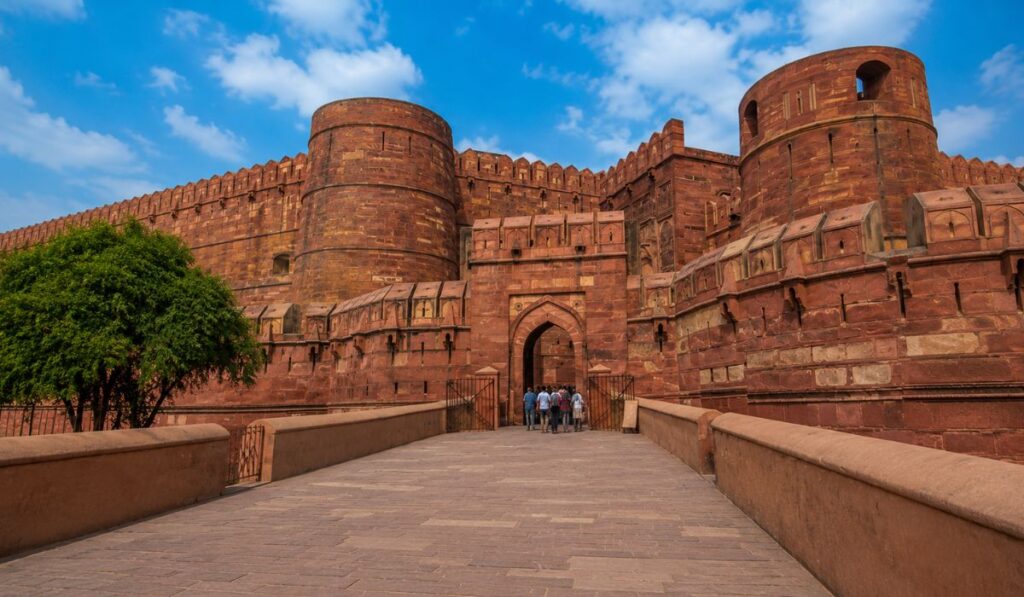
When people think about Agra, the Taj Mahal is usually the first monument that comes to mind. Every year, millions of travelers visit this iconic symbol of love, making it one of the most visited landmarks in the world. However, many tourists are unaware that another UNESCO World Heritage Site in the city holds just as many fascinating stories and historical secrets. Agra Fort, located just a short distance from the Taj Mahal, is a monument that deserves far more attention than it often receives.
Hidden Facts About Agra Fort Most Visitors Miss
Before exploring the detailed history of Agra Fort, here are some surprising facts that many visitors never discover:
- The fort originally contained hundreds of buildings and royal structures.
- Secret tunnels reportedly connected important areas of the complex.
- Large portions of Agra Fort remain closed to the public today.
- Several marble pavilions influenced later Mughal architecture, including elements seen in the Taj Mahal.
- Shah Jahan spent his final years imprisoned within the fort.
Built as a powerful fortress and royal residence, Agra Fort was once the center of the Mughal Empire. It witnessed the rise and fall of emperors, major political decisions, royal celebrations, and even family betrayals. Behind its towering red sandstone walls are stories that most visitors never hear about. These hidden facts about Agra Fort reveal a fascinating past filled with architectural marvels, royal intrigue, and historical events that helped shape India’s history.
Many travelers who book a Sunrise Tour of Taj Mahal by Car discover that visiting Agra Fort afterward provides a much deeper understanding of Mughal history. While the Taj Mahal tells a story of love and loss, Agra Fort reveals the political power, royal lifestyles, and dramatic events that shaped an empire.
If you are planning a visit to Agra, here are some hidden facts about Agra Fort that most tourists don’t know.
Agra Fort at a Glance
- UNESCO World Heritage Site
- Built by: Emperor Akbar
- Construction Started: 1565
- Location: Agra, Uttar Pradesh
- Material: Red Sandstone
- Distance from Taj Mahal: 2.5 km
Agra Fort Was Once the Real Heart of the Mughal Empire
Today, the Taj Mahal is the most famous attraction in Agra, but during the Mughal era, Agra Fort was actually more important.
For decades, this massive fortress served as the political headquarters of one of the most powerful empires in the world. Mughal emperors ruled vast territories from within these walls, making decisions that affected millions of people.
The fort was not simply a military structure. It functioned as an entire royal city containing palaces, audience halls, mosques, gardens, living quarters, and administrative offices.
Before the Taj Mahal became an international icon, Agra Fort was the center of royal life and governance.
The Original Fort Was Not Made of Red Sandstone
Many visitors assume Agra Fort has always looked the same. In reality, the structure standing today replaced an older fort known as Badalgarh.
When Emperor Akbar chose Agra as his capital in the sixteenth century, he ordered the reconstruction of the fort using red sandstone. Thousands of craftsmen and workers participated in the project.
The result was one of the strongest and most impressive fortifications in India.
This transformation helped establish Agra as the political center of the Mughal Empire.
Most of the Fort Is Closed to Visitors
One surprising fact that many tourists do not know is that only a small section of Agra Fort is open to the public.
Large portions of the complex remain inaccessible because they are under the control of the Indian military. Historians believe that many historical structures still exist within these restricted areas.
As a result, visitors only experience a fraction of what was once an enormous royal complex.
This hidden side of Agra Fort continues to fascinate researchers and history enthusiasts.
Shah Jahan Spent His Final Years Here
Perhaps the most famous story associated with Agra Fort involves Emperor Shah Jahan, the builder of the Taj Mahal.
After creating one of the world’s most beautiful monuments in memory of Mumtaz Mahal, Shah Jahan was eventually overthrown by his son Aurangzeb.
He spent the final years of his life confined within Agra Fort.
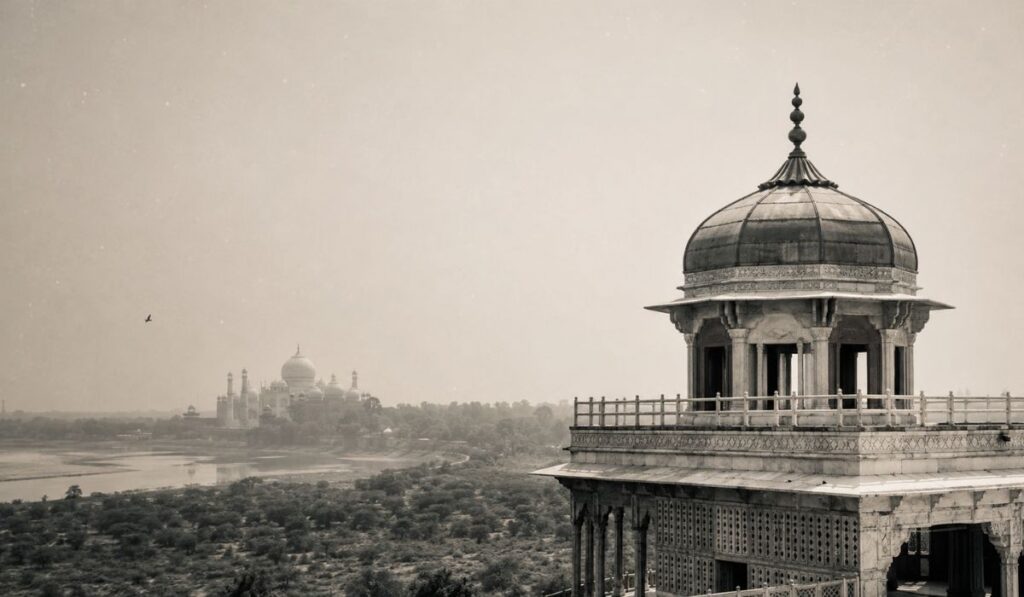
According to historical accounts, he was held in Musamman Burj, an elegant marble tower that offered views of the Taj Mahal across the Yamuna River.
Imagine spending your final years looking at the monument built for the love of your life but being unable to visit it.
This emotional chapter remains one of the most dramatic stories in Mughal history.
Want to see the place where Shah Jahan spent his final years and enjoy the same view of the Taj Mahal? Explore our Agra Fort and Taj Mahal sightseeing tours with a private guide.
Did You Know?
- Agra Fort’s outer walls stretch for more than 2.5 km.
- The fort was the primary residence of Mughal emperors before the Taj Mahal was completed.
- Only a portion of the original complex is accessible to visitors today.
- Agra Fort became a UNESCO World Heritage Site in 1983.
- The fort contains both red sandstone and white marble structures.
Agra Fort Contains Multiple Architectural Styles
Many visitors notice the red sandstone walls but fail to realize how diverse the architecture truly is.
The fort contains influences from:
Persian architecture
Central Asian design
Islamic art
Traditional Indian craftsmanship
Mughal engineering
Different emperors contributed their own styles over time.
Akbar favored grand sandstone structures.
Jahangir introduced decorative enhancements.
Shah Jahan added elegant white marble elements that later inspired the design of the Taj Mahal.
The result is a unique blend of architectural traditions rarely seen elsewhere.
Secret Passages Once Existed Inside the Fort
Royal security was a major concern during the Mughal period.
Historical accounts suggest that Agra Fort once contained secret passages and hidden escape routes designed to protect members of the royal family.
Although many of these routes are no longer accessible, stories about underground tunnels continue to attract interest from historians and visitors.
These passages highlight the strategic importance of the fort and the constant need for protection during periods of political uncertainty.
Agra Fort Offers Stunning Views of the Taj Mahal
Most travelers focus on seeing the Taj Mahal from its own grounds, but one of the best views of the monument can actually be enjoyed from Agra Fort.
Several locations inside the fort provide panoramic views across the Yamuna River.
These viewpoints help visitors understand the relationship between the two monuments.
Many tourists booking a Same Day Tour of Taj Mahal by Car include Agra Fort in their itinerary because it offers a completely different perspective of the Taj Mahal while adding important historical context to the visit.
For photographers and history lovers, this experience is especially rewarding.
The Diwan-i-Khas Hosted Important Political Meetings
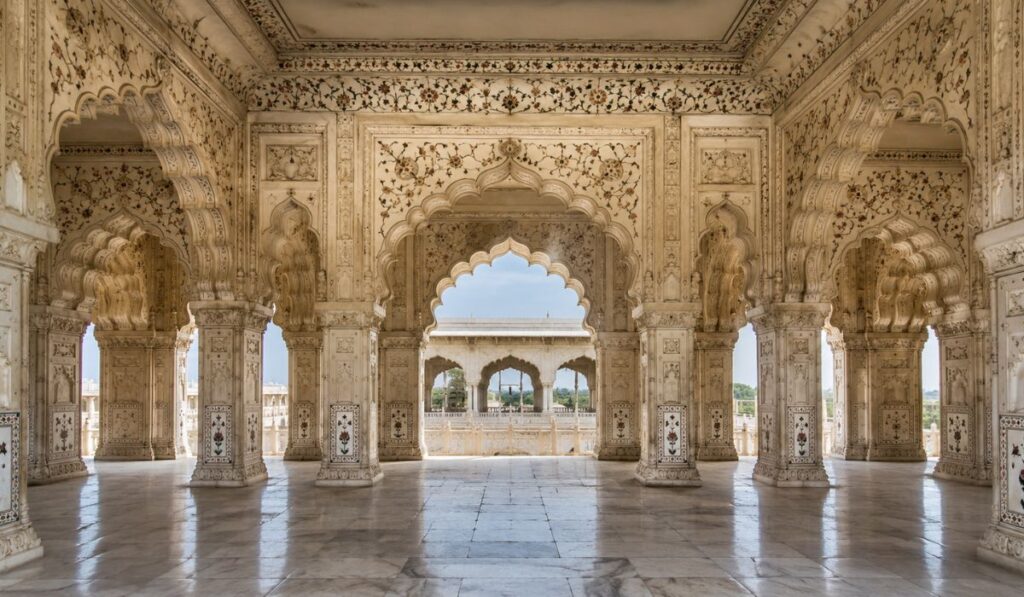
The Diwan-i-Khas, or Hall of Private Audience, was one of the most significant buildings inside Agra Fort.
This was where Mughal emperors met with:
Foreign ambassadors
Trusted advisors
Military commanders
High-ranking officials
Major political decisions were discussed within these walls.
The elegant architecture reflected the power and prestige of the Mughal court.
Today, visitors can stand in the same place where rulers shaped the future of an empire.
Hidden Facts About Agra Fort That Survived Through Different Rulers
Agra Fort has witnessed remarkable historical changes.
Over the centuries, control of the fort passed through multiple hands, including:
Mughal rulers
Jat forces
Maratha leaders
British authorities
Each period left its mark on the structure.
Despite wars, invasions, and political upheaval, the fort remains one of the best-preserved historical monuments in India.
Its survival is a testament to the strength of Mughal construction techniques.
Hundreds of Buildings Once Existed Inside
Today, visitors see only a portion of what Agra Fort once contained.
Historical records suggest that hundreds of structures once filled the complex.
These included:
Royal palaces
Administrative buildings
Military facilities
Gardens
Residential quarters
Storage areas
Many of these structures were modified, destroyed, or replaced over time. The fort visitors see today represents only a glimpse of its former grandeur.
Jahangiri Mahal Was Designed for Royal Women
One of the most beautiful structures inside Agra Fort is Jahangiri Mahal.
Despite its name, historians believe it was primarily used by royal women.
The palace features impressive courtyards, intricate carvings, decorative balconies, and sophisticated architectural details.
It provides valuable insight into daily life within the Mughal royal household.
Visitors interested in palace architecture often consider it one of the highlights of Agra Fort.
Agra Fort Helps You Understand the Taj Mahal Better
Many travelers focus entirely on the Taj Mahal without realizing that Agra Fort provides important context for understanding Mughal history.
The fort explains:
How Mughal emperors lived
How the empire was governed
The political environment of the period
The story of Shah Jahan
The events that led to the construction of the Taj Mahal
Without visiting Agra Fort, travelers often miss a major part of the historical narrative behind India’s most famous monument.
Many visitors exploring the city through an Agra Local Sightseeing Tour with Taj Mahal discover that the fort transforms their understanding of Agra’s heritage and the Mughal Empire.
Why Agra Fort Deserves More Recognition
Although the Taj Mahal attracts most visitors, Agra Fort offers a richer understanding of the city’s history.
It combines:
Royal history
Military strategy
Political intrigue
Architectural excellence
Cultural heritage
Every section of the fort tells a different story.
From royal residences and audience halls to defensive structures and marble pavilions, Agra Fort remains one of the most fascinating historical destinations in India.
For travelers interested in history, architecture, photography, or culture, it is an essential stop during any visit to Agra.
Ready to Explore Agra’s Hidden History?
Visit Agra Fort, the Taj Mahal, and other Mughal landmarks with an experienced local guide. Check our Agra Tour Packages for a hassle-free experience.
Conclusion – Hidden Facts About Agra Fort
Agra Fort is much more than a secondary attraction near the Taj Mahal. Behind its impressive walls lies a world of hidden stories, royal drama, architectural innovation, and historical significance.
From Shah Jahan’s imprisonment and secret passageways to stunning views of the Taj Mahal and centuries of political history, the fort offers experiences that many tourists never expect.
Whether you are visiting Agra for the first time or returning to explore the city in greater depth, Agra Fort deserves a prominent place on your itinerary. The more you learn about its hidden secrets, the more you appreciate why it remains one of India’s greatest historical treasures.
FAQs – Hidden Facts About Agra Fort
1. Why is Agra Fort famous?
Agra Fort is famous for being the former residence of Mughal emperors and a UNESCO World Heritage Site. It played a major role in the political and military history of the Mughal Empire.
2. How far is Agra Fort from the Taj Mahal?
Agra Fort is located approximately 2.5 kilometers from the Taj Mahal and can be reached within a short drive, making it easy to visit both attractions on the same day.
3. Can you see the Taj Mahal from Agra Fort?
Yes. Several areas within Agra Fort offer beautiful views of the Taj Mahal across the Yamuna River, including the famous Musamman Burj.
4. How much time should I spend at Agra Fort?
Most visitors spend between 1.5 and 3 hours exploring Agra Fort, depending on their interest in history, architecture, and photography.
5. Is Agra Fort worth visiting along with the Taj Mahal?
Absolutely. Agra Fort provides important historical context about the Mughal Empire and the life of Shah Jahan, helping visitors gain a deeper appreciation of the Taj Mahal and Agra’s rich heritage.
6. What Is the Most Interesting Fact About Agra Fort?
One of the most fascinating facts about Agra Fort is that Emperor Shah Jahan spent the final years of his life imprisoned there while looking across the Yamuna River at the Taj Mahal.
Plan Your Visit to Agra Fort
Learning these hidden facts about Agra Fort makes the monument even more fascinating, but a memorable visit also depends on planning your trip at the right time. Knowing the opening hours, ticket prices, entry rules, and the best time of day to explore the fort can help you avoid crowds and make the most of your experience.
Whether you’re combining Agra Fort with a Taj Mahal visit or planning a full day of sightseeing in Agra, understanding the latest visitor information is essential.
Read our complete guide: Agra Fort Visiting Time: Opening Hours, Tickets & Travel Tips (2026) for updated timings, ticket details, travel advice, and practical tips before your visit.
Sources
Archaeological Survey of India
Historical Mughal Records

Comments