<!-- wp:paragraph -->
<p>Discover Rajasthan beyond monuments as Jaipur and Udaipur reveal the state’s living culture, royal heritage, art, and everyday traditions.</p>
<!-- /wp:paragraph -->
<!-- wp:gallery {"linkTo":"none"} -->
<figure class="wp-block-gallery has-nested-images columns-default is-cropped"><!-- wp:image {"id":2866,"sizeSlug":"large","linkDestination":"none"} -->
<figure class="wp-block-image size-large"><img src="https://www.azaantravels.com/wp-content/uploads/2025/12/Untitled-design-2025-12-26T143553.131-1024x597.jpg" alt="A Cultural Journey Across Rajasthan: Jaipur and Udaipur as the Heart of the State" class="wp-image-2866"/></figure>
<!-- /wp:image --></figure>
<!-- /wp:gallery -->
<!-- wp:heading -->
<h2 class="wp-block-heading" id="h-introduction-cultural-journey-across-rajasthan">Introduction - Cultural Journey Across Rajasthan</h2>
<!-- /wp:heading -->
<!-- wp:paragraph -->
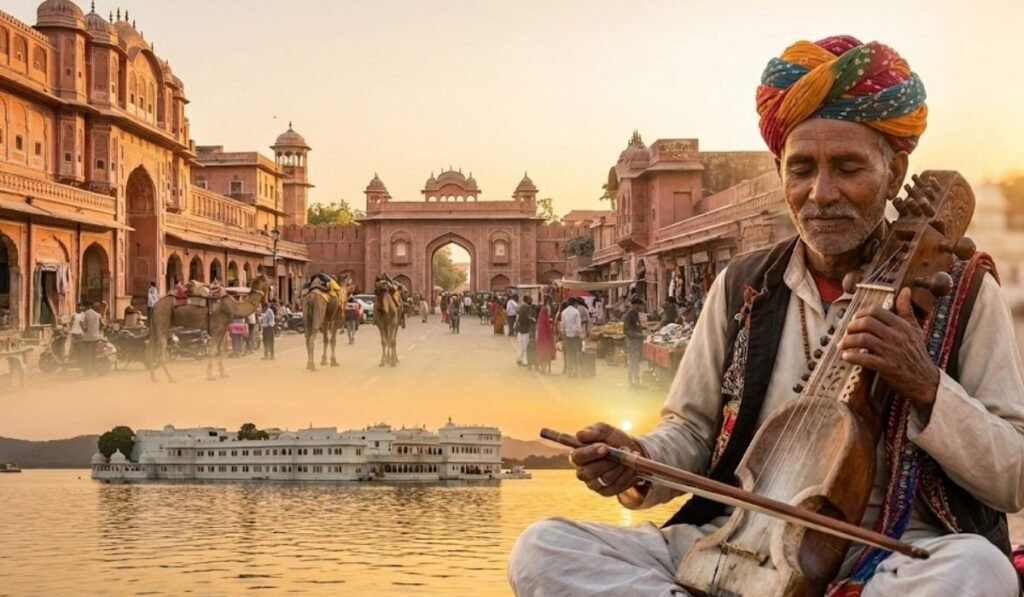
<p>Rajasthan is often described through images of grand forts, colorful turbans, and endless desert landscapes. But to truly understand Rajasthan, you have to look beyond the surface of monuments and travel routes. The culture of this state is not confined to palaces or museums—it lives in daily rituals, in music echoing through old streets, in handcrafted art passed down generations, and in the rhythm of life shaped by history.</p>
<!-- /wp:paragraph -->
<!-- wp:paragraph -->
<p>Among all the cities in Rajasthan, <strong>Jaipur and Udaipur</strong> stand out not just as tourist destinations, but as cultural anchors. Together, they represent two complementary sides of Rajasthan’s heritage—one structured and regal, the other emotional and artistic. Exploring these two cities as part of a cultural journey offers one of the most complete ways to experience the true soul of Rajasthan.</p>
<!-- /wp:paragraph -->
<!-- wp:paragraph -->
<p>This blog explores why Jaipur and Udaipur are considered the heart of the state, and how traveling through them reveals Rajasthan as a living, breathing cultural landscape rather than a checklist of attractions.</p>
<!-- /wp:paragraph -->
<!-- wp:heading -->
<h2 class="wp-block-heading" id="h-why-jaipur-and-udaipur-represent-the-soul-of-rajasthan"><strong>Why Jaipur and Udaipur Represent the Soul of Rajasthan</strong></h2>
<!-- /wp:heading -->
<!-- wp:paragraph -->
<p>Rajasthan’s identity has been shaped by centuries of Rajput rule, trade routes, warfare, art, and spiritual traditions. While many cities reflect parts of this history, Jaipur and Udaipur together capture its full emotional and cultural range.</p>
<!-- /wp:paragraph -->
<!-- wp:paragraph -->
<p>Jaipur represents <strong>order, power, and planned heritage</strong>. It reflects royal vision, discipline, and a strong connection between governance and culture. Udaipur, on the other hand, represents <strong>romance, creativity, and emotional expression</strong>—a city where art, music, and nature merge seamlessly.</p>
<!-- /wp:paragraph -->
<!-- wp:paragraph -->
<p>This contrast is not accidental. It reflects how Rajasthan evolved—balancing strength with sensitivity, structure with storytelling. That is why most meaningful Rajasthan tour experiences naturally revolve around these two cities.</p>
<!-- /wp:paragraph -->
<!-- wp:heading -->
<h2 class="wp-block-heading" id="h-jaipur-the-structured-grandeur-of-the-pink-city"><strong>Jaipur: The Structured Grandeur of the Pink City</strong></h2>
<!-- /wp:heading -->
<!-- wp:heading {"level":3} -->
<h3 class="wp-block-heading" id="h-planned-architecture-and-royal-vision"><strong>Planned Architecture and Royal Vision</strong></h3>
<!-- /wp:heading -->
<!-- wp:paragraph -->
<p>Jaipur is one of the few cities in India that was planned before it was built. Designed in the 18th century by Maharaja Sawai Jai Singh II, the city follows principles of ancient Indian architecture and astronomy. The grid-based layout, wide streets, and uniform facades reflect discipline and foresight.</p>
<!-- /wp:paragraph -->
<!-- wp:paragraph -->
<p>Landmarks like the City Palace, Jantar Mantar, and Hawa Mahal are not just architectural achievements—they are expressions of how science, governance, and culture were deeply interconnected in Rajasthan’s royal past.</p>
<!-- /wp:paragraph -->
<!-- wp:paragraph -->
<p>Jaipur’s forts, including Amber Fort and Nahargarh, further reinforce this sense of strategic brilliance and royal authority. These structures were built not only for defense but also to symbolize power and permanence.</p>
<!-- /wp:paragraph -->
<!-- wp:heading {"level":3} -->
<h3 class="wp-block-heading" id="h-living-traditions-of-jaipur"><strong>Living Traditions of Jaipur</strong></h3>
<!-- /wp:heading -->
<!-- wp:paragraph -->
<p>What makes Jaipur culturally rich is not just its monuments, but how traditions continue to thrive within the modern city.</p>
<!-- /wp:paragraph -->
<!-- wp:paragraph -->
<p>Jaipur is a center for:</p>
<!-- /wp:paragraph -->
<!-- wp:list -->
<ul class="wp-block-list"><!-- wp:list-item -->
<li>Block printing and textile arts<br></li>
<!-- /wp:list-item -->
<!-- wp:list-item -->
<li>Blue pottery and gemstone craftsmanship<br></li>
<!-- /wp:list-item -->
<!-- wp:list-item -->
<li>Traditional jewelry design rooted in royal patronage<br></li>
<!-- /wp:list-item --></ul>
<!-- /wp:list -->
<!-- wp:paragraph -->
<p>Local bazaars like Johari Bazaar and Bapu Bazaar are living museums where artisans still practice centuries-old skills. Folk music performances, traditional dance forms, and seasonal festivals such as Teej and Gangaur keep cultural rhythms alive.</p>
<!-- /wp:paragraph -->
<!-- wp:paragraph -->
<p>Even Jaipur’s food culture—dal baati churma, ghewar, and kachori—reflects history shaped by climate and royal kitchens.</p>
<!-- /wp:paragraph -->
<!-- wp:heading -->
<h2 class="wp-block-heading" id="h-udaipur-the-emotional-and-artistic-face-of-rajasthan"><strong>Udaipur: The Emotional and Artistic Face of Rajasthan</strong></h2>
<!-- /wp:heading -->
<!-- wp:heading {"level":3} -->
<h3 class="wp-block-heading" id="h-lakes-palaces-and-poetry"><strong>Lakes, Palaces, and Poetry</strong></h3>
<!-- /wp:heading -->
<!-- wp:paragraph -->
<p>If Jaipur feels structured and powerful, Udaipur feels poetic.</p>
<!-- /wp:paragraph -->
<!-- wp:paragraph -->
<p>Often called the <strong>City of Lakes</strong>, Udaipur was built around water—a rare and precious resource in Rajasthan. Lakes like Pichola and Fateh Sagar are not just scenic features; they are central to the city’s identity and way of life.</p>
<!-- /wp:paragraph -->
<!-- wp:paragraph -->
<p>The City Palace of Udaipur rises organically above the lake, blending architecture with landscape. Unlike the symmetry of Jaipur, Udaipur’s design feels intuitive and emotional, shaped by terrain rather than geometry.</p>
<!-- /wp:paragraph -->
<!-- wp:paragraph -->
<p>This relationship between nature and architecture gives Udaipur its timeless, romantic character.</p>
<!-- /wp:paragraph -->
<!-- wp:heading {"level":3} -->
<h3 class="wp-block-heading" id="h-art-music-and-slow-living"><strong>Art, Music, and Slow Living</strong></h3>
<!-- /wp:heading -->
<!-- wp:paragraph -->
<p>Udaipur has long been a center for miniature painting, storytelling, and classical music. Art here is not confined to galleries—it exists in courtyards, temples, and everyday life.</p>
<!-- /wp:paragraph -->
<!-- wp:paragraph -->
<p>The pace of life in Udaipur is slower. Evenings are meant for reflection, boat rides, and conversations rather than schedules. This rhythm allows travelers to connect more deeply with local culture.</p>
<!-- /wp:paragraph -->
<!-- wp:paragraph -->
<p>Festivals, temple rituals, and lakeside performances highlight how art and spirituality coexist naturally in Udaipur’s daily life.</p>
<!-- /wp:paragraph -->
<!-- wp:heading -->
<h2 class="wp-block-heading" id="h-the-cultural-journey-between-jaipur-and-udaipur"><strong>The Cultural Journey Between Jaipur and Udaipur</strong></h2>
<!-- /wp:heading -->
<!-- wp:image {"id":2869,"sizeSlug":"large","linkDestination":"none"} -->
<figure class="wp-block-image size-large"><img src="https://www.azaantravels.com/wp-content/uploads/2025/12/Untitled-design-2025-12-26T143611.679-1024x597.jpg" alt="Cultural Journey Across Rajasthan
" class="wp-image-2869"/></figure>
<!-- /wp:image -->
<!-- wp:paragraph -->
<p>Traveling between Jaipur and Udaipur is not just a transfer—it is part of the experience.</p>
<!-- /wp:paragraph -->
<!-- wp:paragraph -->
<p>The route passes through smaller towns, rural landscapes, and historical regions that show how Rajasthan transitions from royal capitals to countryside traditions. You witness changes in clothing, dialects, food, and architecture.</p>
<!-- /wp:paragraph -->
<!-- wp:paragraph -->
<p>This journey helps travelers understand that Rajasthan is not one uniform culture, but a collection of interconnected identities shaped by geography and history.</p>
<!-- /wp:paragraph -->
<!-- wp:heading -->
<h2 class="wp-block-heading" id="h-how-jaipur-and-udaipur-shape-rajasthan-tour-experiences"><strong>How Jaipur and Udaipur Shape Rajasthan Tour Experiences</strong></h2>
<!-- /wp:heading -->
<!-- wp:paragraph -->
<p>There is a reason why most <strong>Rajasthan tour packages</strong> are built around Jaipur and Udaipur. Together, they offer cultural completeness.</p>
<!-- /wp:paragraph -->
<!-- wp:paragraph -->
<p>Because of this cultural balance, most thoughtfully designed <a href="https://www.azaantravels.com/rajasthan-tour-packages/">Rajasthan tour packages</a> naturally revolve around Jaipur and Udaipur as their foundation.</p>
<!-- /wp:paragraph -->
<!-- wp:paragraph -->
<p>Jaipur provides:</p>
<!-- /wp:paragraph -->
<!-- wp:list -->
<ul class="wp-block-list"><!-- wp:list-item -->
<li>Historical context<br></li>
<!-- /wp:list-item -->
<!-- wp:list-item -->
<li>Architectural discipline<br></li>
<!-- /wp:list-item -->
<!-- wp:list-item -->
<li>Royal legacy<br></li>
<!-- /wp:list-item --></ul>
<!-- /wp:list -->
<!-- wp:paragraph -->
<p>Udaipur offers:</p>
<!-- /wp:paragraph -->
<!-- wp:list -->
<ul class="wp-block-list"><!-- wp:list-item -->
<li>Emotional connection<br></li>
<!-- /wp:list-item -->
<!-- wp:list-item -->
<li>Artistic heritage<br></li>
<!-- /wp:list-item -->
<!-- wp:list-item -->
<li>Natural beauty<br></li>
<!-- /wp:list-item --></ul>
<!-- /wp:list -->
<!-- wp:paragraph -->
<p>This combination allows travelers to understand <a href="https://en.wikipedia.org/wiki/Rajasthan">Rajasthan</a> not just visually, but intellectually and emotionally. A Jaipur–Udaipur journey forms the foundation of a meaningful <strong>Rajasthan cultural tour</strong>, especially for first-time visitors.</p>
<!-- /wp:paragraph -->
<!-- wp:heading -->
<h2 class="wp-block-heading" id="h-best-time-to-experience-cultural-rajasthan"><strong>Best Time to Experience Cultural Rajasthan</strong></h2>
<!-- /wp:heading -->
<!-- wp:paragraph -->
<p>Culture is deeply influenced by seasons in Rajasthan.</p>
<!-- /wp:paragraph -->
<!-- wp:list -->
<ul class="wp-block-list"><!-- wp:list-item -->
<li><strong>October to March</strong> is ideal for cultural exploration. The weather is pleasant, festivals are frequent, and outdoor exploration is comfortable.<br></li>
<!-- /wp:list-item -->
<!-- wp:list-item -->
<li><strong>Summer months</strong> are quieter and offer fewer crowds, but cultural activities slow down due to heat.<br></li>
<!-- /wp:list-item -->
<!-- wp:list-item -->
<li><strong>Monsoon season</strong> brings greenery, especially around Udaipur, adding a different emotional tone to the journey.<br></li>
<!-- /wp:list-item --></ul>
<!-- /wp:list -->
<!-- wp:paragraph -->
<p>For travelers focused on heritage and culture rather than speed, winter months offer the richest experience.</p>
<!-- /wp:paragraph -->
<!-- wp:heading -->
<h2 class="wp-block-heading" id="h-who-this-cultural-journey-is-best-for"><strong>Who This Cultural Journey Is Best For</strong></h2>
<!-- /wp:heading -->
<!-- wp:paragraph -->
<p>A Jaipur–Udaipur cultural journey is ideal for:</p>
<!-- /wp:paragraph -->
<!-- wp:list -->
<ul class="wp-block-list"><!-- wp:list-item -->
<li>First-time visitors to Rajasthan<br></li>
<!-- /wp:list-item -->
<!-- wp:list-item -->
<li>Travelers interested in history and heritage<br></li>
<!-- /wp:list-item -->
<!-- wp:list-item -->
<li>Couples seeking romantic, meaningful travel<br></li>
<!-- /wp:list-item -->
<!-- wp:list-item -->
<li>Slow travelers and photographers<br></li>
<!-- /wp:list-item -->
<!-- wp:list-item -->
<li>Those who prefer learning over rushing<br></li>
<!-- /wp:list-item --></ul>
<!-- /wp:list -->
<!-- wp:paragraph -->
<p>This route appeals to people who want depth, not just destinations.</p>
<!-- /wp:paragraph -->
<!-- wp:heading -->
<h2 class="wp-block-heading" id="h-common-mistakes-when-exploring-rajasthan-culturally"><strong>Common Mistakes When Exploring Rajasthan Culturally</strong></h2>
<!-- /wp:heading -->
<!-- wp:paragraph -->
<p>Many travelers unintentionally reduce cultural experiences by:</p>
<!-- /wp:paragraph -->
<!-- wp:list -->
<ul class="wp-block-list"><!-- wp:list-item -->
<li>Treating culture as a checklist<br></li>
<!-- /wp:list-item -->
<!-- wp:list-item -->
<li>Rushing through cities without understanding context<br></li>
<!-- /wp:list-item -->
<!-- wp:list-item -->
<li>Focusing only on monuments and ignoring local life<br></li>
<!-- /wp:list-item -->
<!-- wp:list-item -->
<li>Overloading itineraries without rest or reflection<br></li>
<!-- /wp:list-item --></ul>
<!-- /wp:list -->
<!-- wp:paragraph -->
<p>Cultural travel requires time, patience, and openness. Jaipur and Udaipur reward travelers who slow down and observe.</p>
<!-- /wp:paragraph -->
<!-- wp:heading -->
<h2 class="wp-block-heading" id="h-the-role-of-jaipur-and-udaipur-in-modern-rajasthan-travel"><strong>The Role of Jaipur and Udaipur in Modern Rajasthan Travel</strong></h2>
<!-- /wp:heading -->
<!-- wp:paragraph -->
<p>Even today, Jaipur and Udaipur continue to shape how Rajasthan is perceived globally. They balance tourism with tradition, modernization with heritage preservation.</p>
<!-- /wp:paragraph -->
<!-- wp:paragraph -->
<p>Their ability to adapt while retaining identity makes them central to Rajasthan’s cultural future—not just its past.</p>
<!-- /wp:paragraph -->
<!-- wp:paragraph -->
<p>This is why travelers who begin their Rajasthan journey with these two cities often leave with a deeper appreciation for the state as a whole.</p>
<!-- /wp:paragraph -->
<!-- wp:heading -->
<h2 class="wp-block-heading" id="h-conclusion-the-cultural-journey-across-rajasthan"><strong>Conclusion: The Cultural Journey Across Rajasthan</strong></h2>
<!-- /wp:heading -->
<!-- wp:paragraph -->
<p>Rajasthan cannot be understood through monuments alone. It is a state where culture is lived, not displayed.</p>
<!-- /wp:paragraph -->
<!-- wp:paragraph -->
<p>Jaipur represents Rajasthan’s strength—its order, vision, and royal discipline.<br>Udaipur represents its heart—emotion, creativity, and artistic soul.</p>
<!-- /wp:paragraph -->
<!-- wp:paragraph -->
<p>Together, they form a cultural narrative that defines Rajasthan.</p>
<!-- /wp:paragraph -->
<!-- wp:paragraph -->
<p>Traveling through Jaipur and Udaipur is not about covering distance. It is about understanding balance—between power and poetry, structure and emotion, history and life. That balance is what makes these two cities the true heart of Rajasthan.</p>
<!-- /wp:paragraph -->
<!-- wp:heading {"level":3} -->
<h3 class="wp-block-heading" id="h-cultural-travel-tip"><strong>Cultural Travel Tip</strong></h3>
<!-- /wp:heading -->
<!-- wp:paragraph -->
<p>To experience Rajasthan authentically, allow time for conversation, observation, and stillness. Culture reveals itself slowly—but leaves a lasting impression.</p>
<!-- /wp:paragraph -->
<!-- wp:heading -->
<h2 class="wp-block-heading" id="h-faq-cultural-journey-across-rajasthan">FAQ - Cultural Journey Across Rajasthan</h2>
<!-- /wp:heading -->
<!-- wp:heading {"level":3} -->
<h3 class="wp-block-heading" id="h-nbsp-1-why-are-jaipur-and-udaipur-considered-the-cultural-heart-of-rajasthan"><strong> 1: Why are Jaipur and Udaipur considered the cultural heart of Rajasthan?</strong></h3>
<!-- /wp:heading -->
<!-- wp:paragraph -->
<p>Jaipur and Udaipur represent two essential sides of Rajasthan’s culture. Jaipur reflects royal planning, architecture, and administrative heritage, while Udaipur expresses the artistic, emotional, and nature-connected side of the state. Together, they offer the most complete cultural understanding of Rajasthan.</p>
<!-- /wp:paragraph -->
<!-- wp:heading {"level":3} -->
<h3 class="wp-block-heading" id="h-nbsp-2-is-a-jaipur-udaipur-journey-suitable-for-first-time-rajasthan-visitors"><strong> 2: Is a Jaipur–Udaipur journey suitable for first-time Rajasthan visitors?</strong></h3>
<!-- /wp:heading -->
<!-- wp:paragraph -->
<p>Yes. For first-time visitors, Jaipur and Udaipur provide a balanced introduction to Rajasthan. The journey covers forts, palaces, art, festivals, local traditions, and everyday cultural life without overwhelming travelers with too many destinations.</p>
<!-- /wp:paragraph -->
<!-- wp:heading {"level":3} -->
<h3 class="wp-block-heading" id="h-nbsp-3-what-makes-a-cultural-rajasthan-tour-different-from-regular-sightseeing"><strong> 3: What makes a cultural Rajasthan tour different from regular sightseeing?</strong></h3>
<!-- /wp:heading -->
<!-- wp:paragraph -->
<p>A cultural Rajasthan tour focuses on understanding history, traditions, local art, food, and lifestyle rather than just visiting monuments. It allows time for observation, interaction, and reflection, helping travelers connect emotionally with places like Jaipur and Udaipur.</p>
<!-- /wp:paragraph -->
<!-- wp:heading {"level":3} -->
<h3 class="wp-block-heading" id="h-nbsp-4-when-is-the-best-time-to-experience-rajasthan-s-culture-in-jaipur-and-udaipur"><strong> 4: When is the best time to experience Rajasthan’s culture in Jaipur and Udaipur?</strong></h3>
<!-- /wp:heading -->
<!-- wp:paragraph -->
<p>The best time is between October and March, when the weather is pleasant and cultural activities, festivals, and outdoor exploration are most comfortable. This period offers the richest cultural experience in both cities.</p>
<!-- /wp:paragraph -->
Discover Rajasthan beyond monuments as Jaipur and Udaipur reveal the state’s living culture, royal heritage, art, and everyday traditions.
Introduction – Cultural Journey Across Rajasthan
Rajasthan is often described through images of grand forts, colorful turbans, and endless desert landscapes. But to truly understand Rajasthan, you have to look beyond the surface of monuments and travel routes. The culture of this state is not confined to palaces or museums—it lives in daily rituals, in music echoing through old streets, in handcrafted art passed down generations, and in the rhythm of life shaped by history.
Among all the cities in Rajasthan, Jaipur and Udaipur stand out not just as tourist destinations, but as cultural anchors. Together, they represent two complementary sides of Rajasthan’s heritage—one structured and regal, the other emotional and artistic. Exploring these two cities as part of a cultural journey offers one of the most complete ways to experience the true soul of Rajasthan.
This blog explores why Jaipur and Udaipur are considered the heart of the state, and how traveling through them reveals Rajasthan as a living, breathing cultural landscape rather than a checklist of attractions.
Why Jaipur and Udaipur Represent the Soul of Rajasthan
Rajasthan’s identity has been shaped by centuries of Rajput rule, trade routes, warfare, art, and spiritual traditions. While many cities reflect parts of this history, Jaipur and Udaipur together capture its full emotional and cultural range.
Jaipur represents order, power, and planned heritage. It reflects royal vision, discipline, and a strong connection between governance and culture. Udaipur, on the other hand, represents romance, creativity, and emotional expression—a city where art, music, and nature merge seamlessly.
This contrast is not accidental. It reflects how Rajasthan evolved—balancing strength with sensitivity, structure with storytelling. That is why most meaningful Rajasthan tour experiences naturally revolve around these two cities.
Jaipur: The Structured Grandeur of the Pink City
Planned Architecture and Royal Vision
Jaipur is one of the few cities in India that was planned before it was built. Designed in the 18th century by Maharaja Sawai Jai Singh II, the city follows principles of ancient Indian architecture and astronomy. The grid-based layout, wide streets, and uniform facades reflect discipline and foresight.
Landmarks like the City Palace, Jantar Mantar, and Hawa Mahal are not just architectural achievements—they are expressions of how science, governance, and culture were deeply interconnected in Rajasthan’s royal past.
Jaipur’s forts, including Amber Fort and Nahargarh, further reinforce this sense of strategic brilliance and royal authority. These structures were built not only for defense but also to symbolize power and permanence.
Living Traditions of Jaipur
What makes Jaipur culturally rich is not just its monuments, but how traditions continue to thrive within the modern city.
Jaipur is a center for:
Block printing and textile arts
Blue pottery and gemstone craftsmanship
Traditional jewelry design rooted in royal patronage
Local bazaars like Johari Bazaar and Bapu Bazaar are living museums where artisans still practice centuries-old skills. Folk music performances, traditional dance forms, and seasonal festivals such as Teej and Gangaur keep cultural rhythms alive.
Even Jaipur’s food culture—dal baati churma, ghewar, and kachori—reflects history shaped by climate and royal kitchens.
Udaipur: The Emotional and Artistic Face of Rajasthan
Lakes, Palaces, and Poetry
If Jaipur feels structured and powerful, Udaipur feels poetic.
Often called the City of Lakes, Udaipur was built around water—a rare and precious resource in Rajasthan. Lakes like Pichola and Fateh Sagar are not just scenic features; they are central to the city’s identity and way of life.
The City Palace of Udaipur rises organically above the lake, blending architecture with landscape. Unlike the symmetry of Jaipur, Udaipur’s design feels intuitive and emotional, shaped by terrain rather than geometry.
This relationship between nature and architecture gives Udaipur its timeless, romantic character.
Art, Music, and Slow Living
Udaipur has long been a center for miniature painting, storytelling, and classical music. Art here is not confined to galleries—it exists in courtyards, temples, and everyday life.
The pace of life in Udaipur is slower. Evenings are meant for reflection, boat rides, and conversations rather than schedules. This rhythm allows travelers to connect more deeply with local culture.
Festivals, temple rituals, and lakeside performances highlight how art and spirituality coexist naturally in Udaipur’s daily life.
The Cultural Journey Between Jaipur and Udaipur
Traveling between Jaipur and Udaipur is not just a transfer—it is part of the experience.
The route passes through smaller towns, rural landscapes, and historical regions that show how Rajasthan transitions from royal capitals to countryside traditions. You witness changes in clothing, dialects, food, and architecture.
This journey helps travelers understand that Rajasthan is not one uniform culture, but a collection of interconnected identities shaped by geography and history.
How Jaipur and Udaipur Shape Rajasthan Tour Experiences
There is a reason why most Rajasthan tour packages are built around Jaipur and Udaipur. Together, they offer cultural completeness.
Because of this cultural balance, most thoughtfully designed Rajasthan tour packages naturally revolve around Jaipur and Udaipur as their foundation.
Jaipur provides:
Historical context
Architectural discipline
Royal legacy
Udaipur offers:
Emotional connection
Artistic heritage
Natural beauty
This combination allows travelers to understand Rajasthan not just visually, but intellectually and emotionally. A Jaipur–Udaipur journey forms the foundation of a meaningful Rajasthan cultural tour, especially for first-time visitors.
Best Time to Experience Cultural Rajasthan
Culture is deeply influenced by seasons in Rajasthan.
October to March is ideal for cultural exploration. The weather is pleasant, festivals are frequent, and outdoor exploration is comfortable.
Summer months are quieter and offer fewer crowds, but cultural activities slow down due to heat.
Monsoon season brings greenery, especially around Udaipur, adding a different emotional tone to the journey.
For travelers focused on heritage and culture rather than speed, winter months offer the richest experience.
Who This Cultural Journey Is Best For
A Jaipur–Udaipur cultural journey is ideal for:
First-time visitors to Rajasthan
Travelers interested in history and heritage
Couples seeking romantic, meaningful travel
Slow travelers and photographers
Those who prefer learning over rushing
This route appeals to people who want depth, not just destinations.
Common Mistakes When Exploring Rajasthan Culturally
Many travelers unintentionally reduce cultural experiences by:
Treating culture as a checklist
Rushing through cities without understanding context
Focusing only on monuments and ignoring local life
Overloading itineraries without rest or reflection
Cultural travel requires time, patience, and openness. Jaipur and Udaipur reward travelers who slow down and observe.
The Role of Jaipur and Udaipur in Modern Rajasthan Travel
Even today, Jaipur and Udaipur continue to shape how Rajasthan is perceived globally. They balance tourism with tradition, modernization with heritage preservation.
Their ability to adapt while retaining identity makes them central to Rajasthan’s cultural future—not just its past.
This is why travelers who begin their Rajasthan journey with these two cities often leave with a deeper appreciation for the state as a whole.
Conclusion: The Cultural Journey Across Rajasthan
Rajasthan cannot be understood through monuments alone. It is a state where culture is lived, not displayed.
Jaipur represents Rajasthan’s strength—its order, vision, and royal discipline. Udaipur represents its heart—emotion, creativity, and artistic soul.
Together, they form a cultural narrative that defines Rajasthan.
Traveling through Jaipur and Udaipur is not about covering distance. It is about understanding balance—between power and poetry, structure and emotion, history and life. That balance is what makes these two cities the true heart of Rajasthan.
Cultural Travel Tip
To experience Rajasthan authentically, allow time for conversation, observation, and stillness. Culture reveals itself slowly—but leaves a lasting impression.
FAQ – Cultural Journey Across Rajasthan
1: Why are Jaipur and Udaipur considered the cultural heart of Rajasthan?
Jaipur and Udaipur represent two essential sides of Rajasthan’s culture. Jaipur reflects royal planning, architecture, and administrative heritage, while Udaipur expresses the artistic, emotional, and nature-connected side of the state. Together, they offer the most complete cultural understanding of Rajasthan.
2: Is a Jaipur–Udaipur journey suitable for first-time Rajasthan visitors?
Yes. For first-time visitors, Jaipur and Udaipur provide a balanced introduction to Rajasthan. The journey covers forts, palaces, art, festivals, local traditions, and everyday cultural life without overwhelming travelers with too many destinations.
3: What makes a cultural Rajasthan tour different from regular sightseeing?
A cultural Rajasthan tour focuses on understanding history, traditions, local art, food, and lifestyle rather than just visiting monuments. It allows time for observation, interaction, and reflection, helping travelers connect emotionally with places like Jaipur and Udaipur.
4: When is the best time to experience Rajasthan’s culture in Jaipur and Udaipur?
The best time is between October and March, when the weather is pleasant and cultural activities, festivals, and outdoor exploration are most comfortable. This period offers the richest cultural experience in both cities.