India’s cultural fabric is woven with stories of love, architectural brilliance, and spiritual depth.
The Golden Triangle Tour, connecting Delhi, Agra, and Jaipur, is the most popular travel route in India. It is known for its combination of history, culture, architecture, street life, and world-famous landmarks such as the Taj Mahal and Amber Fort. Before planning this journey, most travelers ask the same question: What is the actual cost of the Golden Triangle Tour from Delhi?
The answer depends on several factors, including the number of days you travel, the hotel category you choose, the type of car used, and how many people are traveling with you. This comprehensive guide explains the real cost, hidden expenses, cost breakdown, itineraries, and how to save money, all in an evergreen format that remains accurate year after year.
If you want exact pricing for your dates, you can WhatsApp your requirement to your preferred operator for a customized quote.
Quick Summary of Golden Triangle Tour Cost
Most Indian tour operators follow a similar price range:
Budget Package: ₹8,500 to ₹12,500 per person
Standard Package: ₹14,000 to ₹18,500 per person
Luxury Package: ₹22,000 to ₹32,000 per person
Car-Only Package: ₹9,000 to ₹13,000 total
Train + Car Combo: ₹2,500 to ₹4,000 per person
These costs vary depending on season, hotel availability, car type, and additional services included in the itinerary.
What’s Included in the Golden Triangle Tour Cost
A complete Golden Triangle package usually includes everything needed for a smooth and comfortable journey across Delhi, Agra, and Jaipur. The foundation of the tour is the private air-conditioned car, which stays with you from start to finish. This includes the cost of fuel, toll tax, parking fees, and the driver’s allowance. Having a dedicated car makes the tour flexible, especially when visiting crowded areas or traveling between cities.
Accommodation is another major component. Depending on your chosen package, the hotels may be 3-star, 4-star, or 5-star. Breakfast is usually included, and the hotels are selected based on safety, cleanliness, and location. Most packages also include a professional guide in Agra, Delhi, and Jaipur. Their knowledge enhances your understanding of the monuments, ensures you do not miss important details, and helps manage timings efficiently.
Some operators also include complimentary features such as bottled water, itinerary planning, and driver assistance. Optional add-ons like monument entry tickets, meals, cultural shows in Jaipur, shopping visits, or sunrise tours of the Taj Mahal may be included depending on the package. Always ask for a complete inclusion list before booking.
Complete Golden Triangle Tour Cost Breakdown
The total price of your tour is determined by various components. Transport forms a large portion of the cost because the entire route covers approximately 750 to 800 kilometers. A sedan such as the Dzire or Etios is the most economical option, while an SUV like the Innova or Marazzo offers more comfort and space at a higher price. For group travel, tempo travelers are commonly used.
Hotels also play an essential role in the total cost. Delhi, Agra, and Jaipur offer thousands of accommodation options, and the cost difference between a 3-star and a 5-star hotel can be significant. Three-star hotels are affordable and comfortable, while four-star properties provide better facilities, ambiance, and service. Five-star hotels offer luxury amenities such as spas, pools, and fine dining, but they increase the package cost sharply.
Entry tickets to monuments form the next part of the cost. Attractions such as the Taj Mahal, Agra Fort, Amber Fort, City Palace, and Qutub Minar have fixed ticket prices. Guide fees also vary by city, with Agra guides generally charging more due to the popularity of the Taj Mahal. Lastly, your meal expenses can vary depending on where you eat. While breakfast is included in hotel stays, lunches and dinners are paid directly at the restaurant of your choice.
Together, these components determine the overall cost of your Golden Triangle Tour.
Golden Triangle Tour Cost by Duration
The number of days you choose significantly affects the total cost. Here is the detailed breakdown:
3-Day Golden Triangle Tour
A 3-day tour is designed for travelers who want to cover the highlights quickly. The itinerary is compact, with long drives and shorter sightseeing breaks. On the first day, the tour usually begins in Delhi, covering major landmarks before heading to Agra for the night. On the second day, visitors explore the Taj Mahal and Agra Fort before driving to Jaipur. The final day includes sightseeing in Jaipur before returning to Delhi.
This option is ideal for students, young couples, business travelers, and anyone with limited time. The cost ranges from ₹8,500 to ₹10,500 for budget packages, ₹12,000 to ₹16,000 for standard packages, and ₹20,000 to ₹30,000 for luxury packages.
4-Day Golden Triangle Tour
The 4-day tour is the most popular because it provides a balanced pace. Travelers get more time in Jaipur, which offers many attractions, including Amber Fort, City Palace, Hawa Mahal, Jal Mahal, and various markets. The additional day allows for a smoother schedule, avoiding the rush of a 3-day itinerary.
A 4-day tour generally costs ₹10,000 to ₹12,500 for budget options, ₹14,000 to ₹18,500 for standard options, and ₹22,000 to ₹32,000 for luxury options.
5-Day Golden Triangle Tour
A 5-day itinerary is suitable for travelers who prefer a relaxed trip and want to explore more places. It allows more time for shopping, heritage walks, additional attractions, or photography. This is especially preferred by foreign travelers, senior citizens, and families wanting a slower pace.
The cost for a 5-day tour ranges from ₹12,000 to ₹15,500 for budget, ₹18,000 to ₹22,000 for standard, and ₹28,000 to ₹40,000 for luxury packages.
Factors That Affect the Total Cost
The total cost of a Golden Triangle Tour depends on several key factors. The first is the travel season. Peak months, especially October to March, experience high demand, leading to higher hotel and car rates. Off-season months, such as April to September, offer significant discounts on both accommodations and transport.
Hotel category is another major cost influencer. Travelers who choose 3-star hotels spend much less compared to those selecting luxury five-star properties. The type of car chosen also affects the budget. Sedans are the cheapest option, SUVs cost more due to comfort and space, and tempo travellers are ideal for groups but come at a premium.
Group size also plays a role. The more people sharing the same vehicle and hotel rooms, the lower the per-person cost becomes. Add-ons such as monument tickets, guides, cultural activities, shopping experiences, and additional sightseeing can also influence the final total. Additionally, the location of pickup—whether Delhi city, Gurugram, Noida, or the airport—can slightly impact transportation charges.
These factors combined determine what you will ultimately pay for your Golden Triangle Tour from Delhi.
Cheapest Ways to Do the Golden Triangle Tour
Travelers can reduce their cost by planning smartly. Choosing to travel in the off-season helps save significantly on hotels. Opting for 3-star hotels instead of premium hotels also cuts expenses without compromising much on comfort. Selecting a sedan rather than an SUV can reduce transportation costs. Avoiding tourist trap shopping zones in Agra and Jaipur prevents unnecessary spending. Booking early also helps secure lower rates, especially during holiday seasons. Finally, selecting a car-plus-hotel package from a reliable tour operator ensures better pricing compared to booking each component separately.
Reliable operators provide clean AC cars, professional drivers, handpicked hotels, licensed guides, and 24×7 support. They also offer customization based on travel dates, family size, and preferences.
Which Package Should You Choose
Different travelers have different needs. Couples often prefer the 4-day standard package. Families find the 4-day standard or 5-day budget package ideal. Senior citizens prefer luxury packages for added comfort. Students usually choose 3-day budget trips, while solo travelers prefer standard packages for safety and convenience. Foreign tourists often select standard or luxury packages for a more curated experience.
Frequently Asked Questions
Is the Golden Triangle Tour expensive? No, it is one of the most affordable multi-city tours in India.
Is 3 days enough for the Golden Triangle? It is possible but 4 days is more comfortable.
Is the route safe for families? Yes, it is considered one of the safest travel circuits.
Are guides necessary? They are highly recommended for understanding important monuments.
Are entry tickets included? Packages vary, so always confirm beforehand.
What is the best season to visit? October to March is considered ideal.
Can the itinerary be customised? Yes, fully customised itineraries are possible.
How many kilometres is the whole route? Approximately 750 to 800 kilometers.
Final Thought
Plan your Golden Triangle Tour with complete comfort, transparency, and the best possible pricing. With private AC car service, reliable drivers, comfortable hotels, and well-planned itineraries, the journey becomes memorable and hassle-free.
To get today’s best offer and a personalized quote, contact the operator on WhatsApp or call directly.
India’s cultural fabric is woven with stories of love, architectural brilliance, and spiritual depth.
How to Plan the Perfect Golden Triangle Trip (Costs, Route, Transport & Tips)
The Only Guide You Will Ever Need — Written for First-Timers, Foreign Tourists & Luxury Travelers
Introduction: Why the Golden Triangle Feels Like India’s First Love
If you’ve ever searched “what is the Golden Triangle in India” or wondered why travelers call it the gateway to India, you’re not alone. The Golden Triangle — Delhi, Agra, Jaipur — is more than a route. It is a story. A living museum of India’s soul.
It’s where Mughal emperors loved, where Rajput warriors ruled, where Sufi saints wandered, and where modern India beats with loud streets, colorful bazaars, and slow sunsets over ancient forts.
And if you’re planning your first India trip… Then the Golden Triangle is the safest, easiest, and most rewarding starting point.
With this detailed guide, you’ll learn:
✔ Best Golden Triangle itinerary ✔ 3-day & 5-day travel plan ✔ Costs, transport, maps & distances ✔ Cheapest ways to travel ✔ Best time to visit ✔ Golden Triangle trip for first-timers ✔ Secret travel psychology that only pros know
This is the most complete Golden Triangle blueprint you will find online.
Chapter 1: What Exactly Is the Golden Triangle?
Most people describe the Golden Triangle as a simple travel circuit connecting Delhi, Agra, and Jaipur, but that definition doesn’t do justice to what it truly feels like. The Golden Triangle isn’t just a route on a map — it’s a living story of India told through three cities, each guarding a different chapter of its soul.
Imagine standing in Delhi, where ancient empires and modern India collide on every street. You look one way and see Mughal-era mosques; you look the other and see glass towers touching the sky. Delhi is the heartbeat — loud, restless, full of flavors and contradictions.
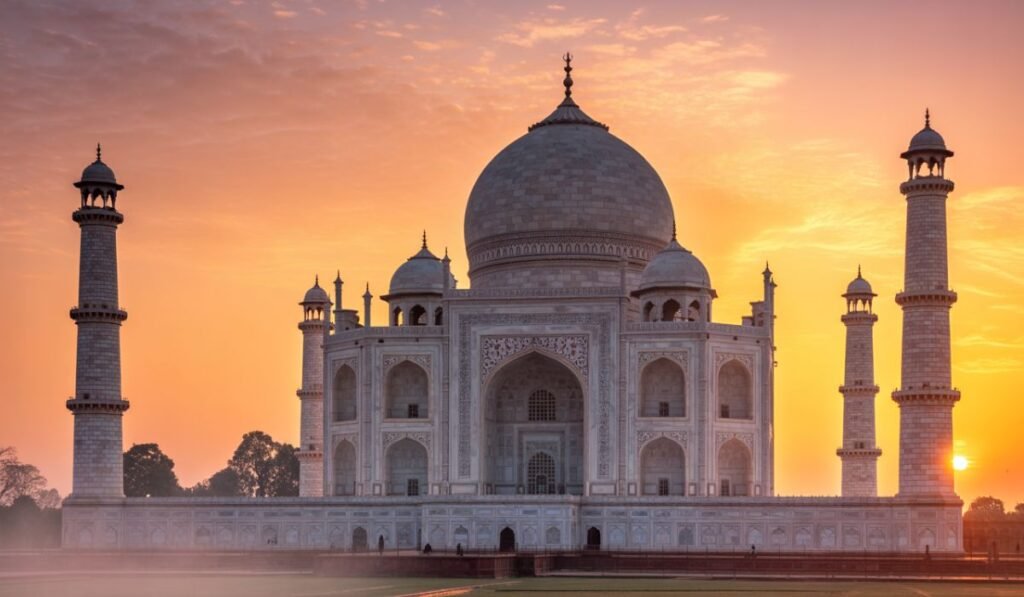
Drive a few hours south and the mood changes completely. Agra is quieter, almost poetic. The Taj Mahal doesn’t feel like a monument. It feels like a breath, a pause, a moment that stops time. The marble glows differently at sunrise, as if the love story behind it is still alive.
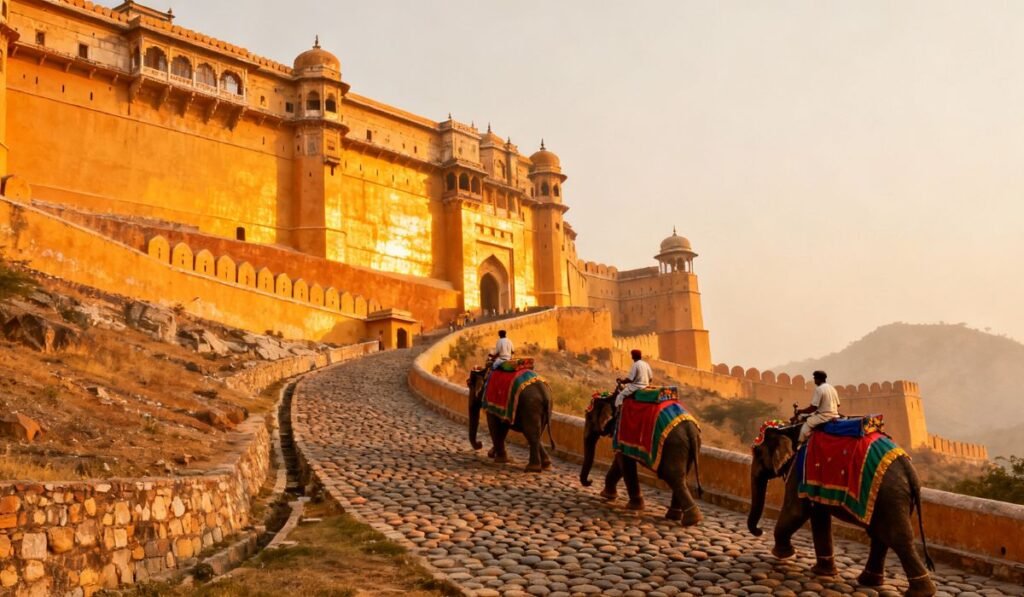
From Agra, move west towards Jaipur and suddenly everything becomes bright — pink walls, golden forts, elephant processions, royal courtyards. Jaipur feels like a doorway into India’s royal past, where history isn’t hidden in museums but painted on every wall and carved into every gate.
Together, these cities form the Golden Triangle because they offer the richest, most authentic, and most diverse glimpse of India within just a few days. Culture, architecture, food, traditions, colors — everything comes together here.
It’s not just a triangle on the map. It’s the perfect introduction to India, especially for first-time travelers.
Experience India’s Most Iconic Journey Start your Golden Triangle Delhi Agra Jaipur Tour with a trusted expert. Comfortable transport, licensed guides, smooth planning — everything done for you.
Every traveler who completes the Golden Triangle carries at least one moment that stays with them for life. Not a photograph, not a souvenir — but a feeling. And that feeling is what makes this journey truly worth it.
Maybe it happens the first time you walk toward the Taj Mahal at sunrise. The sky is still half-asleep, the marble is glowing like warm gold, and for a second you forget the world exists. You’re not thinking about history or architecture. You’re just… present. Fully, deeply present. And that’s rare.
For others, the moment happens in Old Delhi, inside a small lane where chai sellers pour hot tea into clay cups, spices hang in the air like perfume, and rickshaws dance around you like organized chaos. You stand there, overwhelmed yet oddly peaceful, realizing this is the real India — loud, loving, alive.
And then comes Jaipur. If Delhi is the heartbeat and Agra is the soul, Jaipur is the imagination. When you climb the ramparts of the Amber Fort and see the sun lighting up the ancient walls in shades of honey and copper, it feels like stepping into a royal storybook. You don’t just see history — you feel it breathing.
So is the Golden Triangle worth it? Absolutely. Not because guidebooks say so, but because each traveler discovers a different emotional truth here.
This route doesn’t just show you India — It lets you fall in love with India, one city at a time.
Chapter 3: Best Golden Triangle Itinerary
Google rewards blogs that offer clear, structured, user-friendly itineraries, especially when travelers can instantly understand the plan. The Golden Triangle is perfect because every day gives you a different emotion, a different flavor of India, and a brand-new story to carry home. Below is the most optimized itinerary — one that balances history, culture, photography, comfort, and time.
Perfect 5-Day Golden Triangle Itinerary (Most Recommended)
This 5-day plan gives you the ideal pace — not too fast, not too slow — and allows you to truly feel each city.
Day 1 – Delhi:
Red Fort → Jama Masjid → Chandni Chowk → India Gate → Qutub Minar Your first day is a journey through centuries. Start with the majestic Red Fort, then glide into the spiritual calm of Jama Masjid. Dive into the colorful chaos of Chandni Chowk, where every corner smells like history and street food. By evening, India Gate glows beautifully, and Qutub Minar completes your introduction to Delhi’s layered heritage.
Day 2 – Delhi to Agra:
Lotus Temple → Humayun’s Tomb → Drive to Agra (3–4 hrs) Morning begins with the peaceful Lotus Temple — a rare moment of silence in Delhi. Then explore Humayun’s Tomb, the architectural inspiration behind the Taj Mahal. By afternoon, drive to Agra through green landscapes and warm breezes.
Day 3 – Agra:
Taj Mahal (sunrise) → Agra Fort → Mehtab Bagh → Drive to Jaipur This is the emotional peak of your journey. Watching the Taj Mahal during sunrise feels like witnessing a painting come alive. After exploring Agra Fort’s imperial walls and Mehtab Bagh’s riverside view, begin your drive to Jaipur — Rajasthan’s royal heart.
Day 4 – Jaipur:
Amber Fort → Jal Mahal → Hawa Mahal → Jantar Mantar Jaipur welcomes you with history carved in pink stone. Begin at Amber Fort, where elephants, royal courtyards, and panoramic views set your imagination free. Jal Mahal floats calmly on the lake, Hawa Mahal stands like a delicate pink crown, and Jantar Mantar blends science with ancient genius.
Day 5 – Jaipur:
City Palace → Local Markets → Return to Delhi or Airport This final day is a blend of royalty and local charm. Explore the City Palace’s grand halls, shop in Jaipur’s vibrant markets, and savor one last cup of masala chai before heading back to Delhi or the airport.
3 Days Golden Triangle Tour Plan
Not everyone has the luxury of five days. Some travelers come to India on short business trips, tight schedules, or weekend escapes. For them, the 3-day Golden Triangle Tour is the perfect blend of speed, efficiency, and unforgettable moments. It’s fast — but it never feels rushed. Every hour has purpose. Every city gives you one strong memory.
This itinerary captures the essence of the Golden Triangle in just 72 hours.
Day 1: Delhi Sightseeing → Drive to Agra
You begin in the vibrant heart of India — Delhi. Start early because every minute counts. Visit the city’s highlights: the massive Red Fort, the timeless Qutub Minar, the calm yet majestic Lotus Temple, or the bustling charm of Chandni Chowk. Even with limited time, Delhi leaves an impression — a mix of old and new that sets the tone for your entire journey.
By late afternoon, begin your drive to Agra. The transition is beautiful. Delhi’s fast-paced energy slowly fades into the serene countryside. You arrive in Agra by evening, just in time to rest before meeting the world’s most beautiful monument the next morning.
Day 2: Taj Mahal → Drive to Jaipur
This is the day of your wow moment. Visit the Taj Mahal at sunrise, when the marble glows like soft pink gold and the world seems to stand still. This timing avoids crowds and gives you the pure, magical Taj experience.
After exploring the Taj and perhaps taking in the grandeur of Agra Fort, start your drive to Jaipur. The journey shifts from Mughal romance to Rajput royalty. By the time you reach Jaipur, the pink walls and lantern-lit streets create a warm welcome.
Day 3: Jaipur → Return to Delhi
Your final day is powerful, colorful, and deeply cultural. Start at Amber Fort, where elephant paths and royal courtyards make history feel alive. Visit Hawa Mahal, take photos at Jal Mahal, and explore the vibrant markets filled with textiles, jewelry, pottery, and handcrafted souvenirs.
By afternoon or early evening, begin your return drive to Delhi — completing your triangle of memories.
Short. Efficient. Unforgettable. This 3-day itinerary is perfect for business travelers, weekend explorers, or anyone wanting the Golden Triangle’s highlights without taking too much time off.
Distances may look like numbers on paper, but each stretch of the Golden Triangle road feels like a transition into a new chapter of India.
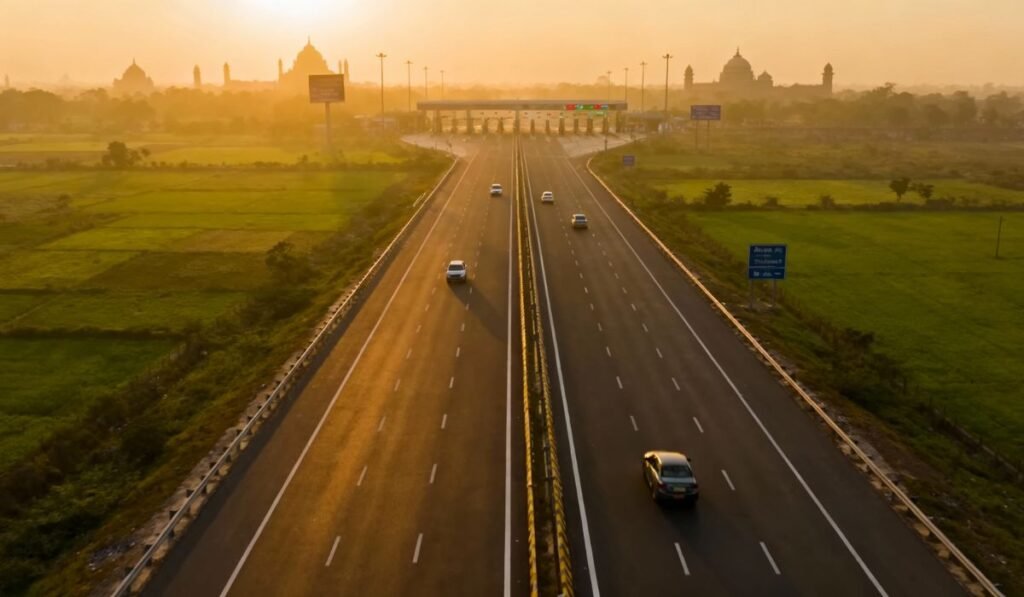
The first leg, Delhi to Agra, is 230 km via the smooth Yamuna Expressway. This part of the journey feels modern and fast — glass buildings slowly shift into endless green farmlands. People often describe this road as “India exhaling.” It’s peaceful, safe, and surprisingly scenic.
From Agra to Jaipur — about 240 km — the journey becomes warmer. Clay houses, mustard fields, camel carts, and small dhabas paint the roadside. You feel Rajasthan approaching long before you enter it. The architecture begins turning pink and golden, and the air feels drier, lighter.
The final stretch, Jaipur to Delhi (280 km), is the perfect closing chapter. By this time, your mind is full of forts, marble, markets, and memories. The journey back feels like returning from a different era.
The route map is simple, but the experience is not:
Delhi → Agra → Jaipur → Delhi This shape forms the famous “triangle.”
Every bend, every road, and every stop along this triangle carries stories. You don’t just travel through kilometers — you travel through centuries, cultures, and kingdoms.
Chapter 5: Best Time for the Golden Triangle
Travel is not just about weather conditions — it’s about what the season feels like. That’s the secret most blogs don’t tell you.
The Golden Triangle is magical between October and March. The air feels crisp in the mornings, perfect for exploring fort walls and old markets. Sunsets look softer. Photography becomes a dream. Even the city noise feels more poetic in this weather.
But the real reason this season works? Your energy stays high. You don’t get exhausted. Enjoy more. You walk more. You absorb more.
Summer (April–June) is the opposite. Heat rises like fire from the ground. The monuments stand powerful but sharp under the sun. Unless you’re used to Indian summers, it drains you fast.
Monsoon (July–August) brings a different charm — wet roads, dark clouds behind pink palaces, and fewer tourists at the Taj Mahal. It’s actually beautiful if you love moody, cinematic travel.
Psychology tip: If you want fewer crowds and higher comfort, travel in:
September Early February Weekdays of March
During these times, the Golden Triangle feels like it was built just for you.
Chapter 6: Golden Triangle Cost Breakdown — REAL NUMBERS
Travel budgets usually feel confusing because most blogs hide real numbers. So here’s the truth, simple and clear.
Budget travelers can complete the Golden Triangle for ₹9,000–₹12,000. Hostels, local buses, and street food make it possible. It’s raw, adventurous, and perfect for backpackers.
Standard travelers spend ₹14,000–₹20,000. This is the most balanced category — comfortable hotels, a private car, and an ideal experience.
Luxury travelers spend anywhere from ₹35,000 to ₹60,000+. Private guides, premium cars, 5-star stays, fine dining, and curated experiences transform the journey into a royal treat.
Foreign tourists often spend more due to:
Higher monument entry fees
Private drivers
Extra tours
Upgraded accommodations
But here’s the secret truth: The Golden Triangle gives more value per day than almost any other India trip.
You can travel like royalty here without spending like royalty.
Chapter 7: Cheapest Way to Travel the Golden Triangle
The cheapest way isn’t always the hardest way. It’s actually about being smart.
Trains are your best friend — fast, clean, affordable. Buses are the cheapest, but not always the most comfortable.
Stay at guesthouses or budget hotels. Eat where locals eat. Travel during off-season. Book everything online to avoid tourist-price traps.
A special hack most people don’t know: Travel overnight from Delhi to Jaipur or Agra. You save a hotel night AND arrive early with more time to explore.
Budget travel doesn’t mean low-quality travel. It means efficient travel.
Final Verdict:Hire a private car + driver for the perfect experience.
Chapter 9: Golden Triangle Trip for First-Time Travelers
If this is your first time in India:
Choose a 5-day itinerary Book your hotels beforehand Avoid pushing too many sites per day Stay hydrated Avoid extreme summers Use official guides only Respect local culture (especially in temples)
Chapter 10: Hidden Gems Nobody Tells You About
The Golden Triangle is famous for its headline attractions — the Taj Mahal, Amber Fort, Qutub Minar — but what truly elevates a journey are the quiet corners, the places untouched by tourist crowds, where history whispers instead of shouts. These hidden gems give your trip soul. They add depth, mystery, and beauty you weren’t expecting. And the best part? Even many locals don’t know about them.
Delhi – Agrasen ki Baoli
In the heart of New Delhi lies a silent world of stone geometry. As you step down each descending level of this ancient stepwell, the city’s noise fades away. The deeper you go, the cooler the air becomes — almost supernatural. It’s peaceful, cinematic, and slightly eerie, which is exactly why it feels magical.
Agra – Mehtab Bagh
Everyone rushes to the Taj Mahal, but few cross the river to this quiet garden. Here, the Taj looks softer, calmer, almost shy. The Yamuna reflects its golden glow at sunset, creating the perfect moment — one that feels like the Taj Mahal belongs only to you.
Jaipur – Panna Meena ka Kund
A jewel of symmetrical beauty. Every step, every angle forms a perfect pattern. It’s a paradise for photographers, travelers, and anyone obsessed with ancient architecture. And yet, it’s surprisingly uncrowded.
Fatehpur Sikri – Fatehpur Sikri
Once the grand capital of the Mughal Empire — now a beautifully preserved ghost city. Walk through its empty halls and you’ll feel echoes of royal life, as if the city paused itself and never pressed play again.
Abhaneri – Chand Baori
One of the deepest and most intricate stepwells in the world. Standing at its edge feels unreal — 3,500 perfectly aligned steps descending into a cool, mysterious hollow. A masterpiece hidden in a small village.
These gems don’t just add stops to your itinerary — They add stories, depth, and the kind of photographs that feel like secrets.
Chapter 11: India Travel Tips – Golden Triangle (Insider Edition)
Start early morning to avoid crowds Keep cash + card + UPI Avoid unofficial guides near monuments Use bottled water only Check monument holidays Carry light clothing + scarves Pre-book Taj Mahal sunrise ticket
Chapter 12: How to Plan Golden Triangle — The Ultimate Checklist
Choose 3, 5, or 6+ day itinerary Fix a route: Delhi → Agra → Jaipur Select transport (car/train) Book hotels early Check weather Buy Taj Mahal tickets online Create a flexible daily plan Keep buffer time for traffic Hire a reliable tour operator
Chapter 13: Why the Golden Triangle Changes Every Traveler
Because this trip is not sightseeing. It is self-discovery through culture.
Delhi tests your senses. Agra softens your heart. Jaipur awakens your imagination.
You return home with:
✔ more stories ✔ better photos ✔ deeper understanding of India ✔ an unforgettable memory
This is why millions say: “The Golden Triangle is worth it.”
Ready to See Delhi, Agra & Jaipur the Right Way? Let professionals handle your itinerary, transport, tickets & guides — You just enjoy the journey.
The Golden Triangle is India’s most popular travel circuit connecting three iconic cities — Delhi, Agra and Jaipur. These three cities form a triangular shape on the map and together represent India’s culture, history, cuisine, architecture, and heritage. It’s the perfect introduction to India for any traveler.
2. Is the Golden Triangle worth it?
Absolutely — 100% yes. For first-time travelers, this route offers the best mix of Mughal history, royal palaces, local markets, iconic monuments, and real-life cultural experiences. You get to see India’s past and present in just a few days, making it one of the most rewarding trips in the country.
3. How many days are enough?
Ideally, 5 days gives you the perfect balance of sightseeing, travel, and relaxation across all three cities. You can explore comfortably without rushing. If your schedule is tight, a 3-day itinerary still covers the major highlights of Delhi, Agra, and Jaipur — but it will be fast-paced.
4. What is the cheapest way to travel?
The most affordable way is to use trains between cities, stay in budget hotels or hostels, eat at local restaurants, and travel during the off-season (July–September). It reduces costs while still giving you the full Golden Triangle experience without compromising safety or enjoyment.
5. Is the route safe?
Yes — the Golden Triangle is one of India’s safest routes for tourists. Roads are well-maintained, tourist areas are secure, and locals are extremely friendly. Hiring a trusted guide or driver further enhances safety, especially for families or international visitors.
6. When is the best time to go?
The ideal time is October to March, when the weather is pleasant, skies are clear, and sightseeing becomes comfortable. Winter sunsets are stunning at the monuments, and early mornings are perfect for photography. Avoid April–June if you are sensitive to heat.
7. Can families do this trip?
Yes — the Golden Triangle is very family-friendly. The destinations offer clean hotels, safe transport options, and plenty of attractions suitable for children. The pace can also be customized depending on your family’s comfort, making it one of the easiest India trips for parents.
8. Do I need a guide?
A guide is highly recommended at major sites like the Taj Mahal and the historic forts of Jaipur Forts. They help you avoid queues, understand the history, and navigate the best photo spots. For first-timers, guides make the experience richer and smoother.
India’s cultural fabric is woven with stories of love, architectural brilliance, and spiritual depth.
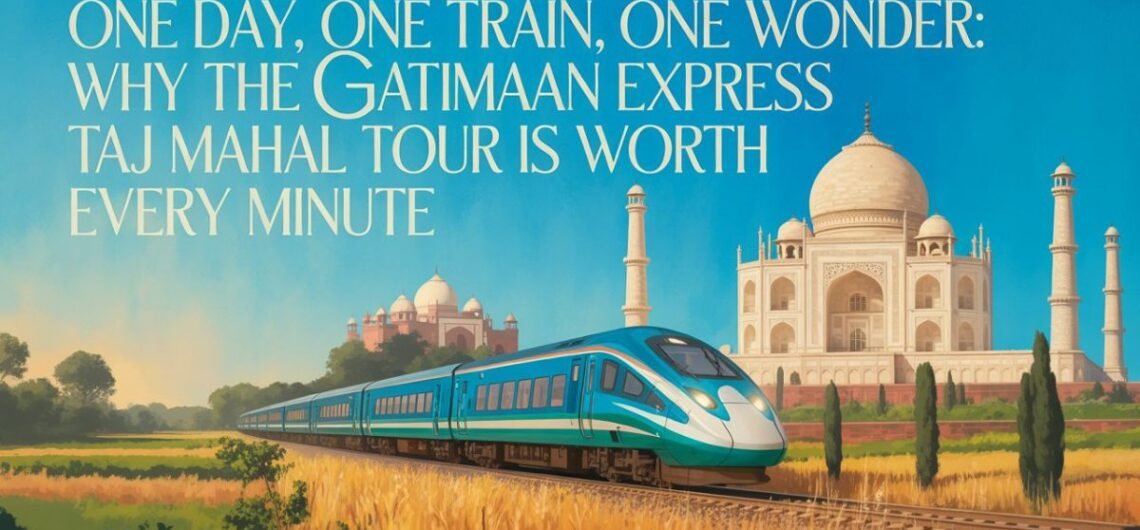
One Day, One Train, One Wonder: Why the Gatimaan Express Taj Mahal Tour is Worth Every Minute
Introduction – Gatimaan Express Taj Mahal Tour
There are some mornings that begin like any other, and some that promise something extraordinary. The day you take the Gatimaan Express from Delhi to Agra is one of those. As the first light of dawn spreads over the city, you find yourself at Hazrat Nizamuddin Station, ticket in hand, ready to board India’s fastest train. The hum of excitement fills the platform—travelers, photographers, families, all bound for the same destination: the timeless Taj Mahal.
It’s not just a trip; it’s a story waiting to be lived. One day, one train, and one of the greatest wonders the world has ever seen.
Why Choose the Gatimaan Express for Your Taj Mahal Visit
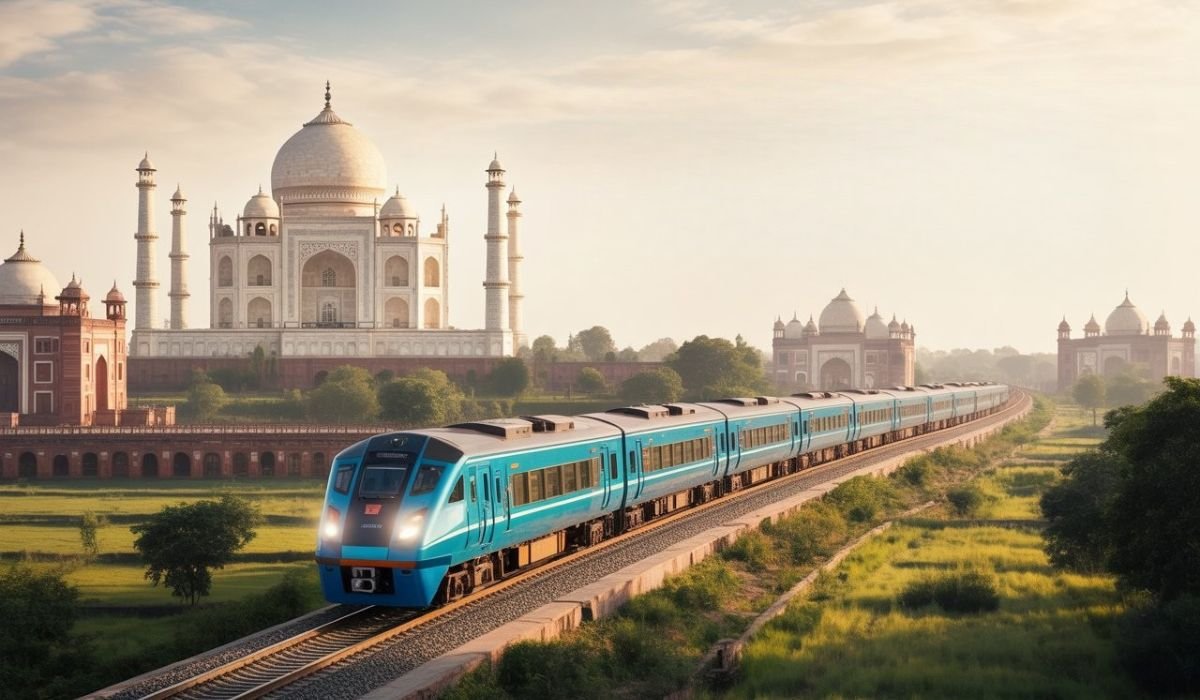
If you’ve ever driven from Delhi to Agra, you know the story—traffic, tolls, and hours on the road. But the Gatimaan Express changes that completely. In just about one hour and forty minutes, you glide through the plains of North India in air-conditioned comfort, with breakfast served at your seat.
The Gatimaan Express departs from Delhi’s Hazrat Nizamuddin Railway Station and arrives at Agra Cantt before you’ve even finished your morning coffee. It’s quick, clean, and designed for travelers who value time and comfort. For Delhi residents, it’s a stress-free way to experience Agra without the long drive. For tourists from the USA, it’s the perfect blend of efficiency and elegance—a modern gateway to a Mughal masterpiece.
Choosing the train over the highway doesn’t just save time; it gives you more of what matters—the chance to immerse yourself in the beauty of the Taj Mahal, explore Agra’s heritage, and return the same evening with memories that will last forever.
A Perfect One-Day Itinerary – Delhi to Agra and Back
5:00 AM – Hotel Pick-Up and Transfer to Railway Station
Your adventure begins in the stillness of early morning. A comfortable private car collects you from your hotel in Delhi, Noida, or Gurgaon and takes you to Hazrat Nizamuddin Railway Station. Here, the sleek Gatimaan Express (or Shatabdi Express) awaits—India’s fastest trains, known for punctuality and comfort. Your guide will ensure you have your tickets and are settled before departure.
8:10 AM – Board the Train to Agra
As the train glides out of Delhi, you settle into your air-conditioned seat. A complimentary breakfast is served onboard—fresh, simple, and satisfying. Outside your window, the city slowly gives way to open fields and small towns. The two-hour journey is smooth and quiet, offering just enough time to relax before the day ahead.
9:50 AM – Arrival in Agra and Meet Your Guide
At Agra Cantt Railway Station, a friendly local guide and private driver welcome you. They’ll brief you on the day’s plan, sharing insights about Agra’s Mughal legacy. Within minutes, you’re en route to the crown jewel of the city—the Taj Mahal.
10:00 AM – Visit the Taj Mahal
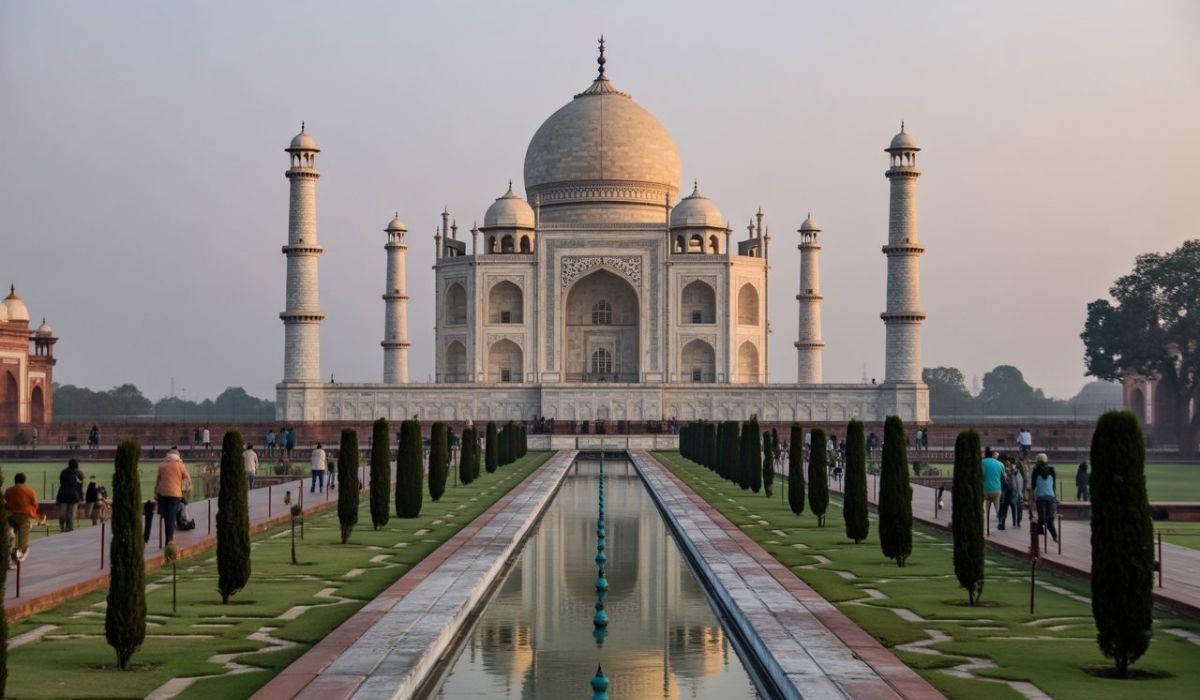
As you approach, the white marble monument rises gracefully from its gardens, glowing softly in the morning light. The air feels different here—calm, reverent, timeless. Your guide leads you through the Taj Mahal’s history, explaining its architecture, symbolism, and the enduring love story of Shah Jahan and Mumtaz Mahal.
You’ll have time to take photographs, including the famous reflection shot at the pool. Early morning is the best hour for this—gentle sunlight brings out the marble’s delicate shades of ivory and gold.
11:30 AM – Explore the Agra Fort
Just a short drive away lies the red sandstone stronghold of Agra Fort, another UNESCO World Heritage Site. Once the royal residence of Mughal emperors, it’s filled with courtyards, halls, and towers that tell centuries of history. You’ll visit the Diwan-i-Am, Diwan-i-Khas, and the Musamman Burj—where Emperor Shah Jahan spent his final days gazing at the Taj Mahal across the Yamuna River.
Your guide’s stories make these walls come alive, connecting the fort’s grandeur to the romance that built an empire.
12:30 PM – Lunch at a Local Restaurant
After a morning of exploration, it’s time to relax and enjoy a hearty lunch at a local restaurant. Agra’s Mughlai cuisine is legendary—rich curries, soft naan, aromatic biryanis, and kebabs that melt in your mouth. Your guide can help you choose between authentic local flavors or lighter dishes depending on your taste.
In the afternoon, you can choose between two serene spots.
Mehtab Bagh: Across the Yamuna River, this garden offers a panoramic view of the Taj Mahal—ideal for photographers who love capturing reflections and symmetry.
Itimad-ud-Daulah: Often called the “Baby Taj,” this smaller marble tomb is a masterpiece in its own right, with intricate inlay work that inspired the Taj Mahal’s design.
Whichever you visit, your guide will share fascinating details about Mughal architecture and the city’s artistic legacy.
3:00 PM – Optional Shopping in Agra
Before leaving, you may stop at Agra’s local markets—famous for marble inlay work, leather goods, and textiles. The craftsmanship here continues traditions that date back to the builders of the Taj Mahal. It’s a great opportunity to take home a handcrafted souvenir of your visit.
4:30 PM – Return to Agra Cantt Railway Station
After a fulfilling day, your driver will take you back to Agra Cantt Station for your evening return train to Delhi.
5:50 PM – Board the Train Back to Delhi
Settle back into your seat on the Gatimaan or Shatabdi Express. Light snacks are served as the train rolls north through the fading daylight. You’ll feel pleasantly tired, your camera full and your heart even fuller.
7:30 PM – Arrival in Delhi and Hotel Drop-Off
Upon arrival at Hazrat Nizamuddin Station, your driver meets you for your transfer back to your hotel or preferred location. The journey ends where it began—but now you carry with you the memory of standing before one of the world’s greatest wonders.
What Makes This Tour Worth Every Minute
Every moment on this journey feels purposeful. The Gatimaan Express doesn’t just connect two cities—it connects experiences. The ease of travel gives you more time to truly see, feel, and understand Agra’s grandeur.
There’s no rush, no exhaustion from long road travel. You arrive refreshed, ready to walk the marble paths, listen to your guide’s stories, and simply be present in the wonder of it all.
For travelers from the USA, it’s an ideal day trip: seamless, secure, and filled with insight. For Delhi locals, it’s an effortless escape from the city—a day of history, beauty, and reflection.
This tour lets you make the most of every minute, without missing a thing.
Azaan Travels – Your Trusted Partner for the Taj Experience
Behind this well-timed journey stands Azaan Travels, a trusted name in curated tours across India. The team ensures every detail is handled—from confirmed Gatimaan Express tickets to expert guides, comfortable transfers, and well-chosen restaurants.
With years of experience in organizing same-day Agra tours, Azaan Travels understands what travelers need: clarity, comfort, and credibility.
Whether you’re visiting from the USA or exploring from Delhi, the company’s professionalism ensures a smooth, safe, and authentic experience. Every itinerary is designed with care, so you can focus on what matters most—enjoying your day without worry.
Travel Tips for a Seamless Gatimaan Express Taj Mahal Tour
Best Time to Visit: The best season for this tour is between November and March when the weather in Agra is cool and pleasant. Early mornings offer the best light for photographs.
Book Early: The Gatimaan Express is popular, especially among international tourists. Booking your tour a few days in advance ensures confirmed seats and the best schedule.
What to Pack: Comfortable walking shoes, sunglasses, a hat, and your camera. The Taj Mahal complex is large, and you’ll want to explore freely.
Photography Tips: Arrive early to capture the Taj in soft light. The reflection pools near the main gate offer perfect symmetry for stunning photos.
Etiquette & Dress Code: Modest clothing is appreciated. Be mindful of restricted items—tripods, food, and large bags are not allowed inside the Taj Mahal complex.
Return Tip: When heading back to Agra Cantt Station, plan to reach about 30 minutes before departure. A window seat offers the best views as you journey back toward Delhi under the evening sky.
How to Book Your Gatimaan Express Taj Mahal Tour
If you’re ready to experience the Taj Mahal the smart and memorable way, book your tour directly with Azaan Travels. Every booking includes train tickets, hotel transfers, local sightseeing by private car, a professional guide, and complete coordination.
By booking directly, you ensure transparent pricing, secure reservations, and expert assistance every step of the way.
Why This Tour Appeals to Both Delhi and USA Travelers
For travelers from Delhi, this tour is a chance to escape routine without the hassle of long drives or hotel stays. You leave after sunrise, witness one of the world’s greatest wonders, and return home by night. It’s luxury and leisure wrapped into a single day.
For visitors from the USA, it’s an opportunity to make the most of limited time in India. You experience the heart of Mughal history, guided by local experts, with comfort and coordination that matches international standards.
This journey perfectly captures India’s dual spirit—its ancient heritage and modern progress. A high-speed train meets timeless marble, and for one perfect day, the two worlds travel side by side.
Conclusion – One Train, One Day, One Lifetime Memory
There are journeys that are simply trips, and then there are journeys that leave you changed. The Gatimaan Express Taj Mahal Tour is the latter. From the moment the train glides out of Delhi to the moment you stand before the Taj Mahal’s shimmering domes, every second feels meaningful.
It’s not just about seeing a monument; it’s about feeling its story, its silence, its beauty. It’s about realizing that in a country of billions, one monument still whispers a universal truth—love endures.
Experience it for yourself. One day. One train. One wonder. Book your journey with Azaan Travels today and make every minute count.
Frequently Asked Questions – Taj Mahal Tour by Gatimaan Express
1. How long does the Gatimaan Express take from Delhi to Agra?
The Gatimaan Express takes approximately 1 hour and 40 minutes to travel from Delhi’s Hazrat Nizamuddin Railway Station to Agra Cantt. It’s one of India’s fastest trains, offering a smooth and comfortable journey that saves several hours compared to road travel.
2. What time does the Gatimaan Express leave Delhi and return from Agra?
The train usually departs from Delhi around 8:10 AM and arrives in Agra by 9:50 AM. The return journey begins around 5:50 PM, reaching Delhi by approximately 7:30 PM. Schedules can vary slightly, so Azaan Travels confirms exact times during booking.
3. Is breakfast or food included on the Gatimaan Express?
Yes. A complimentary breakfast is served onboard during the morning journey, and light snacks are provided on the return trip. The meals are hygienic, pre-packed, and included in your train fare.
4. Are entrance fees for the Taj Mahal and Agra Fort included in the tour?
Entrance fees are generally included in the complete Azaan Travels package unless you choose a customized plan. You can confirm inclusions (tickets, guide, transfers, and lunch) while booking on Azaan Travels’ official website.
5. What should I wear while visiting the Taj Mahal?
Visitors should wear comfortable and modest clothing. Light cotton fabrics are ideal during summer, while a light jacket is useful in winter. Comfortable walking shoes are highly recommended since the complex requires a fair amount of walking.
6. Can foreign tourists from the USA or Europe book this tour easily?
Absolutely. Azaan Travels frequently arranges Taj Mahal tours for international travelers, including visitors from the USA and Europe. The team provides English-speaking guides, safe private transfers, and complete assistance throughout the trip to ensure a seamless experience.
7. Is there time for shopping in Agra during the tour?
Yes, time is usually allotted in the afternoon for optional shopping in Agra’s local markets. Visitors can explore and purchase famous Agra handicrafts such as marble inlay work, leather goods, jewelry, and textiles before heading back to the station.