
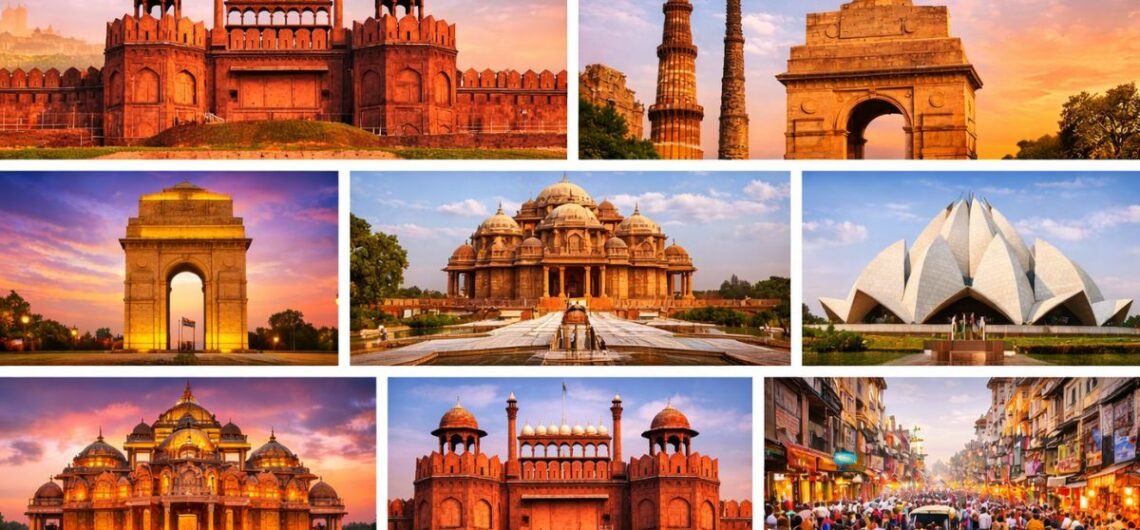
Delhi is a vibrant city blending history, culture and modern life. It offers countless Places to Visit in Delhi and Delhi sightseeing places for every traveler.
Whether you want a relaxed Delhi itinerary or prefer to explore Delhi by car/cab, the city is family-friendly and easy to navigate by road.
With an air-conditioned cab or car, families and older guests can enjoy door-to-door comfort and cover many attractions in a day. In winter (October–March) the weather is best for sightseeing, while summers can be very hot.
This guide highlights Delhi’s top sights, plus ready-made 1-day, 2-day and 3-day plans that make touring Delhi simple, comfortable and fun.
Top 10 Places to Visit in Delhi
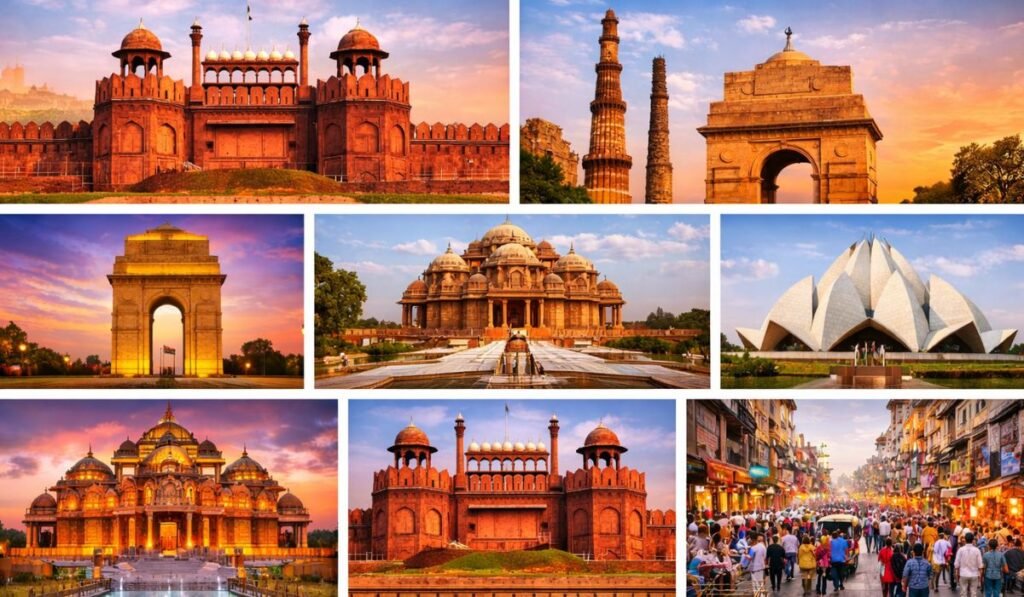
Red Fort
The majestic Red Fort (Lal Qila) is Shah Jahan’s 17th-century palace-fortress. This UNESCO monument has red sandstone walls surrounding imperial halls.
See the Diwan-i-Am (public audience hall) and Diwan-i-Khas (private hall) and marvel at Rang Mahal, Moti Masjid and the covered bazaar Chhatta Chowk. The fort’s light-and-sound show in the evening is popular. Entry fee is ₹35 (Indians) and ₹500 (foreigners). It’s open 9:30–4:30 daily (closed Mondays).
Best time to visit is winter (Oct–Feb). Nearby is the bustling Chandni Chowk market and Jama Masjid.
Qutub Minar
Qutub Minar is a 73-meter stone tower built in the 12th–13th centuries (started by Qutb-ud-din Aibak). It’s India’s tallest brick minaret, part of an ancient mosque complex. Admire the ornate fluted shaft, carved balconies and inscriptions. In the same UNESCO complex you’ll find the Quwwat-ul-Islam Mosque ruins, the Iron Pillar and the grand Alai Darwaza gateway.
Tickets cost about ₹50 for Indians and ₹600 for foreigners. The site is open from dawn to 8:00 PM. The best time to visit is in cooler months (Oct–Mar) when Delhi is pleasant. Nearby attractions include the Archaeological Park at Mehrauli and the Lotus Temple.
India Gate
India Gate is a 42-meter tall war memorial arch on Rajpath. Built in 1931 and designed by Edwin Lutyens, it honors 90,000 Indian soldiers who died in World War I. Underneath it burns the eternal Amar Jawan Jyoti flame (added after 1971 war). Entry to the lawns is free and visitors often picnic on the grassy plaza.
The monument is beautifully lit at night. There is no ticket – it’s a public park open 24/7. The best time to come is late afternoon or evening, especially in winter when it’s cool and people gather for ice cream. Nearby are the Rashtrapati Bhavan (Presidential Palace) and Kartavya Path (the Grand Avenue).
Humayun’s Tomb
Humayun’s Tomb (1565–72) was India’s first great Mughal garden tomb and a UNESCO site. Built by Humayun’s widow in red sandstone with double marble domes, it set the template for later monuments (like the Taj Mahal). The charbagh garden, symmetry and ornate lattices create a beautiful scene.
Other Mughal emperors’ tombs are in the surrounding complex, including Isa Khan. The site opens 6:00 AM–6:00 PM daily. Entry is ~₹40 for Indians and ₹600 for foreigners. The adjoining Nizamuddin Dargah (a 14th c. saint’s shrine) lies just outside the gate. Humayun’s Tomb is especially lovely at sunrise or in the cool evening.
Lotus Temple
The Lotus Temple (Bahá’í House of Worship) was completed in 1986 and is known for its flower-like architecture. This serene temple of white marble has 27 “petals” arranged in lotus formation.
It is non-denominational and welcomes visitors of any faith to enter the central hall for meditation. There is no entry fee, but it closes Monday. Hours are 9:00–5:30 PM (winter) and 9:00–7:00 PM (summer).
The temple often has long lines on weekends, so early morning is best. Located in East Delhi near Kalkaji Mandir Metro (Violet Line), it’s quiet and spiritual. The nearby Kalkaji Temple and Nehru Place market are easy stops on the same visit.
Akshardham Temple
Swaminarayan Akshardham (opened 2005) is a vast modern Hindu temple and cultural complex. Its ornate pink sandstone-and-marble mandir, filled with carvings of deities, saints and dancers, showcases 10,000 years of Indian heritage.
The site also has boat-ride and film exhibitions on Indian culture, and a musical fountain show at sunset. Entrance to the temple complex is free (parking and exhibition tickets cost extra). It is open 9:30 AM–6:30 PM (closed Mondays).
The temple is a family-friendly experience – remove shoes, cover shoulders/legs, and enjoy the gardens and the Hall of Values exhibits inside.
Jama Masjid
Jama Masjid (1656) is Delhi’s largest mosque, built by Shah Jahan. This grand mosque courtyard can hold 25,000 worshippers. Its red-and-white stone facade features three arched entrances, four towers and two 40-meter minarets.
Non-Muslim visitors are welcome outside prayer times; foreigners pay ₹400 and Indians enter free. Visiting hours are roughly 8 AM–4 PM (for tourists). At the northern gate, you can rent a robe to enter respectfully. From the mosque’s tower you get panoramic views of Old Delhi. After, stroll nearby Chandni Chowk markets or find the spice bazaar Khari Baoli in the old city..
Chandni Chowk
Chandni Chowk is the buzzing heart of Old Delhi, a historic market founded in 1650. It’s famous for narrow lanes packed with shops and street food. Don’t miss Paranthe Wali Gali (famous for stuffed parathas), Katra Neel (silver jewelry), Bhagirath Palace (electronics), and the spice souk.
This area has a vibrant, crowded charm. The entrance near Red Fort leads to busy bazaars like Khari Baoli (Asia’s largest spice market). There is no entry fee – it’s a public market. Best times are mid-morning or evening (afternoons can be extremely hot and crowded). Combine a trip here with Red Fort and Jama Masjid for a full Old Delhi experience.
Rashtrapati Bhavan
Rashtrapati Bhavan (Presidential Palace) is India’s head-of-state residence on Raisina Hill. This grand 340-room neoclassical palace (completed 1929) has a distinctive dome inspired by Indian architecture. You can only see inside on guided tours (open Tue–Sun 9:30 AM–4:30 PM).
Tours (₹50) visit state rooms like the Ashok and Ganatantra Mandaps and the Mughal Gardens (open Mar/Apr). The lotus-shaped Mughal Gardens (Amrit Udyan) bloom in spring and are a highlight. Even from outside, the long colonnades and massive forecourt are impressive. Tickets must be booked in advance online; no large bags or cameras are allowed.
Raj Ghat
Raj Ghat is a simple, serene memorial where Mahatma Gandhi was cremated in 1948. A black marble platform (below an old banyan tree) marks the spot with the inscription “Hey Ram.”
The garden setting is peaceful, with flowers and flags. Entry is free, and it’s open roughly 6:30 AM–5:00 PM. Nearby are memorials for other leaders like Nehru and Indira Gandhi. A short walk south is the Red Fort. Raj Ghat is often included in Delhi heritage walks and is a moving tribute to the Father of the Nation.
Top 30 Places to Visit in Delhi
- Red Fort
- Qutub Minar
- India Gate
- Humayun’s Tomb
- Lotus Temple
- Akshardham Temple
- Jama Masjid
- Chandni Chowk Market
- Rashtrapati Bhavan (President’s House)
- Raj Ghat (Gandhi Memorial)
- Purana Qila (Old Fort)
- Lodhi Gardens
- Jantar Mantar Observatory
- Gurudwara Bangla Sahib
- Connaught Place (shopping district)
- Paranthe Wali Gali (street of flatbreads)
- Dilli Haat (crafts & food bazaar)
- Hauz Khas Village & Deer Park
- Agrasen ki Baoli (ancient stepwell)
- Tughlaqabad Fort
- Safdarjung Tomb
- National Rail Museum
- Mughal Gardens (at Rashtrapati Bhavan)
- Indira Gandhi Memorial Museum (Birla House)
- National Gallery of Modern Art (NGMA)
- National Crafts Museum (Shilpgram)
- Waste to Wonder Park (recycled monuments)
- Sarojini Nagar Market
- Gandhi Smriti (Birla House, Gandhi’s death place)
One-Day Delhi Sightseeing Plan
A well-planned one-day Delhi itinerary typically starts around 8:30 AM.Pick up by cab makes travel easy. For example, start at the Red Fort at 8:30–10:30 AM, then walk to Jama Masjid (10:30–11:30).
Enjoy lunch and street food in Chandni Chowk (11:30–12:30). After a short rest, take a drive by cab to New Delhi: visit India Gate (1:00–1:30 PM) and snap photos on the lawns, then head to Humayun’s Tomb (2:00–3:15 PM).
Next, see the Lotus Temple (4:00–4:45 PM), then if time allows, Qutub Minar (5:30–6:15 PM). Finish with dinner in Connaught Place (6:30–7:30). This Delhi sightseeing tour by car means you spend less time in transit. Adjust timing for traffic—evenings at India Gate or a riverside walk at sunset are lovely.
Two Day Delhi Sightseeing Plan
Day 1 (Old Delhi focus): Begin at 9:00 AM at Red Fort and explore for 2–3 hours. Next, tour Jama Masjid and wander through Chandni Chowk’s bazaars and food stalls. After lunch, visit Raj Ghat for a reflective stop. End Day 1 with shopping or a street-food walk in Kinari Bazar or the new Paranthe Wali Gali. (Traveling by cab all day lets you avoid crowded metros—consider a Delhi sightseeing tour by car for convenience.)
Day 2 (New Delhi + Temples): Start at 9:30 AM from your hotel. See Qutub Minar in the morning when it’s cooler. Then visit Humayun’s Tomb by late morning. After lunch, tour the grand Rashtrapati Bhavan and Mughal Gardens (best in spring). Late afternoon, head to India Gate and the nearby National War Memorial for views at dusk. Finish the day at Swaminarayan Akshardham in the evening (light show around 7:00 PM). This split lets you enjoy Old and New Delhi comfortably with minimal backtracking.
Three-Day Delhi Trip Plan
Day 1: Old Delhi highlights—visit Red Fort (late morning), then Jama Masjid, and savor lunch at Chandni Chowk. Explore the spice and jewelry markets and end at Raj Ghat by late afternoon. Families enjoy the rickshaw ride through heritage lanes.
Day 2: New Delhi landmarks—start with India Gate and nearby gardens, then tour Rashtrapati Bhavan (book in advance) and Humayun’s Tomb by midday. Afternoon can include Lodhi Gardens or the Rail Museum.
Day 3: Temples & Culture—begin at the Lotus Temple in the morning, then head to Akshardham for the exhibitions. Late afternoon, unwind with shopping and street-food tasting in Connaught Place or Chandni Chowk. Throughout, take breaks to keep pace easy for children or seniors. A car or cab ensures comfort and flexibility.
Best Time to Visit Delhi for Sightseeing
The best time for Delhi sightseeing is from October to March, when the weather is pleasant, skies are clearer, and outdoor exploration feels comfortable. Winter days (November–February) are cool and ideal for visiting monuments, gardens, and markets without fatigue. Early mornings can be foggy in peak winter, especially in December and January, which may slightly delay visibility at places like India Gate, but the misty views also add a unique charm to heritage sites.
From April to June, Delhi experiences intense summer heat, often crossing 40°C, making afternoon sightseeing tiring. If visiting in summer, plan early morning and evening outings with rest breaks during the day. The monsoon months (July–September) bring humidity and occasional showers, but greenery looks refreshed and crowd levels are lower. Overall, winter remains the most comfortable and recommended season for exploring Delhi’s attractions.
Best Way to Visit Places in Delhi
The most comfortable way to see Delhi is by hiring a private car or cab. Delhi’s attractions are spread out, and summer heat or monsoon showers can make walking difficult. In a cab you can control departure times, stop for breaks, and carry family easily.
Roads in Delhi have ample parking at major sites (unlike metros or rickshaws with limited luggage space). Many visitors book Delhi local tour packages or Delhi tour packages with sightseeing that include a cab and guide.
For example, a Delhi full-day sightseeing cab ensures you see all must-see places in comfort. These packages also link to nearby cities—consider a Delhi-Agra tour to include the Taj Mahal or a same-day tour option from Delhi to destinations like Agra or Jaipur. Traveling by car is especially recommended for families with kids or elders, as it avoids Delhi’s busy metro stairs and provides reliable air-conditioning
For travelers who want to cover all these places comfortably without worrying about routes, traffic, or planning, a planned Delhi sightseeing tour by car is the smartest way to explore the city.
FAQs About Delhi Sightseeing and Tourism
Which place is most visited in Delhi?
India Gate is the most visited public landmark, especially in the evening when the lawns fill with visitors. Among monuments, the Red Fort attracts massive footfall due to its UNESCO status and historic significance. Both are must-see stops on any Delhi sightseeing plan.
Where should I go if I have only one day in Delhi?
Follow a compact route: Red Fort → Jama Masjid → Chandni Chowk (morning), then India Gate and either Humayun’s Tomb or Qutub Minar (afternoon). End at Lotus Temple or Connaught Place. This covers Old and New Delhi efficiently in one day.
What are the famous markets in Delhi?
Chandni Chowk is known for spices, sweets, and wedding shopping. Connaught Place mixes brands with street food. Sarojini Nagar and Lajpat Nagar are popular for budget fashion. Hauz Khas Village offers boutiques and cafés, while Dilli Haat is ideal for handicrafts from across India.
What is the best time to visit Delhi for sightseeing?
October to March is best for Delhi sightseeing, with pleasant weather for outdoor monuments and gardens. April to June is very hot, and July to September brings humidity and monsoon showers. Winter mornings and evenings are ideal for places like India Gate, Lodhi Garden, and heritage walks.

Comments