
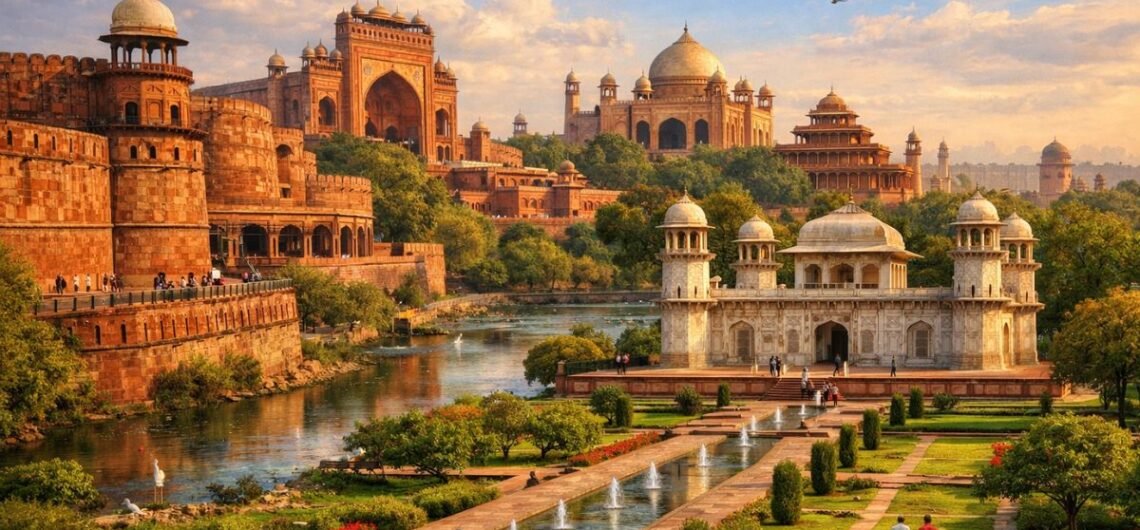
Introduction – Top Places to Visit in Agra with Taj Mahal
Agra was the heart of the Mughal Empire and is rich in history and culture beyond the Taj Mahal. Today it boasts two UNESCO World Heritage sites – the Taj Mahal and the Agra Fort plus many gardens, tombs and bazaars. In fact, places to visit in Agra include palaces and parks that bring Mughal India to life.
Exploring Agra’s other tourist attractions reveals ornate red-sandstone forts, elegant gardens, and bustling markets where artisans sell famous marble inlay work, leatherware and spicy street food.
A properly planned Agra sightseeing trip will show why the city’s heritage extends far beyond its iconic marble mausoleum.
Top Places in Agra to Visit
These are the iconic monuments and heritage sites that Agra proudly offers beyond the Taj Mahal, reflecting the grandeur of its Mughal past.
Taj Mahal
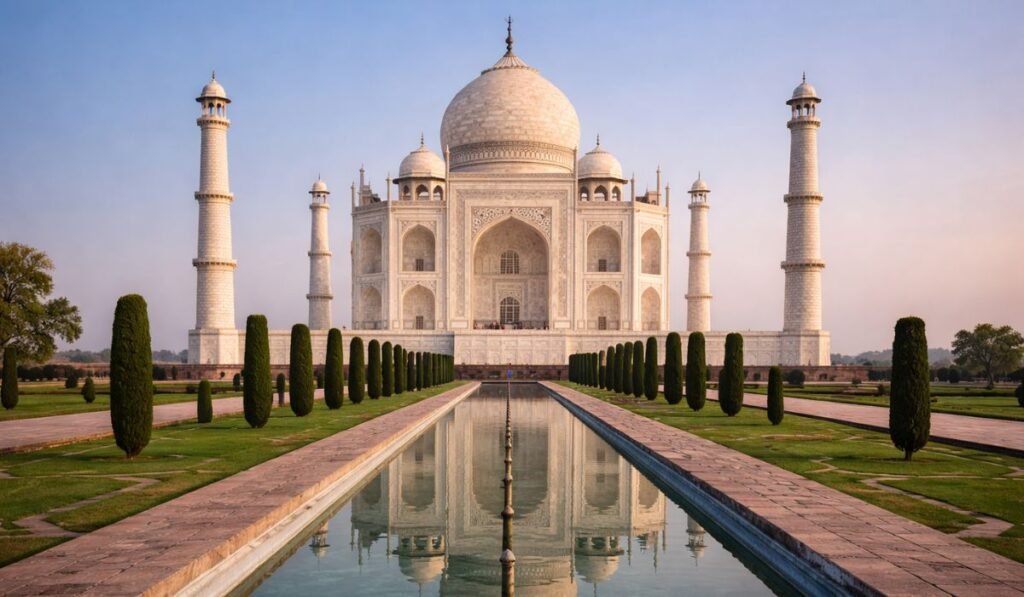
The Taj Mahal is an immense white-marble mausoleum (1631–1648) built by Emperor Shah Jahan in memory of his wife.
It is open daily (except Fridays) and opens 30 minutes before sunrise and closes 30 minutes before sunset. To avoid crowds (and the midday heat), plan to arrive at opening time. Sunrise visits are legendary for their soft pink light and relative calm. Allow at least 2–3 hours to explore the complex – wandering the gardens and terraces, absorbing views of the domes and minarets.
Tickets can be bought online or at the entrance gates (separate queues for foreign and Indian visitors). Foreign tourists pay a higher fee (currently ₹1,100 plus an optional ₹200 to enter the main tomb), while Indian visitors pay a nominal fee (₹50 plus optional ₹200).
Tip: Book e-tickets in advance to skip long lines. At the gate, you’ll be given free shoe covers, a bottle of water and a guide map – so you don’t need to carry heavy bags. Note that tripods, drones, large bags and food/drink are prohibited. Photography is allowed on the grounds, but no photos or videos are permitted inside the central mausoleum.
The best photo spots are across the reflecting pool or through the grand gate. A guided tour or audio guide can enrich your visit with stories of the Taj’s design, calligraphy and pietra-dura inlay.
You can easily include this experience in many Agra Tour Packages with Taj Mahal, which are designed to help visitors witness the monument at the best time of day while covering nearby attractions comfortably.
Agra Fort
Just 2 km from the Taj, the Agra Fort (Red Fort of Agra) is a massive 16th-century citadel of red sandstone. Built by Emperor Akbar (completed 1565–1573) on the ruins of an earlier fort, it later became the Mughal emperors’ main residence.
Inside its 2.5-km-long walls are lush gardens, courtyards and “fairy-tale” palaces. Key sites include the Jahangir Mahal and Khas Mahal (Shah Jahan’s white marble palace) and the audience halls (Diwan-i-Am and Diwan-i-Khas) where emperors held court. Don’t miss the two stunning marble mosques – the Moti Masjid and Nagina Masjid – added by Shah Jahan. From the riverside Musamman Burj you can also glimpse the Taj across the water.
The Fort is open from sunrise to sunset. Plan about 1–2 hours here: it’s easy to get lost among its corridors and pillars. If pressed for time, focus on the grand halls (Diwan-i-Am/Khas) and river-facing side. An official audio guide (in multiple languages) is available at the ticket counter. (Tip: Indians and SAARC visitors pay a modest fee (~₹50), while foreigners pay more, so it makes sense to buy a combined ticket or the ₹500 all-monuments pass if available.)
Itmad-ud-Daulah (Baby Taj)
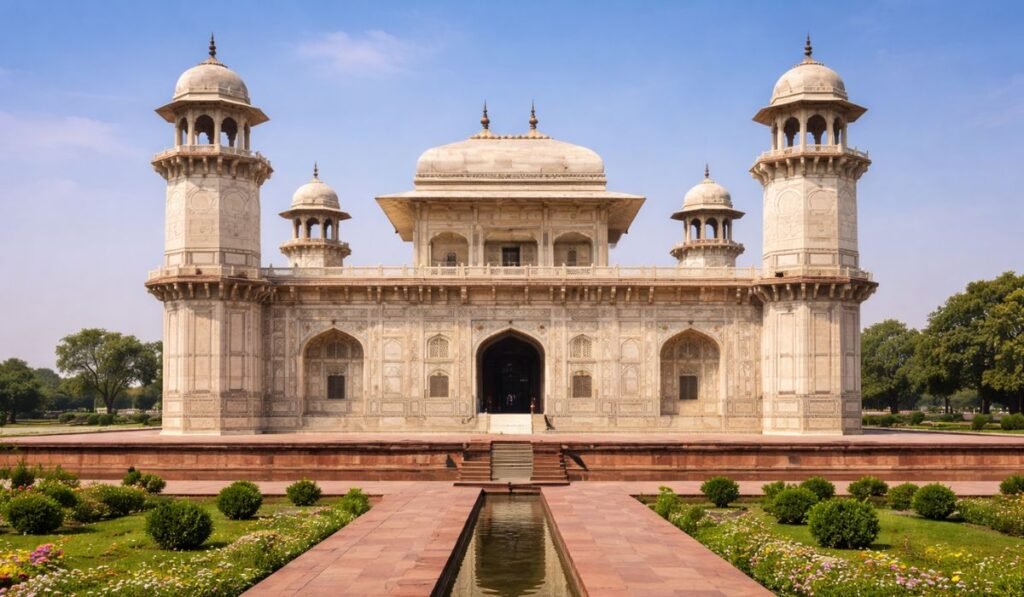
Sometimes called the “Baby Taj,” Itmad-ud-Daulah’s Tomb is a small jewel-like mausoleum on the Yamuna’s banks. Built in 1622–1628 by Empress Nur Jahan for her father (Mirza Ghiyas Beg), it was the first Indian tomb made entirely of white marble. Its refined design and fine pietra-dura inlay prefigure many elements of the Taj Mahal.
Walk through its geometric Charbagh garden and admire the delicate carvings and lattice screens. Visitors often note that some inlay patterns here are even more intricate than at the Taj. Because Itmad-ud-Daulah is much less crowded, you can linger for 30–45 minutes and take photos in peace. (There is a small entry fee, with a separate ticket.) This serene monument is a reminder of Agra’s Mughal artistry, and it can be enjoyed as a quick stop before or after lunch.
Mehtab Bagh
The Mehtab Bagh (Moonlight Garden) is a restored Mughal garden directly opposite the Taj Mahal, on the north bank of the Yamuna. It is famed for its sunset views of the Taj.
In late afternoon, when the west-facing Taj is bathed in golden light, its reflection shimmers in the long ponds of Mehtab Bagh. Stroll the manicured lawns and fountains as the Taj changes color with the setting sun.
Photographers love the framing of the Taj behind cypress trees and garden terraces. (Bring a camera with a telephoto lens if you have one.) Since the garden is small, you only need about 30–45 minutes here. Mehtab Bagh is open until dusk; plan to arrive at least half an hour before sunset.
Visitors should bring water, sun protection and mosquito repellent — the open grass and riverbank can be hot by day and buggy after dark.
Local Markets
No Agra trip is complete without a taste of its street life. Nearby the monuments, Agra’s bazaar neighborhoods pulse with color and culture.
In Kinari Bazaar (west of Jama Masjid), vendors sell bright textiles, embroidered scarves and wedding apparel, as well as traditional juttis (slip-on shoes) and jewelry. Wander the narrow lanes to see craftsmen at work. Sadar Bazaar is equally lively: look for Agra’s famous marble inlay souvenirs and leather goods (bags, shoes, jackets) along with antique shops.
It’s also a great place to sample street food. Try the local specialties: petha candy (sweet pumpkin) and spicy chaat at nearby stalls. Haggling is expected, so start low and bargain respectfully. (Tip: Always keep an eye on your belongings in crowded markets.)
Akbar’s Tomb in Sikandra (Optional)
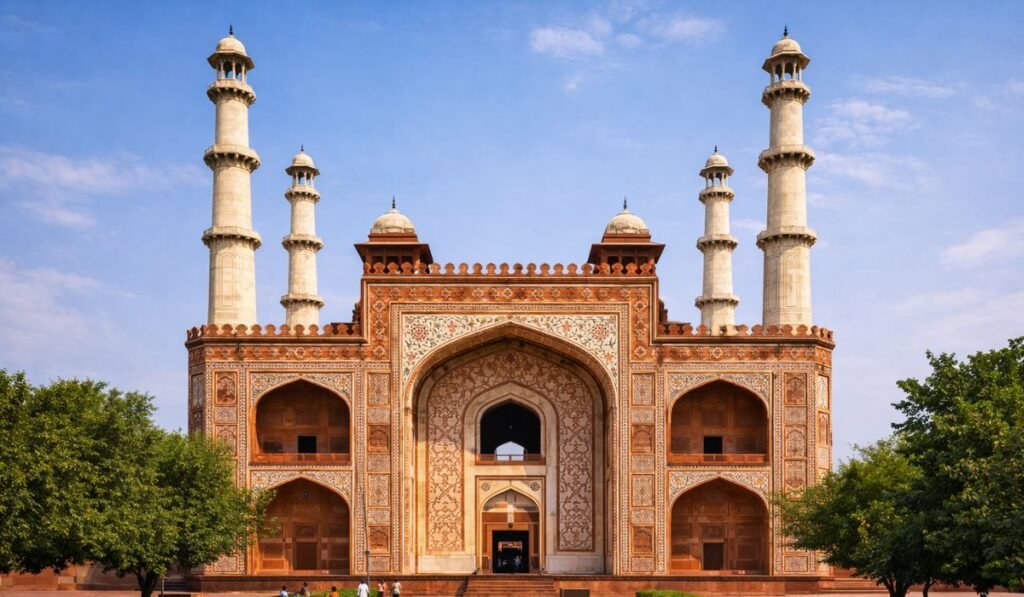
For those with extra time, Akbar’s Tomb at Sikandra (about 8 km from central Agra) is well worth a visit. This grand Mughal mausoleum was built 1605–1613 by Emperor Jahangir for his father, Akbar. Set within large Charbagh gardens, the tomb’s gateway imitates the style of Fatehpur Sikri’s Buland Darwaza, and the main tomb is a striking pyramid of red sandstone with white-marble trim.
It blends Persian, Islamic and Hindu designs. Exploring the carved arches and terraces can take about 1 hour. Sikandra is quieter than central Agra, so it’s a peaceful place to end the day. (If you skip Fatehpur Sikri due to time, Akbar’s Tomb is a closer substitute for extra Mughal flavor.)
One-Day Itinerary for Places to Visit in Agra
- 6:00 AM: Taj Mahal at Sunrise. Enter the Taj well before dawn (the gates open 30 min before sunrise) and watch its first light. Spend 2–3 hours here, as the morning mist or light crowds allow the best photos of the façade and reflecting pools.
- 8:30 AM: Breakfast near Agra Fort. Enjoy North Indian favorites (parathas, kachori, lassi) at a local café or dhaba en route to the Fort.
- 10:00 AM: Agra Fort (1.5–2 hours). Tour the Red Fort’s highlights – the Diwan-i-Aam (audience hall), Jahangiri Mahal, Sheesh Mahal (mirror palace) and Jaswant or Anguri Bagh (grape garden). Don’t miss Shah Jahan’s marble mosques overlooking the Yamuna.
- 12:30 PM: Lunch. Sample Mughlai or North Indian cuisine (seek out dum biryani, kebabs, or dal-handi) in the city or at Kinari Bazaar.
- 2:00 PM: Itmad-ud-Daulah (Baby Taj). Spend 30–45 minutes at this tranquil tomb, admiring its inlaid panels and gardens.
- 3:00 PM: Local Markets. Stroll Kinari and Sadar Bazaars for souvenirs (handicrafts, inlay art, leather goods) and snacks. Pick up a rose-water petha or spicy chaat as you shop.
- 4:30 PM: Return to hotel or rest. Beat the late-afternoon heat.
- 5:00 PM: Mehtab Bagh. Cross the river for the Taj at sunset. Arrive by 5 PM (or one hour before sunset) to relax on the lawns and photograph the golden Taj across the water.
- 7:00 PM: Dinner and Departure. Enjoy a final Agra meal – the city has many mughalai restaurants – before heading home or back to Delhi.
(Timing is approximate; adjust seasonally for sunrise/sunset times.)
Travel Tips for Top Places in Agra to Visit
- Tickets: Always buy Taj Mahal and Agra Fort tickets in advance if possible. Online booking saves time. Also consider the ₹500 All Monuments ticket (valid same day for Taj, Fort, Itmad, Fatehpur Sikri, Sikandra, etc. on one day).
- Timings: Arrive very early for the Taj and Fort to avoid crowds and midday heat. Note the Taj is closed on Fridays (it reopens Saturday morning).
- Best Season: October–March has pleasant weather and lower humidity; summer (April–June) is extremely hot. Monsoon (July–September) sees fewer tourists but expect rains. Dress in light, breathable clothes and carry a hat or umbrella.
- Guides: Hire only official ASI guides (they wear badges). Unofficial touts may overcharge. The ASI guides at monuments know history and shortcuts.
- Attire and Gear: Wear comfortable walking shoes (you will remove them at the Taj; shoe-covers are provided free). Modest dress is appreciated (no shorts inside tombs; women should cover shoulders). Carry bottled water (allowed inside the Taj complex) and sunscreen. Travel light to ease security checks.
- Local Transport: Pre-arrange an auto-rickshaw or taxi for the day, or use ride-hail apps (Ola, Uber) that now operate in Agra. Agree on fares beforehand for rickshaws if they don’t use meters. For shorter hops you can hail cycle-rickshaws. Beware of touts at the gate offering the “best deals” on tours or shops – these are usually overpriced.
- Safety: Agra is generally safe, but beware of pickpockets in crowded markets. Carry cash in a money belt or front pocket, and always drink bottled water. Beware of “shoe-cover” sellers outside the Taj – official shoe-covers are free at the entrance.
- Crowds: The Taj and Fort get busiest late morning. Weekdays (Tue–Thu) are slightly quieter than weekends. If time allows, visiting Mehtab Bagh or markets can give you a break from crowds.
- Nearby Options: If you have more time or stay overnight, add Fatehpur Sikri (red sandstone Mughal capital) or a night view of the Taj (full-moon dates only) to your plan.
FAQ – Places in Agra to Visit
What are the Taj Mahal opening hours?
The Taj is open daily (except Friday) from 30 minutes before sunrise until 30 minutes before sunset. Gates open about 5:30–6:00 AM (depending on season) for sunrise visits. Plan to enter as early as possible to avoid crowds
How long should I spend at each site?
At the Taj, spend about 2–3 hours to see the main views and gardens. Agra Fort deserves 1.5–2 hours, especially if you tour the palaces. The Baby Taj can be done in under an hour. Mehtab Bagh needs only ~30 minutes (mainly for sunset photos).
Is one day enough to see Agra’s highlights?
Yes – with an early start and efficient planning, you can cover the Taj, Fort, Itmad-ud-Daulah and even markets in a day. Our suggested itinerary above is designed for a full day. Staying overnight lets you see more leisurely or add Fatehpur Sikri.
How do I buy tickets?
You can buy tickets online (official ASI portal) or on-site at the entry gates. Online booking is recommended to skip queues. There are separate ticket windows for each monument (Western/Eastern gate for the Taj).
What should I wear?
Dress modestly and comfortably. At Taj and Fort you’ll remove shoes, so wear easy-slip-ons. For women, covering shoulders and head (especially during prayers at Friday mosque) is polite. Carry a hat or scarf for sun protection.
Are there facilities at these sites?
Yes. The Taj complex provides free bottled water, tourist maps, and shoe covers with foreign entry tickets. Toilets and cloakrooms (for small bags) are at the entrances. Battery-run carts are available for the walk from parking to the main gate. There are also ASI souvenir shops and a small museum at the Taj.
Any scams to watch out for?
Aeware of unofficial guides or street touts. Don’t buy overpriced “mandatory” things (shoe covers, maps, etc. – they’re free). Only hire guides from the official queue and use prepaid rickshaws/taxis. Always ask for official ASI entry fee receipts.
Can I visit the Taj at night?
Yes, the Taj offers special full-moon night viewing (five nights each lunar month, and two nights around Holi and Diwali). Tickets are limited and sold separately. On non-full-moon nights, the Taj is closed at night.
Conclusion – Places to Visit in Agra
Agra’s appeal goes far beyond its famous marble tomb. Even with just one day, you can immerse yourself in the city’s rich Mughal heritage – from the panoramic courtyards of Agra Fort to the exquisite pietra-dura artistry of the Baby Taj, and the vibrant lanes of Kinari Bazaar.
Each monument and market reveals a different facet of Agra’s history and culture. With early planning (and this guide in hand), you’ll leave knowing that Agra’s timeless charm extends well beyond a single monument.
Make the most of your visit by starting early, staying hydrated and keeping an eye on the time – but allow moments to simply soak in the magnificence of these sights. In Agra, every brick and bazaar has a story, so enjoy the journey and cherish the memories of India’s enchanting Mughal city.

Comments