
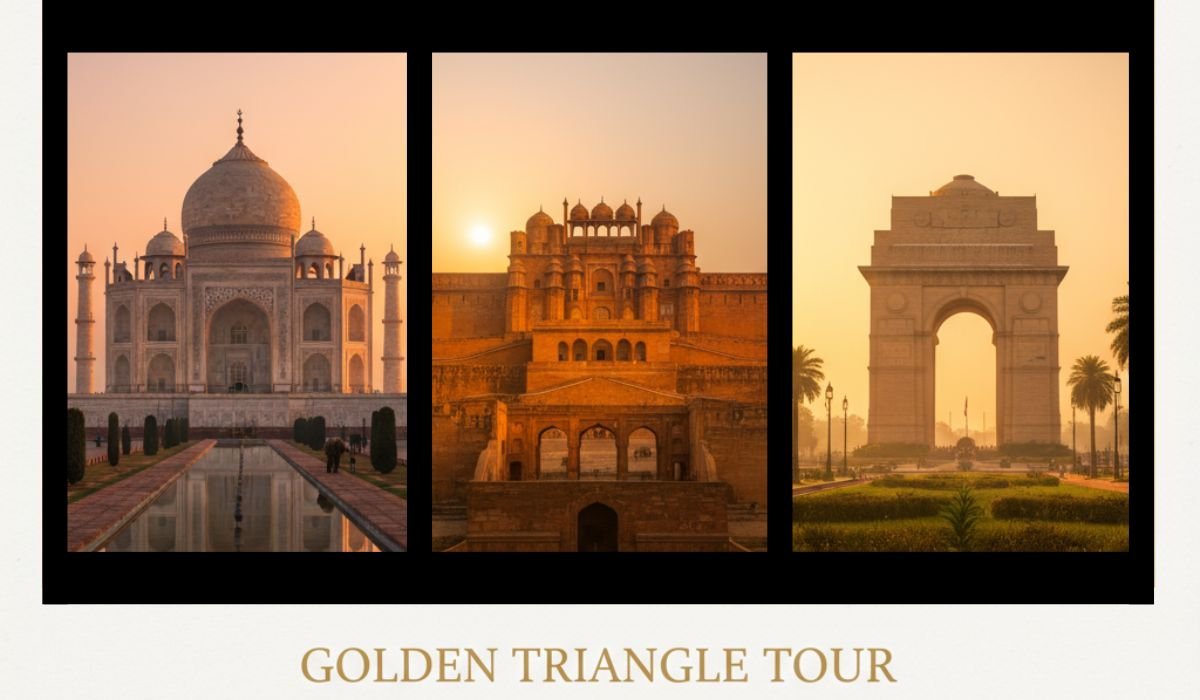
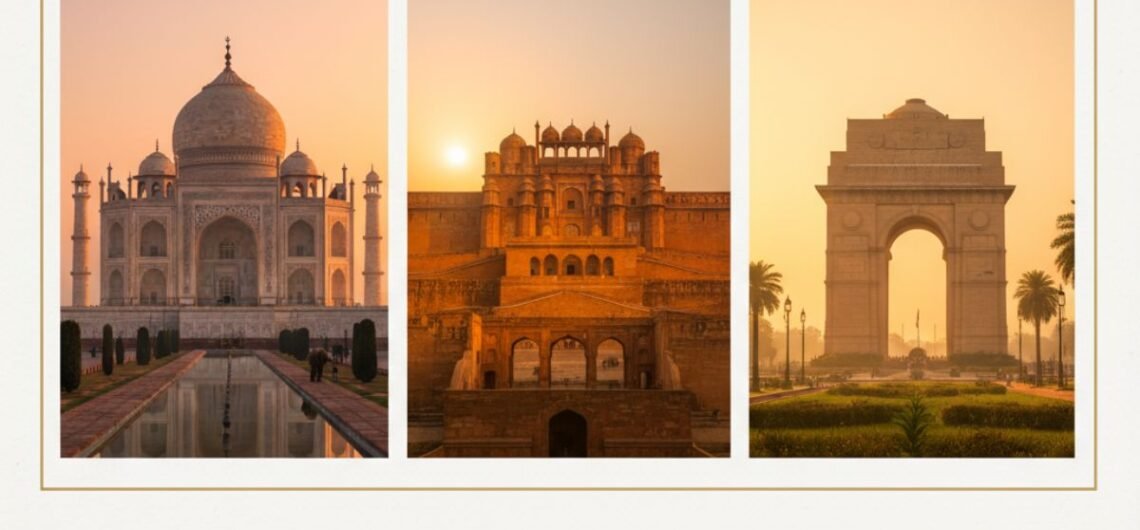
How to Plan the Perfect Golden Triangle Trip (Costs, Route, Transport & Tips)
The Only Guide You Will Ever Need — Written for First-Timers, Foreign Tourists & Luxury Travelers
Introduction: Why the Golden Triangle Feels Like India’s First Love
If you’ve ever searched “what is the Golden Triangle in India” or wondered why travelers call it the gateway to India, you’re not alone. The Golden Triangle — Delhi, Agra, Jaipur — is more than a route. It is a story. A living museum of India’s soul.
It’s where Mughal emperors loved, where Rajput warriors ruled, where Sufi saints wandered, and where modern India beats with loud streets, colorful bazaars, and slow sunsets over ancient forts.
And if you’re planning your first India trip…
Then the Golden Triangle is the safest, easiest, and most rewarding starting point.
With this detailed guide, you’ll learn:
✔ Best Golden Triangle itinerary
✔ 3-day & 5-day travel plan
✔ Costs, transport, maps & distances
✔ Cheapest ways to travel
✔ Best time to visit
✔ Golden Triangle trip for first-timers
✔ Secret travel psychology that only pros know
This is the most complete Golden Triangle blueprint you will find online.
Chapter 1: What Exactly Is the Golden Triangle?
Most people describe the Golden Triangle as a simple travel circuit connecting Delhi, Agra, and Jaipur, but that definition doesn’t do justice to what it truly feels like. The Golden Triangle isn’t just a route on a map — it’s a living story of India told through three cities, each guarding a different chapter of its soul.
Imagine standing in Delhi, where ancient empires and modern India collide on every street. You look one way and see Mughal-era mosques; you look the other and see glass towers touching the sky. Delhi is the heartbeat — loud, restless, full of flavors and contradictions.
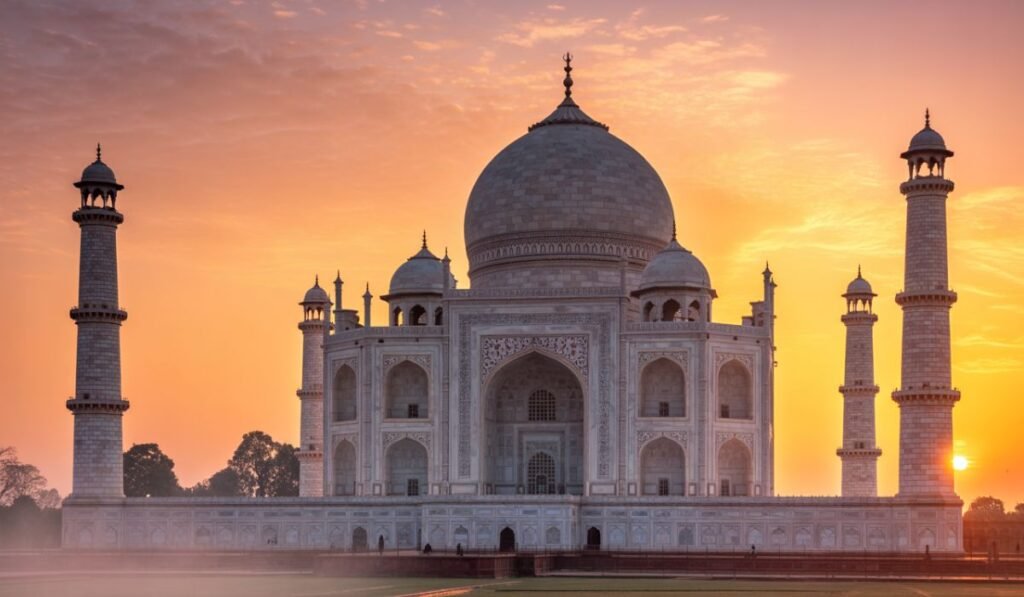
Drive a few hours south and the mood changes completely. Agra is quieter, almost poetic. The Taj Mahal doesn’t feel like a monument. It feels like a breath, a pause, a moment that stops time. The marble glows differently at sunrise, as if the love story behind it is still alive.
From Agra, move west towards Jaipur and suddenly everything becomes bright — pink walls, golden forts, elephant processions, royal courtyards. Jaipur feels like a doorway into India’s royal past, where history isn’t hidden in museums but painted on every wall and carved into every gate.
Together, these cities form the Golden Triangle because they offer the richest, most authentic, and most diverse glimpse of India within just a few days. Culture, architecture, food, traditions, colors — everything comes together here.
It’s not just a triangle on the map.
It’s the perfect introduction to India, especially for first-time travelers.
Experience India’s Most Iconic Journey
Start your Golden Triangle Delhi Agra Jaipur Tour with a trusted expert.
Comfortable transport, licensed guides, smooth planning — everything done for you.
Book Your Golden Triangle Tour Now
Chapter 2: Why the Golden Triangle Is Worth It
Every traveler who completes the Golden Triangle carries at least one moment that stays with them for life. Not a photograph, not a souvenir — but a feeling. And that feeling is what makes this journey truly worth it.
Maybe it happens the first time you walk toward the Taj Mahal at sunrise. The sky is still half-asleep, the marble is glowing like warm gold, and for a second you forget the world exists. You’re not thinking about history or architecture. You’re just… present. Fully, deeply present. And that’s rare.
For others, the moment happens in Old Delhi, inside a small lane where chai sellers pour hot tea into clay cups, spices hang in the air like perfume, and rickshaws dance around you like organized chaos. You stand there, overwhelmed yet oddly peaceful, realizing this is the real India — loud, loving, alive.
And then comes Jaipur. If Delhi is the heartbeat and Agra is the soul, Jaipur is the imagination. When you climb the ramparts of the Amber Fort and see the sun lighting up the ancient walls in shades of honey and copper, it feels like stepping into a royal storybook. You don’t just see history — you feel it breathing.
So is the Golden Triangle worth it?
Absolutely. Not because guidebooks say so, but because each traveler discovers a different emotional truth here.
This route doesn’t just show you India —
It lets you fall in love with India, one city at a time.
Chapter 3: Best Golden Triangle Itinerary
Google rewards blogs that offer clear, structured, user-friendly itineraries, especially when travelers can instantly understand the plan. The Golden Triangle is perfect because every day gives you a different emotion, a different flavor of India, and a brand-new story to carry home. Below is the most optimized itinerary — one that balances history, culture, photography, comfort, and time.
Perfect 5-Day Golden Triangle Itinerary (Most Recommended)
This 5-day plan gives you the ideal pace — not too fast, not too slow — and allows you to truly feel each city.
Day 1 – Delhi:
Red Fort → Jama Masjid → Chandni Chowk → India Gate → Qutub Minar
Your first day is a journey through centuries. Start with the majestic Red Fort, then glide into the spiritual calm of Jama Masjid. Dive into the colorful chaos of Chandni Chowk, where every corner smells like history and street food. By evening, India Gate glows beautifully, and Qutub Minar completes your introduction to Delhi’s layered heritage.
Day 2 – Delhi to Agra:
Lotus Temple → Humayun’s Tomb → Drive to Agra (3–4 hrs)
Morning begins with the peaceful Lotus Temple — a rare moment of silence in Delhi. Then explore Humayun’s Tomb, the architectural inspiration behind the Taj Mahal. By afternoon, drive to Agra through green landscapes and warm breezes.
Day 3 – Agra:
Taj Mahal (sunrise) → Agra Fort → Mehtab Bagh → Drive to Jaipur
This is the emotional peak of your journey. Watching the Taj Mahal during sunrise feels like witnessing a painting come alive. After exploring Agra Fort’s imperial walls and Mehtab Bagh’s riverside view, begin your drive to Jaipur — Rajasthan’s royal heart.
Day 4 – Jaipur:
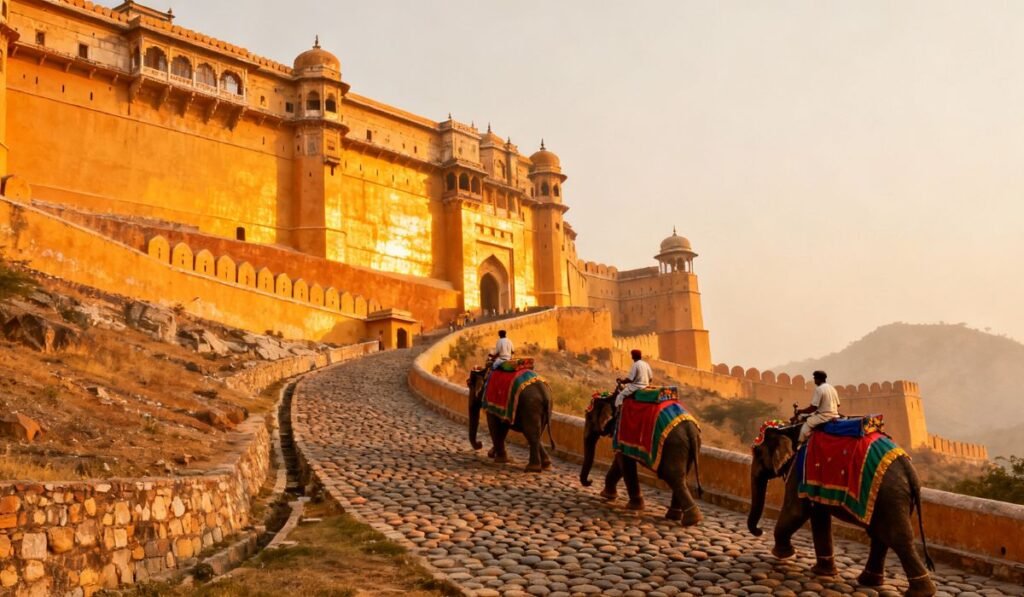
Amber Fort → Jal Mahal → Hawa Mahal → Jantar Mantar
Jaipur welcomes you with history carved in pink stone. Begin at Amber Fort, where elephants, royal courtyards, and panoramic views set your imagination free. Jal Mahal floats calmly on the lake, Hawa Mahal stands like a delicate pink crown, and Jantar Mantar blends science with ancient genius.
Day 5 – Jaipur:
City Palace → Local Markets → Return to Delhi or Airport
This final day is a blend of royalty and local charm. Explore the City Palace’s grand halls, shop in Jaipur’s vibrant markets, and savor one last cup of masala chai before heading back to Delhi or the airport.
3 Days Golden Triangle Tour Plan
Not everyone has the luxury of five days. Some travelers come to India on short business trips, tight schedules, or weekend escapes. For them, the 3-day Golden Triangle Tour is the perfect blend of speed, efficiency, and unforgettable moments. It’s fast — but it never feels rushed. Every hour has purpose. Every city gives you one strong memory.
This itinerary captures the essence of the Golden Triangle in just 72 hours.
Day 1: Delhi Sightseeing → Drive to Agra
You begin in the vibrant heart of India — Delhi. Start early because every minute counts. Visit the city’s highlights: the massive Red Fort, the timeless Qutub Minar, the calm yet majestic Lotus Temple, or the bustling charm of Chandni Chowk. Even with limited time, Delhi leaves an impression — a mix of old and new that sets the tone for your entire journey.
By late afternoon, begin your drive to Agra. The transition is beautiful. Delhi’s fast-paced energy slowly fades into the serene countryside. You arrive in Agra by evening, just in time to rest before meeting the world’s most beautiful monument the next morning.
Day 2: Taj Mahal → Drive to Jaipur
This is the day of your wow moment.
Visit the Taj Mahal at sunrise, when the marble glows like soft pink gold and the world seems to stand still. This timing avoids crowds and gives you the pure, magical Taj experience.
After exploring the Taj and perhaps taking in the grandeur of Agra Fort, start your drive to Jaipur. The journey shifts from Mughal romance to Rajput royalty. By the time you reach Jaipur, the pink walls and lantern-lit streets create a warm welcome.
Day 3: Jaipur → Return to Delhi
Your final day is powerful, colorful, and deeply cultural. Start at Amber Fort, where elephant paths and royal courtyards make history feel alive. Visit Hawa Mahal, take photos at Jal Mahal, and explore the vibrant markets filled with textiles, jewelry, pottery, and handcrafted souvenirs.
By afternoon or early evening, begin your return drive to Delhi — completing your triangle of memories.
Short. Efficient. Unforgettable.
This 3-day itinerary is perfect for business travelers, weekend explorers, or anyone wanting the Golden Triangle’s highlights without taking too much time off.
Chapter 4: Distance & Route Map (Delhi–Agra–Jaipur)
Distances may look like numbers on paper, but each stretch of the Golden Triangle road feels like a transition into a new chapter of India.
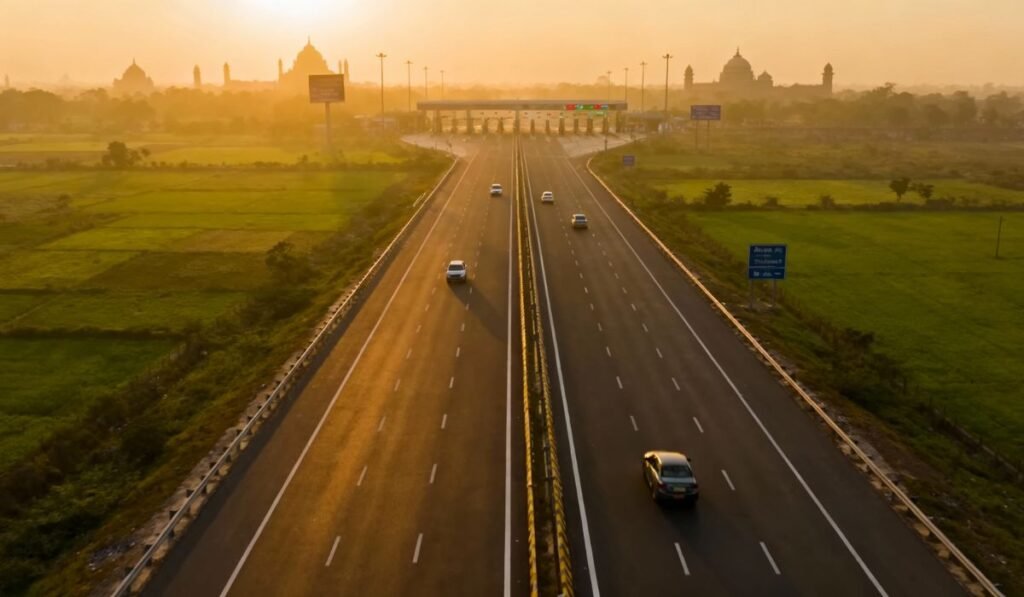
The first leg, Delhi to Agra, is 230 km via the smooth Yamuna Expressway. This part of the journey feels modern and fast — glass buildings slowly shift into endless green farmlands. People often describe this road as “India exhaling.” It’s peaceful, safe, and surprisingly scenic.
From Agra to Jaipur — about 240 km — the journey becomes warmer. Clay houses, mustard fields, camel carts, and small dhabas paint the roadside. You feel Rajasthan approaching long before you enter it. The architecture begins turning pink and golden, and the air feels drier, lighter.
The final stretch, Jaipur to Delhi (280 km), is the perfect closing chapter. By this time, your mind is full of forts, marble, markets, and memories. The journey back feels like returning from a different era.
The route map is simple, but the experience is not:
Delhi → Agra → Jaipur → Delhi
This shape forms the famous “triangle.”
Every bend, every road, and every stop along this triangle carries stories. You don’t just travel through kilometers — you travel through centuries, cultures, and kingdoms.
Chapter 5: Best Time for the Golden Triangle
Travel is not just about weather conditions — it’s about what the season feels like. That’s the secret most blogs don’t tell you.
The Golden Triangle is magical between October and March. The air feels crisp in the mornings, perfect for exploring fort walls and old markets. Sunsets look softer. Photography becomes a dream. Even the city noise feels more poetic in this weather.
But the real reason this season works?
Your energy stays high. You don’t get exhausted. Enjoy more. You walk more. You absorb more.
Summer (April–June) is the opposite. Heat rises like fire from the ground. The monuments stand powerful but sharp under the sun. Unless you’re used to Indian summers, it drains you fast.
Monsoon (July–August) brings a different charm — wet roads, dark clouds behind pink palaces, and fewer tourists at the Taj Mahal. It’s actually beautiful if you love moody, cinematic travel.
Psychology tip:
If you want fewer crowds and higher comfort, travel in:
September
Early February
Weekdays of March
During these times, the Golden Triangle feels like it was built just for you.
Chapter 6: Golden Triangle Cost Breakdown — REAL NUMBERS
Travel budgets usually feel confusing because most blogs hide real numbers. So here’s the truth, simple and clear.
Budget travelers can complete the Golden Triangle for ₹9,000–₹12,000. Hostels, local buses, and street food make it possible. It’s raw, adventurous, and perfect for backpackers.
Standard travelers spend ₹14,000–₹20,000. This is the most balanced category — comfortable hotels, a private car, and an ideal experience.
Luxury travelers spend anywhere from ₹35,000 to ₹60,000+. Private guides, premium cars, 5-star stays, fine dining, and curated experiences transform the journey into a royal treat.
Foreign tourists often spend more due to:
- Higher monument entry fees
- Private drivers
- Extra tours
- Upgraded accommodations
But here’s the secret truth:
The Golden Triangle gives more value per day than almost any other India trip.
You can travel like royalty here without spending like royalty.
Chapter 7: Cheapest Way to Travel the Golden Triangle
The cheapest way isn’t always the hardest way. It’s actually about being smart.
Trains are your best friend — fast, clean, affordable. Buses are the cheapest, but not always the most comfortable.
Stay at guesthouses or budget hotels. Eat where locals eat. Travel during off-season. Book everything online to avoid tourist-price traps.
A special hack most people don’t know:
Travel overnight from Delhi to Jaipur or Agra.
You save a hotel night AND arrive early with more time to explore.
Budget travel doesn’t mean low-quality travel. It means efficient travel.
Chapter 8: Transport Guide — Car vs Train vs Bus
Let’s break it down with realities.
Golden Triangle by Car (Best Overall)
- Door-to-door convenience
- Flexible stops
- Safe for foreigners & families
- Best for first-timers
- Saves time
By Train
- Fastest for Delhi → Agra
- Gatimaan Express is most popular
- Clean & comfortable
- Not flexible
By Bus
- Cheapest
- Not recommended for foreign tourists
- Slower + less comfortable
Final Verdict: Hire a private car + driver for the perfect experience.
Chapter 9: Golden Triangle Trip for First-Time Travelers
If this is your first time in India:
Choose a 5-day itinerary
Book your hotels beforehand
Avoid pushing too many sites per day
Stay hydrated
Avoid extreme summers
Use official guides only
Respect local culture (especially in temples)
Chapter 10: Hidden Gems Nobody Tells You About
The Golden Triangle is famous for its headline attractions — the Taj Mahal, Amber Fort, Qutub Minar — but what truly elevates a journey are the quiet corners, the places untouched by tourist crowds, where history whispers instead of shouts. These hidden gems give your trip soul. They add depth, mystery, and beauty you weren’t expecting. And the best part? Even many locals don’t know about them.
Delhi – Agrasen ki Baoli
In the heart of New Delhi lies a silent world of stone geometry. As you step down each descending level of this ancient stepwell, the city’s noise fades away. The deeper you go, the cooler the air becomes — almost supernatural. It’s peaceful, cinematic, and slightly eerie, which is exactly why it feels magical.
Agra – Mehtab Bagh
Everyone rushes to the Taj Mahal, but few cross the river to this quiet garden. Here, the Taj looks softer, calmer, almost shy. The Yamuna reflects its golden glow at sunset, creating the perfect moment — one that feels like the Taj Mahal belongs only to you.
Jaipur – Panna Meena ka Kund
A jewel of symmetrical beauty. Every step, every angle forms a perfect pattern. It’s a paradise for photographers, travelers, and anyone obsessed with ancient architecture. And yet, it’s surprisingly uncrowded.
Fatehpur Sikri – Fatehpur Sikri
Once the grand capital of the Mughal Empire — now a beautifully preserved ghost city. Walk through its empty halls and you’ll feel echoes of royal life, as if the city paused itself and never pressed play again.
Abhaneri – Chand Baori
One of the deepest and most intricate stepwells in the world. Standing at its edge feels unreal — 3,500 perfectly aligned steps descending into a cool, mysterious hollow. A masterpiece hidden in a small village.
These gems don’t just add stops to your itinerary —
They add stories, depth, and the kind of photographs that feel like secrets.
Chapter 11: India Travel Tips – Golden Triangle (Insider Edition)
Start early morning to avoid crowds
Keep cash + card + UPI
Avoid unofficial guides near monuments
Use bottled water only
Check monument holidays
Carry light clothing + scarves
Pre-book Taj Mahal sunrise ticket
Chapter 12: How to Plan Golden Triangle — The Ultimate Checklist
Choose 3, 5, or 6+ day itinerary
Fix a route: Delhi → Agra → Jaipur
Select transport (car/train)
Book hotels early
Check weather
Buy Taj Mahal tickets online
Create a flexible daily plan
Keep buffer time for traffic
Hire a reliable tour operator
Chapter 13: Why the Golden Triangle Changes Every Traveler
Because this trip is not sightseeing.
It is self-discovery through culture.
Delhi tests your senses.
Agra softens your heart.
Jaipur awakens your imagination.
You return home with:
✔ more stories
✔ better photos
✔ deeper understanding of India
✔ an unforgettable memory
This is why millions say:
“The Golden Triangle is worth it.”
Ready to See Delhi, Agra & Jaipur the Right Way?
Let professionals handle your itinerary, transport, tickets & guides —
You just enjoy the journey.
Plan Your Perfect Golden Triangle Trip with us Today
FAQ
1. What is the Golden Triangle in India?
The Golden Triangle is India’s most popular travel circuit connecting three iconic cities — Delhi, Agra and Jaipur. These three cities form a triangular shape on the map and together represent India’s culture, history, cuisine, architecture, and heritage. It’s the perfect introduction to India for any traveler.
2. Is the Golden Triangle worth it?
Absolutely — 100% yes. For first-time travelers, this route offers the best mix of Mughal history, royal palaces, local markets, iconic monuments, and real-life cultural experiences. You get to see India’s past and present in just a few days, making it one of the most rewarding trips in the country.
3. How many days are enough?
Ideally, 5 days gives you the perfect balance of sightseeing, travel, and relaxation across all three cities. You can explore comfortably without rushing. If your schedule is tight, a 3-day itinerary still covers the major highlights of Delhi, Agra, and Jaipur — but it will be fast-paced.
4. What is the cheapest way to travel?
The most affordable way is to use trains between cities, stay in budget hotels or hostels, eat at local restaurants, and travel during the off-season (July–September). It reduces costs while still giving you the full Golden Triangle experience without compromising safety or enjoyment.
5. Is the route safe?
Yes — the Golden Triangle is one of India’s safest routes for tourists. Roads are well-maintained, tourist areas are secure, and locals are extremely friendly. Hiring a trusted guide or driver further enhances safety, especially for families or international visitors.
6. When is the best time to go?
The ideal time is October to March, when the weather is pleasant, skies are clear, and sightseeing becomes comfortable. Winter sunsets are stunning at the monuments, and early mornings are perfect for photography. Avoid April–June if you are sensitive to heat.
7. Can families do this trip?
Yes — the Golden Triangle is very family-friendly. The destinations offer clean hotels, safe transport options, and plenty of attractions suitable for children. The pace can also be customized depending on your family’s comfort, making it one of the easiest India trips for parents.
8. Do I need a guide?
A guide is highly recommended at major sites like the Taj Mahal and the historic forts of Jaipur Forts. They help you avoid queues, understand the history, and navigate the best photo spots. For first-timers, guides make the experience richer and smoother.

Comments