<!-- wp:paragraph -->
<p>Planning a Rajasthan trip but worried about the summer heat? Many travellers often postpone their plans after hearing about Rajasthan’s high temperatures during May and June. However, with the right travel planning and flexible private AC transport, a Jaipur Udaipur tour in summer can actually turn out to be a comfortable and peaceful travel experience.</p>
<!-- /wp:paragraph -->
<!-- wp:paragraph -->
<p>Unlike peak winter months, summer travel in Rajasthan offers fewer crowds, better hotel deals, and more flexible sightseeing opportunities. If you are considering a Rajasthan trip in May or June, choosing a well-planned Jaipur Udaipur tour package with private travel can help you explore comfortably without worrying about extreme weather conditions.</p>
<!-- /wp:paragraph -->
<!-- wp:heading -->
<h2 class="wp-block-heading" id="h-how-hot-does-rajasthan-get-in-summer"><strong>How Hot Does Rajasthan Get in Summer?</strong></h2>
<!-- /wp:heading -->
<!-- wp:paragraph -->
<p>Rajasthan weather in summer, especially between April to June, usually ranges from 35°C to 45°C during the day. Jaipur experiences dry heat, while Udaipur’s climate is slightly more comfortable due to nearby lakes and greenery.</p>
<!-- /wp:paragraph -->
<!-- wp:paragraph -->
<p>However, most sightseeing in Rajasthan is best enjoyed during early mornings and evenings when the temperature is relatively pleasant. This is why many travellers prefer <a href="https://www.azaantravels.com/rajasthan-tour-packages/"><strong>Rajasthan Tour Packages with Jaipur Udaipur</strong></a> that include private AC travel and flexible sightseeing schedules to avoid the afternoon heat and travel comfortably.</p>
<!-- /wp:paragraph -->
<!-- wp:heading -->
<h2 class="wp-block-heading" id="h-benefits-of-visiting-jaipur-and-udaipur-in-summer"><strong>Benefits of Visiting Jaipur and Udaipur in Summer</strong></h2>
<!-- /wp:heading -->
<!-- wp:paragraph -->
<p>Travelling during the off-season in Rajasthan comes with several advantages:</p>
<!-- /wp:paragraph -->
<!-- wp:list -->
<ul class="wp-block-list"><!-- wp:list-item -->
<li>Lower hotel prices<br></li>
<!-- /wp:list-item -->
<!-- wp:list-item -->
<li>Less crowded tourist places in Jaipur and Udaipur<br></li>
<!-- /wp:list-item -->
<!-- wp:list-item -->
<li>Peaceful sightseeing experiences<br></li>
<!-- /wp:list-item -->
<!-- wp:list-item -->
<li>Easy entry to monuments<br></li>
<!-- /wp:list-item -->
<!-- wp:list-item -->
<li>Flexible travel itinerary<br></li>
<!-- /wp:list-item --></ul>
<!-- /wp:list -->
<!-- wp:paragraph -->
<p>With fewer crowds at major attractions, travellers can enjoy comfortable Rajasthan sightseeing without long queues or waiting time, especially when travelling through a flexible Jaipur Udaipur private tour.</p>
<!-- /wp:paragraph -->
<!-- wp:heading -->
<h2 class="wp-block-heading" id="h-challenges-of-rajasthan-summer-trip"><strong>Challenges of Rajasthan Summer Trip</strong></h2>
<!-- /wp:heading -->
<!-- wp:paragraph -->
<p>Like any travel season, summer travel in Rajasthan has its own challenges:</p>
<!-- /wp:paragraph -->
<!-- wp:list -->
<ul class="wp-block-list"><!-- wp:list-item -->
<li>Afternoon heat<br></li>
<!-- /wp:list-item -->
<!-- wp:list-item -->
<li>Outdoor sightseeing fatigue<br></li>
<!-- /wp:list-item -->
<!-- wp:list-item -->
<li>Public transport discomfort<br></li>
<!-- /wp:list-item --></ul>
<!-- /wp:list -->
<!-- wp:paragraph -->
<p>This is why many travellers prefer private Rajasthan tours with flexible sightseeing schedules. With the option to return to your hotel for a midday rest and continue exploring in the evening with AC private transport, the overall travel experience becomes much more comfortable.</p>
<!-- /wp:paragraph -->
<!-- wp:paragraph -->
<p>Travellers looking for a more comfortable Rajasthan summer trip often prefer Rajasthan Tour Packages with Jaipur Udaipur that include flexible sightseeing schedules and private AC travel.</p>
<!-- /wp:paragraph -->
<!-- wp:heading -->
<h2 class="wp-block-heading" id="h-smart-travel-tips-for-jaipur-udaipur-summer-tour"><strong>Smart Travel Tips for Jaipur Udaipur Summer Tour</strong></h2>
<!-- /wp:heading -->
<!-- wp:image {"id":3009,"sizeSlug":"large","linkDestination":"none"} -->
<figure class="wp-block-image size-large"><img src="https://www.azaantravels.com/wp-content/uploads/2026/02/udaipur-lake-pichola-evening-summer-tour-2-1024x597.jpg" alt="Is Summer a Good Time for Jaipur Udaipur Tour?" class="wp-image-3009"/></figure>
<!-- /wp:image -->
<!-- wp:paragraph -->
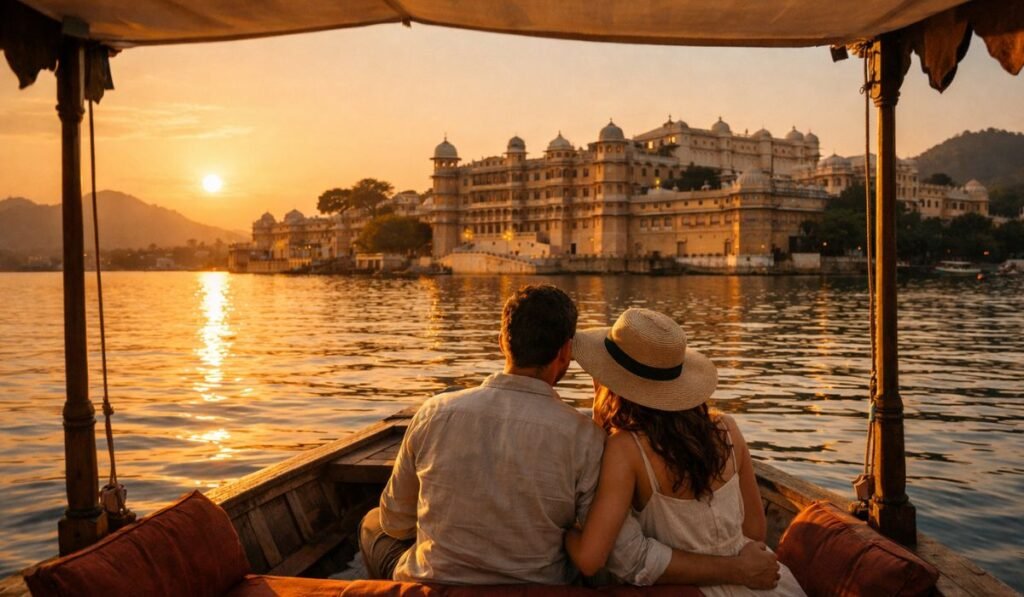
<p>If you are planning a Jaipur Udaipur tour in summer, managing your sightseeing schedule smartly can make a significant difference in your overall travel experience. Since Rajasthan’s temperature tends to rise during the afternoon hours, most travellers prefer adjusting their daily itinerary to explore major attractions during cooler parts of the day.</p>
<!-- /wp:paragraph -->
<!-- wp:paragraph -->
<p>Starting your sightseeing early in the morning allows you to comfortably visit forts, palaces, and local markets without dealing with peak heat conditions. Many popular tourist attractions in Jaipur and Udaipur are less crowded during early hours, making your experience more relaxed and enjoyable.</p>
<!-- /wp:paragraph -->
<!-- wp:paragraph -->
<p>It is also advisable to take a short afternoon rest at your hotel after completing morning sightseeing. This helps avoid unnecessary fatigue caused by extended outdoor exposure during hotter hours of the day. Later in the evening, you can continue visiting monuments, lakes, and cultural sites when the temperature becomes relatively pleasant again.</p>
<!-- /wp:paragraph -->
<!-- wp:paragraph -->
<p>Wearing light cotton clothes, using sunglasses, applying sunscreen, and staying hydrated throughout the day are small but important steps that can help you stay comfortable during your Rajasthan summer trip.</p>
<!-- /wp:paragraph -->
<!-- wp:paragraph -->
<p>However, following these travel tips effectively often requires a flexible sightseeing schedule. This is why many travellers prefer choosing a Jaipur Udaipur Tour Package with private AC car travel, which allows them to return to their hotel for midday rest and resume sightseeing in the evening without being restricted by fixed timings or public transport schedules.</p>
<!-- /wp:paragraph -->
<!-- wp:paragraph -->
<p>For travellers looking for a comfortable Rajasthan trip, private tour planning helps avoid unnecessary exposure to heat while maintaining a relaxed and flexible itinerary during summer travel in Rajasthan.</p>
<!-- /wp:paragraph -->
<!-- wp:heading -->
<h2 class="wp-block-heading" id="h-why-private-rajasthan-tour-is-best-in-summer"><strong>Why Private Rajasthan Tour is Best in Summer?</strong></h2>
<!-- /wp:heading -->
<!-- wp:image {"id":3008,"sizeSlug":"large","linkDestination":"none"} -->
<figure class="wp-block-image size-large"><img src="https://www.azaantravels.com/wp-content/uploads/2026/02/rajasthan-private-ac-car-summer-tour-1024x597.jpg" alt="Is Summer a Good Time for Jaipur Udaipur Tour?" class="wp-image-3008"/></figure>
<!-- /wp:image -->
<!-- wp:paragraph -->
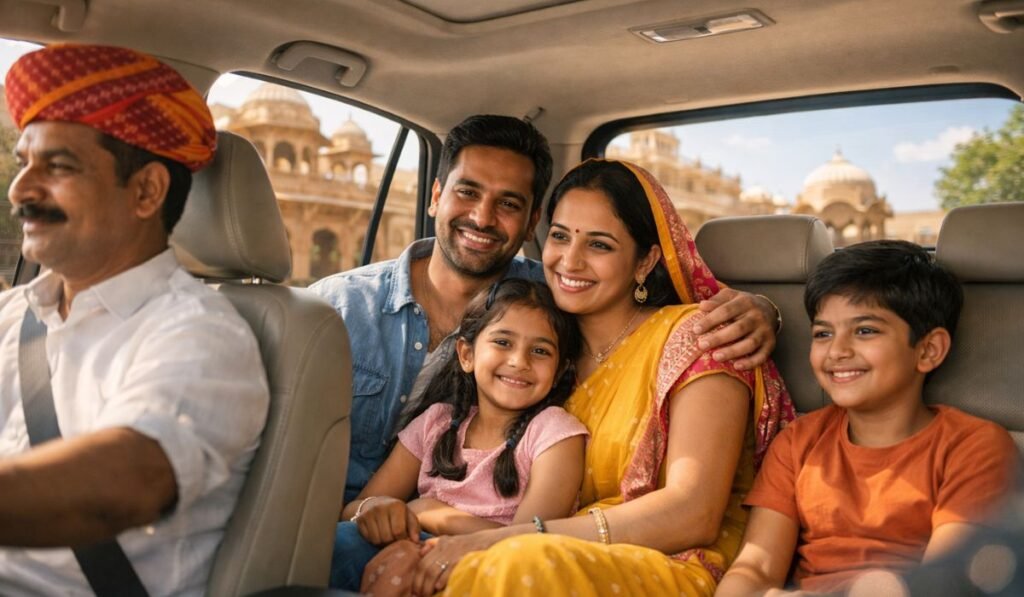
<p>Rajasthan afternoons can be extremely hot during peak summer months, especially when sightseeing involves visiting outdoor heritage sites and walking through forts or palace complexes. This is where private Rajasthan tour packages become a more comfortable travel option for families and couples who prefer a relaxed travel experience without rushing through their itinerary.</p>
<!-- /wp:paragraph -->
<!-- wp:paragraph -->
<p>Unlike fixed group tours or public transport-based travel, a Rajasthan tour by private AC car allows travellers to plan their day according to comfort levels. Instead of continuing sightseeing during peak afternoon hours, visitors can choose to return to their hotel for rest and resume their journey later in the evening.</p>
<!-- /wp:paragraph -->
<!-- wp:paragraph -->
<p>Here’s how private travel makes summer sightseeing more manageable:</p>
<!-- /wp:paragraph -->
<!-- wp:table -->
<figure class="wp-block-table"><table class="has-fixed-layout"><tbody><tr><td><strong>Summer Travel Problem</strong></td><td><strong>Private Tour Solution</strong></td></tr><tr><td>Heat exposure</td><td>Air-conditioned car</td></tr><tr><td>Fixed sightseeing time</td><td>Flexible schedule</td></tr><tr><td>Public taxi hassle</td><td>Hotel pickup</td></tr><tr><td>Family fatigue</td><td>Midday rest option</td></tr><tr><td>Travel confusion</td><td>Private driver support</td></tr></tbody></table></figure>
<!-- /wp:table -->
<!-- wp:paragraph -->
<p>With Rajasthan tour by car, families and couples can plan their sightseeing based on comfort rather than fixed timings. This flexibility becomes especially useful during summer months when avoiding peak heat can significantly improve the overall travel experience.</p>
<!-- /wp:paragraph -->
<!-- wp:paragraph -->
<p>As a result, travellers can enjoy exploring Jaipur and Udaipur at their own pace, ensuring a relaxed and enjoyable Rajasthan summer vacation without unnecessary travel fatigue.</p>
<!-- /wp:paragraph -->
<!-- wp:heading -->
<h2 class="wp-block-heading" id="h-is-it-worth-booking-jaipur-udaipur-tour-in-summer"><strong>Is It Worth Booking Jaipur Udaipur Tour in Summer?</strong></h2>
<!-- /wp:heading -->
<!-- wp:paragraph -->
<p>Yes, summer can be a good time to visit Jaipur and Udaipur for:</p>
<!-- /wp:paragraph -->
<!-- wp:list -->
<ul class="wp-block-list"><!-- wp:list-item -->
<li>Budget travellers<br></li>
<!-- /wp:list-item -->
<!-- wp:list-item -->
<li>Families with kids<br></li>
<!-- /wp:list-item -->
<!-- wp:list-item -->
<li>Couples planning peaceful trips<br></li>
<!-- /wp:list-item -->
<!-- wp:list-item -->
<li>Photographers<br></li>
<!-- /wp:list-item -->
<!-- wp:list-item -->
<li>Off-season travellers<br></li>
<!-- /wp:list-item --></ul>
<!-- /wp:list -->
<!-- wp:paragraph -->
<p>With proper planning and comfortable private travel arrangements, a Rajasthan summer trip becomes both enjoyable and cost-effective.</p>
<!-- /wp:paragraph -->
<!-- wp:heading -->
<h2 class="wp-block-heading" id="h-plan-your-summer-rajasthan-trip-today"><strong>Plan Your Summer Rajasthan Trip Today</strong></h2>
<!-- /wp:heading -->
<!-- wp:paragraph -->
<p>If you are looking for a comfortable way to explore Rajasthan during summer, avoid public transport discomfort and enjoy flexible sightseeing with our <a href="https://www.azaantravels.com/rajasthan-tour-packages/"><strong>Rajasthan Tour Packages with Jaipur Udaipur</strong></a>.</p>
<!-- /wp:paragraph -->
<!-- wp:paragraph -->
<p>Book your Jaipur Udaipur Private Tour today and travel stress-free with private AC car transport designed for comfortable Rajasthan travel even during peak summer months.</p>
<!-- /wp:paragraph -->
<!-- wp:heading {"level":1} -->
<h1 class="wp-block-heading" id="h-faqs"><strong>FAQs</strong></h1>
<!-- /wp:heading -->
<!-- wp:paragraph -->
<p><strong>Is Rajasthan too hot in May?</strong><strong><br></strong> Yes, Rajasthan temperature in May can be high, but with early morning sightseeing and private AC travel, your trip can still be comfortable.</p>
<!-- /wp:paragraph -->
<!-- wp:paragraph -->
<p><strong>Can we visit Udaipur in June?</strong><strong><br></strong> Yes, Udaipur’s climate is relatively pleasant due to nearby lakes, making it suitable for summer travel.</p>
<!-- /wp:paragraph -->
<!-- wp:paragraph -->
<p><strong>Is Rajasthan trip possible with kids in summer?</strong><strong><br></strong> Yes, with flexible itineraries and private transport, families can comfortably explore Jaipur and Udaipur.</p>
<!-- /wp:paragraph -->
<!-- wp:paragraph -->
<p><strong>Best time to visit Rajasthan for budget trip?</strong><strong><br></strong> Summer months are considered off-season and often offer better hotel and travel deals.</p>
<!-- /wp:paragraph -->
<!-- wp:paragraph -->
<p><strong>Is private AC tour recommended in summer?</strong><strong><br></strong> Yes, private Rajasthan tours with AC cars provide a comfortable and stress-free travel experience during summer.</p>
<!-- /wp:paragraph -->
Planning a Rajasthan trip but worried about the summer heat? Many travellers often postpone their plans after hearing about Rajasthan’s high temperatures during May and June. However, with the right travel planning and flexible private AC transport, a Jaipur Udaipur tour in summer can actually turn out to be a comfortable and peaceful travel experience.
Unlike peak winter months, summer travel in Rajasthan offers fewer crowds, better hotel deals, and more flexible sightseeing opportunities. If you are considering a Rajasthan trip in May or June, choosing a well-planned Jaipur Udaipur tour package with private travel can help you explore comfortably without worrying about extreme weather conditions.
How Hot Does Rajasthan Get in Summer?
Rajasthan weather in summer, especially between April to June, usually ranges from 35°C to 45°C during the day. Jaipur experiences dry heat, while Udaipur’s climate is slightly more comfortable due to nearby lakes and greenery.
However, most sightseeing in Rajasthan is best enjoyed during early mornings and evenings when the temperature is relatively pleasant. This is why many travellers prefer Rajasthan Tour Packages with Jaipur Udaipur that include private AC travel and flexible sightseeing schedules to avoid the afternoon heat and travel comfortably.
Benefits of Visiting Jaipur and Udaipur in Summer
Travelling during the off-season in Rajasthan comes with several advantages:
Lower hotel prices
Less crowded tourist places in Jaipur and Udaipur
Peaceful sightseeing experiences
Easy entry to monuments
Flexible travel itinerary
With fewer crowds at major attractions, travellers can enjoy comfortable Rajasthan sightseeing without long queues or waiting time, especially when travelling through a flexible Jaipur Udaipur private tour.
Challenges of Rajasthan Summer Trip
Like any travel season, summer travel in Rajasthan has its own challenges:
Afternoon heat
Outdoor sightseeing fatigue
Public transport discomfort
This is why many travellers prefer private Rajasthan tours with flexible sightseeing schedules. With the option to return to your hotel for a midday rest and continue exploring in the evening with AC private transport, the overall travel experience becomes much more comfortable.
Travellers looking for a more comfortable Rajasthan summer trip often prefer Rajasthan Tour Packages with Jaipur Udaipur that include flexible sightseeing schedules and private AC travel.
Smart Travel Tips for Jaipur Udaipur Summer Tour
If you are planning a Jaipur Udaipur tour in summer, managing your sightseeing schedule smartly can make a significant difference in your overall travel experience. Since Rajasthan’s temperature tends to rise during the afternoon hours, most travellers prefer adjusting their daily itinerary to explore major attractions during cooler parts of the day.
Starting your sightseeing early in the morning allows you to comfortably visit forts, palaces, and local markets without dealing with peak heat conditions. Many popular tourist attractions in Jaipur and Udaipur are less crowded during early hours, making your experience more relaxed and enjoyable.
It is also advisable to take a short afternoon rest at your hotel after completing morning sightseeing. This helps avoid unnecessary fatigue caused by extended outdoor exposure during hotter hours of the day. Later in the evening, you can continue visiting monuments, lakes, and cultural sites when the temperature becomes relatively pleasant again.
Wearing light cotton clothes, using sunglasses, applying sunscreen, and staying hydrated throughout the day are small but important steps that can help you stay comfortable during your Rajasthan summer trip.
However, following these travel tips effectively often requires a flexible sightseeing schedule. This is why many travellers prefer choosing a Jaipur Udaipur Tour Package with private AC car travel, which allows them to return to their hotel for midday rest and resume sightseeing in the evening without being restricted by fixed timings or public transport schedules.
For travellers looking for a comfortable Rajasthan trip, private tour planning helps avoid unnecessary exposure to heat while maintaining a relaxed and flexible itinerary during summer travel in Rajasthan.
Why Private Rajasthan Tour is Best in Summer?
Rajasthan afternoons can be extremely hot during peak summer months, especially when sightseeing involves visiting outdoor heritage sites and walking through forts or palace complexes. This is where private Rajasthan tour packages become a more comfortable travel option for families and couples who prefer a relaxed travel experience without rushing through their itinerary.
Unlike fixed group tours or public transport-based travel, a Rajasthan tour by private AC car allows travellers to plan their day according to comfort levels. Instead of continuing sightseeing during peak afternoon hours, visitors can choose to return to their hotel for rest and resume their journey later in the evening.
Here’s how private travel makes summer sightseeing more manageable:
Summer Travel Problem
Private Tour Solution
Heat exposure
Air-conditioned car
Fixed sightseeing time
Flexible schedule
Public taxi hassle
Hotel pickup
Family fatigue
Midday rest option
Travel confusion
Private driver support
With Rajasthan tour by car, families and couples can plan their sightseeing based on comfort rather than fixed timings. This flexibility becomes especially useful during summer months when avoiding peak heat can significantly improve the overall travel experience.
As a result, travellers can enjoy exploring Jaipur and Udaipur at their own pace, ensuring a relaxed and enjoyable Rajasthan summer vacation without unnecessary travel fatigue.
Is It Worth Booking Jaipur Udaipur Tour in Summer?
Yes, summer can be a good time to visit Jaipur and Udaipur for:
Budget travellers
Families with kids
Couples planning peaceful trips
Photographers
Off-season travellers
With proper planning and comfortable private travel arrangements, a Rajasthan summer trip becomes both enjoyable and cost-effective.
Plan Your Summer Rajasthan Trip Today
If you are looking for a comfortable way to explore Rajasthan during summer, avoid public transport discomfort and enjoy flexible sightseeing with our Rajasthan Tour Packages with Jaipur Udaipur.
Book your Jaipur Udaipur Private Tour today and travel stress-free with private AC car transport designed for comfortable Rajasthan travel even during peak summer months.
FAQs
Is Rajasthan too hot in May? Yes, Rajasthan temperature in May can be high, but with early morning sightseeing and private AC travel, your trip can still be comfortable.
Can we visit Udaipur in June? Yes, Udaipur’s climate is relatively pleasant due to nearby lakes, making it suitable for summer travel.
Is Rajasthan trip possible with kids in summer? Yes, with flexible itineraries and private transport, families can comfortably explore Jaipur and Udaipur.
Best time to visit Rajasthan for budget trip? Summer months are considered off-season and often offer better hotel and travel deals.
Is private AC tour recommended in summer? Yes, private Rajasthan tours with AC cars provide a comfortable and stress-free travel experience during summer.
<!-- wp:paragraph -->
<p>If you're visiting India for the first time, experiencing the beauty of the Taj Mahal is probably at the top of your travel bucket list. Located in the historic city of Agra, the Taj Mahal attracts millions of tourists every year who come to witness its timeless architecture, romantic history, and Mughal-era craftsmanship.</p>
<!-- /wp:paragraph -->
<!-- wp:paragraph -->
<p>However, planning your visit independently can sometimes feel overwhelming — especially when it comes to managing transportation, entry tickets, local travel, and finding a reliable guide. That’s why many first-time travelers prefer booking professionally organized <strong>Taj Mahal Agra tours</strong> to enjoy a smooth and comfortable sightseeing experience.</p>
<!-- /wp:paragraph -->
<!-- wp:paragraph -->
<p>A well-planned Taj Mahal sightseeing tour not only helps you explore the monument without hassle but also allows you to discover other iconic attractions in Agra with the help of a knowledgeable local guide. Whether you're planning a Taj Mahal trip from Delhi or looking for a complete Agra travel experience, choosing the right tour package can make your journey more convenient, informative, and memorable.</p>
<!-- /wp:paragraph -->
<!-- wp:heading -->
<h2 class="wp-block-heading" id="h-why-choose-a-taj-mahal-agra-tour-for-your-first-visit">Why Choose a Taj Mahal Agra Tour for Your First Visit?</h2>
<!-- /wp:heading -->
<!-- wp:paragraph -->
<p>Visiting the Taj Mahal for the first time is an unforgettable experience — but without proper planning, it can also become tiring and confusing. From arranging transportation to understanding monument entry rules and finding the best time to visit, there are many small details that can affect your overall trip.</p>
<!-- /wp:paragraph -->
<!-- wp:paragraph -->
<p>This is where booking a professionally organized <strong><a href="https://www.azaantravels.com/agra-tour-packages/">Taj Mahal Agra tour</a></strong> becomes highly beneficial, especially for first-time travelers.</p>
<!-- /wp:paragraph -->
<!-- wp:paragraph -->
<p>Here’s why:</p>
<!-- /wp:paragraph -->
<!-- wp:image {"id":2998,"sizeSlug":"large","linkDestination":"none"} -->
<figure class="wp-block-image size-large"><img src="https://www.azaantravels.com/wp-content/uploads/2026/02/Untitled-design-2026-02-24T165532.954-1024x597.jpg" alt="Best Taj Mahal Agra Tours for First-Time Visitors: Complete Travel Guide" class="wp-image-2998"/></figure>
<!-- /wp:image -->
<!-- wp:list -->
<ul class="wp-block-list"><!-- wp:list-item -->
<li><strong>Skip-the-Line Access:</strong> Guided Taj Mahal tours often help you avoid long waiting queues at the entrance, saving valuable sightseeing time.<br></li>
<!-- /wp:list-item -->
<!-- wp:list-item -->
<li><strong>Expert Local Guide:</strong> A knowledgeable guide enhances your visit by sharing historical facts, architectural insights, and lesser-known stories behind the monument.<br></li>
<!-- /wp:list-item -->
<!-- wp:list-item -->
<li><strong>Comfortable Travel:</strong> Most Agra sightseeing packages include private AC vehicles for a relaxed journey from Delhi to Agra and back.<br></li>
<!-- /wp:list-item -->
<!-- wp:list-item -->
<li><strong>Time Efficiency:</strong> An organized Taj Mahal trip follows a planned itinerary, ensuring you cover all major attractions in a single day without rushing.<br></li>
<!-- /wp:list-item -->
<!-- wp:list-item -->
<li><strong>Safety & Convenience:</strong> From hotel pickup to monument entry assistance, everything is managed for a smooth travel experience.<br></li>
<!-- /wp:list-item --></ul>
<!-- /wp:list -->
<!-- wp:paragraph -->
<p>For anyone planning their first Agra tour, choosing a guided Taj Mahal travel experience ensures you enjoy the monument and nearby attractions without worrying about logistics or local arrangements.</p>
<!-- /wp:paragraph -->
<!-- wp:heading -->
<h2 class="wp-block-heading" id="h-types-of-taj-mahal-agra-tours-available">Types of Taj Mahal Agra Tours Available</h2>
<!-- /wp:heading -->
<!-- wp:paragraph -->
<p>When planning your first visit, it’s important to choose the right type of <strong>Taj Mahal Agra tour</strong> based on your schedule, travel style, and comfort preferences. From quick same-day trips to more relaxed overnight stays, there are several Agra tour options designed for different kinds of travelers.</p>
<!-- /wp:paragraph -->
<!-- wp:heading {"level":3} -->
<h3 class="wp-block-heading" id="h-nbsp-same-day-taj-mahal-tour"> Same Day Taj Mahal Tour</h3>
<!-- /wp:heading -->
<!-- wp:paragraph -->
<p>A same day Taj Mahal tour from Delhi is one of the most popular choices among tourists who have limited time but still want to explore Agra’s top attractions. This tour usually includes:</p>
<!-- /wp:paragraph -->
<!-- wp:list -->
<ul class="wp-block-list"><!-- wp:list-item -->
<li>Early morning pickup from Delhi<br></li>
<!-- /wp:list-item -->
<!-- wp:list-item -->
<li>Comfortable AC travel via Yamuna Expressway<br></li>
<!-- /wp:list-item -->
<!-- wp:list-item -->
<li>Visit to the Taj Mahal<br></li>
<!-- /wp:list-item -->
<!-- wp:list-item -->
<li>Agra Fort sightseeing<br></li>
<!-- /wp:list-item -->
<!-- wp:list-item -->
<li>Lunch at a local restaurant<br></li>
<!-- /wp:list-item -->
<!-- wp:list-item -->
<li>Return to Delhi by evening<br></li>
<!-- /wp:list-item --></ul>
<!-- /wp:list -->
<!-- wp:paragraph -->
<p>This type of Taj Mahal day trip is ideal for travelers who want to experience Agra in a single day without an overnight stay.</p>
<!-- /wp:paragraph -->
<!-- wp:heading {"level":3} -->
<h3 class="wp-block-heading" id="h-nbsp-sunrise-taj-mahal-tour"> Sunrise Taj Mahal Tour</h3>
<!-- /wp:heading -->
<!-- wp:paragraph -->
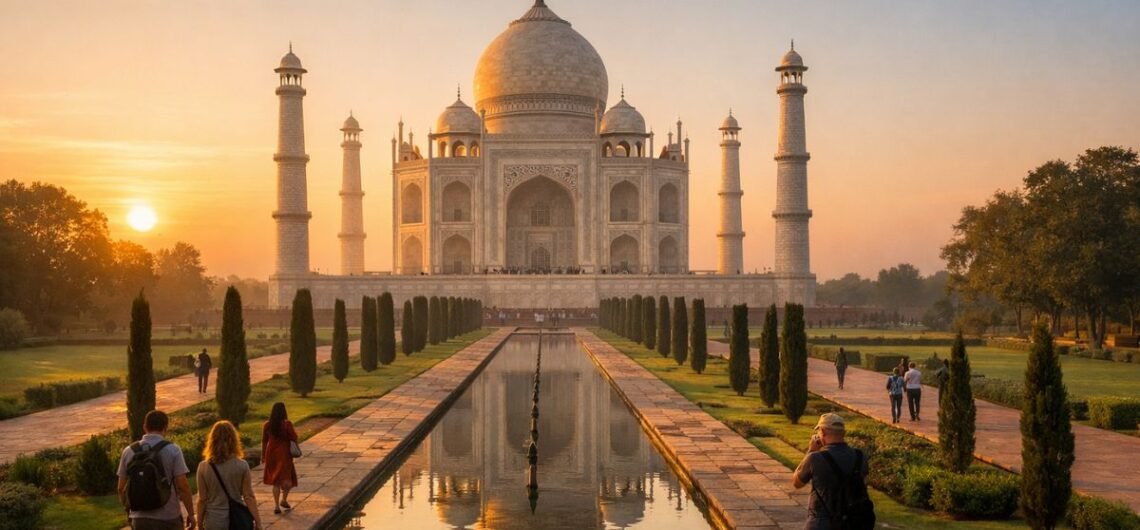
<p>A <a href="https://www.azaantravels.com/tours/sunrise-tour-of-taj-mahal-by-car/">Taj Mahal sunrise tour</a> offers a peaceful and less crowded experience of the monument during the early morning hours. The soft golden light at sunrise enhances the marble’s beauty and provides excellent photography opportunities.</p>
<!-- /wp:paragraph -->
<!-- wp:paragraph -->
<p>This Agra travel package usually includes:</p>
<!-- /wp:paragraph -->
<!-- wp:list -->
<ul class="wp-block-list"><!-- wp:list-item -->
<li>Early morning departure from Delhi<br></li>
<!-- /wp:list-item -->
<!-- wp:list-item -->
<li>Guided Taj Mahal visit at sunrise<br></li>
<!-- /wp:list-item -->
<!-- wp:list-item -->
<li>Breakfast after sightseeing<br></li>
<!-- /wp:list-item -->
<!-- wp:list-item -->
<li>Visit to Agra Fort or Mehtab Bagh<br></li>
<!-- /wp:list-item --></ul>
<!-- /wp:list -->
<!-- wp:paragraph -->
<p>Perfect for those who want to enjoy the monument in a calm and scenic environment.</p>
<!-- /wp:paragraph -->
<!-- wp:heading {"level":3} -->
<h3 class="wp-block-heading" id="h-nbsp-overnight-agra-tour"> Overnight Agra Tour</h3>
<!-- /wp:heading -->
<!-- wp:paragraph -->
<p>If you prefer a relaxed itinerary, an overnight Agra tour allows you to explore the city at a slower pace. This tour generally includes:</p>
<!-- /wp:paragraph -->
<!-- wp:list -->
<ul class="wp-block-list"><!-- wp:list-item -->
<li>Hotel accommodation in Agra<br></li>
<!-- /wp:list-item -->
<!-- wp:list-item -->
<li>Visit to Taj Mahal at sunrise<br></li>
<!-- /wp:list-item -->
<!-- wp:list-item -->
<li>Exploration of Agra Fort<br></li>
<!-- /wp:list-item -->
<!-- wp:list-item -->
<li>Visit to local markets or Mehtab Bagh<br></li>
<!-- /wp:list-item --></ul>
<!-- /wp:list -->
<!-- wp:paragraph -->
<p>An overnight Taj Mahal trip gives you more time to experience Agra’s cultural heritage without rushing.</p>
<!-- /wp:paragraph -->
<!-- wp:heading {"level":3} -->
<h3 class="wp-block-heading" id="h-nbsp-private-taj-mahal-tour"> Private Taj Mahal Tour</h3>
<!-- /wp:heading -->
<!-- wp:paragraph -->
<p>A private Taj Mahal tour is best suited for travelers looking for a personalized and flexible travel experience. It typically includes:</p>
<!-- /wp:paragraph -->
<!-- wp:list -->
<ul class="wp-block-list"><!-- wp:list-item -->
<li>Private AC vehicle<br></li>
<!-- /wp:list-item -->
<!-- wp:list-item -->
<li>Dedicated tour guide<br></li>
<!-- /wp:list-item -->
<!-- wp:list-item -->
<li>Custom sightseeing itinerary<br></li>
<!-- /wp:list-item -->
<!-- wp:list-item -->
<li>Flexible pickup and drop timings<br></li>
<!-- /wp:list-item --></ul>
<!-- /wp:list -->
<!-- wp:paragraph -->
<p>Ideal for families, couples, or small groups seeking comfort and exclusivity during their Agra sightseeing tour.</p>
<!-- /wp:paragraph -->
<!-- wp:heading -->
<h2 class="wp-block-heading" id="h-top-attractions-included-in-taj-mahal-agra-tours">Top Attractions Included in Taj Mahal Agra Tours</h2>
<!-- /wp:heading -->
<!-- wp:paragraph -->
<p>Most professionally organized <strong>Taj Mahal Agra tours</strong> are designed to give travelers a complete sightseeing experience by covering not just the Taj Mahal but also other important historical landmarks in the city. These attractions showcase the rich Mughal heritage and architectural brilliance that make Agra one of the most visited tourist destinations in India.</p>
<!-- /wp:paragraph -->
<!-- wp:paragraph -->
<p>Here are the top places usually included in a Taj Mahal Agra sightseeing tour:</p>
<!-- /wp:paragraph -->
<!-- wp:heading {"level":3} -->
<h3 class="wp-block-heading" id="h-nbsp-taj-mahal"> Taj Mahal</h3>
<!-- /wp:heading -->
<!-- wp:paragraph -->
<p>The highlight of every Agra travel package, the Taj Mahal is one of the Seven Wonders of the World and a UNESCO World Heritage Site. Built by Emperor Shah Jahan in memory of his wife Mumtaz Mahal, this white marble monument is known for its intricate carvings, symmetrical design, and timeless beauty.</p>
<!-- /wp:paragraph -->
<!-- wp:heading {"level":3} -->
<h3 class="wp-block-heading" id="h-nbsp-agra-fort"> Agra Fort</h3>
<!-- /wp:heading -->
<!-- wp:paragraph -->
<p>Located just a few kilometers from the Taj Mahal, Agra Fort is another UNESCO-listed monument that offers a glimpse into the royal lifestyle of the Mughal emperors. Its red sandstone walls, grand courtyards, and palace structures make it an important stop in any Agra day tour itinerary.</p>
<!-- /wp:paragraph -->
<!-- wp:heading {"level":3} -->
<h3 class="wp-block-heading" id="h-nbsp-mehtab-bagh"> Mehtab Bagh</h3>
<!-- /wp:heading -->
<!-- wp:paragraph -->
<p>Situated across the Yamuna River, Mehtab Bagh is a popular garden complex that provides a stunning rear view of the Taj Mahal, especially during sunset. It’s an ideal photography spot included in many Taj Mahal guided tours.</p>
<!-- /wp:paragraph -->
<!-- wp:heading {"level":3} -->
<h3 class="wp-block-heading" id="h-nbsp-itmad-ud-daulah-baby-taj"> Itmad-ud-Daulah (Baby Taj)</h3>
<!-- /wp:heading -->
<!-- wp:paragraph -->
<p>Often referred to as the “Baby Taj,” this elegant marble tomb is known for its delicate inlay work and Persian-style architecture. It is considered a precursor to the <a href="https://en.wikipedia.org/wiki/Taj_Mahal">Taj Mahal</a> and is usually included in private Agra tour packages.</p>
<!-- /wp:paragraph -->
<!-- wp:paragraph -->
<p>Exploring these Mughal monuments in Agra with a guided Taj Mahal tour helps you understand their historical significance while ensuring a well-planned and time-efficient sightseeing experience.</p>
<!-- /wp:paragraph -->
<!-- wp:heading -->
<h2 class="wp-block-heading" id="h-what-is-included-in-a-taj-mahal-agra-tour-package">What is Included in a Taj Mahal Agra Tour Package?</h2>
<!-- /wp:heading -->
<!-- wp:paragraph -->
<p>Booking a professionally organized <a href="https://www.azaantravels.com/agra-tour-packages/"><strong>Agra Tour Packages with Taj Mahale</strong></a> ensures that all essential travel arrangements are taken care of, allowing you to enjoy a hassle-free sightseeing experience. Most Agra tour packages are designed to offer maximum comfort and convenience, especially for first-time visitors traveling from Delhi.</p>
<!-- /wp:paragraph -->
<!-- wp:paragraph -->
<p>Here’s what is typically included in a Taj Mahal travel package:</p>
<!-- /wp:paragraph -->
<!-- wp:heading {"level":3} -->
<h3 class="wp-block-heading" id="h-nbsp-private-ac-vehicle"> Private AC Vehicle</h3>
<!-- /wp:heading -->
<!-- wp:image {"id":2997,"sizeSlug":"large","linkDestination":"none"} -->
<figure class="wp-block-image size-large"><img src="https://www.azaantravels.com/wp-content/uploads/2026/02/Untitled-design-2026-02-24T165547.308-1024x597.jpg" alt="Best Taj Mahal Agra Tours for First-Time Visitors: Complete Travel Guide" class="wp-image-2997"/></figure>
<!-- /wp:image -->
<!-- wp:paragraph -->
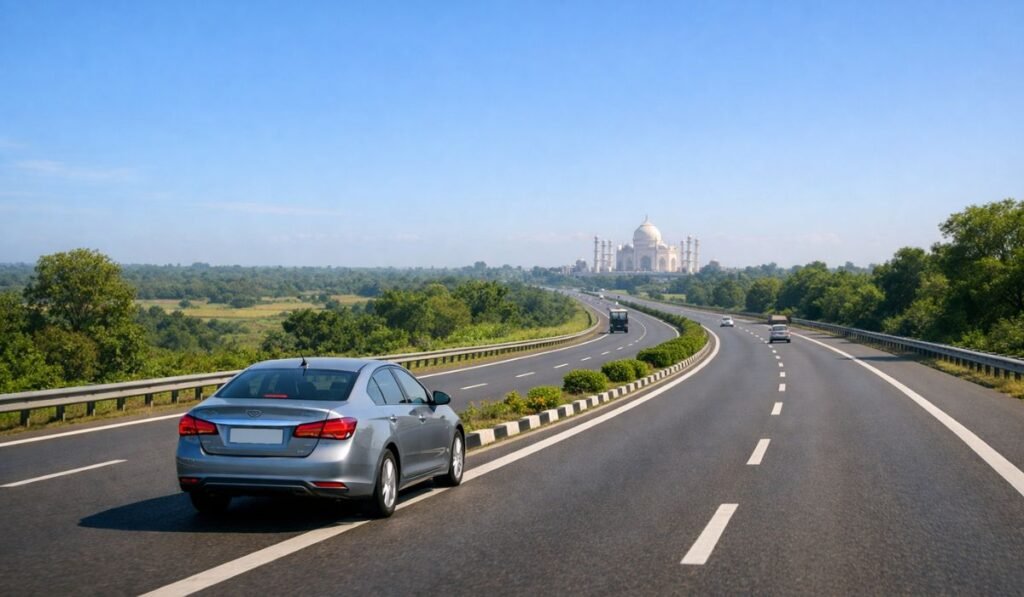
<p>A comfortable air-conditioned car is provided for travel from Delhi to Agra via the Yamuna Expressway. This ensures a smooth and relaxing journey throughout your Taj Mahal day trip.</p>
<!-- /wp:paragraph -->
<!-- wp:heading {"level":3} -->
<h3 class="wp-block-heading" id="h-nbsp-hotel-pickup-amp-drop-off"> Hotel Pickup & Drop-Off</h3>
<!-- /wp:heading -->
<!-- wp:paragraph -->
<p>Many Taj Mahal tour services include door-to-door pickup and drop-off from your hotel or preferred location in Delhi, making the trip convenient and time-saving.</p>
<!-- /wp:paragraph -->
<!-- wp:heading {"level":3} -->
<h3 class="wp-block-heading" id="h-nbsp-professional-local-guide"> Professional Local Guide</h3>
<!-- /wp:heading -->
<!-- wp:paragraph -->
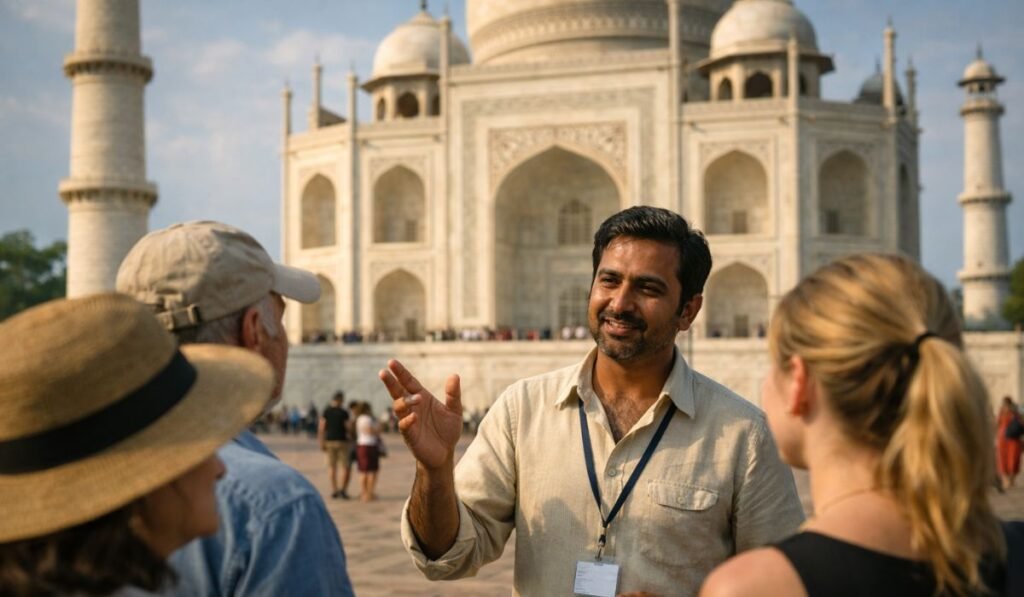
<p>An experienced tour guide accompanies you during your Agra sightseeing tour, explaining the history, architecture, and cultural importance of each monument.</p>
<!-- /wp:paragraph -->
<!-- wp:heading {"level":3} -->
<h3 class="wp-block-heading" id="h-nbsp-monument-entry-assistance"> Monument Entry Assistance</h3>
<!-- /wp:heading -->
<!-- wp:paragraph -->
<p>Some Agra travel packages also include entry ticket assistance for the Taj Mahal and Agra Fort, helping you avoid long queues and delays.</p>
<!-- /wp:paragraph -->
<!-- wp:heading {"level":3} -->
<h3 class="wp-block-heading" id="h-nbsp-lunch-at-a-local-restaurant"> Lunch at a Local Restaurant</h3>
<!-- /wp:heading -->
<!-- wp:paragraph -->
<p>Most same day Taj Mahal tour packages include a lunch break at a well-rated local restaurant in Agra, allowing you to relax before continuing your sightseeing.</p>
<!-- /wp:paragraph -->
<!-- wp:paragraph -->
<p>Choosing a private Taj Mahal tour from Delhi with these inclusions ensures that your travel experience remains comfortable, informative, and stress-free from start to finish.</p>
<!-- /wp:paragraph -->
<!-- wp:heading -->
<h2 class="wp-block-heading" id="h-best-time-to-take-a-taj-mahal-agra-tour">Best Time to Take a Taj Mahal Agra Tour</h2>
<!-- /wp:heading -->
<!-- wp:paragraph -->
<p>Choosing the right time to plan your <strong>Taj Mahal Agra tour</strong> can significantly enhance your overall travel experience. <br>Weather conditions, crowd levels, and lighting all play an important role in how comfortably you can explore the monument and enjoy sightseeing in Agra.</p>
<!-- /wp:paragraph -->
<!-- wp:paragraph -->
<p>Here’s a seasonal breakdown to help you plan your Taj Mahal trip more effectively:</p>
<!-- /wp:paragraph -->
<!-- wp:heading {"level":3} -->
<h3 class="wp-block-heading" id="h-nbsp-winter-season-october-to-march"> Winter Season (October to March)</h3>
<!-- /wp:heading -->
<!-- wp:paragraph -->
<p>This is considered the best time to visit the Taj Mahal due to pleasant weather and comfortable daytime temperatures. Early morning Taj Mahal tours during winter offer clear views and a peaceful environment for sightseeing.</p>
<!-- /wp:paragraph -->
<!-- wp:heading {"level":3} -->
<h3 class="wp-block-heading" id="h-nbsp-summer-season-april-to-june"> Summer Season (April to June)</h3>
<!-- /wp:heading -->
<!-- wp:paragraph -->
<p>Summers in Agra can be quite hot, especially during the afternoon. However, planning a Taj Mahal sunrise tour during this season can help you avoid extreme heat and enjoy a relatively calm visit.</p>
<!-- /wp:paragraph -->
<!-- wp:heading {"level":3} -->
<h3 class="wp-block-heading" id="h-nbsp-monsoon-season-july-to-september"> Monsoon Season (July to September)</h3>
<!-- /wp:heading -->
<!-- wp:paragraph -->
<p>Monsoon brings cloudy skies and occasional rainfall, which can add a dramatic backdrop to your Taj Mahal sightseeing experience. Fewer tourists during this period also mean less crowd at major attractions.</p>
<!-- /wp:paragraph -->
<!-- wp:paragraph -->
<p>For the best Agra travel experience, many visitors prefer booking early morning or sunrise Taj Mahal tours, as the soft natural lighting enhances the monument’s marble beauty and makes sightseeing more enjoyable.</p>
<!-- /wp:paragraph -->
<!-- wp:heading -->
<h2 class="wp-block-heading" id="h-book-the-best-taj-mahal-agra-tour-package-for-a-hassle-free-experience">Book the Best Taj Mahal Agra Tour Package for a Hassle-Free Experience</h2>
<!-- /wp:heading -->
<!-- wp:paragraph -->
<p>Planning your first visit to the Taj Mahal should be exciting — not stressful. From arranging transportation to managing entry tickets and exploring multiple historical attractions in a limited time, organizing everything on your own can sometimes take away from the overall travel experience.</p>
<!-- /wp:paragraph -->
<!-- wp:paragraph -->
<p>This is why choosing a professionally managed <strong>Taj Mahal Agra tour package</strong> is highly recommended for first-time visitors.</p>
<!-- /wp:paragraph -->
<!-- wp:paragraph -->
<p>A well-organized Agra sightseeing tour allows you to:</p>
<!-- /wp:paragraph -->
<!-- wp:list -->
<ul class="wp-block-list"><!-- wp:list-item -->
<li>Travel comfortably from Delhi in a private AC vehicle<br></li>
<!-- /wp:list-item -->
<!-- wp:list-item -->
<li>Explore the Taj Mahal with an experienced local guide<br></li>
<!-- /wp:list-item -->
<!-- wp:list-item -->
<li>Visit major Mughal monuments like Agra Fort and Mehtab Bagh<br></li>
<!-- /wp:list-item -->
<!-- wp:list-item -->
<li>Avoid long queues with monument entry assistance<br></li>
<!-- /wp:list-item -->
<!-- wp:list-item -->
<li>Enjoy a relaxed and time-efficient travel itinerary<br></li>
<!-- /wp:list-item --></ul>
<!-- /wp:list -->
<!-- wp:paragraph -->
<p>Whether you’re looking for a same day Taj Mahal tour from Delhi or a private Agra travel package, selecting the right tour ensures that your journey remains smooth, informative, and memorable from start to finish.</p>
<!-- /wp:paragraph -->
<!-- wp:paragraph -->
<p>If you're planning your trip and want to experience the beauty of the Taj Mahal without worrying about travel logistics, transport arrangements, or guided sightseeing, booking a professionally curated tour package can make your visit truly hassle-free.</p>
<!-- /wp:paragraph -->
<!-- wp:heading -->
<h2 class="wp-block-heading" id="h-faqs">FAQs</h2>
<!-- /wp:heading -->
<!-- wp:heading {"level":3} -->
<h3 class="wp-block-heading" id="h-1-what-is-included-in-a-taj-mahal-agra-tour-package">1. What is included in a Taj Mahal Agra tour package?</h3>
<!-- /wp:heading -->
<!-- wp:paragraph -->
<p>A typical Taj Mahal Agra tour package includes private AC transportation from Delhi, hotel pickup and drop-off, a professional local tour guide, monument entry assistance, and visits to major attractions like the Taj Mahal and Agra Fort.</p>
<!-- /wp:paragraph -->
<!-- wp:heading {"level":3} -->
<h3 class="wp-block-heading" id="h-2-can-i-visit-the-taj-mahal-in-one-day-from-delhi"> 2. Can I visit the Taj Mahal in one day from Delhi?</h3>
<!-- /wp:heading -->
<!-- wp:paragraph -->
<p>Yes, a same day Taj Mahal tour from Delhi is one of the most popular travel options. It allows visitors to explore the Taj Mahal, Agra Fort, and nearby attractions in a single day with comfortable round-trip travel.</p>
<!-- /wp:paragraph -->
<!-- wp:heading {"level":3} -->
<h3 class="wp-block-heading" id="h-3-what-is-the-best-time-to-take-a-taj-mahal-agra-tour"> 3. What is the best time to take a Taj Mahal Agra tour?</h3>
<!-- /wp:heading -->
<!-- wp:paragraph -->
<p>The best time to plan a Taj Mahal Agra tour is between October and March when the weather is pleasant. Sunrise tours are especially recommended for a peaceful experience and better sightseeing conditions.</p>
<!-- /wp:paragraph -->
<!-- wp:heading {"level":3} -->
<h3 class="wp-block-heading" id="h-4-is-a-guided-taj-mahal-tour-worth-it-for-first-time-visitors"> 4. Is a guided Taj Mahal tour worth it for first-time visitors?</h3>
<!-- /wp:heading -->
<!-- wp:paragraph -->
<p>Yes, a guided Taj Mahal tour is highly recommended for first-time visitors as it helps you understand the monument’s history, architecture, and cultural significance while ensuring a smooth and well-organized travel experience.</p>
<!-- /wp:paragraph -->
<!-- wp:heading {"level":3} -->
<h3 class="wp-block-heading" id="h-5-how-much-does-a-taj-mahal-agra-tour-from-delhi-cost"> 5. How much does a Taj Mahal Agra tour from Delhi cost?</h3>
<!-- /wp:heading -->
<!-- wp:paragraph -->
<p>The cost of a Taj Mahal Agra tour from Delhi depends on the type of package you choose, such as same day, private, or overnight tours. Prices may vary based on travel services, guide availability, and included attractions.</p>
<!-- /wp:paragraph -->
If you’re visiting India for the first time, experiencing the beauty of the Taj Mahal is probably at the top of your travel bucket list. Located in the historic city of Agra, the Taj Mahal attracts millions of tourists every year who come to witness its timeless architecture, romantic history, and Mughal-era craftsmanship.
However, planning your visit independently can sometimes feel overwhelming — especially when it comes to managing transportation, entry tickets, local travel, and finding a reliable guide. That’s why many first-time travelers prefer booking professionally organized Taj Mahal Agra tours to enjoy a smooth and comfortable sightseeing experience.
A well-planned Taj Mahal sightseeing tour not only helps you explore the monument without hassle but also allows you to discover other iconic attractions in Agra with the help of a knowledgeable local guide. Whether you’re planning a Taj Mahal trip from Delhi or looking for a complete Agra travel experience, choosing the right tour package can make your journey more convenient, informative, and memorable.
Why Choose a Taj Mahal Agra Tour for Your First Visit?
Visiting the Taj Mahal for the first time is an unforgettable experience — but without proper planning, it can also become tiring and confusing. From arranging transportation to understanding monument entry rules and finding the best time to visit, there are many small details that can affect your overall trip.
This is where booking a professionally organized Taj Mahal Agra tour becomes highly beneficial, especially for first-time travelers.
Here’s why:
Skip-the-Line Access: Guided Taj Mahal tours often help you avoid long waiting queues at the entrance, saving valuable sightseeing time.
Expert Local Guide: A knowledgeable guide enhances your visit by sharing historical facts, architectural insights, and lesser-known stories behind the monument.
Comfortable Travel: Most Agra sightseeing packages include private AC vehicles for a relaxed journey from Delhi to Agra and back.
Time Efficiency: An organized Taj Mahal trip follows a planned itinerary, ensuring you cover all major attractions in a single day without rushing.
Safety & Convenience: From hotel pickup to monument entry assistance, everything is managed for a smooth travel experience.
For anyone planning their first Agra tour, choosing a guided Taj Mahal travel experience ensures you enjoy the monument and nearby attractions without worrying about logistics or local arrangements.
Types of Taj Mahal Agra Tours Available
When planning your first visit, it’s important to choose the right type of Taj Mahal Agra tour based on your schedule, travel style, and comfort preferences. From quick same-day trips to more relaxed overnight stays, there are several Agra tour options designed for different kinds of travelers.
Same Day Taj Mahal Tour
A same day Taj Mahal tour from Delhi is one of the most popular choices among tourists who have limited time but still want to explore Agra’s top attractions. This tour usually includes:
Early morning pickup from Delhi
Comfortable AC travel via Yamuna Expressway
Visit to the Taj Mahal
Agra Fort sightseeing
Lunch at a local restaurant
Return to Delhi by evening
This type of Taj Mahal day trip is ideal for travelers who want to experience Agra in a single day without an overnight stay.
Sunrise Taj Mahal Tour
A Taj Mahal sunrise tour offers a peaceful and less crowded experience of the monument during the early morning hours. The soft golden light at sunrise enhances the marble’s beauty and provides excellent photography opportunities.
This Agra travel package usually includes:
Early morning departure from Delhi
Guided Taj Mahal visit at sunrise
Breakfast after sightseeing
Visit to Agra Fort or Mehtab Bagh
Perfect for those who want to enjoy the monument in a calm and scenic environment.
Overnight Agra Tour
If you prefer a relaxed itinerary, an overnight Agra tour allows you to explore the city at a slower pace. This tour generally includes:
Hotel accommodation in Agra
Visit to Taj Mahal at sunrise
Exploration of Agra Fort
Visit to local markets or Mehtab Bagh
An overnight Taj Mahal trip gives you more time to experience Agra’s cultural heritage without rushing.
Private Taj Mahal Tour
A private Taj Mahal tour is best suited for travelers looking for a personalized and flexible travel experience. It typically includes:
Private AC vehicle
Dedicated tour guide
Custom sightseeing itinerary
Flexible pickup and drop timings
Ideal for families, couples, or small groups seeking comfort and exclusivity during their Agra sightseeing tour.
Top Attractions Included in Taj Mahal Agra Tours
Most professionally organized Taj Mahal Agra tours are designed to give travelers a complete sightseeing experience by covering not just the Taj Mahal but also other important historical landmarks in the city. These attractions showcase the rich Mughal heritage and architectural brilliance that make Agra one of the most visited tourist destinations in India.
Here are the top places usually included in a Taj Mahal Agra sightseeing tour:
Taj Mahal
The highlight of every Agra travel package, the Taj Mahal is one of the Seven Wonders of the World and a UNESCO World Heritage Site. Built by Emperor Shah Jahan in memory of his wife Mumtaz Mahal, this white marble monument is known for its intricate carvings, symmetrical design, and timeless beauty.
Agra Fort
Located just a few kilometers from the Taj Mahal, Agra Fort is another UNESCO-listed monument that offers a glimpse into the royal lifestyle of the Mughal emperors. Its red sandstone walls, grand courtyards, and palace structures make it an important stop in any Agra day tour itinerary.
Mehtab Bagh
Situated across the Yamuna River, Mehtab Bagh is a popular garden complex that provides a stunning rear view of the Taj Mahal, especially during sunset. It’s an ideal photography spot included in many Taj Mahal guided tours.
Itmad-ud-Daulah (Baby Taj)
Often referred to as the “Baby Taj,” this elegant marble tomb is known for its delicate inlay work and Persian-style architecture. It is considered a precursor to the Taj Mahal and is usually included in private Agra tour packages.
Exploring these Mughal monuments in Agra with a guided Taj Mahal tour helps you understand their historical significance while ensuring a well-planned and time-efficient sightseeing experience.
What is Included in a Taj Mahal Agra Tour Package?
Booking a professionally organized Agra Tour Packages with Taj Mahale ensures that all essential travel arrangements are taken care of, allowing you to enjoy a hassle-free sightseeing experience. Most Agra tour packages are designed to offer maximum comfort and convenience, especially for first-time visitors traveling from Delhi.
Here’s what is typically included in a Taj Mahal travel package:
Private AC Vehicle
A comfortable air-conditioned car is provided for travel from Delhi to Agra via the Yamuna Expressway. This ensures a smooth and relaxing journey throughout your Taj Mahal day trip.
Hotel Pickup & Drop-Off
Many Taj Mahal tour services include door-to-door pickup and drop-off from your hotel or preferred location in Delhi, making the trip convenient and time-saving.
Professional Local Guide
An experienced tour guide accompanies you during your Agra sightseeing tour, explaining the history, architecture, and cultural importance of each monument.
Monument Entry Assistance
Some Agra travel packages also include entry ticket assistance for the Taj Mahal and Agra Fort, helping you avoid long queues and delays.
Lunch at a Local Restaurant
Most same day Taj Mahal tour packages include a lunch break at a well-rated local restaurant in Agra, allowing you to relax before continuing your sightseeing.
Choosing a private Taj Mahal tour from Delhi with these inclusions ensures that your travel experience remains comfortable, informative, and stress-free from start to finish.
Best Time to Take a Taj Mahal Agra Tour
Choosing the right time to plan your Taj Mahal Agra tour can significantly enhance your overall travel experience. Weather conditions, crowd levels, and lighting all play an important role in how comfortably you can explore the monument and enjoy sightseeing in Agra.
Here’s a seasonal breakdown to help you plan your Taj Mahal trip more effectively:
Winter Season (October to March)
This is considered the best time to visit the Taj Mahal due to pleasant weather and comfortable daytime temperatures. Early morning Taj Mahal tours during winter offer clear views and a peaceful environment for sightseeing.
Summer Season (April to June)
Summers in Agra can be quite hot, especially during the afternoon. However, planning a Taj Mahal sunrise tour during this season can help you avoid extreme heat and enjoy a relatively calm visit.
Monsoon Season (July to September)
Monsoon brings cloudy skies and occasional rainfall, which can add a dramatic backdrop to your Taj Mahal sightseeing experience. Fewer tourists during this period also mean less crowd at major attractions.
For the best Agra travel experience, many visitors prefer booking early morning or sunrise Taj Mahal tours, as the soft natural lighting enhances the monument’s marble beauty and makes sightseeing more enjoyable.
Book the Best Taj Mahal Agra Tour Package for a Hassle-Free Experience
Planning your first visit to the Taj Mahal should be exciting — not stressful. From arranging transportation to managing entry tickets and exploring multiple historical attractions in a limited time, organizing everything on your own can sometimes take away from the overall travel experience.
This is why choosing a professionally managed Taj Mahal Agra tour package is highly recommended for first-time visitors.
A well-organized Agra sightseeing tour allows you to:
Travel comfortably from Delhi in a private AC vehicle
Explore the Taj Mahal with an experienced local guide
Visit major Mughal monuments like Agra Fort and Mehtab Bagh
Avoid long queues with monument entry assistance
Enjoy a relaxed and time-efficient travel itinerary
Whether you’re looking for a same day Taj Mahal tour from Delhi or a private Agra travel package, selecting the right tour ensures that your journey remains smooth, informative, and memorable from start to finish.
If you’re planning your trip and want to experience the beauty of the Taj Mahal without worrying about travel logistics, transport arrangements, or guided sightseeing, booking a professionally curated tour package can make your visit truly hassle-free.
FAQs
1. What is included in a Taj Mahal Agra tour package?
A typical Taj Mahal Agra tour package includes private AC transportation from Delhi, hotel pickup and drop-off, a professional local tour guide, monument entry assistance, and visits to major attractions like the Taj Mahal and Agra Fort.
2. Can I visit the Taj Mahal in one day from Delhi?
Yes, a same day Taj Mahal tour from Delhi is one of the most popular travel options. It allows visitors to explore the Taj Mahal, Agra Fort, and nearby attractions in a single day with comfortable round-trip travel.
3. What is the best time to take a Taj Mahal Agra tour?
The best time to plan a Taj Mahal Agra tour is between October and March when the weather is pleasant. Sunrise tours are especially recommended for a peaceful experience and better sightseeing conditions.
4. Is a guided Taj Mahal tour worth it for first-time visitors?
Yes, a guided Taj Mahal tour is highly recommended for first-time visitors as it helps you understand the monument’s history, architecture, and cultural significance while ensuring a smooth and well-organized travel experience.
5. How much does a Taj Mahal Agra tour from Delhi cost?
The cost of a Taj Mahal Agra tour from Delhi depends on the type of package you choose, such as same day, private, or overnight tours. Prices may vary based on travel services, guide availability, and included attractions.
<!-- wp:paragraph -->
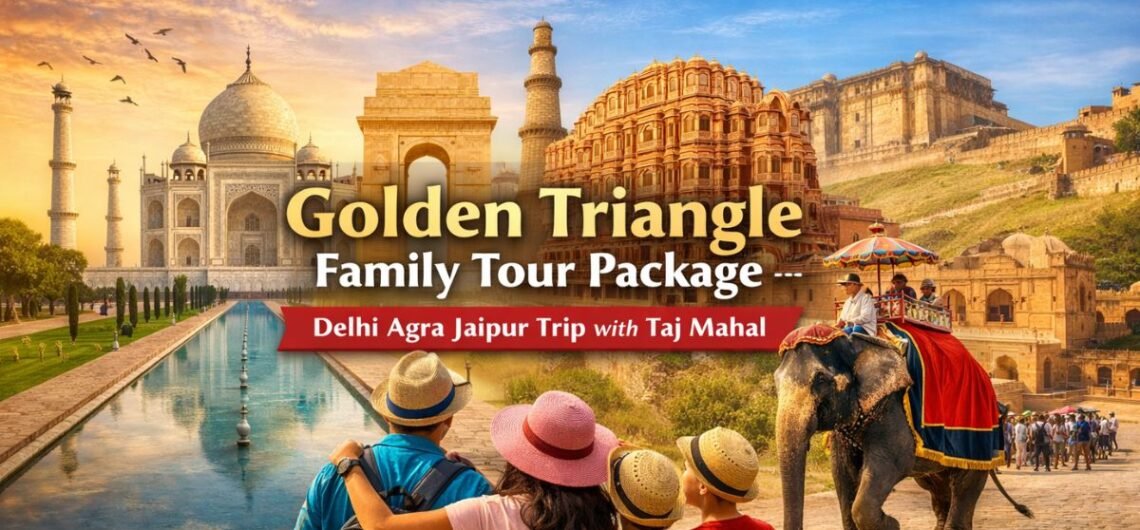
<p>Watching your children’s eyes light up in front of the Taj Mahal is a moment you’ll cherish forever. The Golden Triangle – <a href="https://www.azaantravels.com/tours/golden-triangle-agra-delhi-jaipur/">Delhi, Agra, and Jaipur</a> – offers exactly that kind of magic for families. This famous trio of cities blends history, culture, and entertainment in a compact circuit. From the marble wonder of the <strong>Taj Mahal</strong> in Agra (the ultimate symbol of love) to the pink palaces of Jaipur and the bustling monuments of Delhi, there’s something to captivate every generation. <strong>Azaan Travels</strong> curates these experiences into a smooth journey, easing logistics so parents can focus on making memories. The region’s top heritage sites are highly accessible: it’s known as India’s most family-friendly circuit, with manageable distances, good tourist infrastructure, and attractions that “captivate both children and adults”. Whether it’s riding an elephant up Amber Fort, riding a rickshaw in Old Delhi, or watching the sunset over historic lakes, every day is an adventure that’s educational yet fun.</p>
<!-- /wp:paragraph -->
<!-- wp:paragraph -->
<p>Historically rich yet welcoming to visitors, the Golden Triangle offers a gentle introduction to India’s culture. Delhi’s monuments like Qutub Minar and the Red Fort stand as “enduring symbols of India’s rich cultural and architectural legacy”, while Agra’s Taj Mahal and Agra Fort bring Mughal history to life. Jaipur’s royal palaces and observatories (like Jantar Mantar) showcase Rajasthan’s grandeur. All three cities accommodate families well: attractions are safe and well-maintained, and children under 15 typically enter free to the monuments. In short, a Golden Triangle family tour satisfies curious minds and fun-loving hearts alike – and with <strong>Azaan Travels</strong> guiding the way, your trip will be comfortable, exciting, and designed just for your family.</p>
<!-- /wp:paragraph -->
<!-- wp:heading -->
<h2 class="wp-block-heading" id="h-why-golden-triangle-is-the-perfect-family-tour-in-india"><strong>Why Golden Triangle Is the Perfect Family Tour in India</strong></h2>
<!-- /wp:heading -->
<!-- wp:paragraph -->
<p>The Golden Triangle combines <strong>world-class heritage</strong> with <strong>kid-friendly adventure</strong>. In Delhi, Agra, and Jaipur you’ll find multiple UNESCO World Heritage sites within easy reach of each other. This means your children get to see iconic landmarks like the Taj Mahal, Qutub Minar, and Amber Fort – all in one trip – without long, arduous travel between them. The travel distances are very manageable (Delhi to Agra is about 3½–4 hours by car, and Agra to Jaipur about 4–5 hours), allowing for relaxed pacing. In fact, experienced planners recommend spreading the 720-kilometer circuit over 6–8 days so kids have time to rest between sights.</p>
<!-- /wp:paragraph -->
<!-- wp:paragraph -->
<p>Each city offers variety: Delhi’s busy bazaars, gardens and interactive museums; Agra’s Mughal gardens and fort; and Jaipur’s colorful markets and royal palaces. Many attractions come alive for kids – for example, storytelling guides at ancient monuments, astronomy demonstrations at Jantar Mantar, elephant rides at Amber Fort, or fun rickshaw tours in Old Delhi turn sightseeing into interactive education. The Golden Triangle is also one of India’s safest regions for tourists. Major sites have security screening and clean facilities, and private drivers ensure comfortable, secure travel. It’s no wonder “millions of families visit annually,” making it a “reliably safe tourist circuit for international travelers with children”.</p>
<!-- /wp:paragraph -->
<!-- wp:paragraph -->
<p>Choosing Azaan Travels’ Golden Triangle package means experienced guides and local insights at every stop. They can highlight interactive experiences (like child-friendly anecdotes at the Taj or science stories at Delhi’s observatories) that keep youngsters engaged. In short, the Golden Triangle delivers heritage and fun in equal measure – making it an ideal <strong>cultural family tour in India</strong>.</p>
<!-- /wp:paragraph -->
<!-- wp:heading -->
<h2 class="wp-block-heading" id="h-delhi-sightseeing-the-perfect-start-to-your-family-trip"><strong>Delhi Sightseeing – The Perfect Start to Your Family Trip</strong></h2>
<!-- /wp:heading -->
<!-- wp:image {"id":2986,"sizeSlug":"large","linkDestination":"none"} -->
<figure class="wp-block-image size-large"><img src="https://www.azaantravels.com/wp-content/uploads/2026/02/Untitled-design-2026-02-16T141933.883-1024x597.jpg" alt="Golden Triangle Family Tour Package – Delhi Agra Jaipur Trip with Taj Mahal" class="wp-image-2986"/></figure>
<!-- /wp:image -->
<!-- wp:paragraph -->
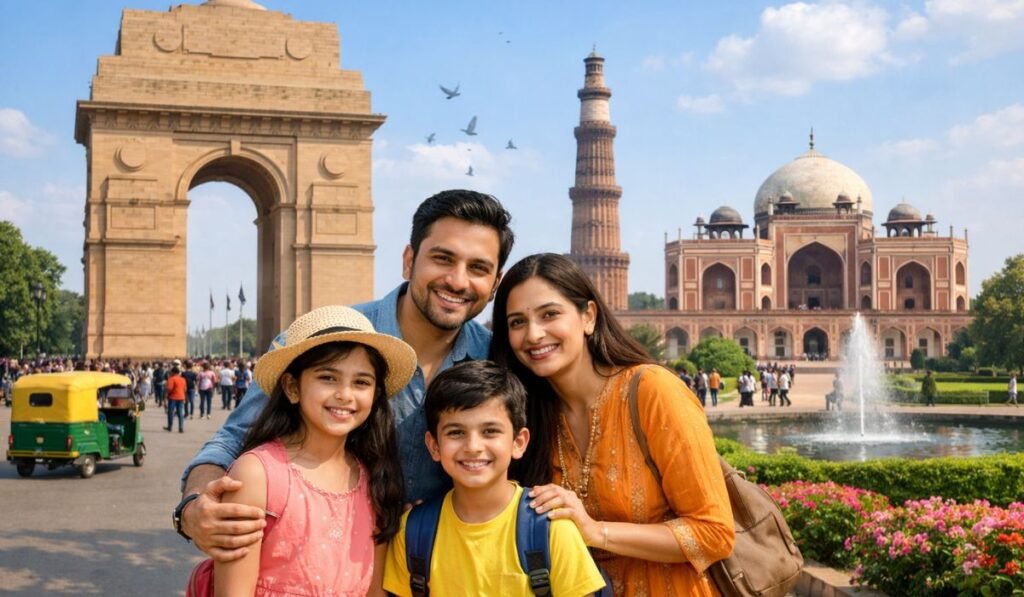
<p>Your Golden Triangle adventure typically begins in Delhi, India’s bustling capital. Delhi impresses with a mix of centuries-old monuments and modern life, providing a fascinating introduction for children and adults alike. The city <strong>boasts three UNESCO World Heritage sites</strong> – the Qutub Minar, the Red Fort, and Humayun’s Tomb – each telling a story of India’s past empires. Imagine kids marveling at Qutub Minar’s soaring minaret, or running around the gardens of Humayun’s Tomb. Azaan Travels’ Delhi tour packages will typically include these sites, along with visits to India Gate, Lotus Temple, or the lively markets of Chandni Chowk, all with knowledgeable guides.</p>
<!-- /wp:paragraph -->
<!-- wp:paragraph -->
<p>Delhi also offers <strong>interactive museums and activities</strong> that children enjoy. The National Science Center has hands-on exhibits, the Rail Museum delights train-loving kids, and at Jantar Mantar (the historic observatory) curious families can see giant sundials and instruments – a fun math and science lesson under the sky. According to travel experts, “astronomy demonstrations at Jantar Mantar” and old-fashioned rickshaw rides in Old Delhi “transform monument visits from passive viewing into engaging educational adventures”. Every day in Delhi mixes excitement and learning. When the little ones get tired, Azaan’s guides suggest parks like Lodhi Gardens or hotel pools for a break. By evening, families often enjoy a meal at an atmospheric local restaurant, savoring Indian delicacies as kids sample treats like freshly made paratha or sweet jalebi.</p>
<!-- /wp:paragraph -->
<!-- wp:paragraph -->
<p>Overall, Delhi sets a lively tone for the journey. It’s easy to see <a href="https://www.azaantravels.com/delhi-tour-packages/"><strong>Delhi sightseeing as a fun family outing</strong></a> — with prehistoric ruins, colorful markets, and even puppet shows. With Azaan Travels handling the logistics, your family can hop from site to site in an air-conditioned car, stopping whenever the kids need a snack or photo break. This smooth start gets everyone excited for the road ahead through Agra and Jaipur.</p>
<!-- /wp:paragraph -->
<!-- wp:heading -->
<h2 class="wp-block-heading" id="h-agra-family-tour-experiencing-the-taj-mahal-together"><strong>Agra Family Tour – Experiencing the Taj Mahal Together</strong></h2>
<!-- /wp:heading -->
<!-- wp:paragraph -->
<p>Next, the family travels southeast to Agra – home of the iconic <strong>Taj Mahal</strong>. This white-marble marvel is the highlight for many: “built by Emperor Shah Jahan in memory of his wife Mumtaz Mahal,” it’s a “timeless symbol of love and one of the Seven Wonders of the World”. Imagine sharing sunrise at the Taj as the soft morning light bathes the monument, creating a golden-pink glow. Families who visit early enjoy cooler weather and smaller crowds. In fact, the Taj opens about 30 minutes before sunrise, and that peaceful early-morning visit is a favorite because “children appreciate the magical lighting,” while parents can admire the beautiful inlay work up close.</p>
<!-- /wp:paragraph -->
<!-- wp:paragraph -->
<p>Azaan Travels’ <a href="https://www.azaantravels.com/agra-tour-packages/"><strong>Agra tour packages</strong></a> take care of all the details so you experience the Taj at its best. English-speaking guides share the enchanting love story behind the monument, point out hidden optical illusions in the marble, and let kids learn about Mughal architecture through fun facts. Kids under 15 enjoy free entry to the Taj Mahal and other Agra monuments, so the family can enter worry-free.</p>
<!-- /wp:paragraph -->
<!-- wp:paragraph -->
<p>Beyond the Taj, Agra has more to keep a family busy. The massive <strong>Agra Fort</strong> – a UNESCO site itself – offers wide ramparts to run along and a small museum inside. Children often love feeding the birds in the gardens of Mehtab Bagh, which also gives a postcard-perfect view of the Taj across the Yamuna River. Shopping in Agra can be a hit too: the city’s famous sweet, Agra petha (candied ash gourd), and colorful marble crafts make great kid-friendly souvenirs. In the evening, a puppet show or a cultural performance in the hotel may cap off a full day.</p>
<!-- /wp:paragraph -->
<!-- wp:paragraph -->
<p>All in all, the Agra leg of the trip is a memorable cultural immersion. With <strong>Azaan Travels</strong> coordinating, your family can enjoy a comfortable stay (often in air-conditioned hotels with family rooms) and hassle-free sightseeing. The result? Shared moments of wonder at one of India’s greatest monuments – memories the whole family will treasure.</p>
<!-- /wp:paragraph -->
<!-- wp:heading -->
<h2 class="wp-block-heading" id="h-jaipur-royal-experience-for-the-whole-family"><strong>Jaipur – Royal Experience for the Whole Family</strong></h2>
<!-- /wp:heading -->
<!-- wp:paragraph -->
<p>Finally, the tour leads to Jaipur, Rajasthan’s famous “Pink City.” Jaipur feels like a living museum of royal India, and families love its grandeur and color. The star attraction is <strong>Amber Fort</strong> (part of the Hill Forts UNESCO listing). Here, little ones can ride atop gentle elephants or in a jeep up the fort’s ramps – an adventure in itself. Experts note that “elephant rides at Amber Fort” are a top way to make history fun for kids. Once at the fort, climb the ramparts and wander the mirror-palace halls; older kids and teens often enjoy seeing how royalty once lived. In the evening, some hotels offer traditional puppet shows or Rajasthani dance performances, which delight kids with music and costumes.</p>
<!-- /wp:paragraph -->
<!-- wp:paragraph -->
<p>Back in town, the <strong>City Palace</strong> and its museums showcase royal attire and artifacts. The nearby <strong>Hawa Mahal</strong> (Palace of Winds) is an Instagram favorite with its pink façade of latticed windows – kids love peeking through the honeycomb “balconies” that allowed princesses to observe street festivals. Don’t miss <strong>Jantar Mantar</strong> (another UNESCO site): it’s an 18th-century open-air observatory filled with giant sundials and astrolabes. These huge geometric instruments look like alien playground equipment, making science surprisingly exciting for young visitors. (Jaipur’s Jantar Mantar “embodies architectural and instrumental innovations” – perfect for curious minds.)</p>
<!-- /wp:paragraph -->
<!-- wp:paragraph -->
<p>Between sites, Jaipur’s bustling bazaars offer colorful bangles, block-printed fabrics, and spicy street snacks like “kachori” (savory pastries) for tasting. Parents will enjoy bargaining in the markets, while kids marvel at street performers or the sight of camels and carts. Throughout Jaipur, <strong>Azaan Travels</strong> ensures your family’s itinerary is paced just right – balancing sightseeing with fun downtime.</p>
<!-- /wp:paragraph -->
<!-- wp:paragraph -->
<p>In summary, Jaipur rounds out the Golden Triangle with royal splendor. The mix of forts, palaces, and markets keeps children engaged, and there are plenty of safe, family-friendly hotels and activities. With Azaan’s local guides explaining myths of Maharajas or counting the 27 lunar mansions at Jantar Mantar, the city’s history becomes an interactive story for the whole family.</p>
<!-- /wp:paragraph -->
<!-- wp:heading -->
<h2 class="wp-block-heading" id="h-suggested-5-day-golden-triangle-family-tour-itinerary"><strong>Suggested 5-Day Golden Triangle Family Tour Itinerary</strong></h2>
<!-- /wp:heading -->
<!-- wp:list -->
<ul class="wp-block-list"><!-- wp:list-item -->
<li><strong>Day 1 – Delhi:</strong> Arrive in Delhi and start with Old Delhi’s highlights. Visit the <strong>Red Fort</strong> (UNESCO World Heritage site), where kids can explore the ramparts and gardens, and see the historic Lahori Gate. Then enjoy a rickshaw ride through bustling Chandni Chowk bazaar – a thrilling ride past colorful stalls. In the afternoon, head to Humayun’s Tomb (UNESCO) and then see India Gate and the Presidential Palace on a drive through New Delhi. <em>Overnight in Delhi.</em><em><br></em></li>
<!-- /wp:list-item -->
<!-- wp:list-item -->
<li><strong>Day 2 – Delhi to Agra:</strong> Spend the morning at <strong><a href="https://en.wikipedia.org/wiki/Qutb_Minar">Qutub Minar</a></strong> (UNESCO) and the nearby Qutub complex; children love the tall minaret and the ancient iron pillar. After lunch, drive to Agra (about 3.5–4 hours) via the modern expressway. Check into your Agra hotel. <em>Optional evening:</em> relax in the hotel or visit the <strong>Mehtab Bagh</strong> garden for a sunset view of the Taj Mahal across the river.<br></li>
<!-- /wp:list-item -->
<!-- wp:list-item -->
<li><strong>Day 3 – Agra (Taj Mahal) to Jaipur:</strong> Wake up before dawn to visit the <strong>Taj Mahal at sunrise</strong> (arriving around opening time at 6:00 AM). The early light and cool air make the experience magical and more comfortable for kids. After exploring the gardens and marble mausoleum (kids under 15 enter free), return to the hotel for breakfast. Later, tour the red sandstone <strong>Agra Fort</strong> and its museum. In the afternoon, drive from Agra to Jaipur (about 4–5 hours, with an optional stop at Fatehpur Sikri). Enjoy the countryside along the way. <em>Overnight in Jaipur.</em><em><br></em></li>
<!-- /wp:list-item -->
<!-- wp:list-item -->
<li><strong>Day 4 – Jaipur (Amer Fort and City Palace):</strong> Start at <strong>Amer (Amber) Fort</strong>, situated just outside Jaipur. Take an elephant ride or jeep up to the fort entrance (a thrilling experience for children). Tour the ornate palaces and halls inside, and let kids marvel at the mirrored ceiling. In the afternoon return to Jaipur city and visit the <strong>City Palace</strong> complex – see the Royal Museum, and enjoy the gardens. End the day at the <strong>Hawa Mahal</strong> (Palace of Winds) for a family photo. <em>Evening:</em> optional sound-and-light show at Amber Fort or leisure time at the hotel.<br></li>
<!-- /wp:list-item -->
<!-- wp:list-item -->
<li><strong>Day 5 – Jaipur (Jantar Mantar and markets) and Departure:</strong> Visit the <strong>Jantar Mantar</strong> observatory with its giant stone instruments – kids are often fascinated by the way these ancient tools predict time and seasons. Then stroll through the lively bazaars near Hawa Mahal, where you can shop for souvenirs like block prints and toys. If time allows, stop at <strong>Albert Hall Museum</strong> or relax at the hotel. Depart Jaipur in the evening or take a flight/home transfer.<br></li>
<!-- /wp:list-item --></ul>
<!-- /wp:list -->
<!-- wp:paragraph -->
<p>This <strong>5-day family-friendly itinerary</strong> provides a comfortable, well-paced tour. It allows two days in Delhi (to absorb the capital’s monuments and culture) and one day in Agra (for the Taj Mahal at sunrise and Agra Fort), before giving Jaipur two full days to soak in Rajasthan’s heritage. It’s modeled on expert advice that recommends not rushing: families “face choices about balancing ambitious sightseeing against children’s endurance limits,” so building in rest and flexibility is key.</p>
<!-- /wp:paragraph -->
<!-- wp:heading -->
<h2 class="wp-block-heading" id="h-what-s-included-in-a-golden-triangle-family-tour-package"><strong>What’s Included in a Golden Triangle Family Tour Package</strong></h2>
<!-- /wp:heading -->
<!-- wp:paragraph -->
<p>Most Golden Triangle family packages are <strong>all-inclusive</strong>, minimizing stress so you can focus on fun. Typically, the package includes:</p>
<!-- /wp:paragraph -->
<!-- wp:heading {"level":3} -->
<h3 class="wp-block-heading" id="h-private-transportation"><strong>Private Transportation</strong></h3>
<!-- /wp:heading -->
<!-- wp:paragraph -->
<p>An air‑conditioned car (sedan or larger vehicle) with an experienced driver for the entire trip. (This door-to-door service lets you travel at your own pace, with breaks whenever the kids need them.</p>
<!-- /wp:paragraph -->
<!-- wp:heading {"level":3} -->
<h3 class="wp-block-heading" id="h-accommodation"><strong>Accommodation</strong></h3>
<!-- /wp:heading -->
<!-- wp:paragraph -->
<p>Hotel stays (usually 3★ or 4★) with family or adjoining rooms. Many packages include daily breakfast. Upgrades to higher-grade hotels or even heritage palace hotels are often available.</p>
<!-- /wp:paragraph -->
<!-- wp:heading {"level":3} -->
<h3 class="wp-block-heading" id="h-guided-sightseeing"><strong>Guided Sightseeing</strong></h3>
<!-- /wp:heading -->
<!-- wp:paragraph -->
<p>English-speaking, licensed guides in each city explain the history and entertain the family at monuments. These guides are trained to keep children engaged with stories and fun facts.</p>
<!-- /wp:paragraph -->
<!-- wp:heading {"level":3} -->
<h3 class="wp-block-heading" id="h-entrance-fees-and-activities"><strong>Entrance Fees and Activities</strong></h3>
<!-- /wp:heading -->
<!-- wp:paragraph -->
<p>All monument entry tickets are covered (remember: children under 15 generally enter free). Optional extras – like an elephant ride at Amber Fort or a rickshaw ride in Old Delhi – can be arranged.</p>
<!-- /wp:paragraph -->
<!-- wp:heading {"level":3} -->
<h3 class="wp-block-heading" id="h-meals"><strong>Meals</strong></h3>
<!-- /wp:heading -->
<!-- wp:paragraph -->
<p>Some packages include select meals (often welcome lunches or dinners), and can arrange family-friendly restaurant recommendations. Bottled water is typically provided in the car.</p>
<!-- /wp:paragraph -->
<!-- wp:heading {"level":3} -->
<h3 class="wp-block-heading" id="h-taxes-and-fees"><strong>Taxes and Fees</strong></h3>
<!-- /wp:heading -->
<!-- wp:paragraph -->
<p>Government taxes, tolls, and service charges are usually included.<br></p>
<!-- /wp:paragraph -->
<!-- wp:paragraph -->
<p>As one travel operator notes, “Your Golden Triangle tour includes a private AC vehicle and personal guides” and even mention “luxuriate at upscale hotels” in Agra. Azaan Travels’ packages similarly bundle all necessities. In fact, experienced planners point out that standard Agra tour packages (and by extension Golden Triangle tours) include comfortable transport, monument tickets, a tour guide, a pre-planned itinerary, and hotel transfers. This means you can relax: pick-up at the airport, a full itinerary with minor hassle, and drop-off at your next destination or final flight.</p>
<!-- /wp:paragraph -->
<!-- wp:paragraph -->
<p>Additional perks for families may include a complimentary child seat in the car, kids’ amenities at hotels (like an extra bed or cot), and the opportunity to add special requests (such as age-appropriate guides or leisure activities). All in all, a well-crafted Golden Triangle family package provides <strong>everything you need</strong> – from transportation and hotels to sightseeing and meals – so that parents can simply enjoy the trip and create lifetime memories.</p>
<!-- /wp:paragraph -->
<!-- wp:heading -->
<h2 class="wp-block-heading" id="h-best-time-to-plan-your-golden-triangle-family-trip"><strong>Best Time to Plan Your Golden Triangle Family Trip</strong></h2>
<!-- /wp:heading -->
<!-- wp:image {"id":2985,"sizeSlug":"large","linkDestination":"none"} -->
<figure class="wp-block-image size-large"><img src="https://www.azaantravels.com/wp-content/uploads/2026/02/Untitled-design-2026-02-16T143038.980-1024x597.jpg" alt="Golden Triangle Family Tour Package – Delhi Agra Jaipur Trip with Taj Mahal" class="wp-image-2985"/></figure>
<!-- /wp:image -->
<!-- wp:paragraph -->
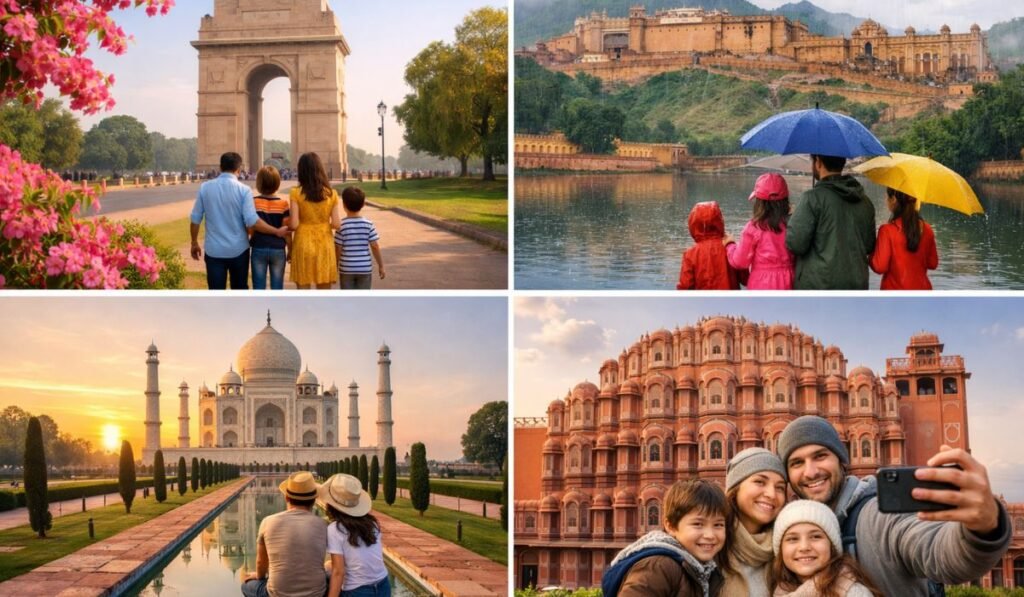
<p>India’s seasons play a big role in planning. For a family tour, the <strong>cooler months (October through March)</strong> are ideal. During these months, daytime temperatures are comfortable (around 20–28°C in winter) which allows kids to enjoy outdoor sightseeing without tiring quickly. In particular, November through February offer clear skies and pleasant weather. October and March can also work (they’re slightly warmer but have fewer crowds).</p>
<!-- /wp:paragraph -->
<!-- wp:paragraph -->
<p>Avoid the <strong>summer months (April–June)</strong> in North India, because temperatures can soar above 40°C in cities like Agra and Jaipur, making outdoor visits exhausting for children. Similarly, the <strong>monsoon season (July–September)</strong> brings heavy rains and unpredictable weather that can disrupt travel, although some families enjoy the lush green scenery at this time. In short, winter and shoulder seasons are best. Many families even time their Golden Triangle trip to coincide with school holidays in winter or spring, when the weather is forgiving. Planning ahead for these times means clear, cool mornings at the Taj Mahal or empty forts for playful exploration, ensuring your kids remember the trip fondly – not as a sweaty trek but as an enchanting adventure.</p>
<!-- /wp:paragraph -->
<!-- wp:heading -->
<h2 class="wp-block-heading" id="h-why-choose-a-private-golden-triangle-family-tour-package"><strong>Why Choose a Private Golden Triangle Family Tour Package?</strong></h2>
<!-- /wp:heading -->
<!-- wp:paragraph -->
<p>A private tour is perfect for families. It means <strong>full flexibility and privacy</strong>, without the pressure of rigid schedules or strangers. With a private package, your car and driver are dedicated to your family alone. You can stop for breaks whenever your child needs a rest or snack – no waiting for a group bus. The English-speaking driver and guides can adjust the day’s pace to your kids’ energy levels, making the trip truly family-friendly.</p>
<!-- /wp:paragraph -->
<!-- wp:paragraph -->
<p>Private transportation also means comfort and safety. Experts agree that “private car with driver represents the most family-friendly transportation option” for the Golden Triangle. You’ll travel in an air‑conditioned vehicle, with room to stretch and luggage space for strollers or extra baggage. Drivers from trusted companies like Azaan are vetted professionals who know the best child-friendly stops (restrooms, clean restaurants, etc.) along the route. During the drive, you can play music your kids enjoy, point out little sights along the way, or simply relax – something you’d miss in a crowded coach.</p>
<!-- /wp:paragraph -->
<!-- wp:paragraph -->
<p>Another benefit is <strong>personalized attention</strong>. Tour guides on a private package are focused on your family. They can incorporate games (like scavenger hunts at monuments), answer children’s questions at their level, and even show the tiny details that group tours often overlook. In a private setting, if grandparents need a slower pace while teens want more excitement, the guide can split time or find compromises. This makes the trip as enjoyable for age 5 and age 50.Finally, booking a private family tour through a reliable company like Azaan Travels brings peace of mind. You get 24/7 support, so if plans change or anyone feels unwell, the company can adjust hotels or activities on short notice. In short, a private Golden Triangle tour is <strong>safe, comfortable, and tailored</strong> to your family’s needs – allowing you to relax and soak in every moment.</p>
<!-- /wp:paragraph -->
<!-- wp:heading -->
<h2 class="wp-block-heading" id="h-final-thoughts-create-lifetime-memories"><strong>Final Thoughts – Create Lifetime Memories</strong></h2>
<!-- /wp:heading -->
<!-- wp:paragraph -->
<p>A Golden Triangle family tour is more than a vacation; it’s a chance to spark your children’s curiosity and create shared memories that last a lifetime. By experiencing India’s rich heritage together – watching the Taj Mahal glow at sunrise, counting astronomical shadows at Jaipur’s observatory, or tasting spices in an old Delhi market – your family weaves its own story of wonder. With <strong>Azaan Travels</strong>’ gentle guidance, every detail is taken care of, so your family can focus on adventure and bonding. These five days together exploring Delhi’s history, Agra’s romance, and Jaipur’s royals will bring laughter, learning, and those “I’ll never forget that” moments. <a href="https://www.azaantravels.com/golden-triangle-tour-packages/"><strong>Plan your Golden Triangle family tour now</strong></a> and look forward to years of photos and stories about this unforgettable Indian journey.</p>
<!-- /wp:paragraph -->
<!-- wp:heading -->
<h2 class="wp-block-heading" id="h-golden-triangle-family-trip-faqs"><strong>Golden Triangle Family Trip – FAQs</strong></h2>
<!-- /wp:heading -->
<!-- wp:yoast/faq-block {"questions":[{"id":"faq-question-1771235553060","question":[{"type":"strong","props":{"children":["Is the Golden Triangle safe for families with young children?"]}}],"answer":["Yes. Delhi, Agra, and Jaipur are among India’s most tourist-friendly regions with strong infrastructure and security at major monuments. Families usually face no issues beyond normal city traffic. Keep children close near busy streets, use bottled water, and book reputable hotels and transport for a smooth experience."],"jsonQuestion":"\u003cstrong\u003eIs the Golden Triangle safe for families with young children?\u003c/strong\u003e","jsonAnswer":"Yes. Delhi, Agra, and Jaipur are among India’s most tourist-friendly regions with strong infrastructure and security at major monuments. Families usually face no issues beyond normal city traffic. Keep children close near busy streets, use bottled water, and book reputable hotels and transport for a smooth experience."},{"id":"faq-question-1771235598376","question":[{"type":"strong","props":{"children":["Are children free to enter monuments in India?"]}}],"answer":["Yes. Children under 15 years generally enter major national monuments free of charge, including the Taj Mahal, Red Fort, and Amer Fort. Parents may need to show a passport or birth certificate for age verification at ticket counters."],"jsonQuestion":"\u003cstrong\u003eAre children free to enter monuments in India?\u003c/strong\u003e","jsonAnswer":"Yes. Children under 15 years generally enter major national monuments free of charge, including the Taj Mahal, Red Fort, and Amer Fort. Parents may need to show a passport or birth certificate for age verification at ticket counters."},{"id":"faq-question-1771235602388","question":[{"type":"strong","props":{"children":["How can families manage India’s heat and crowds?"]}}],"answer":["Start sightseeing early, ideally at 6:00–6:30 AM when it’s cooler and less crowded. Plan hotel breaks between 11 AM and 4 PM during hot months. Carry refillable water bottles, apply sunscreen regularly, and dress children in breathable cotton clothing. Use shaded garden areas for rest."],"jsonQuestion":"\u003cstrong\u003eHow can families manage India’s heat and crowds?\u003c/strong\u003e","jsonAnswer":"Start sightseeing early, ideally at 6:00–6:30 AM when it’s cooler and less crowded. Plan hotel breaks between 11 AM and 4 PM during hot months. Carry refillable water bottles, apply sunscreen regularly, and dress children in breathable cotton clothing. Use shaded garden areas for rest."},{"id":"faq-question-1771235603332","question":[{"type":"strong","props":{"children":["What is the best way to travel between Delhi, Agra, and Jaipur with kids?"]}}],"answer":["A private car is the most convenient option. Travel time is about 3.5–4 hours from Delhi to Agra and 4–5 hours from Agra to Jaipur. Private transport allows flexible stops and avoids station stress. Trains like the Gatimaan Express are fast but require advance booking and station handling."],"jsonQuestion":"\u003cstrong\u003eWhat is the best way to travel between Delhi, Agra, and Jaipur with kids?\u003c/strong\u003e","jsonAnswer":"A private car is the most convenient option. Travel time is about 3.5–4 hours from Delhi to Agra and 4–5 hours from Agra to Jaipur. Private transport allows flexible stops and avoids station stress. Trains like the Gatimaan Express are fast but require advance booking and station handling."},{"id":"faq-question-1771235604068","question":[{"type":"strong","props":{"children":["How many days are ideal for a family Golden Triangle trip?"]}}],"answer":["Five to seven days is ideal for families. A relaxed plan includes 2 days in Delhi, 1 day in Agra, and 2 days in Jaipur. Adding one or two extra days helps reduce travel fatigue and allows optional experiences like wildlife parks."],"jsonQuestion":"\u003cstrong\u003eHow many days are ideal for a family Golden Triangle trip?\u003c/strong\u003e","jsonAnswer":"Five to seven days is ideal for families. A relaxed plan includes 2 days in Delhi, 1 day in Agra, and 2 days in Jaipur. Adding one or two extra days helps reduce travel fatigue and allows optional experiences like wildlife parks."}]} -->
<div class="schema-faq wp-block-yoast-faq-block"><div class="schema-faq-section" id="faq-question-1771235553060"><strong class="schema-faq-question"><strong>Is the Golden Triangle safe for families with young children?</strong></strong> <p class="schema-faq-answer">Yes. Delhi, Agra, and Jaipur are among India’s most tourist-friendly regions with strong infrastructure and security at major monuments. Families usually face no issues beyond normal city traffic. Keep children close near busy streets, use bottled water, and book reputable hotels and transport for a smooth experience.</p> </div> <div class="schema-faq-section" id="faq-question-1771235598376"><strong class="schema-faq-question"><strong>Are children free to enter monuments in India?</strong></strong> <p class="schema-faq-answer">Yes. Children under 15 years generally enter major national monuments free of charge, including the Taj Mahal, Red Fort, and Amer Fort. Parents may need to show a passport or birth certificate for age verification at ticket counters.</p> </div> <div class="schema-faq-section" id="faq-question-1771235602388"><strong class="schema-faq-question"><strong>How can families manage India’s heat and crowds?</strong></strong> <p class="schema-faq-answer">Start sightseeing early, ideally at 6:00–6:30 AM when it’s cooler and less crowded. Plan hotel breaks between 11 AM and 4 PM during hot months. Carry refillable water bottles, apply sunscreen regularly, and dress children in breathable cotton clothing. Use shaded garden areas for rest.</p> </div> <div class="schema-faq-section" id="faq-question-1771235603332"><strong class="schema-faq-question"><strong>What is the best way to travel between Delhi, Agra, and Jaipur with kids?</strong></strong> <p class="schema-faq-answer">A private car is the most convenient option. Travel time is about 3.5–4 hours from Delhi to Agra and 4–5 hours from Agra to Jaipur. Private transport allows flexible stops and avoids station stress. Trains like the Gatimaan Express are fast but require advance booking and station handling.</p> </div> <div class="schema-faq-section" id="faq-question-1771235604068"><strong class="schema-faq-question"><strong>How many days are ideal for a family Golden Triangle trip?</strong></strong> <p class="schema-faq-answer">Five to seven days is ideal for families. A relaxed plan includes 2 days in Delhi, 1 day in Agra, and 2 days in Jaipur. Adding one or two extra days helps reduce travel fatigue and allows optional experiences like wildlife parks.</p> </div> </div>
<!-- /wp:yoast/faq-block -->
Watching your children’s eyes light up in front of the Taj Mahal is a moment you’ll cherish forever. The Golden Triangle – Delhi, Agra, and Jaipur – offers exactly that kind of magic for families. This famous trio of cities blends history, culture, and entertainment in a compact circuit. From the marble wonder of the Taj Mahal in Agra (the ultimate symbol of love) to the pink palaces of Jaipur and the bustling monuments of Delhi, there’s something to captivate every generation. Azaan Travels curates these experiences into a smooth journey, easing logistics so parents can focus on making memories. The region’s top heritage sites are highly accessible: it’s known as India’s most family-friendly circuit, with manageable distances, good tourist infrastructure, and attractions that “captivate both children and adults”. Whether it’s riding an elephant up Amber Fort, riding a rickshaw in Old Delhi, or watching the sunset over historic lakes, every day is an adventure that’s educational yet fun.
Historically rich yet welcoming to visitors, the Golden Triangle offers a gentle introduction to India’s culture. Delhi’s monuments like Qutub Minar and the Red Fort stand as “enduring symbols of India’s rich cultural and architectural legacy”, while Agra’s Taj Mahal and Agra Fort bring Mughal history to life. Jaipur’s royal palaces and observatories (like Jantar Mantar) showcase Rajasthan’s grandeur. All three cities accommodate families well: attractions are safe and well-maintained, and children under 15 typically enter free to the monuments. In short, a Golden Triangle family tour satisfies curious minds and fun-loving hearts alike – and with Azaan Travels guiding the way, your trip will be comfortable, exciting, and designed just for your family.
Why Golden Triangle Is the Perfect Family Tour in India
The Golden Triangle combines world-class heritage with kid-friendly adventure. In Delhi, Agra, and Jaipur you’ll find multiple UNESCO World Heritage sites within easy reach of each other. This means your children get to see iconic landmarks like the Taj Mahal, Qutub Minar, and Amber Fort – all in one trip – without long, arduous travel between them. The travel distances are very manageable (Delhi to Agra is about 3½–4 hours by car, and Agra to Jaipur about 4–5 hours), allowing for relaxed pacing. In fact, experienced planners recommend spreading the 720-kilometer circuit over 6–8 days so kids have time to rest between sights.
Each city offers variety: Delhi’s busy bazaars, gardens and interactive museums; Agra’s Mughal gardens and fort; and Jaipur’s colorful markets and royal palaces. Many attractions come alive for kids – for example, storytelling guides at ancient monuments, astronomy demonstrations at Jantar Mantar, elephant rides at Amber Fort, or fun rickshaw tours in Old Delhi turn sightseeing into interactive education. The Golden Triangle is also one of India’s safest regions for tourists. Major sites have security screening and clean facilities, and private drivers ensure comfortable, secure travel. It’s no wonder “millions of families visit annually,” making it a “reliably safe tourist circuit for international travelers with children”.
Choosing Azaan Travels’ Golden Triangle package means experienced guides and local insights at every stop. They can highlight interactive experiences (like child-friendly anecdotes at the Taj or science stories at Delhi’s observatories) that keep youngsters engaged. In short, the Golden Triangle delivers heritage and fun in equal measure – making it an ideal cultural family tour in India.
Delhi Sightseeing – The Perfect Start to Your Family Trip
Your Golden Triangle adventure typically begins in Delhi, India’s bustling capital. Delhi impresses with a mix of centuries-old monuments and modern life, providing a fascinating introduction for children and adults alike. The city boasts three UNESCO World Heritage sites – the Qutub Minar, the Red Fort, and Humayun’s Tomb – each telling a story of India’s past empires. Imagine kids marveling at Qutub Minar’s soaring minaret, or running around the gardens of Humayun’s Tomb. Azaan Travels’ Delhi tour packages will typically include these sites, along with visits to India Gate, Lotus Temple, or the lively markets of Chandni Chowk, all with knowledgeable guides.
Delhi also offers interactive museums and activities that children enjoy. The National Science Center has hands-on exhibits, the Rail Museum delights train-loving kids, and at Jantar Mantar (the historic observatory) curious families can see giant sundials and instruments – a fun math and science lesson under the sky. According to travel experts, “astronomy demonstrations at Jantar Mantar” and old-fashioned rickshaw rides in Old Delhi “transform monument visits from passive viewing into engaging educational adventures”. Every day in Delhi mixes excitement and learning. When the little ones get tired, Azaan’s guides suggest parks like Lodhi Gardens or hotel pools for a break. By evening, families often enjoy a meal at an atmospheric local restaurant, savoring Indian delicacies as kids sample treats like freshly made paratha or sweet jalebi.
Overall, Delhi sets a lively tone for the journey. It’s easy to see Delhi sightseeing as a fun family outing — with prehistoric ruins, colorful markets, and even puppet shows. With Azaan Travels handling the logistics, your family can hop from site to site in an air-conditioned car, stopping whenever the kids need a snack or photo break. This smooth start gets everyone excited for the road ahead through Agra and Jaipur.
Agra Family Tour – Experiencing the Taj Mahal Together
Next, the family travels southeast to Agra – home of the iconic Taj Mahal. This white-marble marvel is the highlight for many: “built by Emperor Shah Jahan in memory of his wife Mumtaz Mahal,” it’s a “timeless symbol of love and one of the Seven Wonders of the World”. Imagine sharing sunrise at the Taj as the soft morning light bathes the monument, creating a golden-pink glow. Families who visit early enjoy cooler weather and smaller crowds. In fact, the Taj opens about 30 minutes before sunrise, and that peaceful early-morning visit is a favorite because “children appreciate the magical lighting,” while parents can admire the beautiful inlay work up close.
Azaan Travels’ Agra tour packages take care of all the details so you experience the Taj at its best. English-speaking guides share the enchanting love story behind the monument, point out hidden optical illusions in the marble, and let kids learn about Mughal architecture through fun facts. Kids under 15 enjoy free entry to the Taj Mahal and other Agra monuments, so the family can enter worry-free.
Beyond the Taj, Agra has more to keep a family busy. The massive Agra Fort – a UNESCO site itself – offers wide ramparts to run along and a small museum inside. Children often love feeding the birds in the gardens of Mehtab Bagh, which also gives a postcard-perfect view of the Taj across the Yamuna River. Shopping in Agra can be a hit too: the city’s famous sweet, Agra petha (candied ash gourd), and colorful marble crafts make great kid-friendly souvenirs. In the evening, a puppet show or a cultural performance in the hotel may cap off a full day.
All in all, the Agra leg of the trip is a memorable cultural immersion. With Azaan Travels coordinating, your family can enjoy a comfortable stay (often in air-conditioned hotels with family rooms) and hassle-free sightseeing. The result? Shared moments of wonder at one of India’s greatest monuments – memories the whole family will treasure.
Jaipur – Royal Experience for the Whole Family
Finally, the tour leads to Jaipur, Rajasthan’s famous “Pink City.” Jaipur feels like a living museum of royal India, and families love its grandeur and color. The star attraction is Amber Fort (part of the Hill Forts UNESCO listing). Here, little ones can ride atop gentle elephants or in a jeep up the fort’s ramps – an adventure in itself. Experts note that “elephant rides at Amber Fort” are a top way to make history fun for kids. Once at the fort, climb the ramparts and wander the mirror-palace halls; older kids and teens often enjoy seeing how royalty once lived. In the evening, some hotels offer traditional puppet shows or Rajasthani dance performances, which delight kids with music and costumes.
Back in town, the City Palace and its museums showcase royal attire and artifacts. The nearby Hawa Mahal (Palace of Winds) is an Instagram favorite with its pink façade of latticed windows – kids love peeking through the honeycomb “balconies” that allowed princesses to observe street festivals. Don’t miss Jantar Mantar (another UNESCO site): it’s an 18th-century open-air observatory filled with giant sundials and astrolabes. These huge geometric instruments look like alien playground equipment, making science surprisingly exciting for young visitors. (Jaipur’s Jantar Mantar “embodies architectural and instrumental innovations” – perfect for curious minds.)
Between sites, Jaipur’s bustling bazaars offer colorful bangles, block-printed fabrics, and spicy street snacks like “kachori” (savory pastries) for tasting. Parents will enjoy bargaining in the markets, while kids marvel at street performers or the sight of camels and carts. Throughout Jaipur, Azaan Travels ensures your family’s itinerary is paced just right – balancing sightseeing with fun downtime.
In summary, Jaipur rounds out the Golden Triangle with royal splendor. The mix of forts, palaces, and markets keeps children engaged, and there are plenty of safe, family-friendly hotels and activities. With Azaan’s local guides explaining myths of Maharajas or counting the 27 lunar mansions at Jantar Mantar, the city’s history becomes an interactive story for the whole family.
Suggested 5-Day Golden Triangle Family Tour Itinerary
Day 1 – Delhi: Arrive in Delhi and start with Old Delhi’s highlights. Visit the Red Fort (UNESCO World Heritage site), where kids can explore the ramparts and gardens, and see the historic Lahori Gate. Then enjoy a rickshaw ride through bustling Chandni Chowk bazaar – a thrilling ride past colorful stalls. In the afternoon, head to Humayun’s Tomb (UNESCO) and then see India Gate and the Presidential Palace on a drive through New Delhi. Overnight in Delhi.
Day 2 – Delhi to Agra: Spend the morning at Qutub Minar (UNESCO) and the nearby Qutub complex; children love the tall minaret and the ancient iron pillar. After lunch, drive to Agra (about 3.5–4 hours) via the modern expressway. Check into your Agra hotel. Optional evening: relax in the hotel or visit the Mehtab Bagh garden for a sunset view of the Taj Mahal across the river.
Day 3 – Agra (Taj Mahal) to Jaipur: Wake up before dawn to visit the Taj Mahal at sunrise (arriving around opening time at 6:00 AM). The early light and cool air make the experience magical and more comfortable for kids. After exploring the gardens and marble mausoleum (kids under 15 enter free), return to the hotel for breakfast. Later, tour the red sandstone Agra Fort and its museum. In the afternoon, drive from Agra to Jaipur (about 4–5 hours, with an optional stop at Fatehpur Sikri). Enjoy the countryside along the way. Overnight in Jaipur.
Day 4 – Jaipur (Amer Fort and City Palace): Start at Amer (Amber) Fort, situated just outside Jaipur. Take an elephant ride or jeep up to the fort entrance (a thrilling experience for children). Tour the ornate palaces and halls inside, and let kids marvel at the mirrored ceiling. In the afternoon return to Jaipur city and visit the City Palace complex – see the Royal Museum, and enjoy the gardens. End the day at the Hawa Mahal (Palace of Winds) for a family photo. Evening: optional sound-and-light show at Amber Fort or leisure time at the hotel.
Day 5 – Jaipur (Jantar Mantar and markets) and Departure: Visit the Jantar Mantar observatory with its giant stone instruments – kids are often fascinated by the way these ancient tools predict time and seasons. Then stroll through the lively bazaars near Hawa Mahal, where you can shop for souvenirs like block prints and toys. If time allows, stop at Albert Hall Museum or relax at the hotel. Depart Jaipur in the evening or take a flight/home transfer.
This 5-day family-friendly itinerary provides a comfortable, well-paced tour. It allows two days in Delhi (to absorb the capital’s monuments and culture) and one day in Agra (for the Taj Mahal at sunrise and Agra Fort), before giving Jaipur two full days to soak in Rajasthan’s heritage. It’s modeled on expert advice that recommends not rushing: families “face choices about balancing ambitious sightseeing against children’s endurance limits,” so building in rest and flexibility is key.
What’s Included in a Golden Triangle Family Tour Package
Most Golden Triangle family packages are all-inclusive, minimizing stress so you can focus on fun. Typically, the package includes:
Private Transportation
An air‑conditioned car (sedan or larger vehicle) with an experienced driver for the entire trip. (This door-to-door service lets you travel at your own pace, with breaks whenever the kids need them.
Accommodation
Hotel stays (usually 3★ or 4★) with family or adjoining rooms. Many packages include daily breakfast. Upgrades to higher-grade hotels or even heritage palace hotels are often available.
Guided Sightseeing
English-speaking, licensed guides in each city explain the history and entertain the family at monuments. These guides are trained to keep children engaged with stories and fun facts.
Entrance Fees and Activities
All monument entry tickets are covered (remember: children under 15 generally enter free). Optional extras – like an elephant ride at Amber Fort or a rickshaw ride in Old Delhi – can be arranged.
Meals
Some packages include select meals (often welcome lunches or dinners), and can arrange family-friendly restaurant recommendations. Bottled water is typically provided in the car.
Taxes and Fees
Government taxes, tolls, and service charges are usually included.
As one travel operator notes, “Your Golden Triangle tour includes a private AC vehicle and personal guides” and even mention “luxuriate at upscale hotels” in Agra. Azaan Travels’ packages similarly bundle all necessities. In fact, experienced planners point out that standard Agra tour packages (and by extension Golden Triangle tours) include comfortable transport, monument tickets, a tour guide, a pre-planned itinerary, and hotel transfers. This means you can relax: pick-up at the airport, a full itinerary with minor hassle, and drop-off at your next destination or final flight.
Additional perks for families may include a complimentary child seat in the car, kids’ amenities at hotels (like an extra bed or cot), and the opportunity to add special requests (such as age-appropriate guides or leisure activities). All in all, a well-crafted Golden Triangle family package provides everything you need – from transportation and hotels to sightseeing and meals – so that parents can simply enjoy the trip and create lifetime memories.
Best Time to Plan Your Golden Triangle Family Trip
India’s seasons play a big role in planning. For a family tour, the cooler months (October through March) are ideal. During these months, daytime temperatures are comfortable (around 20–28°C in winter) which allows kids to enjoy outdoor sightseeing without tiring quickly. In particular, November through February offer clear skies and pleasant weather. October and March can also work (they’re slightly warmer but have fewer crowds).
Avoid the summer months (April–June) in North India, because temperatures can soar above 40°C in cities like Agra and Jaipur, making outdoor visits exhausting for children. Similarly, the monsoon season (July–September) brings heavy rains and unpredictable weather that can disrupt travel, although some families enjoy the lush green scenery at this time. In short, winter and shoulder seasons are best. Many families even time their Golden Triangle trip to coincide with school holidays in winter or spring, when the weather is forgiving. Planning ahead for these times means clear, cool mornings at the Taj Mahal or empty forts for playful exploration, ensuring your kids remember the trip fondly – not as a sweaty trek but as an enchanting adventure.
Why Choose a Private Golden Triangle Family Tour Package?
A private tour is perfect for families. It means full flexibility and privacy, without the pressure of rigid schedules or strangers. With a private package, your car and driver are dedicated to your family alone. You can stop for breaks whenever your child needs a rest or snack – no waiting for a group bus. The English-speaking driver and guides can adjust the day’s pace to your kids’ energy levels, making the trip truly family-friendly.
Private transportation also means comfort and safety. Experts agree that “private car with driver represents the most family-friendly transportation option” for the Golden Triangle. You’ll travel in an air‑conditioned vehicle, with room to stretch and luggage space for strollers or extra baggage. Drivers from trusted companies like Azaan are vetted professionals who know the best child-friendly stops (restrooms, clean restaurants, etc.) along the route. During the drive, you can play music your kids enjoy, point out little sights along the way, or simply relax – something you’d miss in a crowded coach.
Another benefit is personalized attention. Tour guides on a private package are focused on your family. They can incorporate games (like scavenger hunts at monuments), answer children’s questions at their level, and even show the tiny details that group tours often overlook. In a private setting, if grandparents need a slower pace while teens want more excitement, the guide can split time or find compromises. This makes the trip as enjoyable for age 5 and age 50.Finally, booking a private family tour through a reliable company like Azaan Travels brings peace of mind. You get 24/7 support, so if plans change or anyone feels unwell, the company can adjust hotels or activities on short notice. In short, a private Golden Triangle tour is safe, comfortable, and tailored to your family’s needs – allowing you to relax and soak in every moment.
Final Thoughts – Create Lifetime Memories
A Golden Triangle family tour is more than a vacation; it’s a chance to spark your children’s curiosity and create shared memories that last a lifetime. By experiencing India’s rich heritage together – watching the Taj Mahal glow at sunrise, counting astronomical shadows at Jaipur’s observatory, or tasting spices in an old Delhi market – your family weaves its own story of wonder. With Azaan Travels’ gentle guidance, every detail is taken care of, so your family can focus on adventure and bonding. These five days together exploring Delhi’s history, Agra’s romance, and Jaipur’s royals will bring laughter, learning, and those “I’ll never forget that” moments. Plan your Golden Triangle family tour now and look forward to years of photos and stories about this unforgettable Indian journey.
Golden Triangle Family Trip – FAQs
Is the Golden Triangle safe for families with young children?
Yes. Delhi, Agra, and Jaipur are among India’s most tourist-friendly regions with strong infrastructure and security at major monuments. Families usually face no issues beyond normal city traffic. Keep children close near busy streets, use bottled water, and book reputable hotels and transport for a smooth experience.
Are children free to enter monuments in India?
Yes. Children under 15 years generally enter major national monuments free of charge, including the Taj Mahal, Red Fort, and Amer Fort. Parents may need to show a passport or birth certificate for age verification at ticket counters.
How can families manage India’s heat and crowds?
Start sightseeing early, ideally at 6:00–6:30 AM when it’s cooler and less crowded. Plan hotel breaks between 11 AM and 4 PM during hot months. Carry refillable water bottles, apply sunscreen regularly, and dress children in breathable cotton clothing. Use shaded garden areas for rest.
What is the best way to travel between Delhi, Agra, and Jaipur with kids?
A private car is the most convenient option. Travel time is about 3.5–4 hours from Delhi to Agra and 4–5 hours from Agra to Jaipur. Private transport allows flexible stops and avoids station stress. Trains like the Gatimaan Express are fast but require advance booking and station handling.
How many days are ideal for a family Golden Triangle trip?
Five to seven days is ideal for families. A relaxed plan includes 2 days in Delhi, 1 day in Agra, and 2 days in Jaipur. Adding one or two extra days helps reduce travel fatigue and allows optional experiences like wildlife parks.
<!-- wp:paragraph -->
<p>Delhi is a vibrant city blending history, culture and modern life. It offers countless <strong>Places to Visit in Delhi</strong> and <strong>Delhi sightseeing places</strong> for every traveler. </p>
<!-- /wp:paragraph -->
<!-- wp:paragraph -->
<p>Whether you want a relaxed <strong>Delhi itinerary</strong> or prefer to <a href="https://www.azaantravels.com/delhi-tour-packages/"><strong>explore Delhi by car/cab</strong></a>, the city is family-friendly and easy to navigate by road. </p>
<!-- /wp:paragraph -->
<!-- wp:paragraph -->
<p>With an air-conditioned cab or car, families and older guests can enjoy door-to-door comfort and cover many attractions in a day. In winter (October–March) the weather is best for sightseeing, while summers can be very hot. </p>
<!-- /wp:paragraph -->
<!-- wp:paragraph -->
<p>This guide highlights Delhi’s top sights, plus ready-made 1-day, 2-day and 3-day plans that make touring Delhi simple, comfortable and fun.</p>
<!-- /wp:paragraph -->
<!-- wp:heading -->
<h2 class="wp-block-heading" id="h-top-10-places-to-visit-in-delhi"><strong>Top 10 Places to Visit in Delhi</strong></h2>
<!-- /wp:heading -->
<!-- wp:image {"id":2980,"sizeSlug":"large","linkDestination":"none"} -->
<figure class="wp-block-image size-large"><img src="https://www.azaantravels.com/wp-content/uploads/2026/02/Untitled-design-2026-02-11T150418.665-1024x597.jpg" alt="Best Places to Visit in Delhi with 1, 2 & 3 Day Sightseeing Itinerary" class="wp-image-2980"/></figure>
<!-- /wp:image -->
<!-- wp:heading {"level":3} -->
<h3 class="wp-block-heading" id="h-red-fort"><strong>Red Fort</strong></h3>
<!-- /wp:heading -->
<!-- wp:paragraph -->
<p>The majestic Red Fort (Lal Qila) is Shah Jahan’s 17th-century palace-fortress. This <strong>UNESCO</strong> monument has red sandstone walls surrounding imperial halls. </p>
<!-- /wp:paragraph -->
<!-- wp:paragraph -->
<p>See the Diwan-i-Am (public audience hall) and Diwan-i-Khas (private hall) and marvel at Rang Mahal, Moti Masjid and the covered bazaar Chhatta Chowk. The fort’s light-and-sound show in the evening is popular. Entry fee is ₹35 (Indians) and ₹500 (foreigners). It’s open 9:30–4:30 daily (closed Mondays). </p>
<!-- /wp:paragraph -->
<!-- wp:paragraph -->
<p>Best time to visit is winter (Oct–Feb). Nearby is the bustling Chandni Chowk market and Jama Masjid.<br></p>
<!-- /wp:paragraph -->
<!-- wp:heading {"level":3} -->
<h3 class="wp-block-heading" id="h-qutub-minar"><strong>Qutub Minar</strong></h3>
<!-- /wp:heading -->
<!-- wp:paragraph -->
<p>Qutub Minar is a 73-meter stone tower built in the 12th–13th centuries (started by Qutb-ud-din Aibak). It’s India’s tallest brick minaret, part of an ancient mosque complex. Admire the ornate fluted shaft, carved balconies and inscriptions. In the same UNESCO complex you’ll find the Quwwat-ul-Islam Mosque ruins, the Iron Pillar and the grand Alai Darwaza gateway. </p>
<!-- /wp:paragraph -->
<!-- wp:paragraph -->
<p>Tickets cost about ₹50 for Indians and ₹600 for foreigners. The site is open from dawn to 8:00 PM. The best time to visit is in cooler months (Oct–Mar) when Delhi is pleasant. Nearby attractions include the Archaeological Park at Mehrauli and the Lotus Temple.</p>
<!-- /wp:paragraph -->
<!-- wp:heading {"level":3} -->
<h3 class="wp-block-heading" id="h-india-gate"><strong>India Gate</strong></h3>
<!-- /wp:heading -->
<!-- wp:paragraph -->
<p>India Gate is a 42-meter tall war memorial arch on Rajpath. Built in 1931 and designed by Edwin Lutyens, it honors 90,000 Indian soldiers who died in World War I. Underneath it burns the eternal <strong>Amar Jawan Jyoti</strong> flame (added after 1971 war). Entry to the lawns is free and visitors often picnic on the grassy plaza. </p>
<!-- /wp:paragraph -->
<!-- wp:paragraph -->
<p>The monument is beautifully lit at night. There is no ticket – it’s a public park open 24/7. The best time to come is late afternoon or evening, especially in winter when it’s cool and people gather for ice cream. Nearby are the Rashtrapati Bhavan (Presidential Palace) and Kartavya Path (the Grand Avenue).</p>
<!-- /wp:paragraph -->
<!-- wp:heading {"level":3} -->
<h3 class="wp-block-heading" id="h-humayun-s-tomb"><strong>Humayun’s Tomb</strong></h3>
<!-- /wp:heading -->
<!-- wp:paragraph -->
<p><a href="https://en.wikipedia.org/wiki/Humayun%27s_Tomb">Humayun’s Tomb</a> (1565–72) was India’s first great Mughal garden tomb and a UNESCO site. Built by Humayun’s widow in red sandstone with double marble domes, it set the template for later monuments (like the Taj Mahal). The charbagh garden, symmetry and ornate lattices create a beautiful scene. </p>
<!-- /wp:paragraph -->
<!-- wp:paragraph -->
<p>Other Mughal emperors’ tombs are in the surrounding complex, including Isa Khan. The site opens 6:00 AM–6:00 PM daily. Entry is ~₹40 for Indians and ₹600 for foreigners. The adjoining <strong>Nizamuddin Dargah</strong> (a 14th c. saint’s shrine) lies just outside the gate. Humayun’s Tomb is especially lovely at sunrise or in the cool evening.</p>
<!-- /wp:paragraph -->
<!-- wp:heading {"level":3} -->
<h3 class="wp-block-heading" id="h-lotus-temple"><strong>Lotus Temple</strong></h3>
<!-- /wp:heading -->
<!-- wp:paragraph -->
<p>The Lotus Temple (Bahá’í House of Worship) was completed in 1986 and is known for its flower-like architecture. This serene temple of white marble has 27 “petals” arranged in lotus formation. </p>
<!-- /wp:paragraph -->
<!-- wp:paragraph -->
<p>It is non-denominational and welcomes visitors of any faith to enter the central hall for meditation. There is <strong>no entry fee</strong>, but it closes Monday. Hours are 9:00–5:30 PM (winter) and 9:00–7:00 PM (summer). </p>
<!-- /wp:paragraph -->
<!-- wp:paragraph -->
<p>The temple often has long lines on weekends, so early morning is best. Located in East Delhi near Kalkaji Mandir Metro (Violet Line), it’s quiet and spiritual. The nearby Kalkaji Temple and Nehru Place market are easy stops on the same visit.</p>
<!-- /wp:paragraph -->
<!-- wp:heading {"level":3} -->
<h3 class="wp-block-heading" id="h-akshardham-temple"><strong>Akshardham Temple</strong></h3>
<!-- /wp:heading -->
<!-- wp:paragraph -->
<p>Swaminarayan Akshardham (opened 2005) is a vast modern Hindu temple and cultural complex. Its ornate pink sandstone-and-marble mandir, filled with carvings of deities, saints and dancers, showcases 10,000 years of Indian heritage. </p>
<!-- /wp:paragraph -->
<!-- wp:paragraph -->
<p>The site also has boat-ride and film exhibitions on Indian culture, and a musical fountain show at sunset. Entrance to the temple complex is <strong>free</strong> (parking and exhibition tickets cost extra). It is open 9:30 AM–6:30 PM (closed Mondays). </p>
<!-- /wp:paragraph -->
<!-- wp:paragraph -->
<p>The temple is a family-friendly experience – remove shoes, cover shoulders/legs, and enjoy the gardens and the <strong>Hall of Values</strong> exhibits inside.</p>
<!-- /wp:paragraph -->
<!-- wp:heading {"level":3} -->
<h3 class="wp-block-heading" id="h-jama-masjid"><strong>Jama Masjid</strong></h3>
<!-- /wp:heading -->
<!-- wp:paragraph -->
<p>Jama Masjid (1656) is Delhi’s largest mosque, built by Shah Jahan. This grand mosque courtyard can hold 25,000 worshippers. Its red-and-white stone facade features three arched entrances, four towers and two 40-meter minarets. </p>
<!-- /wp:paragraph -->
<!-- wp:paragraph -->
<p>Non-Muslim visitors are welcome outside prayer times; foreigners pay ₹400 and Indians enter free. Visiting hours are roughly 8 AM–4 PM (for tourists). At the northern gate, you can rent a robe to enter respectfully. From the mosque’s tower you get panoramic views of Old Delhi. After, stroll nearby <strong>Chandni Chowk</strong> markets or find the spice bazaar Khari Baoli in the old city.<em>.</em></p>
<!-- /wp:paragraph -->
<!-- wp:heading {"level":3} -->
<h3 class="wp-block-heading" id="h-chandni-chowk"><strong>Chandni Chowk</strong></h3>
<!-- /wp:heading -->
<!-- wp:paragraph -->
<p>Chandni Chowk is the buzzing heart of Old Delhi, a historic market founded in 1650. It’s famous for narrow lanes packed with shops and street food. Don’t miss <em>Paranthe Wali Gali</em> (famous for stuffed parathas), <em>Katra Neel</em> (silver jewelry), Bhagirath Palace (electronics), and the spice souk. </p>
<!-- /wp:paragraph -->
<!-- wp:paragraph -->
<p>This area has a vibrant, crowded charm. The entrance near Red Fort leads to busy bazaars like Khari Baoli (Asia’s largest spice market). There is no entry fee – it’s a public market. Best times are mid-morning or evening (afternoons can be extremely hot and crowded). Combine a trip here with Red Fort and Jama Masjid for a full Old Delhi experience.</p>
<!-- /wp:paragraph -->
<!-- wp:heading {"level":3} -->
<h3 class="wp-block-heading" id="h-rashtrapati-bhavan"><strong>Rashtrapati Bhavan</strong></h3>
<!-- /wp:heading -->
<!-- wp:paragraph -->
<p>Rashtrapati Bhavan (Presidential Palace) is India’s head-of-state residence on Raisina Hill. This grand 340-room neoclassical palace (completed 1929) has a distinctive dome inspired by Indian architecture. You can only see inside on guided tours (open Tue–Sun 9:30 AM–4:30 PM). </p>
<!-- /wp:paragraph -->
<!-- wp:paragraph -->
<p>Tours (₹50) visit state rooms like the Ashok and Ganatantra Mandaps and the Mughal Gardens (open Mar/Apr). The lotus-shaped Mughal Gardens (Amrit Udyan) bloom in spring and are a highlight. Even from outside, the long colonnades and massive forecourt are impressive. Tickets must be booked in advance online; no large bags or cameras are allowed.</p>
<!-- /wp:paragraph -->
<!-- wp:heading {"level":3} -->
<h3 class="wp-block-heading" id="h-raj-ghat"><strong>Raj Ghat</strong></h3>
<!-- /wp:heading -->
<!-- wp:paragraph -->
<p>Raj Ghat is a simple, serene memorial where Mahatma Gandhi was cremated in 1948. A black marble platform (below an old banyan tree) marks the spot with the inscription <em>“Hey Ram.”</em> </p>
<!-- /wp:paragraph -->
<!-- wp:paragraph -->
<p>The garden setting is peaceful, with flowers and flags. Entry is free, and it’s open roughly 6:30 AM–5:00 PM. Nearby are memorials for other leaders like Nehru and Indira Gandhi. A short walk south is the Red Fort. Raj Ghat is often included in Delhi heritage walks and is a moving tribute to the Father of the Nation.</p>
<!-- /wp:paragraph -->
<!-- wp:heading -->
<h2 class="wp-block-heading" id="h-top-30-places-to-visit-in-delhi"><strong>Top 30 Places to Visit in Delhi</strong></h2>
<!-- /wp:heading -->
<!-- wp:list -->
<ul class="wp-block-list"><!-- wp:list-item -->
<li>Red Fort</li>
<!-- /wp:list-item -->
<!-- wp:list-item -->
<li>Qutub Minar</li>
<!-- /wp:list-item -->
<!-- wp:list-item -->
<li>India Gate</li>
<!-- /wp:list-item -->
<!-- wp:list-item -->
<li>Humayun’s Tomb</li>
<!-- /wp:list-item -->
<!-- wp:list-item -->
<li>Lotus Temple</li>
<!-- /wp:list-item -->
<!-- wp:list-item -->
<li>Akshardham Temple</li>
<!-- /wp:list-item -->
<!-- wp:list-item -->
<li>Jama Masjid</li>
<!-- /wp:list-item -->
<!-- wp:list-item -->
<li>Chandni Chowk Market</li>
<!-- /wp:list-item -->
<!-- wp:list-item -->
<li>Rashtrapati Bhavan (President’s House)</li>
<!-- /wp:list-item -->
<!-- wp:list-item -->
<li>Raj Ghat (Gandhi Memorial)</li>
<!-- /wp:list-item -->
<!-- wp:list-item -->
<li>Purana Qila (Old Fort)</li>
<!-- /wp:list-item -->
<!-- wp:list-item -->
<li>Lodhi Gardens</li>
<!-- /wp:list-item -->
<!-- wp:list-item -->
<li>Jantar Mantar Observatory</li>
<!-- /wp:list-item -->
<!-- wp:list-item -->
<li>Gurudwara Bangla Sahib</li>
<!-- /wp:list-item -->
<!-- wp:list-item -->
<li>Connaught Place (shopping district)</li>
<!-- /wp:list-item -->
<!-- wp:list-item -->
<li>Paranthe Wali Gali (street of flatbreads)</li>
<!-- /wp:list-item -->
<!-- wp:list-item -->
<li>Dilli Haat (crafts & food bazaar)</li>
<!-- /wp:list-item -->
<!-- wp:list-item -->
<li>Hauz Khas Village & Deer Park</li>
<!-- /wp:list-item -->
<!-- wp:list-item -->
<li>Agrasen ki Baoli (ancient stepwell)</li>
<!-- /wp:list-item -->
<!-- wp:list-item -->
<li>Tughlaqabad Fort</li>
<!-- /wp:list-item -->
<!-- wp:list-item -->
<li>Safdarjung Tomb</li>
<!-- /wp:list-item -->
<!-- wp:list-item -->
<li>National Rail Museum</li>
<!-- /wp:list-item -->
<!-- wp:list-item -->
<li>Mughal Gardens (at Rashtrapati Bhavan)</li>
<!-- /wp:list-item -->
<!-- wp:list-item -->
<li>Indira Gandhi Memorial Museum (Birla House)</li>
<!-- /wp:list-item -->
<!-- wp:list-item -->
<li>National Gallery of Modern Art (NGMA)</li>
<!-- /wp:list-item -->
<!-- wp:list-item -->
<li>National Crafts Museum (Shilpgram)</li>
<!-- /wp:list-item -->
<!-- wp:list-item -->
<li>Waste to Wonder Park (recycled monuments)</li>
<!-- /wp:list-item -->
<!-- wp:list-item -->
<li>Sarojini Nagar Market</li>
<!-- /wp:list-item -->
<!-- wp:list-item -->
<li>Gandhi Smriti (Birla House, Gandhi’s death place)<br></li>
<!-- /wp:list-item --></ul>
<!-- /wp:list -->
<!-- wp:heading -->
<h2 class="wp-block-heading" id="h-one-day-delhi-sightseeing-plan"><strong>One-Day Delhi Sightseeing Plan</strong></h2>
<!-- /wp:heading -->
<!-- wp:paragraph -->
<p>A well-planned <strong>one-day Delhi itinerary</strong> typically starts around 8:30 AM.Pick up by cab makes travel easy. For example, start at the Red Fort at 8:30–10:30 AM, then walk to Jama Masjid (10:30–11:30). </p>
<!-- /wp:paragraph -->
<!-- wp:paragraph -->
<p>Enjoy lunch and street food in Chandni Chowk (11:30–12:30). After a short rest, take a drive by cab to New Delhi: visit India Gate (1:00–1:30 PM) and snap photos on the lawns, then head to Humayun’s Tomb (2:00–3:15 PM). </p>
<!-- /wp:paragraph -->
<!-- wp:paragraph -->
<p>Next, see the Lotus Temple (4:00–4:45 PM), then if time allows, Qutub Minar (5:30–6:15 PM). Finish with dinner in Connaught Place (6:30–7:30). This Delhi sightseeing tour by car means you spend less time in transit. Adjust timing for traffic—evenings at India Gate or a riverside walk at sunset are lovely.</p>
<!-- /wp:paragraph -->
<!-- wp:heading -->
<h2 class="wp-block-heading" id="h-two-day-delhi-sightseeing-plan"><strong>Two Day Delhi Sightseeing Plan</strong></h2>
<!-- /wp:heading -->
<!-- wp:paragraph -->
<p><strong>Day 1 (Old Delhi focus):</strong> Begin at 9:00 AM at Red Fort and explore for 2–3 hours. Next, tour Jama Masjid and wander through Chandni Chowk’s bazaars and food stalls. After lunch, visit Raj Ghat for a reflective stop. End Day 1 with shopping or a street-food walk in Kinari Bazar or the new Paranthe Wali Gali. (Traveling by cab all day lets you avoid crowded metros—consider a Delhi sightseeing tour by car for convenience.)</p>
<!-- /wp:paragraph -->
<!-- wp:paragraph -->
<p><strong>Day 2 (New Delhi + Temples):</strong> Start at 9:30 AM from your hotel. See Qutub Minar in the morning when it’s cooler. Then visit Humayun’s Tomb by late morning. After lunch, tour the grand Rashtrapati Bhavan and Mughal Gardens (best in spring). Late afternoon, head to India Gate and the nearby National War Memorial for views at dusk. Finish the day at Swaminarayan Akshardham in the evening (light show around 7:00 PM). This split lets you enjoy Old and New Delhi comfortably with minimal backtracking.</p>
<!-- /wp:paragraph -->
<!-- wp:heading -->
<h2 class="wp-block-heading" id="h-three-day-delhi-trip-plan"><strong>Three-Day Delhi Trip Plan</strong></h2>
<!-- /wp:heading -->
<!-- wp:paragraph -->
<p><strong>Day 1:</strong> Old Delhi highlights—visit Red Fort (late morning), then Jama Masjid, and savor lunch at Chandni Chowk. Explore the spice and jewelry markets and end at Raj Ghat by late afternoon. Families enjoy the rickshaw ride through heritage lanes.</p>
<!-- /wp:paragraph -->
<!-- wp:paragraph -->
<p><strong>Day 2:</strong> New Delhi landmarks—start with India Gate and nearby gardens, then tour Rashtrapati Bhavan (book in advance) and Humayun’s Tomb by midday. Afternoon can include Lodhi Gardens or the Rail Museum.</p>
<!-- /wp:paragraph -->
<!-- wp:paragraph -->
<p><strong>Day 3:</strong> Temples & Culture—begin at the Lotus Temple in the morning, then head to Akshardham for the exhibitions. Late afternoon, unwind with shopping and street-food tasting in Connaught Place or Chandni Chowk. Throughout, take breaks to keep pace easy for children or seniors. A car or cab ensures comfort and flexibility.</p>
<!-- /wp:paragraph -->
<!-- wp:heading -->
<h2 class="wp-block-heading" id="h-best-time-to-visit-delhi-for-sightseeing"><strong>Best Time to Visit Delhi for Sightseeing</strong></h2>
<!-- /wp:heading -->
<!-- wp:paragraph -->
<p>The best time for Delhi sightseeing is from <strong>October to March</strong>, when the weather is pleasant, skies are clearer, and outdoor exploration feels comfortable. Winter days (November–February) are cool and ideal for visiting monuments, gardens, and markets without fatigue. Early mornings can be foggy in peak winter, especially in December and January, which may slightly delay visibility at places like India Gate, but the misty views also add a unique charm to heritage sites.</p>
<!-- /wp:paragraph -->
<!-- wp:paragraph -->
<p>From <strong>April to June</strong>, Delhi experiences intense summer heat, often crossing 40°C, making afternoon sightseeing tiring. If visiting in summer, plan early morning and evening outings with rest breaks during the day. The <strong>monsoon months (July–September)</strong> bring humidity and occasional showers, but greenery looks refreshed and crowd levels are lower. Overall, winter remains the most comfortable and recommended season for exploring Delhi’s attractions.</p>
<!-- /wp:paragraph -->
<!-- wp:heading -->
<h2 class="wp-block-heading" id="h-best-way-to-visit-places-in-delhi"><strong>Best Way <strong>to Visit</strong></strong> <strong>Places in Delhi</strong></h2>
<!-- /wp:heading -->
<!-- wp:paragraph -->
<p>The <strong>most comfortable way to see Delhi</strong> is by hiring a private car or cab. Delhi’s attractions are spread out, and summer heat or monsoon showers can make walking difficult. In a cab you can control departure times, stop for breaks, and carry family easily. </p>
<!-- /wp:paragraph -->
<!-- wp:paragraph -->
<p>Roads in Delhi have ample parking at major sites (unlike metros or rickshaws with limited luggage space). Many visitors book Delhi local tour packages or Delhi tour packages with sightseeing that include a cab and guide. </p>
<!-- /wp:paragraph -->
<!-- wp:paragraph -->
<p>For example, a Delhi full-day sightseeing cab ensures you see all must-see places in comfort. These packages also link to nearby cities—consider a <strong>Delhi-Agra tour</strong> to include the Taj Mahal or a <strong>same-day tour</strong> option from Delhi to destinations like Agra or Jaipur. Traveling by car is especially recommended for families with kids or elders, as it avoids Delhi’s busy metro stairs and provides reliable air-conditioning</p>
<!-- /wp:paragraph -->
<!-- wp:paragraph -->
<p>For travelers who want to cover all these places comfortably without worrying about routes, traffic, or planning, a planned <a href="https://www.azaantravels.com/delhi-tour-packages/"><strong>Delhi sightseeing tour by car</strong></a> is the smartest way to explore the city.</p>
<!-- /wp:paragraph -->
<!-- wp:heading -->
<h2 class="wp-block-heading" id="h-faqs-about-delhi-sightseeing-and-tourism"><strong>FAQs About Delhi Sightseeing and Tourism</strong></h2>
<!-- /wp:heading -->
<!-- wp:heading {"level":3} -->
<h3 class="wp-block-heading" id="h-which-place-is-most-visited-in-delhi"><strong> Which place is most visited in Delhi?</strong></h3>
<!-- /wp:heading -->
<!-- wp:paragraph -->
<p> India Gate is the most visited public landmark, especially in the evening when the lawns fill with visitors. Among monuments, the Red Fort attracts massive footfall due to its UNESCO status and historic significance. Both are must-see stops on any Delhi sightseeing plan.</p>
<!-- /wp:paragraph -->
<!-- wp:heading {"level":3} -->
<h3 class="wp-block-heading" id="h-where-should-i-go-if-i-have-only-one-day-in-delhi"><strong> Where should I go if I have only one day in Delhi?</strong></h3>
<!-- /wp:heading -->
<!-- wp:paragraph -->
<p> Follow a compact route: Red Fort → Jama Masjid → Chandni Chowk (morning), then India Gate and either Humayun’s Tomb or Qutub Minar (afternoon). End at Lotus Temple or Connaught Place. This covers Old and New Delhi efficiently in one day.</p>
<!-- /wp:paragraph -->
<!-- wp:heading {"level":3} -->
<h3 class="wp-block-heading" id="h-what-are-the-famous-markets-in-delhi"><strong> What are the famous markets in Delhi?</strong></h3>
<!-- /wp:heading -->
<!-- wp:paragraph -->
<p> Chandni Chowk is known for spices, sweets, and wedding shopping. Connaught Place mixes brands with street food. Sarojini Nagar and Lajpat Nagar are popular for budget fashion. Hauz Khas Village offers boutiques and cafés, while Dilli Haat is ideal for handicrafts from across India.</p>
<!-- /wp:paragraph -->
<!-- wp:heading {"level":3} -->
<h3 class="wp-block-heading" id="h-what-is-the-best-time-to-visit-delhi-for-sightseeing"><strong> What is the best time to visit Delhi for sightseeing?</strong></h3>
<!-- /wp:heading -->
<!-- wp:paragraph -->
<p> October to March is best for Delhi sightseeing, with pleasant weather for outdoor monuments and gardens. April to June is very hot, and July to September brings humidity and monsoon showers. Winter mornings and evenings are ideal for places like India Gate, Lodhi Garden, and heritage walks.</p>
<!-- /wp:paragraph -->
Delhi is a vibrant city blending history, culture and modern life. It offers countless Places to Visit in Delhi and Delhi sightseeing places for every traveler.
Whether you want a relaxed Delhi itinerary or prefer to explore Delhi by car/cab, the city is family-friendly and easy to navigate by road.
With an air-conditioned cab or car, families and older guests can enjoy door-to-door comfort and cover many attractions in a day. In winter (October–March) the weather is best for sightseeing, while summers can be very hot.
This guide highlights Delhi’s top sights, plus ready-made 1-day, 2-day and 3-day plans that make touring Delhi simple, comfortable and fun.
Top 10 Places to Visit in Delhi
Red Fort
The majestic Red Fort (Lal Qila) is Shah Jahan’s 17th-century palace-fortress. This UNESCO monument has red sandstone walls surrounding imperial halls.
See the Diwan-i-Am (public audience hall) and Diwan-i-Khas (private hall) and marvel at Rang Mahal, Moti Masjid and the covered bazaar Chhatta Chowk. The fort’s light-and-sound show in the evening is popular. Entry fee is ₹35 (Indians) and ₹500 (foreigners). It’s open 9:30–4:30 daily (closed Mondays).
Best time to visit is winter (Oct–Feb). Nearby is the bustling Chandni Chowk market and Jama Masjid.
Qutub Minar
Qutub Minar is a 73-meter stone tower built in the 12th–13th centuries (started by Qutb-ud-din Aibak). It’s India’s tallest brick minaret, part of an ancient mosque complex. Admire the ornate fluted shaft, carved balconies and inscriptions. In the same UNESCO complex you’ll find the Quwwat-ul-Islam Mosque ruins, the Iron Pillar and the grand Alai Darwaza gateway.
Tickets cost about ₹50 for Indians and ₹600 for foreigners. The site is open from dawn to 8:00 PM. The best time to visit is in cooler months (Oct–Mar) when Delhi is pleasant. Nearby attractions include the Archaeological Park at Mehrauli and the Lotus Temple.
India Gate
India Gate is a 42-meter tall war memorial arch on Rajpath. Built in 1931 and designed by Edwin Lutyens, it honors 90,000 Indian soldiers who died in World War I. Underneath it burns the eternal Amar Jawan Jyoti flame (added after 1971 war). Entry to the lawns is free and visitors often picnic on the grassy plaza.
The monument is beautifully lit at night. There is no ticket – it’s a public park open 24/7. The best time to come is late afternoon or evening, especially in winter when it’s cool and people gather for ice cream. Nearby are the Rashtrapati Bhavan (Presidential Palace) and Kartavya Path (the Grand Avenue).
Humayun’s Tomb
Humayun’s Tomb (1565–72) was India’s first great Mughal garden tomb and a UNESCO site. Built by Humayun’s widow in red sandstone with double marble domes, it set the template for later monuments (like the Taj Mahal). The charbagh garden, symmetry and ornate lattices create a beautiful scene.
Other Mughal emperors’ tombs are in the surrounding complex, including Isa Khan. The site opens 6:00 AM–6:00 PM daily. Entry is ~₹40 for Indians and ₹600 for foreigners. The adjoining Nizamuddin Dargah (a 14th c. saint’s shrine) lies just outside the gate. Humayun’s Tomb is especially lovely at sunrise or in the cool evening.
Lotus Temple
The Lotus Temple (Bahá’í House of Worship) was completed in 1986 and is known for its flower-like architecture. This serene temple of white marble has 27 “petals” arranged in lotus formation.
It is non-denominational and welcomes visitors of any faith to enter the central hall for meditation. There is no entry fee, but it closes Monday. Hours are 9:00–5:30 PM (winter) and 9:00–7:00 PM (summer).
The temple often has long lines on weekends, so early morning is best. Located in East Delhi near Kalkaji Mandir Metro (Violet Line), it’s quiet and spiritual. The nearby Kalkaji Temple and Nehru Place market are easy stops on the same visit.
Akshardham Temple
Swaminarayan Akshardham (opened 2005) is a vast modern Hindu temple and cultural complex. Its ornate pink sandstone-and-marble mandir, filled with carvings of deities, saints and dancers, showcases 10,000 years of Indian heritage.
The site also has boat-ride and film exhibitions on Indian culture, and a musical fountain show at sunset. Entrance to the temple complex is free (parking and exhibition tickets cost extra). It is open 9:30 AM–6:30 PM (closed Mondays).
The temple is a family-friendly experience – remove shoes, cover shoulders/legs, and enjoy the gardens and the Hall of Values exhibits inside.
Jama Masjid
Jama Masjid (1656) is Delhi’s largest mosque, built by Shah Jahan. This grand mosque courtyard can hold 25,000 worshippers. Its red-and-white stone facade features three arched entrances, four towers and two 40-meter minarets.
Non-Muslim visitors are welcome outside prayer times; foreigners pay ₹400 and Indians enter free. Visiting hours are roughly 8 AM–4 PM (for tourists). At the northern gate, you can rent a robe to enter respectfully. From the mosque’s tower you get panoramic views of Old Delhi. After, stroll nearby Chandni Chowk markets or find the spice bazaar Khari Baoli in the old city..
Chandni Chowk
Chandni Chowk is the buzzing heart of Old Delhi, a historic market founded in 1650. It’s famous for narrow lanes packed with shops and street food. Don’t miss Paranthe Wali Gali (famous for stuffed parathas), Katra Neel (silver jewelry), Bhagirath Palace (electronics), and the spice souk.
This area has a vibrant, crowded charm. The entrance near Red Fort leads to busy bazaars like Khari Baoli (Asia’s largest spice market). There is no entry fee – it’s a public market. Best times are mid-morning or evening (afternoons can be extremely hot and crowded). Combine a trip here with Red Fort and Jama Masjid for a full Old Delhi experience.
Rashtrapati Bhavan
Rashtrapati Bhavan (Presidential Palace) is India’s head-of-state residence on Raisina Hill. This grand 340-room neoclassical palace (completed 1929) has a distinctive dome inspired by Indian architecture. You can only see inside on guided tours (open Tue–Sun 9:30 AM–4:30 PM).
Tours (₹50) visit state rooms like the Ashok and Ganatantra Mandaps and the Mughal Gardens (open Mar/Apr). The lotus-shaped Mughal Gardens (Amrit Udyan) bloom in spring and are a highlight. Even from outside, the long colonnades and massive forecourt are impressive. Tickets must be booked in advance online; no large bags or cameras are allowed.
Raj Ghat
Raj Ghat is a simple, serene memorial where Mahatma Gandhi was cremated in 1948. A black marble platform (below an old banyan tree) marks the spot with the inscription “Hey Ram.”
The garden setting is peaceful, with flowers and flags. Entry is free, and it’s open roughly 6:30 AM–5:00 PM. Nearby are memorials for other leaders like Nehru and Indira Gandhi. A short walk south is the Red Fort. Raj Ghat is often included in Delhi heritage walks and is a moving tribute to the Father of the Nation.
Top 30 Places to Visit in Delhi
Red Fort
Qutub Minar
India Gate
Humayun’s Tomb
Lotus Temple
Akshardham Temple
Jama Masjid
Chandni Chowk Market
Rashtrapati Bhavan (President’s House)
Raj Ghat (Gandhi Memorial)
Purana Qila (Old Fort)
Lodhi Gardens
Jantar Mantar Observatory
Gurudwara Bangla Sahib
Connaught Place (shopping district)
Paranthe Wali Gali (street of flatbreads)
Dilli Haat (crafts & food bazaar)
Hauz Khas Village & Deer Park
Agrasen ki Baoli (ancient stepwell)
Tughlaqabad Fort
Safdarjung Tomb
National Rail Museum
Mughal Gardens (at Rashtrapati Bhavan)
Indira Gandhi Memorial Museum (Birla House)
National Gallery of Modern Art (NGMA)
National Crafts Museum (Shilpgram)
Waste to Wonder Park (recycled monuments)
Sarojini Nagar Market
Gandhi Smriti (Birla House, Gandhi’s death place)
One-Day Delhi Sightseeing Plan
A well-planned one-day Delhi itinerary typically starts around 8:30 AM.Pick up by cab makes travel easy. For example, start at the Red Fort at 8:30–10:30 AM, then walk to Jama Masjid (10:30–11:30).
Enjoy lunch and street food in Chandni Chowk (11:30–12:30). After a short rest, take a drive by cab to New Delhi: visit India Gate (1:00–1:30 PM) and snap photos on the lawns, then head to Humayun’s Tomb (2:00–3:15 PM).
Next, see the Lotus Temple (4:00–4:45 PM), then if time allows, Qutub Minar (5:30–6:15 PM). Finish with dinner in Connaught Place (6:30–7:30). This Delhi sightseeing tour by car means you spend less time in transit. Adjust timing for traffic—evenings at India Gate or a riverside walk at sunset are lovely.
Two Day Delhi Sightseeing Plan
Day 1 (Old Delhi focus): Begin at 9:00 AM at Red Fort and explore for 2–3 hours. Next, tour Jama Masjid and wander through Chandni Chowk’s bazaars and food stalls. After lunch, visit Raj Ghat for a reflective stop. End Day 1 with shopping or a street-food walk in Kinari Bazar or the new Paranthe Wali Gali. (Traveling by cab all day lets you avoid crowded metros—consider a Delhi sightseeing tour by car for convenience.)
Day 2 (New Delhi + Temples): Start at 9:30 AM from your hotel. See Qutub Minar in the morning when it’s cooler. Then visit Humayun’s Tomb by late morning. After lunch, tour the grand Rashtrapati Bhavan and Mughal Gardens (best in spring). Late afternoon, head to India Gate and the nearby National War Memorial for views at dusk. Finish the day at Swaminarayan Akshardham in the evening (light show around 7:00 PM). This split lets you enjoy Old and New Delhi comfortably with minimal backtracking.
Three-Day Delhi Trip Plan
Day 1: Old Delhi highlights—visit Red Fort (late morning), then Jama Masjid, and savor lunch at Chandni Chowk. Explore the spice and jewelry markets and end at Raj Ghat by late afternoon. Families enjoy the rickshaw ride through heritage lanes.
Day 2: New Delhi landmarks—start with India Gate and nearby gardens, then tour Rashtrapati Bhavan (book in advance) and Humayun’s Tomb by midday. Afternoon can include Lodhi Gardens or the Rail Museum.
Day 3: Temples & Culture—begin at the Lotus Temple in the morning, then head to Akshardham for the exhibitions. Late afternoon, unwind with shopping and street-food tasting in Connaught Place or Chandni Chowk. Throughout, take breaks to keep pace easy for children or seniors. A car or cab ensures comfort and flexibility.
Best Time to Visit Delhi for Sightseeing
The best time for Delhi sightseeing is from October to March, when the weather is pleasant, skies are clearer, and outdoor exploration feels comfortable. Winter days (November–February) are cool and ideal for visiting monuments, gardens, and markets without fatigue. Early mornings can be foggy in peak winter, especially in December and January, which may slightly delay visibility at places like India Gate, but the misty views also add a unique charm to heritage sites.
From April to June, Delhi experiences intense summer heat, often crossing 40°C, making afternoon sightseeing tiring. If visiting in summer, plan early morning and evening outings with rest breaks during the day. The monsoon months (July–September) bring humidity and occasional showers, but greenery looks refreshed and crowd levels are lower. Overall, winter remains the most comfortable and recommended season for exploring Delhi’s attractions.
Best Way to VisitPlaces in Delhi
The most comfortable way to see Delhi is by hiring a private car or cab. Delhi’s attractions are spread out, and summer heat or monsoon showers can make walking difficult. In a cab you can control departure times, stop for breaks, and carry family easily.
Roads in Delhi have ample parking at major sites (unlike metros or rickshaws with limited luggage space). Many visitors book Delhi local tour packages or Delhi tour packages with sightseeing that include a cab and guide.
For example, a Delhi full-day sightseeing cab ensures you see all must-see places in comfort. These packages also link to nearby cities—consider a Delhi-Agra tour to include the Taj Mahal or a same-day tour option from Delhi to destinations like Agra or Jaipur. Traveling by car is especially recommended for families with kids or elders, as it avoids Delhi’s busy metro stairs and provides reliable air-conditioning
For travelers who want to cover all these places comfortably without worrying about routes, traffic, or planning, a planned Delhi sightseeing tour by car is the smartest way to explore the city.
FAQs About Delhi Sightseeing and Tourism
Which place is most visited in Delhi?
India Gate is the most visited public landmark, especially in the evening when the lawns fill with visitors. Among monuments, the Red Fort attracts massive footfall due to its UNESCO status and historic significance. Both are must-see stops on any Delhi sightseeing plan.
Where should I go if I have only one day in Delhi?
Follow a compact route: Red Fort → Jama Masjid → Chandni Chowk (morning), then India Gate and either Humayun’s Tomb or Qutub Minar (afternoon). End at Lotus Temple or Connaught Place. This covers Old and New Delhi efficiently in one day.
What are the famous markets in Delhi?
Chandni Chowk is known for spices, sweets, and wedding shopping. Connaught Place mixes brands with street food. Sarojini Nagar and Lajpat Nagar are popular for budget fashion. Hauz Khas Village offers boutiques and cafés, while Dilli Haat is ideal for handicrafts from across India.
What is the best time to visit Delhi for sightseeing?
October to March is best for Delhi sightseeing, with pleasant weather for outdoor monuments and gardens. April to June is very hot, and July to September brings humidity and monsoon showers. Winter mornings and evenings are ideal for places like India Gate, Lodhi Garden, and heritage walks.